What Causes Negative Battery Terminal Corrosion?
That white or blue crust on your battery terminal isn’t just dirt. It’s a chemical reaction happening right there in your engine bay. The usual culprit is hydrogen gas escaping from the battery during charging.
That gas mixes with air and moisture, and over time it forms a sulfuric acid residue on the metal post. A lot of drivers see it and think they just need to wipe it off.
But it usually means something deeper is going on, maybe your charging system or how well your car vents gases. Left alone, it gets worse. Your car might struggle to start. This guide explains why that corrosion forms and how to pick a cleaner that actually fixes it.
Why Negative Terminals Corrode
The corrosion on your negative terminal isn’t the same as what you’ll see on the positive side. It usually comes down to environmental factors and how the gases are escaping. In this section, we’re breaking down that chemical process so you can actually understand what’s going on.
You’ll learn why hydrogen plays such a big role here. We’ll also go over how an overcharging battery speeds up the whole mess.
Gas Escape During Charging
Here’s how it happens. Lead-acid batteries release hydrogen gas when they’re charging. That’s a normal byproduct of the whole process. The gas escapes through vent caps or seals. It rises and settles on nearby surfaces, and the negative terminal is often sitting right in its path.
When hydrogen meets oxygen in the air, they react. That creates a moist environment. Then sulfuric acid vapor from the battery joins the mix. The combination forms a corrosive film. This film shows up as white or green powder. It builds up over time if it’s not cleaned regularly.
Routine maintenance keeps thick layers from forming in the first place.
Moisture and Environmental Impact
Humidity makes everything worse. Way worse. Water acts as a catalyst for these chemical reactions. Rain or snow can get into your engine bay. Condensation forms on cold metal surfaces overnight. All that moisture mixes with the gases escaping from the battery. The resulting solution is highly acidic.
It eats away at the lead terminal post. Copper cables start suffering too. The corrosion increases electrical resistance. That resistance causes voltage drops when you’re trying to start the car. Cold climates see this more often. Temperature fluctuations cause expansion and contraction. That movement breaks protective seals.
More gas escapes in those conditions.
- Overcharging forces excess hydrogen gas out of vents.
- Loose terminals allow acid mist to leak onto posts.
- High humidity provides moisture for chemical reactions.
- Old batteries vent more gas due to internal wear.
- Short trips prevent full recharging cycles.
Electrical System Contributions
Your vehicle’s charging system has a direct impact on how healthy your terminals are. An alternator pushing too much voltage is going to cause more gassing. In this section, we’re looking at how electrical faults create this corrosion problem. We’re also checking out grounding issues that make it even worse.
Here’s something most people miss. An overcharging alternator is a primary culprit for negative terminal corrosion. When the voltage regulator fails, the alternator sends too much power. That excess energy basically boils the battery electrolyte. When that happens, you get large amounts of hydrogen gas being released.
The gas carries sulfuric acid particles with it. Those particles settle right on the negative terminal. The resulting corrosion grows fast. It can cover the entire post within weeks. Here’s what I would do. Check your charging voltage with a multimeter. A reading above 14.
8 volts while the engine’s running is too high. That condition damages the battery internally. It also creates that messy external corrosion. Fixing the alternator stops the gas at the source. Cleaning the terminal alone is just a temporary fix. Address the electrical fault first.
Otherwise, the corrosion keeps coming back. Regular testing prevents long-term damage. It saves you money on premature battery replacements.
Voltage Readings and Their Meanings
| Voltage Level | System Status | Corrosion Risk |
|---|---|---|
| 12.6V | Fully Charged | Low |
| 13.7-14.7V | Normal Charging | Moderate |
| Above 14.8V | Overcharging | High |
| Below 13.5V | Undercharging | Low |
Cleaners To Remove Terminal Corrosion
Getting rid of existing corrosion takes the right approach. Standard water often fails to neutralize acid buildup. Specialized cleaners dissolve that buildup safely. They also indicate acid presence with color changes. These products actually restore electrical flow. We selected ten top options for different needs.
Some offer kits with brushes for scrubbing. Others provide sprays for quick application. Choose what fits your comfort level and how bad the corrosion is.
|
1
|
CRC Tech Grade Battery Cleaner w/Acid Indicator – 11 oz | Battery Acid Cleaner, Terminal a |

CRC Tech Grade Cleaner neutralizes acid and indicates leaks with color changes for precise diagnosis.
CRC Tech Grade Battery Cleaner delivers professional-grade performance for vehicle maintenance. This eleven-ounce can features an acid indicator that turns pink upon contact. It instantly neutralizes harmful acids on terminals. The spray penetrates deep into cable crevices. It dissolves tough corrosion buildup quickly.
Users appreciate its ability to clean trays and hold-downs too. The formula is safe for surrounding engine components. It does not damage plastic or rubber parts. This product is made in the United States. It suits fleet managers and DIY mechanics alike. The nozzle design allows targeted application.
You avoid wasting product on non-corroded areas.
This cleaner works best for heavy buildup cases. It handles both positive and negative terminal issues. The acid indicator helps identify hidden leaks. However, it requires rinsing after application. Failure to rinse may leave residues. Keep a water source handy during use.
It is not a protector, so apply a coating afterward. The price point reflects its industrial strength. It is ideal for trucks and older vehicles. Regular users report improved starting performance. Store it in a cool, dry place. The canister is durable for shop environments.
|
2
|
NOCO E404 12.25 Oz Battery Terminal Cleaner Spray and Corrosion Cleaner with Acid Detector |
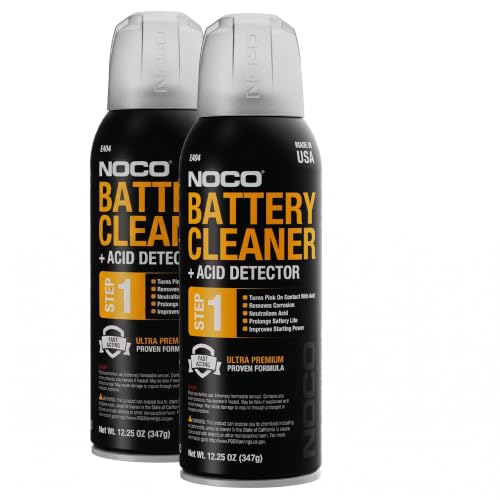
NOCO E404 spray neutralizes corrosion instantly and uses a pink indicator to detect acid presence effectively.
NOCO E404 Battery Terminal Cleaner comes as a convenient two-pack. Each twelve-point-two-five-ounce bottle delivers fast-acting foaming action. The foam clings to vertical posts without dripping. It dissolves corrosion within seconds of contact. A pink indicator reveals acid presence immediately. This visual cue ensures thorough cleaning. The formula neutralizes acids safely.
It improves electrical connections for better cranking. Users find it easy to spray and rinse. No scrubbing is needed for light buildup. The pack size offers great value for multiple vehicles. It fits well in standard toolboxes. The spray mechanism is reliable and clog-resistant.
This product excels in routine maintenance scenarios. It prevents minor corrosion from becoming major issues. The foam action reaches tight spaces around cables. However, heavy crust may require mechanical agitation. Use a brush for stubborn deposits. It is safe for all battery types.
The rinse-off requirement means you need water access. Keep towels nearby for cleanup. It does not leave a protective layer. Apply a separate protector after drying. This step ensures long-term resistance. It is a staple for many professional garages.
|
3
|
CRC Battery Terminal Protector Spray – Anti-Corrosion Coating – 7.5 oz | Battery Terminal |

CRC Terminal Protector Spray applies a lead-free coating that inhibits future corrosion on cleaned posts.
CRC Battery Terminal Protector Spray focuses on prevention rather than removal. This seven-point-five-ounce can applies a soft, lead-free coating. It seals terminals against acid fumes and moisture. The formula extends battery life significantly. It protects cables and bulkhead connectors too. Users report easier starting in cold weather.
The spray dries clear and non-tacky. It does not attract dust or dirt. This feature keeps connections clean longer. Apply it after cleaning with a neutralizer. It complements any cleaning routine effectively. The nozzle provides even coverage around posts.
This protector is ideal for new or freshly cleaned batteries. It stops corrosion before it starts. The coating withstands high under-hood temperatures. However, it will not remove existing rust. You must clean terminals first. Reapply every six months for best results. It is safe for sensitive electronic components.
The small size fits in glove compartments. It is a cost-effective insurance policy. Mechanics often use it during oil changes. It prevents call-backs for starting issues. Store upright to maintain spray quality.
|
4
|
CRC 05023-12PK Battery Cleaner (Acid Indicator 12/11Oz) |

CRC 05023 bulk pack provides consistent acid-neutralizing cleaning for fleets or frequent maintenance needs.
CRC 05023 Battery Cleaner comes in a twelve-pack case. Each eleven-ounce can features an acid indicator. This bulk option suits shops and fleet operators. It removes corrosion efficiently from all terminal types. The formula neutralizes acid to prevent component damage. Users value the consistency across multiple units.
The acid indicator alerts you to leaks instantly. It ensures no spot is missed during cleaning. The spray design allows quick application. It cleans trays and hold-down brackets too. This product streamlines maintenance schedules. It reduces downtime for commercial vehicles.
My take is that you should buy this pack if you manage multiple vehicles. It offers economies of scale for regular upkeep. The cans are standard size for easy storage. However, individual users may find it excessive. Share with neighbors or friends if needed.
The formula is gentle on plastics and rubber. Rinse thoroughly after spraying. Follow up with a protective coating. It handles moderate corrosion levels well. Heavy buildup may need extra effort. Keep it in a temperate environment. The shelf life is long when stored properly.
|
5
|
NOCO NCP2 M401 Battery Terminal Cleaner and Protector Kit with Brush | Clean and protect c |

NOCO NCP2 Kit combines cleaner, protector, and brush for a complete one-step terminal maintenance solution.
NOCO NCP2 M401 Kit provides an all-in-one solution. It includes cleaner, protector, and a specialized brush. This kit stops corrosion for the battery’s life. The formula makes surfaces impenetrable to acid fumes. Users love the convenience of having all tools. The cleaner neutralizes and dissolves buildup instantly.
The brush scrubs posts effectively without damage. The protector seals the connection afterward. It improves cranking ability significantly. This proven formula dates back to nineteen-fourteen. It is made in the USA with quality ingredients. The kit suits cars, trucks, and RVs.
This kit is perfect for DIY enthusiasts. It eliminates the need to buy separate products. The brush ensures thorough mechanical cleaning. However, the kit size is compact. It may not suffice for heavily corroded fleets. Use it for personal vehicles primarily. The instructions are clear and easy to follow.
Apply the protector while the terminal is wet. This method enhances adhesion. It prevents future oxidation effectively. The price is reasonable for the value. It makes a great gift for car owners.
|
6
|
NOCO Remove E403S 14 Oz Battery Terminal Cleaner Spray |

NOCO Remove E403S spray restores maximum current flow by neutralizing and dissolving terminal corrosion quickly.
NOCO Remove E403S is a fourteen-ounce spray bottle. It instantly neutralizes and dissolves battery corrosion. The formula restores maximum current flow to starters. It reduces voltage leakage potential significantly. Users find it easy to spray and rinse. It works on terminals, cables, and hold-downs.
The larger size lasts longer than smaller bottles. It handles moderate to heavy buildup well. The spray pattern covers wide areas evenly. It is safe for all battery types. This product improves overall electrical system health.
Use this for annual maintenance checks. It keeps connections pristine and efficient. The rinse-off process is straightforward. However, it lacks a built-in brush. You may need a separate tool for scrubbing. It does not leave a protective residue. Apply a protector after drying for best results.
The bottle design is ergonomic and comfortable. It fits standard cup holders for transport. Keep it in your emergency kit. It is reliable for roadside repairs. Store away from direct sunlight.
|
7
|
Battery Terminal Cleaner Tool Kit, 2-Pack Battery Post Wire Brush with Metal Case and 10 A |

This kit offers manual brushing and fiber washers to physically remove corrosion and block acid mist mechanically.
This Battery Terminal Cleaner Tool Kit includes two brushes. It also comes with ten anti-corrosion fiber washers. The brushes feature stainless steel casings and wire bristles. They remove stubborn oxides from terminals effectively. The washers block acid mist and moisture physically. Red and green colors distinguish positive and negative posts.
Users appreciate the durable metal case for storage. The double-ended design simplifies the cleaning process. Twist the brush onto the post for action. It takes only one minute to clean. This kit suits cars, trucks, and marine batteries.
This kit is ideal for mechanical cleaners. It provides a physical barrier against future corrosion. The washers fit most standard battery sizes. However, it lacks a chemical neutralizer. Use baking soda or a spray first. The brushes are sturdy and long-lasting. Replace washers annually for optimal protection.
It is a cost-effective long-term solution. The metal case prevents loss of small parts. It fits easily in glove boxes. Great for off-road vehicles with high vibration.
|
8
|
East Penn 00321 Battery Cleaner Spray – 15 oz. |

East Penn 00321 Spray offers a trusted brand solution for neutralizing acid and cleaning marine and auto terminals.
East Penn 00321 Battery Cleaner Spray comes in a fifteen-ounce can. East Penn is a reputable battery manufacturer. This cleaner neutralizes harmful acids on contact. It removes dirt and grime from terminals. The formula is safe for marine and auto use. Users trust its consistency and reliability.
The spray penetrates deep into cable connections. It dissolves power-robbing corrosion quickly. The larger size offers good value per ounce. It is made in the United States. The nozzle resists clogging during storage.
Choose this for brand-conscious consumers. It pairs well with East Penn batteries. The formula is gentle on surrounding components. However, it requires rinsing after application. Keep water handy for cleanup. It does not include a protective coating. Apply a separate protector afterward. It handles light to moderate corrosion well.
Heavy buildup may need repeated applications. Store in a cool, dry place. It is a solid choice for routine maintenance.
|
9
|
Permatex 80369 Battery Cleaner, 5.75 oz. net Aerosol Can |

Permatex 80369 penetrates and removes corrosion in three minutes, suitable for automotive and emergency systems.
Permatex 80369 Battery Cleaner is a five-point-seven-five-ounce aerosol. It works in just three minutes. The spray penetrates and removes corrosion instantly. It neutralizes harmful acid effectively. Users find it convenient for quick fixes. It cleans all types of storage batteries. This includes marine and farm machinery applications.
The formula dissolves power-robbing deposits. It restores electrical efficiency rapidly. The small size fits in tight toolkits. It is ideal for emergency roadside repairs.
Use this for spot cleaning tasks. It is portable and easy to carry. The fast action saves time during emergencies. However, the can size is small. It may not last for multiple vehicles. Rinse thoroughly after application. It does not leave a protective layer. Apply a protector for long-term benefits.
It is affordable and widely available. Keep one in your glove box. It provides peace of mind during travel.
|
10
|
Corrosion Gone Battery Spring and Contact Cleaner |

Corrosion Gone targets small electronics and alkaline battery leaks, offering a niche solution for non-auto devices.
Corrosion Gone Battery Spring and Contact Cleaner targets small electronics. It cleans leakage from alkaline and nicad batteries. This product is great for music equipment and toys. It revitalizes circuit boards damaged by leaks. Users appreciate its specificity for small contacts. It cleans keyboard backups and remote controls too.
The formula is safe for delicate components. It removes white crust from springs effectively. This cleaner extends the life of gadgets. It is not designed for car batteries. Use it for household electronics primarily.
This is essential for hobbyists and musicians. It saves expensive gear from battery damage. Apply with a cotton swab for precision. However, it is unsuitable for automotive use. Do not use on lead-acid batteries. The bottle lasts a long time due to small applications. Store it with your electronics toolkit.
It prevents costly repairs for devices. Keep it away from children. It is a niche but vital product. Great for restoring vintage electronics.
These cleaners tackle different levels of terminal corrosion. Sprays offer convenience for quick neutralization. Kits provide comprehensive tools for thorough maintenance. Pick a product that matches your vehicle’s needs. Regular cleaning prevents frustrating starting issues. Combine cleaning with protective coatings for the best results.
Stay on top of your electrical system.
How To Prevent Future Buildup
Cleaning is only half the battle. Prevention keeps your terminals healthy for the long haul. This section covers steps to stop corrosion before it starts. You’ll learn about protective coatings and good habits. These practices save you time and money over time.
Clean terminals thoroughly with a neutralizing spray.
Rinse with water and dry completely with a cloth.
Apply a dedicated terminal protector spray or gel.
Install anti-corrosion fiber washers on both posts.
Tighten connections securely to prevent gas leaks.
Protective coatings create a barrier against acid fumes. Petroleum jelly is a common household alternative. However, dedicated sprays last longer and resist heat. Reapply these coatings every six months. Check terminals during oil changes for early signs. Tight connections prevent gas escape from gaps. Loose terminals vibrate and break seals.
This vibration accelerates corrosion formation. Use a wrench to snug clamps gently. Avoid overtightening which can strip threads. Inspect battery vents for blockages. Clear any debris to allow proper gas release. Park in a garage when possible to reduce moisture exposure. These simple habits extend battery life significantly.
When To Replace Your Battery
Sometimes corrosion is a sign your battery is nearing the end of its life. Excessive gassing signals internal failure. This section helps you decide when it’s time to replace. We’ll go over warning signs and testing methods.
- Persistent corrosion returns quickly after cleaning.
- Battery case appears swollen or bloated.
- Slow engine crank despite clean terminals.
- Dim headlights when the engine is idling.
- Battery age exceeds four to five years.
Load Testing Procedures
A load test measures battery capacity under stress. Auto parts stores often perform this service free. It reveals weak cells causing excess gassing. Home testers are available for purchase. Connect the tester to both terminals. Follow the device instructions for accurate readings. A failing battery cannot hold a charge.
It releases gas continuously during charging. Replace the battery if it fails the test. Don’t wait to avoid getting stranded. New batteries come with warranties. Register them promptly for coverage. Proper disposal of old batteries is crucial. Recycle them at designated centers.
Checking The Alternator
A faulty alternator can kill a new battery quickly. Test the charging system after replacement. Use a multimeter to check voltage output. Ensure it stays between thirteen-point-seven and fourteen-point-seven volts. High voltage causes overcharging and gassing. Low voltage leads to undercharging and sulfation. Both conditions harm battery health.
Have a mechanic inspect the alternator if voltages are off. Replace the voltage regulator if necessary. This step ensures your new battery lasts. It prevents recurring corrosion issues. Regular system checks maintain vehicle reliability.
Negative terminal corrosion comes from hydrogen gas mixing with moisture and acid. Fixing the root cause, like an overcharging alternator, stops it for good. Clean your terminals today with a neutralizing spray. Apply a protective coating to prevent it from coming back. This simple maintenance step keeps your starts reliable.
Check your battery voltage regularly to catch electrical issues early. Taking care of things now extends your battery’s lifespan significantly.

- 10 Best Battery For Generator Ev Battery Bank Marine 2026 - October 27, 2026
- 10 Best Battery For Generator Ev Battery Bank Lto 2026 - October 27, 2026
- 10 Best Battery For Generator Ev Battery Bank Low Voltage 2026 - October 27, 2026