Garage Door Opener Batteries: Remote Cells and Motor Backup Packs
A dead battery in your garage door opener leaves you locked out or, worse, trapped inside. But not all ‘garage door batteries’ are the same , and grabbing the wrong one just wastes time and money.
There are typically two suspects: the small coin cell inside your remote and the big 12-volt backup pack tucked away in the motor unit itself. Figuring out which one kicked the bucket is half the battle.
This guide walks through how to identify what’s dead, swap it safely, and sidestep the usual rookie mistakes along the way.
Why Your Garage Door Opener Battery Fails
There are two main batteries at play here, and mixing them up can send you down the wrong path fast. Let’s break down what each does and why replacing the right one matters.
The remote control battery is usually a slim CR2032 or A23 coin cell. It sends the radio signal that tells your motor to lift the door. When it dies, hitting the button on your clicker does absolutely nothing.
But don’t panic , the wired wall button still works because it pulls juice straight from your home’s electrical system. Replacing this tiny battery takes about thirty seconds flat. Just pop off the plastic back cover, slide in the new disc, and snap it back together.
Then there’s the backup battery , and this one lives inside the motor housing dangling from your garage ceiling. It’s bulkier, often a 12-volt sealed lead acid or lithium block, and its job is to kick in only when the power goes out.
Think of it like an insurance policy against getting stuck mid-storm. These larger batteries tend to wear out after three to five years, especially if your garage runs hot in summer or freezes in winter.
Ignore a failing one, and suddenly you’re pulling that manual emergency release cord during every blackout.
- Remote clicks but the door ignores the signal entirely.
- Wall switch operates the door while the handheld remote fails.
- Motor beeps continuously during a power outage instead of lifting.
- Backup indicator light flashes red or yellow on the motor head.
- Remote range shrinks so you must park closer to trigger it.
- Door moves sluggishly when running solely on backup power.
Matching The Right Voltage To Your Opener
Voltage and chemistry matter , a lot. Putting in the wrong battery doesn’t just underperform , it can fry delicate circuits or leave you stranded again in a week. Double-checking your opener’s specs saves headaches.
Battery Types By Component
| Component | Common Battery Type | Voltage | Typical Lifespan |
|---|---|---|---|
| Handheld Remote | CR2032 Coin Cell | 3V | 2-3 Years |
| Wireless Keypad | CR2032 or A23 | 3V or 12V | 1-2 Years |
| Safety Sensors | CR2032 Coin Cell | 3V | 2-4 Years |
| Motor Backup (SLA) | Sealed Lead Acid | 12V | 3-5 Years |
| Motor Backup (Lithium) | LiFePO4 Block | 12V | 7-10 Years |
Locate the model number sticker on the back of the motor housing.
Search the manufacturer website for that specific model number.
Open the battery compartment to visually confirm the physical size.
Read the voltage printed directly on the old battery casing.
Purchase a replacement matching both the voltage and physical dimensions.
Batteries That Restore Garage Door Power
Now that you know which battery likely needs swapping, picking the right replacement becomes easier. Whether you’re hunting down a coin cell for your remote or a heavy-duty 12-volt block for your motor, the selections below should cover your situation.
Think of them as quick-reference answers to get your garage door moving again.
|
1
|
CHAMBERLAIN / LiftMaster / Craftsman 4228 Replacement Battery for Battery Backup Equipped |
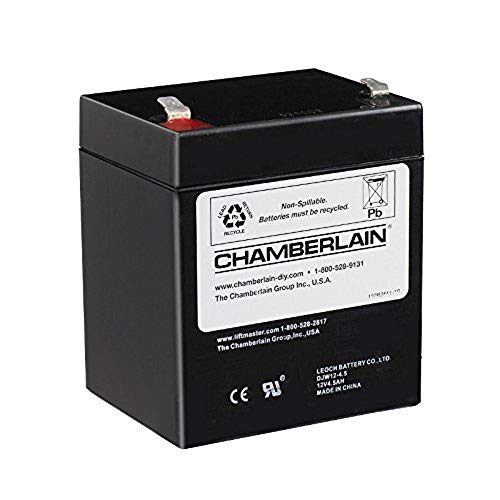
Designed specifically to restore power to Chamberlain, LiftMaster, and Craftsman openers equipped with battery backup systems , this one’s your match if your motor went quiet during an outage.
This Chamberlain 4228 replacement battery delivers 12 volts and 4. 5 amp hours of juice. It slots directly into battery backup-equipped garage door openers without any fuss. The compact build fits snugly in the factory compartment, making installation straightforward. Homeowners trust this unit to prevent lockouts when the grid fails.
Beyond keeping the door operational, it doubles as emergency lighting during blackouts. Keep in mind that packaging might shift between black and grey casings depending on batch , but the internal cell stays consistent.
You’ll want this battery if your overhead motor starts beeping relentlessly during power cuts , a clear sign the backup cell is failing.
Built for Chamberlain, LiftMaster, or Craftsman units needing a 12-volt block, installation is simple: unplug the motor, pop off the lens cover, and disconnect the wires before pulling the old battery free. One caveat?
Sealed lead acid tech tends to degrade faster than newer lithium counterparts, especially in unheated garages where temps swing wildly. Plan on replacing it every three years or so.
|
2
|
Garage Door Opener Battery Replacement CR2032, Pack of 2 | Chamberlain, LiftMaster, Genie, |

A solid option for reviving dead remotes across top brands , perfect if pressing the button did nothing and you confirmed the wall control still worked.
This two-pack of CR2032 batteries covers most modern garage door remotes from Chamberlain, LiftMaster, Genie, and Craftsman. They also handle wireless keypads and safety sensors, so one purchase could solve multiple issues.
Each 3-volt button cell maintains steady output even through wild temperature swings, which matters if you park outside or live somewhere brutal.
Use these for both single-button visor clips and multi-button fobs. They hold up well for daily commuters who hammer their remotes dozens of times a week. Multi-car households appreciate having extras on hand.
That said, their shelf life trails behind premium medical-grade options, though for basic remote fixes, they perform reliably year after year.
|
3
|
Garage Door Opener CR2032 Battery Replacement for Remotes, Keypads, Sensors | Two Pack for |

Premium SHI Elite Series coin cells assembled in the U.S. , ideal if you prefer tighter quality control over budget picks and want fewer chances of a dud.
Smarter Home Ideas markets these CR2032 replacements under their Elite Series label, signaling better QC and consistency. They’re compatible with LiftMaster, Chamberlain, Genie, Craftsman, Linear, and Sears setups, covering nearly every major brand you’ll encounter. Each pair ships in a carded blister pack that shows the contents clearly.
What stands out? Quality inspection happens domestically, giving peace of mind compared to generic bulk-bin finds.
These batteries carry a use-by date of December 2033 , yes, seven years down the road. That long shelf life makes them great for stashing spares in drawers or toolboxes. Cold-weather performance holds strong, which matters for outdoor keypads taking the brunt of winter winds.
Minor note: packaging may vary slightly between batches. Always verify your device runs on a CR2032 before ordering, since some older Sears models call for something else entirely.
|
4
|
Garage Door Opener Battery Replacement CR2032, Pack of 4 | Chamberlain, LiftMaster, Genie, |
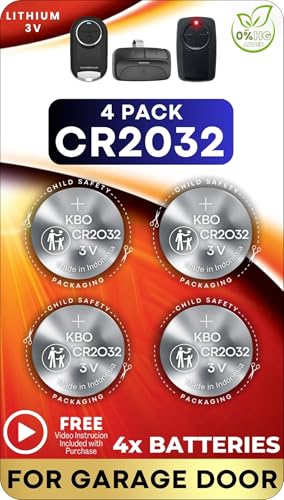
Four coins in one pack , handy if you’re refreshing your remote, keypad, and photo-eye sensors all at once.
Replacing a garage door opener battery isn’t always about just one remote. This four-pack of CR2032 button cells lets you refresh the whole ecosystem: clicker, exterior keypad, and the photo-eye sensors near the floor. They fit Chamberlain, LiftMaster, Genie, Craftsman, and Linear devices.
Getting four instead of two saves you trips back to the store later. Each cell handles heat and cold without dropping voltage.
Big families with several cars go through these fast. Same story if you’ve got a guest house opener or two. Broad compatibility across top brands removes the guesswork when matching part numbers. Swapping takes seconds , open the device, pop in the fresh cell positive-side up, snap the cover shut.
Downside? Four batteries expire eventually if you own fewer than two remotes. Store unused ones in original packaging away from metal zippers or keys to avoid short circuits.
|
5
|
Duracell 2032 Lithium Battery, 4 Count, AirTag & Key Fob, CR2032 3V Cell |

Duracell’s child-safe CR2032 cells , worth considering if little hands roam around your garage tools or remotes.
Duracell coats both sides of these 3-volt CR2032 lithium batteries with a bitter agent to discourage accidental swallowing. Sure, they’re marketed for AirTags and key fobs , but they fit garage door remotes just fine.
If you’re trying to figure out how to replace a garage door opener battery safely around toddlers, these check that box. They meet strict manufacturing tolerances and arrive in a four-count pack, so every clicker and keypad gets covered.
Drop them into any device requiring a standard CR2032. Independent tests show they outlast cheaper alternatives over time. The safety feature matters most when remotes end up chewed on or tossed where kids find them.
True, they cost more than generic multipacks , but for parents weighing convenience against peace of mind, the tradeoff makes sense. Not ideal for extreme budget builds, but reasonable for everyday use.
|
6
|
Energizer A23 Batteries (2 Pack), A23 Battery Alkaline | For garage door openers, keyless |
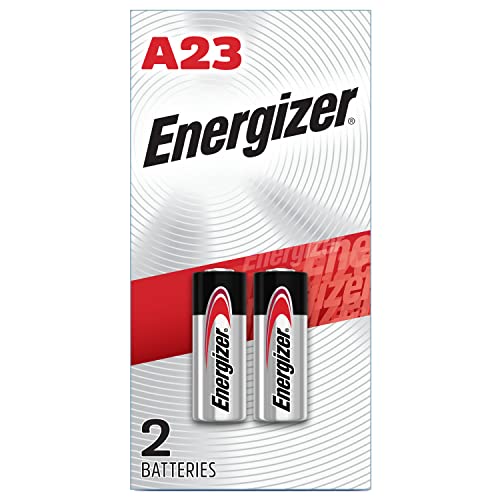
Niche but necessary: these are the A23 alkaline cylinders some older keypads demand , if yours looks like a fat penlight, this is your guy.
Not every remote uses a flat coin cell , some older keyless entry systems ask for an A23 battery instead. This 12-volt Energizer mini alkaline cylinder powers those specific garage door openers. The two-pack gives you an instant replacement plus a backup ready to go.
Learning how to replace a garage door opener battery means recognizing this odd-shaped fellow from the usual CR2032 discs. Energizer built these specifically for keyless entry systems and security gadgets.
Before buying, confirm your exterior keypad actually asks for a 23A or A23 format. Installing the wrong type won’t work and could waste effort. These batteries contain zero mercury, which helps come disposal time. They double-duty as power for Bluetooth speakers and camera gear too.
Just remember: alkaline cells lag behind lithium when temps crash. If your keypad sits outside in northern winters, plan to swap early each season rather than waiting for failure.
|
7
|
Mighty Max Battery ML5-12 – 12V 5AH Chamberlain 41A6357-1 Garage Door Opener Battery |
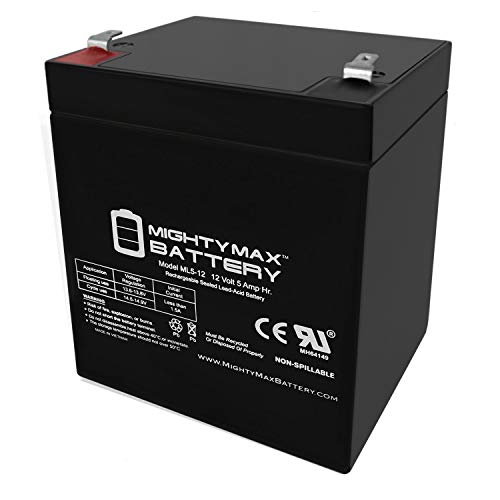
Heavy-duty 12V 5Ah SLA block that drops right into Chamberlain motor housings , matches OEM specs without breaking the bank.
The Mighty Max ML5-12 packs 12 volts and 5 amp hours into a sealed lead acid body built for garage motors. Its dimensions (roughly 3. 5 x 2. 75 x 4 inches) mirror the Chamberlain 41A6357-1 exactly. F1 terminals align with standard harnesses, keeping wiring clean.
Replacing a garage door opener battery at the motor level calls for something sturdy like this SLA beast. Vibration-resistant design protects against wear from the constant up-and-down motion overhead.
Maintenance-free AGM construction means no spills or leaks inside your motor housing. Wide temp tolerance works well in garages lacking insulation. Deep-cycle resilience ensures recovery after extended outages. Fits LiftMaster 485LM and compatible Craftsman motors too.
Reminder: the listing includes just the battery itself , no wires or mounting brackets included. Transfer existing leads carefully, watching polarity. The one-year warranty guards against early failures during initial setup.
|
8
|
12V 5Ah Lithium Battery for Liftmaster 485LM Chamberlain Garage Door Opener | 4000+ Deep C |

Lightweight lithium jump to 12V 5Ah that replaces chunky SLAs with something easier to install and built to last ten years.
HWE Energy trades traditional SLA weight for lithium iron phosphate, producing a 12V 5Ah unit that clocks in at just 1. 6 pounds. Compare that to the 4+ pound lead-acid originals. Designed to replace DJW12-4.
5 or ML5-12 blocks, it’s aimed at anyone upgrading once and forgetting it for close to a decade. With over 4,000 cycles and a 10-year lifespan, this feels like finally solving the recurring battery headache for good.
Fits LiftMaster 485LM, Chamberlain 8500W, and Craftsman 4228 models cleanly. Provides multiple full-door lifts during extended outages, not just one shaky attempt. Ideal for folks who’ve grown tired of lugging heavy batteries every few years. Non-spillable liquid-free design allows flexible mounting orientations. Catch: upfront cost bites harder than SLA twins.
But amortized over a decade, it pays for itself quickly. Make sure your charger supports lithium profiles before installing.
|
9
|
Duracell 21/23 12V Alkaline Battery, 4 Count Pack, 21/23 12 Volt Alkaline Battery, Long-La |

Bulk-friendly four-pack of 12V A23 alkaline cylinders , good if you maintain remote access points across multiple buildings or rental properties.
Duracell bundles four 12-volt 21/23 alkaline batteries together, matching A23, MN21, and V23GA equivalents. Many keyless entry pads rely on this exact cylindrical format, so identifying how to replace a garage door opener battery sometimes leads here.
Duracell backs these cells against defects, promising reliable delivery for remote controls and security modules tied into your garage infrastructure.
Buy this four-pack if you juggle multiple vehicles, manage rental units, or simply like having spares ready. Alkaline chemistry delivers dependable power without the complexity of recharging. Matches the Energizer A23 earlier but doubles quantity. Drawback? Alkaline struggles in sub-zero temps.
If your keypad sits exposed in snow country, swap them out annually before deep freeze sets in. Keep extras in a dry indoor drawer until needed.
|
10
|
Mighty Max Battery ML5-12 – 12 Volt 5 AH, F1 Terminal, Rechargeable SLA AGM Battery |
Universal 12V 5Ah AGM replacement rated for dozens of models , from garage openers to alarms, making it a workshop staple worth owning.
This Mighty Max ML5-12 variant casts a wider net beyond garage doors alone. Rated at 12 volts and 5Ah with F1 terminals, it fits LiftMaster 485LM units alongside older Evercharge gear. Slightly different sizing than competing SLAs doesn’t derail fitment.
Figuring out how to replace a garage door opener battery gets simpler when one part number covers multiple legacy models. Spill-proof AGM design keeps acid locked inside even during rough handling.
Owners of aging Vista 20P ADT panels or Razor scooters can deploy this same battery interchangeably. Versatility earns it real estate on workshop shelves nationwide. Resists vibrations from heavy door tracks without issue. Stable output across hot/cold ranges ensures consistent operation year-round. Reminder: wire harnesses aren’t included.
Carefully migrate red/black leads from your dead battery during install. Reverse polarity? That’s a fast track to fried circuits. Maintenance-free means connect it and forget until next cycle.
Selecting the correct battery depends entirely on whether your remote or your motor failed. Coin cells fix clickers instantly. Heavy 12-volt blocks restore blackout protection. With the right part identified, the actual replacement process becomes straightforward.
Proper installation habits ensure the new battery reaches its full rated lifespan without damaging the surrounding electronics.
Swapping The Battery Without Damaging The Board
Even DIYers need a rhythm when swapping batteries. Rushing the process invites snapped tabs or fried boards , small errors that balloon into big problems. Slow down. Do it right.
Replacing Remote And Keypad Cells
Locate the seam along your remote’s back panel. Using a coin or small flathead screwdriver, gently twist and separate the halves. Don’t force it , plastic tabs snap easily. Pull the old CR2032 or A23 battery out, noting which direction the positive side faces.
Wipe away dirt or corrosion with a dry cloth. Drop in the new cell, aligning polarity correctly. Snap the casing closed until it clicks. Walk ten feet from your garage and press the button. If the door reacts, you nailed it. Recycle the spent battery responsibly instead of trashing it.
Changing The Motor Backup Block
Unplug the garage door opener from the ceiling outlet first. This step prevents accidental activation while your hands are inside the housing. Remove the plastic light lens to access the battery compartment. Disconnect the red and black wires from the old sealed lead acid battery.
Lift the heavy block out carefully to avoid dropping it on your vehicle below. Place the new 12-volt battery in the exact same orientation. Reattach the red wire to the positive terminal and the black wire to negative. Replace the lens cover and plug the unit back into the outlet.
Listen for a brief beep confirming the system recognizes the fresh power source.
Extending The Life Of Your New Battery
Swapping the master backup battery demands more caution , there’s live voltage involved and heavy parts overhead. Proceed methodically.
Garage environments punish batteries. Summer heat accelerates chemical degradation inside sealed lead acid blocks. Winter cold drains coin cells faster than room temperature usage. Insulating the motor housing slightly reduces these extremes. Avoid leaving the garage door open unnecessarily during temperature spikes. Test your backup system twice a year.
Unplug the main power cord from the ceiling outlet intentionally. Press the remote to verify the battery lifts the door smoothly. If the motor struggles or beeps rapidly, the backup battery already needs attention. Do not wait for an actual storm to discover a weak cell.
Keep spare CR2032 batteries in a climate-controlled area inside your home. Storing them in a freezing garage drawer ruins their shelf life. Alkaline A23 cells also prefer stable indoor temperatures. Following these simple habits ensures your garage door opener battery replacement lasts as long as the manufacturer intended.
Maintenance Schedule By Battery Type
| Battery Type | Testing Frequency | Expected Lifespan | Storage Tip |
|---|---|---|---|
| CR2032 Coin | Every 12 Months | 2-3 Years | Store indoors at room temp |
| A23 Alkaline | Every 12 Months | 1-2 Years | Avoid humid locations |
| 12V SLA Block | Every 6 Months | 3-5 Years | Keep terminals clean and dry |
| 12V LiFePO4 | Annually | 7-10 Years | No special storage needed |
Troubleshooting Doors That Still Fail After Swapping
Installing a fresh battery fixes symptoms , until the same culprit resurfaces months later. Addressing underlying causes prevents repeat failures.
- Verify the wall outlet powering the motor has not tripped its breaker.
- Inspect the safety photo-eye sensors for dirt or misalignment blocking the beam.
- Ensure the emergency release cord was not accidentally pulled disengaging the carriage.
- Check the antenna wire hanging from the motor head for damage or disconnection.
- Confirm the remote actually transmits by watching its LED light flash during presses.
- Look for corroded metal contacts inside the battery compartment preventing current flow.
If the remote LED flashes brightly but the door ignores it, the issue likely involves programming rather than power. Batteries occasionally lose their sync code during replacement. Consult your owner manual for the learn button procedure on the motor head. Pressing this button and then clicking the remote re-establishes communication.
Corroded terminals represent another hidden culprit. Old leaking batteries leave white crusty residue on metal contacts. Installing a brand new cell onto corroded springs prevents electricity from flowing. Clean these contacts with vinegar on a cotton swab before inserting the replacement. Let them dry completely first.
Finally, consider the age of the motor itself. Openers exceeding fifteen years often suffer from worn capacitors or failing logic boards. No amount of fresh batteries will overcome degraded internal electronics. Recognizing when the entire unit requires professional replacement saves repeated frustration with battery swaps.
At the end of the day, fixing your garage door opener battery means asking two questions first: is it the remote or the motor that lost power? For remotes, locate the CR2032 or A23 cell inside , easy swap, done.
For motors, listen for persistent beeping during outages , time to order a 12-volt SLA or lithium block. Start by checking your opener’s model number etched into the motor housing. Match that to the battery type listed above.
Buy the correct replacement and stash a spare coin cell in your kitchen drawer. Storm season rolls around again , your garage stays accessible.

- Marine Chargers and Backup Batteries: 9 Options Compared (2026) - October 27, 2026
- LTO Cells vs. SLA Generator Batteries: 5 Options Compared (2026) - October 27, 2026
- 12V/24V Backup Batteries and the EcoFlow DELTA Pro 3 (2026) - October 27, 2026