Can You Store Batteries In A Plastic Bag?
Storing batteries in a plastic bag can be practical for short-term separation and transport, but it isn’t a risk-free long-term solution. The bag helps keep cells from touching each other and isolates contacts, yet plastic does not stop heat or venting. Temperature, battery chemistry, and charge state dictate safety levels. Use bags only as a staging method, not a final storage solution.
For short-term separation, bag each battery individually and keep the bag in a cool, dry place. For Li-ion batteries, store them at 30-50% charge and transfer to a proper container within days.
Key Takeaways
- Short-term use only. Use plastic bags to separate batteries, not as a long-term storage solution.
- Bag each battery separately. This prevents contact with metal objects and other cells.
- Keep it cool and dry. Target a room temperature range of roughly 15-25 C.
- Li-ion needs partial charge. For storage, aim for 30-50% state of charge.
- Not fireproof by itself. Use a dedicated storage container for real safety, if possible.
- Inspect before bagging. Do not bag swollen, leaking, or damaged cells.
Li-ion Storage Basics
Recommended Products


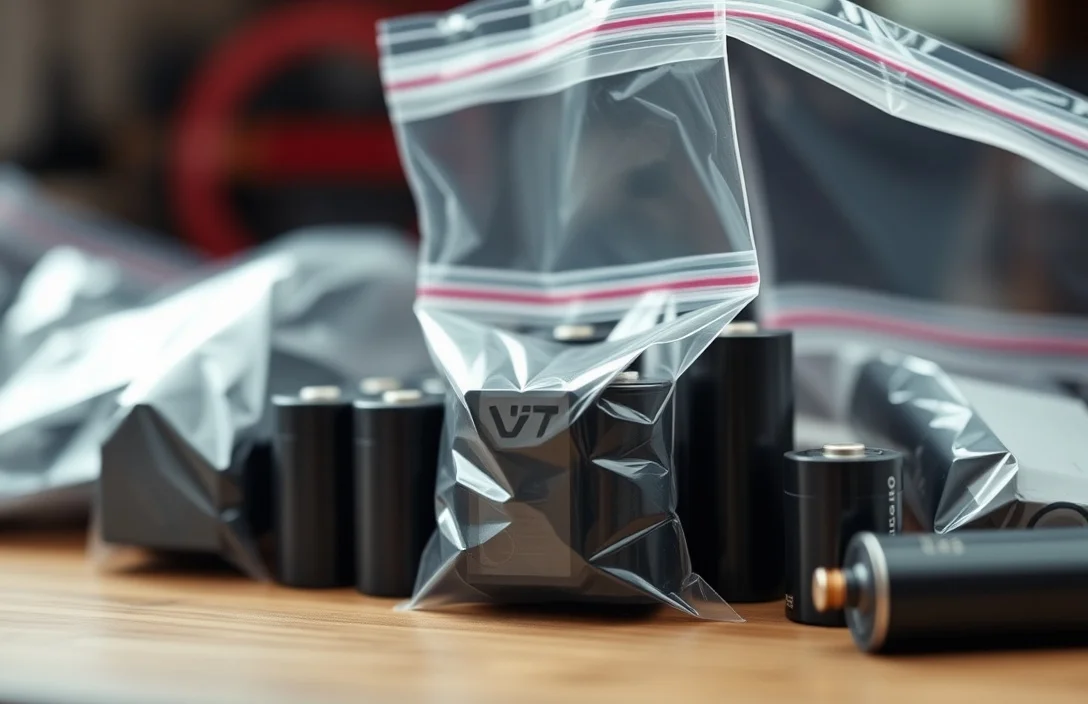
Li-ion cells dislike heat and high states of charge when idle. The safest rule is to store them at a partial charge in a cool, dry place. A plastic bag can keep the cells from touching, but it does nothing to dissipate heat or vent gas if something goes wrong. For any meaningful storage duration, plan for a dedicated, fireproof container or a proper battery storage case.
Think in terms of three factors: temperature, state of charge, and physical separation. Maintain a stable indoor environment around 15-25 C. The state of charge is crucial because fully charged Li-ion cells store more energy and can vent if overheated or damaged. A 30-50% charge window minimizes stress during storage. Physical separation is essential; the bag’s job is to prevent contacts from shorting against other objects or batteries.
You’ll rarely gain anything by piling several Li-ion cells into a single plastic bag. If you must, keep them in individually labeled, non-conductive sleeves or bags and place the whole bundle inside a larger, non-flammable container. The risk increases with higher ambient temperatures, damaged cells, and more packed cells in one bag.
How Different Battery Chemistries Respond
Recommended Products


Alkaline and NiMH cells tolerate room-temperature storage well for months, but they don’t gain or lose energy in the bag itself. A plastic bag mostly helps keep them organized and away from metal objects. Li-ion and Li-polymer cells require more care. They benefit from a controlled state of charge and a purpose-built container rather than a grocery bag.
Keep cells separated not just by type but by polarity. Never mix lithium with non-lithium chemistries in the same bag, and avoid bagging damaged cells with intact ones. A damaged cell can vent or rupture; the bag does not prevent a thermal event from affecting nearby items. For any non-Li chemistry stored long term, choose a cool, dry, well-ventilated area.
Avoid storing spare batteries in a plastic bag for more than a few days to a couple of weeks, depending on the chemistry and environment. For reorganizing a drawer or cleaning up a workstation, a plastic bag can serve as a convenient interim step. Beyond that, switch to a purpose-built container.
A Simple Calculator to Estimate Storage Risk
Recommended Products


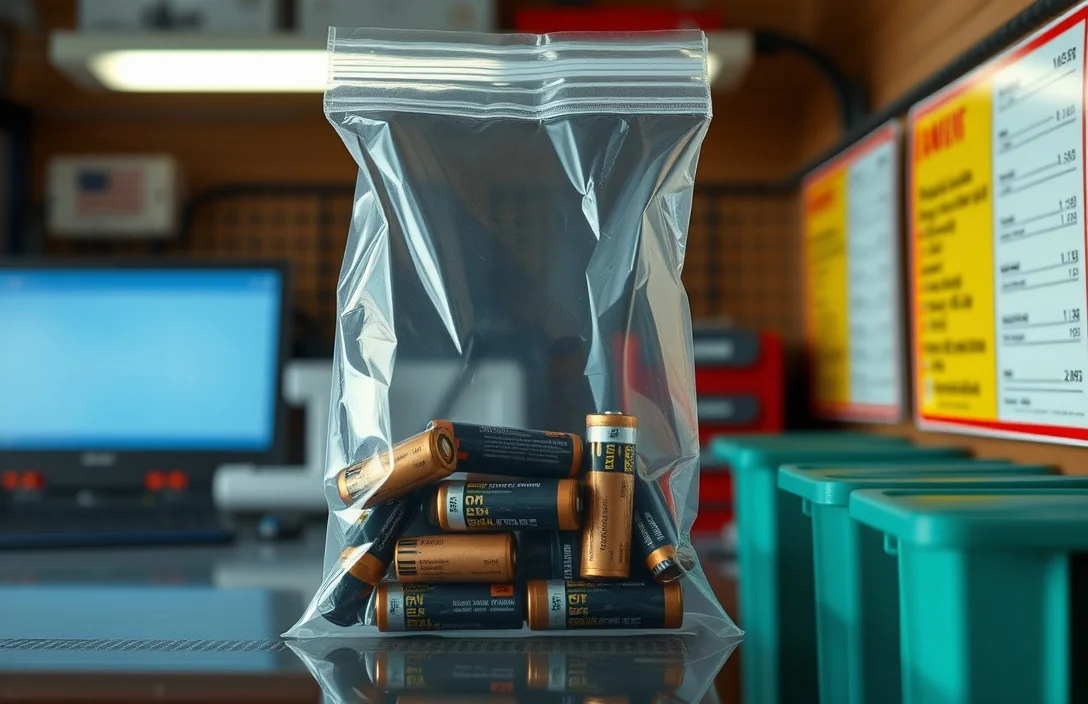
Weigh three factors to assess risk: ambient temperature, charge level, and how many cells are in the same bag. Use this formula as a rough guide:
RiskScore ≈ TempFactor + SoCF + BagFactor
- TempFactor = max(0, (|T – 20| – 5) / 15). T is ambient temperature in C. This scales from 0 to about 1.
- SoCF = charge-based factor: Li-ion at 0-30% = 1.0; 30-50% = 0.6; 50-100% = 0.4.
- BagFactor = 0.4 if a single cell in a bag; 0.8 if multiple cells are bagged together.
Example: T = 22 C, SoC = 40%, one cell in a bag.
TempFactor = max(0, (|22-20| – 5) / 15) = max(0, (2 – 5)/15) = 0
SoCF = 0.6
BagFactor = 0.4
RiskScore ≈ 0 + 0.6 + 0.4 = 1.0 (low to moderate risk)
Another Example: T = 30 C, SoC = 60%, two cells in the same bag.
TempFactor = max(0, (|30-20| – 5) / 15) = (10 – 5)/15 = 0.33
SoCF = 0.4
BagFactor = 0.8
RiskScore ≈ 0.33 + 0.4 + 0.8 = 1.53 (moderate risk)
Lower is better. Keep temperatures cool, reduce SoC, and avoid bagging many cells together to keep the risk score low. This calculator is a rough guide, not a certification of safety.
Storage Options
Recommended Products


| Option | Pros | Cons | Best For |
|---|---|---|---|
| – | – | – | – |
| Plastic bag (single cells) | Inexpensive; easy to label; keeps contacts apart | Not fireproof; heat and gas venting not addressed | Short-term staging or when tags matter more than containment |
| Individual non-conductive sleeves inside a bag | Extra barrier; reduces direct contact risk | Still not fireproof; can still trap heat if venting occurs | Lightweight organization, low moisture risk |
| Fireproof bag or pouch | Provides some fire resistance; reduces external flame risk | Not a guaranteed containment solution for a thermal event | Short-term storage where fire safety is a concern |
| Rigid plastic battery case | Strong physical separation; easier labeling and stacking | Can be bulky; not fireproof by itself | Organized, frequent access storage |
| Metal container with vented lid | Best containment in a thermal event; heat can vent safely | Heavier; needs ventilation planning | Long-term storage or transport in bulk |
| Original packaging or dedicated battery box | Designed for each battery type; often labeled and tempered | Availability varies; may not offer extra containment | Quick, low-risk storage with recognized packaging |
| No bag, device-in-use storage only | Lowest risk of vented gas buildup inside plastic | Not suitable for spare batteries; risk of accidental shorting | When batteries remain in the device and are not spare stock |
| Option | Why it helps | Price | Link |
|---|---|---|---|
| Battery Organizer Storage Box with Tester, Battery Vault Case Fireproof Waterproof Explosionproof Holder Box with Tester BT-168 Checker Carrying Case Container Bag Fit for 200+ Batteries AA AAA C D 9V | This fireproof and waterproof battery storage box ensures safe containment for your batteries, addressing heat and gas venting. | Check price | View → |
| GlossyEnd Set of 4 – Two AA and Two AAA Battery Storage Box, Battery Storage Case Holder with Tester, Clear. Each Case Stores 48 Batteries | This inexpensive battery storage box is easy to label and keeps contacts apart for short-term staging. | Check price | View → |
Essential Storage Solutions for Batteries

Ontel Battery Daddy Storage & Organizer Case w/Tester, Stores & Protects Up to 180 Batteries, Double-Sided, Clear Locking Lid, Secure Latches & Portable Carrying Handle – Red (Batteries Not Included)
The Ontel Battery Daddy Storage Case provides a safe and organized way to store batteries, preventing potential leakage or damage that can occur in plastic bags.

Battery Daddy Storage & Organizer Case w/Tester, Stores & Protects Up to 180 Batteries, Double-Sided, Clear Locking Lid, Secure Latches & Portable Carrying Handle – Charcoal (Batteries Not Included)
The Battery Daddy Storage Case offers a secure environment for batteries, eliminating the risks associated with using plastic bags for storage and ensuring easy access.

Zeee Fireproof Explosionproof Large Capacity Battery Storage Guard Pouch for Lipo Charge & Storage (8.46 x 6.5 x 5.71 in)
The Zeee Fireproof Battery Storage Guard Pouch is designed to safely contain batteries, protecting them from hazards that can arise from improper storage in plastic bags.
Practical Safety Checklist and Caveats
Recommended Products


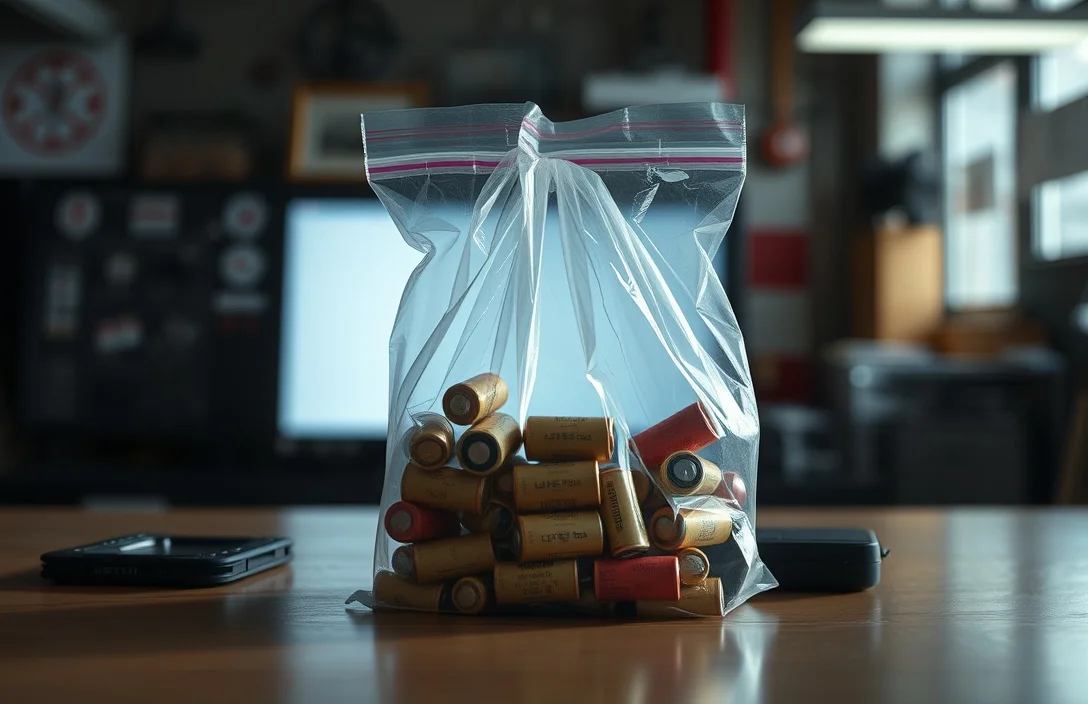
Batteries hate heat, moisture, and rough handling. A plastic bag is just one element of a safe storage plan. Start with damage-free cells and separate them to avoid contact with metal objects. Dispose of any swollen, leaking, or damaged cells through your local hazardous waste channel.
If you use a bag, keep it in a cool, dry place away from direct sunlight and flammable materials. Label bags clearly with chemistry, date of storage, and charge level. Never mix chemistries in a single bag, and never store a bag on carpet or near heat sources. For long-term storage, switch to a purpose-built container or fireproof solution. Regularly inspect stored batteries for swelling or leakage.
A small, dedicated setup works best: one battery per bag, placed inside a non-flammable container, kept in a closet or cabinet away from heat sources. If you routinely handle a mixed battery inventory, create a simple labeling system that notes the chemistry and recommended SOC for each cell. Treat any damaged item as waste, not storage material.

Helpful pick
Ontel Battery Daddy Smart – Battery Organizer Storage Case with Tester, Stores & Protects Up to 150 Batteries, Clear Locking Lid, As Seen On TV, Smart – 150 Batteries (BADAS-MC4)
This organizer protects and stores up to 150 batteries safely, preventing damage and contact with metal objects.
FAQ
How long can you store batteries in a plastic bag?
Plastic bags work for short-term staging and transport, typically days to a couple of weeks, depending on chemistry and ambient conditions. For Li-ion, aim to limit storage to the 30-50% SOC window and transfer to a proper container as soon as practical.
Is it safe to store spare batteries in a plastic bag?
It can reduce direct contact between batteries and metal objects, but it is not fireproof and won’t stop a thermal event. Use a dedicated fireproof container for longer-term storage and avoid stacking many cells in one bag.
Can you store multiple battery chemistries together in a plastic bag?
Do not. Different chemistries have different venting and ignition risks, and a single bag can create cross-contamination hazards. Separate bags for each chemistry are a safer practice.
What about storing batteries in bags inside devices or chargers?
Never rely on bags for safety inside charging devices. If you’re charging, keep the device in a non-combustible area with supervision. Bags are for separation and transport, not containment during charging or long-term storage.
Are there cheaper or safer alternatives to plastic bags for storage?
Yes. A dedicated battery storage case, a fireproof bag, or a metal container with a vented lid is safer for longer-term storage. For real safety, pair any container with a dry, cool environment and battery-specific labeling.
Use plastic bags only as a quick, temporary staging method to separate batteries. For any longer-term storage, upgrade to a proper storage container and keep batteries in a cool, dry, ventilated location. Start by inventorying your spare batteries, bagging them individually, and moving them into a fireproof container within 2-7 days if you can.

- 10 Best Battery For Generator Battery Safety System 2026 - October 12, 2026
- 10 Best Battery For Generator Battery Safety Option 2026 - October 12, 2026
- 10 Best Battery For Generator Battery Safety 2026 - October 12, 2026