Can You Put Batteries In The Freezer?
No. Freezing most common batteries risks swelling, leakage, and capacity loss. Thawing can render them unsafe to reuse. Alkaline, NiMH, NiCd, Li-ion, and LiFePO4 cells aren’t designed for subfreezing storage, and the hoped-for benefits rarely materialize. Stable, cool, dry room-temperature storage preserves usable power far better than freezing.
Freezer storage of batteries is seldom beneficial. Freezing can cause condensation, chemical changes inside the cells, and safety hazards upon thawing. For typical consumer batteries, 20-25 C in a dry environment preserves capacity better than freezing, avoiding risks of leakage and venting.
Key Takeaways
- Don’t freeze. Freezing damages many chemistries, causing swelling or leakage.
- Room-temp rule. 20-25 C is safer for storage than cold or freezing temperatures.
- Humidity matters. Condensation on thaw can short cells; store in a dry, sealed container.
- Partial-charge storage. For Li-ion and LiFePO4, keep at 40-60% state of charge for long-term storage.
- Rotate stock. Use the oldest batteries first to minimize capacity loss from prolonged storage.
- Inspect before use. Look for swelling, corrosion, or leaks; discard if you see signs.
Can you put batteries in the freezer? For almost all household batteries, the answer is no. Attempting to stretch shelf life through freezing often creates more headaches than it solves. A stable, cool, dry storage routine and careful rotation is the better move.
What happens when you freeze a battery?
Recommended Products


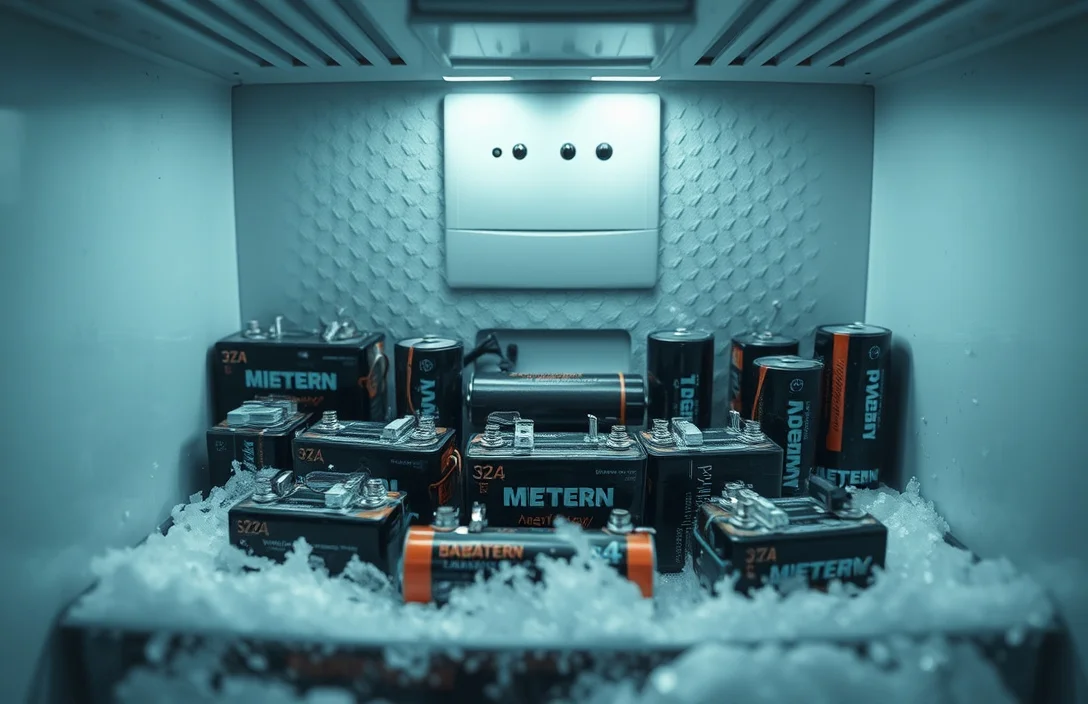
Freezing temperatures slow chemical reactions inside a battery. This slowdown, along with the risk of moisture entering the cell, can permanently alter the internal structure. Upon thawing, water or electrolyte can condense on contacts, increasing the potential for corrosion and triggering leakage paths. If a battery swells or vents during a freeze-thaw cycle, it’s a clear sign of damage and should be discarded.
Chemistries react differently to freezing. Alkaline cells rely on a potassium hydroxide electrolyte that can migrate and leak if the canister is stressed by cold. NiMH and NiCd packages trap electrolyte in a sealed can, but freezing can form microcrystals that reduce usable capacity. Lithium chemistries use organic solvents; extreme cold can promote lithium plating during charging after exposure to cold, permanently lowering capacity and increasing safety risks. LiFePO4 is the most tolerant of cold among common Li chemistries, but repeated freezing is not recommended and can still shorten life, especially if the cell is not at the proper storage state.
The safest approach is to avoid placing any consumer battery in the freezer and to prevent exposure to moisture or mechanical stress that temperature swings could exacerbate. If a battery is accidentally exposed to freezing conditions, treat it as potentially compromised until tested or replaced.
How to store batteries for real shelf life
Recommended Products


Store batteries in a cool, dry place away from heat sources and metal objects. A closet shelf, dry cabinet, or dedicated battery bin that maintains a temperature of 20-25 C and low humidity preserves capacity far better than any freezer. Keep batteries in their original packaging or a light, nonconductive container to prevent short circuits, and use a desiccant to suppress ambient moisture.
For long-term storage, keep Li-ion and LiFePO4 at a partial charge, typically around 40-60%. This minimizes stress on the electrodes and reduces deterioration from self-discharge. If the exact recommended storage state from the manufacturer is unknown, err toward the lower end of that range and check periodically. A quick visual inspection for swelling or leakage every few months is prudent.
For example, a household kit might store AA and AAA alkaline cells in a dry cabinet, NiMH rechargeables in their original sleeves in a labeled bin, and Li-ion 18650 or portable device packs in their protective cases inside a cool cupboard with silica gel packs. Avoid stacking batteries in a metal tray or on a damp surface, and never seal a warm battery inside a hermetic container without allowing it to cool first.

Helpful pick
GlossyEnd Set of 4 – Two AA and Two AAA Battery Storage Box, Battery Storage Case Holder with Tester, Clear. Each Case Stores 48 Batteries
This battery storage case keeps your batteries organized and protected, ensuring they stay in a cool, dry place.
Battery types and freezer risk
Recommended Products
![Abtter SCP-73LBPS Battery, [1800mAh] High Capacity Replacement for Kyocera DuraXV Extreme E4810…](https://m.media-amazon.com/images/I/41rYF39ffTL._SS500_.jpg)
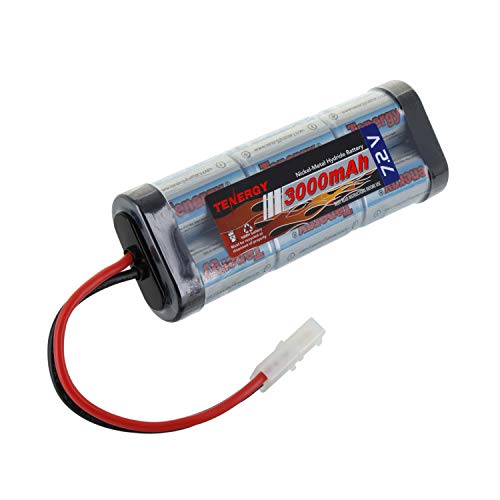
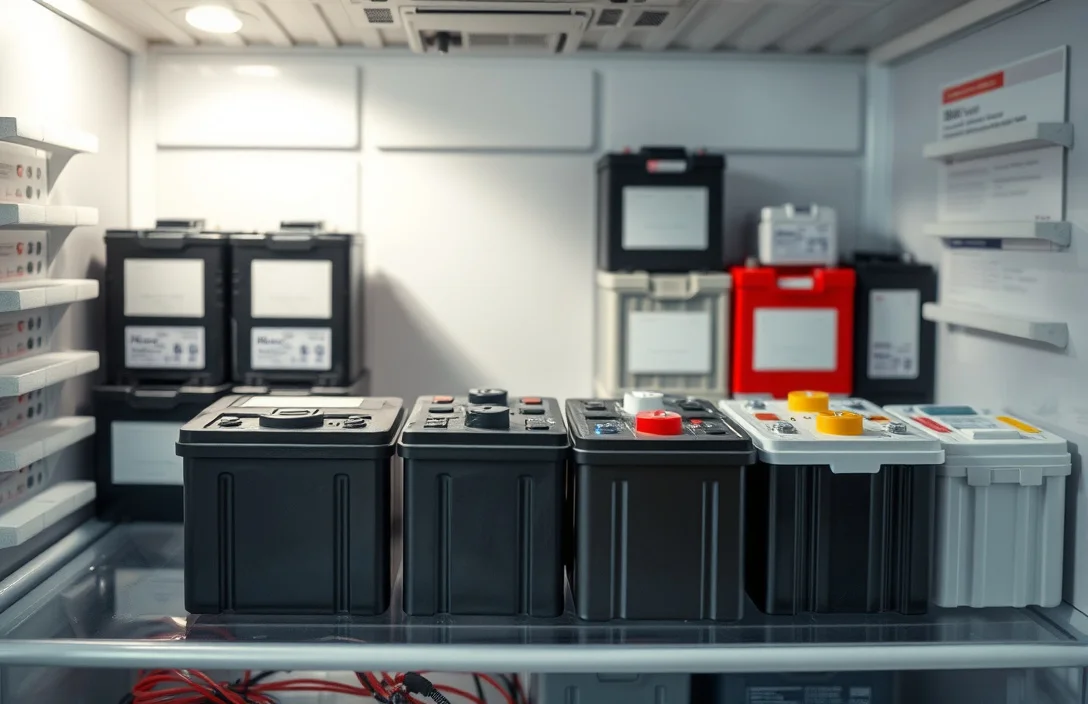
The risk of freezing depends on chemistry, construction, and the duration of storage. The following table summarizes guidance for common consumer chemistries.
| Chemistry | Freezing risk | Best storage condition | What to do if you must store long-term |
|---|---|---|---|
| Alkaline | High risk of leakage and venting | 20-25 C, dry, away from metals | Do not freeze; keep in a dry, room-temperature location; rotate stock and replace when used up |
| NiMH | High to moderate risk; capacity loss possible | 20-25 C, dry | Do not freeze; store at room temp with a desiccant; recharge if capacity still meets needs |
| NiCd | Moderate risk; can tolerate but not ideal | 20-25 C, dry | Do not freeze; avoid deep discharge unless needed; replace if performance drops |
| Li-ion | High risk; electrolyte decomposition and plating possible | 20-25 C, dry | Do not freeze; if stored long-term, keep around 40-60% state of charge; test before use |
| LiFePO4 | Moderate risk; more tolerant but not risk-free | 20-25 C, dry | Do not freeze; store in a cool, dry place with partial charge; monitor voltage safely |
Most households won’t gain anything meaningful from freezing. The table above emphasizes that the only safe, reliable path is steady, room-temperature storage with controlled humidity and periodic checks.
| Option | Why it helps | Price | Link |
|---|---|---|---|
| BTSKY 1 Pack Clear Acrylic Battery Storage Organizer for AA, AAA, 9V, C Batteries, 4-Drawer Storage Box Battery Holder Organizer for Common Types Batteries, Household Container(Batteries Not Included) | This organizer keeps your batteries neatly stored, reducing the risk of damage from freezing conditions. | Check price | View → |
| Battery Organizer Storage Box with Tester, Battery Vault Case Fireproof Waterproof Explosionproof Holder Box with Tester BT-168 Checker Carrying Case Container Bag Fit for 200+ Batteries AA AAA C D 9V | A fireproof and waterproof case ensures your batteries are safely stored, mitigating risks associated with temperature fluctuations. | Check price | View → |
What to do if you accidentally froze a battery
Recommended Products


First, don’t attempt to charge a frozen battery. Wait for it to return to ambient temperature and inspect for signs of damage such as swelling, leakage, or corrosion. If any signs appear, dispose of the battery according to local guidelines. If there are no obvious issues, test the battery in a safe, controlled manner or have it tested by a professional before putting it back into service.
Monitor voltage and capacity closely. A battery that functioned normally before freezing but shows reduced capacity after thawing should be retired or replaced. For lithium chemistries, avoid relying on a quick capacity test; static voltage can appear fine while the cell has degraded internally. When in doubt, err on the side of safety and replace.
The only true safeguard is prevention. Avoid freezer storage entirely for ordinary household batteries, and create a dedicated, temperature-stable storage routine instead. It’s simple, safer, and preserves what you bought.
Essential Tools for Safe Battery Storage

Ontel Battery Daddy Storage & Organizer Case w/Tester, Stores & Protects Up to 180 Batteries, Double-Sided, Clear Locking Lid, Secure Latches & Portable Carrying Handle – Red (Batteries Not Included)
The Ontel Battery Daddy Storage Case keeps your batteries organized and protected, ensuring they remain in optimal condition without the need for freezing.

Zeee Fireproof Explosionproof Large Capacity Battery Storage Guard Pouch for Lipo Charge & Storage (8.46 x 6.5 x 5.71 in)
Zeee’s Battery Storage Guard Pouch offers a safe environment for storing batteries, eliminating the need to freeze them while preventing fire hazards.
Practical workflow for household battery storage
Recommended Products


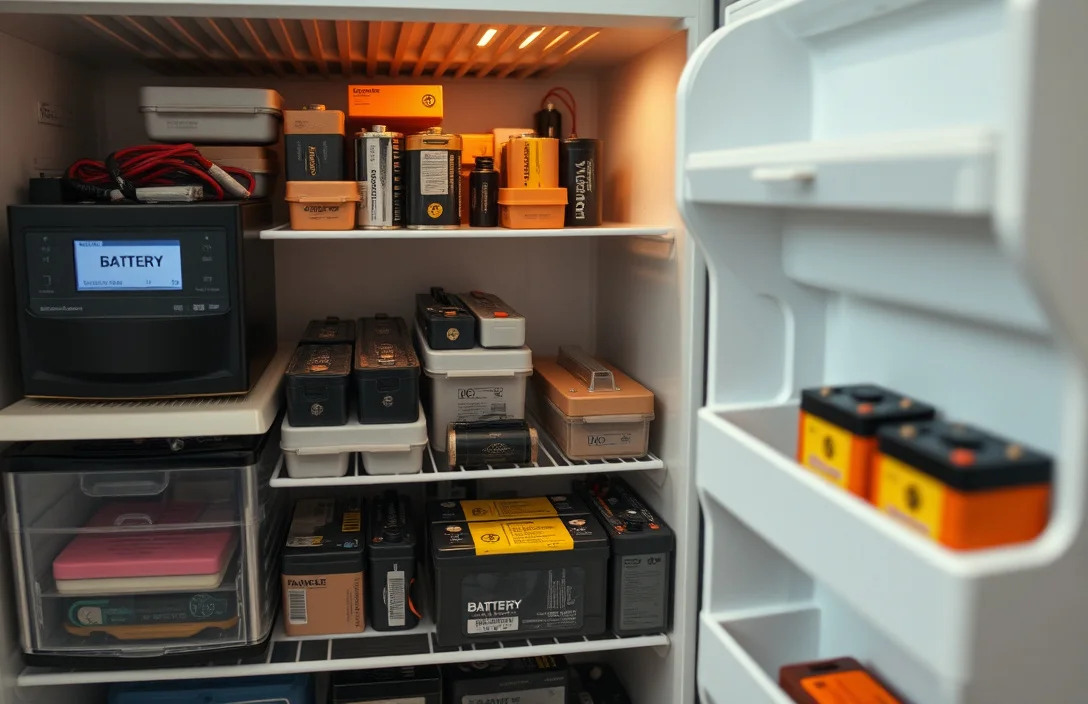
Establish a small, clearly labeled storage system that keeps all cells in protective sleeves or cases, separated by chemistry. Use a two-bin approach: one for used or rechargeable cells and another for fresh stock. Incorporate desiccants and moisture barriers, and check each cell’s condition every few months.
Step-by-step approach:
1) Sort by chemistry and size, then label each container.
2) Place desiccants in each container to control humidity.
3) Store at a stable room temperature, away from heat and direct sunlight.
4) Keep cells in original packaging when possible; use protective cases for loose packs.
5) Rotate stock so the oldest cells are used first.
6) Periodically inspect for swelling, corrosion, or leakage; retire any suspect packs.
7) Avoid metal contact; never seal a storage box airtight when batteries are present.
8) Schedule a quarterly check to reassess storage conditions and battery health.
This workflow minimizes risks and helps you retrieve usable power quickly when needed. Freezing rarely helps and often hurts, making deliberate, temperature-stable storage with routine checks the practical route.

Helpful pick
Ontel Battery Daddy Smart – Battery Organizer Storage Case with Tester, Stores & Protects Up to 150 Batteries, Clear Locking Lid, As Seen On TV, Smart – 150 Batteries (BADAS-MC4)
The Battery Daddy Smart organizer keeps your batteries organized and protected, enhancing your storage workflow.
Myths, misconceptions, and the practical takeaway
A common myth is that cold slows deterioration enough that freezing becomes a viable way to extend shelf life. The truth is that electrolyte and electrode structures are more affected by temperature swings, moisture exposure, and chemical stability. Freezers can introduce humidity traps and condensation worse than mild heat exposure. The practical takeaway is straightforward: store in a cool, dry place, avoid extreme temperatures, and monitor aging cells.
Households in the United States will achieve better results by investing in a small, labeled storage bin system, moisture control, and a routine to rotate stock. This approach is inexpensive, takes minutes to implement, and offers a more reliable, safer battery experience than freezing ever could.
FAQ
Can freezing batteries extend shelf life?
No. Freezing does not reliably extend shelf life for common batteries and can cause condensation, internal damage, and leakage. A safer approach is to store at room temperature (roughly 20-25 C) in a dry place and rotate stock so older cells are used first. Room-temperature storage consistently maintains usable capacity.
Is it safe to freeze lithium-ion batteries?
Generally, no. Freezing can promote lithium plating and electrolyte stress, reducing capacity and raising safety risks upon reuse. If a lithium-ion cell has been frozen, allow it to return to room temperature slowly and test it carefully before charging or using. Follow manufacturer guidelines, as freezing is not a recommended long-term storage method.
What should I store Li-ion and LiFePO4 batteries at if not freezing them?
Store Li-ion and LiFePO4 at moderate temperatures in a dry place, ideally around 20-25 C, with a partial state of charge around 40-60% for long-term storage. Maintain low humidity, use desiccants, and avoid temperature swings. This preserves capacity and minimizes self-discharge.
How can I tell if a battery has been damaged by cold?
Look for swelling, discoloration, venting, or any sign of leakage. After thawing, test the voltage with a reliable meter and verify capacity with a load test if possible. If you see any physical damage or suspect reduced performance, replace the battery rather than attempting a recharge.
Are there any batteries you can freeze safely?
In general, no common consumer battery types are recommended for freezing. Some specialized cells used in industrial or scientific settings may have different guidelines, but for typical household batteries, freezing is not advised. Keep storage in a cool, dry place and avoid freeze-thaw cycles.
—
Freezing batteries is rarely worthwhile. For maximum reliability and safety, store at a stable room temperature in a dry area, use desiccants, and rotate stock regularly. This setup is inexpensive, takes minutes to implement, and leads to clearer inventory and fewer surprises when you need power. For most people, that’s the simple, trustworthy path.

- 10 Best Battery For Generator Battery Safety System 2026 - October 12, 2026
- 10 Best Battery For Generator Battery Safety Option 2026 - October 12, 2026
- 10 Best Battery For Generator Battery Safety 2026 - October 12, 2026