What Is Battery Reserve Capacity?
Let’s be honest , your car battery doesn’t just crank the engine over. It keeps the lights on, the radio alive, and a whole bunch of computers ticking when the alternator takes a break.
But if it goes down, your reserve capacity is what’ll keep you from being stranded on the side of the road. In short, it tells you how long your battery can keep everything running without being charged. A higher number? That means more time to get yourself somewhere safe.
Most of us don’t think twice about it until we’re sitting in the dark wondering why the dash just died. I dug into the specs so you don’t have to.
Why Reserve Capacity Matters
Recommended Products


Think of reserve capacity as your battery’s endurance test. It’s not about how hard it can kick , it’s how long it can keep kicking. Let’s break down why that matters more than you think.
Here’s the deal: reserve capacity is how many minutes your fully charged battery can put out 25 amps at 80°F before it drops below 10. 5 volts. That’s basically what your car’s essential systems , lights, ignition, a few sensors , would draw.
If your alternator dies on the highway, your battery becomes your lifeline. A weak reserve capacity? You’ll find yourself coasting to the shoulder fast. But a strong one gives you breathing room, maybe even enough to nurse it to the next exit.
Today’s cars lean harder on steady voltage , one dip and your navigation starts acting weird or your ABS throws a tantrum. Don’t just chase CCA numbers. Look at reserve capacity too. They’re both pieces of the same puzzle.
- Older alternators fail more often, requiring higher reserve capacity for safety.
- Heavy electrical accessories increase drain, demanding more sustained power output.
- Extreme temperatures reduce effective capacity, so choose a higher rating.
- Long commutes benefit from extra reserve time in case of charging issues.
How RC Differs From CCA
Recommended Products


Cold Cranking Amps and Reserve Capacity might sound similar, but they’re playing different positions on the field. One gets you started, the other keeps you going.
Starting Power Explained
CCA? That’s your winter warrior. It measures how much juice your battery can cough up in freezing temps to turn over the engine. But once that motor fires up? CCA stops doing its job. That’s where Reserve Capacity steps in. It’s the battery saying, ‘Okay, I’m not done yet.’
You want both, but if your daily drive is short trips and stop-and-go traffic, RC might save your bacon more often than you’d expect.
Sustained Power Delivery
Reserve Capacity measures how long the battery supports essential loads. It reflects the battery’s depth and stamina. This metric is crucial when the charging system fails. A battery with high RC keeps your car running longer. It gives you time to react to problems.
Modern vehicles rely heavily on consistent voltage. A drop in power can cause system errors. High reserve capacity maintains stable voltage under load. This stability protects sensitive electronic components. Always consider RC when replacing your battery. It is a key indicator of overall quality.
Top Batteries for Extended Reserve Capacity
Recommended Products

I looked at what each battery brings to the table , especially when it comes to holding power after the engine cuts. These aren’t just big names; they’ve got the numbers to back ’em up.
|
1
|
Mighty Max Battery MM-H6 Start and Stop Car BCI Group Size 48 12V 70 AH, 120RC, 760 CCA Re |

If you need solid backup time without spending a ton? This Mighty Max AGM delivers 120 minutes of reserve capacity. That’s enough to get you home if things go sideways.
The Mighty Max MM-H6 is built like it means business , 760 CCA, sure, but the real win is that 120-minute reserve capacity. I would shortlist this one if your rig sees some serious use. The AGM setup makes it spill-proof and ready for rough roads.
Plus, it handles deep discharge recovery better than a lot of lead-acid alternatives I’ve seen.
One thing I’d check first: verify your vehicle calls for Group Size 48. Otherwise, this battery should handle anything from snow-covered mornings to blazing summer highways. Sure, no Prime shipping is a bummer, but honestly, most people don’t need next-day delivery on a car battery.
|
2
|
Mighty Max Battery MM-G35 Start and Stop Car BCI Group Size 35 12V 55Ah, 100RC, 650 CCA Re |

Small car, big concern? This compact Mighty Max AGM keeps the lights on for 100 minutes. Not flashy, but dependable when you need it most.
The Mighty Max MM-G35 may be smaller, but it’s no weakling , 650 CCA paired with 100 minutes of reserve capacity. My read is this is aimed squarely at folks driving economy cars who still want that AGM peace of mind.
Spill-proof design, low maintenance, and it bounces back well from partial discharges.
I’d say it’s a safe bet for daily commuters who aren’t hauling trailers or running high-drain accessories. Just double-check your group size before ordering , and yes, you guessed it, Prime shipping isn’t an option here either.
|
3
|
Odyssey Battery ODP-AGM31M Performance Series AGM Battery |

Looking for serious endurance? This Odyssey rig pushes 190 minutes of reserve capacity. That’s way more breathing room than most people ever use.
The Odyssey ODP-AGM31M doesn’t mess around. Clocking in at 190 minutes of reserve capacity, it’s overkill in the best possible way. With 925 CCA, it’s also got the punch to match. If you’re running a diesel truck, diesel SUV, or anything hungry for juice, this beast deserves a hard look.
It’s sealed, vibration-resistant, and built like it expects hard use.
This battery excels in high-demand applications. The 190-minute RC is among the best available. It supports heavy accessory loads effectively. The price point is higher than average. However, the performance justifies the cost. It is ideal for off-road or towing use. The dual terminal options add versatility.
Installation may require specific cables. Ensure your tray fits the Group 31 size. It is a premium choice for serious drivers.
|
4
|
Powerstar 170Ah 8V Deep Cycle Battery – Replaces Trojan T-875 (Set of 6) |

Not exactly plug-and-play for sedans, but for golf carts or auxiliary banks, these Powerstar cells offer 295 minutes of reserve at 25 amps. Serious uptime.
The Powerstar 170Ah fleet isn’t something you toss into your Honda Accord , unless you’re modding a mobile workshop. Six 8V batteries wired together give you 48V and 295 minutes of reserve at 25 amps. Replace a tired Trojan T-875? Easy drop-in.
Designed for deep cycling, so expect repeated charges without drama.
This product is not for standard cars. It serves specialized equipment like floor scrubbers. The reserve capacity is exceptional for its type. Maintenance involves checking water levels regularly. Ventilation is required during charging. Confirm dimensions before purchasing. It is a robust solution for industrial use.
The set provides consistent power for long shifts. It is a reliable replacement for older banks. Ensure your charger is compatible with flooded cells.
|
5
|
OPTIMA® Batteries High Performance D34/78 YELLOWTOP® Sealed AGM Battery | Dual Purpose Car |

Dual purpose done right , the OPTIMA Yellowtop packs 120 minutes of reserve capacity plus quicker recharge times thanks to spiral-wound tech.
OPTIMA’s D34/78 Yellowtop nails the sweet spot for people who want both starting punch and lasting punch. 750 CCA, 120 minutes of reserve capacity, and that signature spiral-wound construction cuts down on maintenance hassles. It’s lighter than a brick-style flooded battery, too.
My take? It’s pricier than standard AGMs, but if you’re doing a lot of accessory-driven driving (winch, roof rack lights, whatever), the tradeoff starts to make sense. Faster recovery between uses is a legit bonus.
|
6
|
Mighty Max Battery MM-H7 Start and Stop Car BCI Group Size 94R 12V 80AH, 140RC, 850 CCA Re |
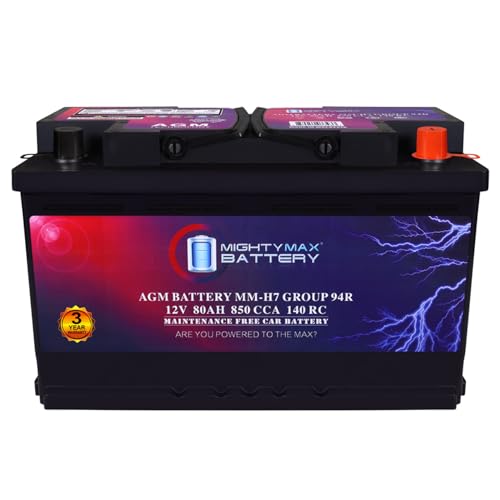
Need something beefy for larger rides? The Mighty Max MM-H7 throws 140 minutes of reserve capacity behind 850 CCA. That’s a good mix.
Bigger car, bigger appetite , the Mighty Max MM-H7 delivers 140 minutes of reserve capacity alongside 850 CCA. Group Size 94R makes it a match for lots of SUVs and luxury sedans. It’s AGM, sealed, and ready for whatever weather you throw at it.
This battery suits larger cars and SUVs. The 140-minute RC provides a good safety margin. It handles cold weather starts well. Lack of Prime shipping is a drawback. Verify fitment before ordering. The AGM technology requires no maintenance. This feature is convenient for daily use.
It is a durable option for harsh climates. The deep discharge recovery is efficient. It is a solid upgrade for standard batteries.
|
7
|
Banshee H8 Group 49 AGM Car Battery, 12V 95Ah 850 CCA, 160 Minute Reserve Capacity, Automo |

This Banshee H8 pushes 160 minutes of reserve capacity and 900 CCA , a strong pair for bigger vehicles that work hard.
The Banshee H8 Group 49 battery is robust. It offers 160 minutes of reserve capacity. This high rating ensures extended emergency power. With 900 CCA, it starts engines effortlessly. The 95Ah capacity supports heavy electrical systems. The AGM design is sealed and spill-proof. It allows flexible mounting positions.
This feature aids in custom installations. The battery resists vibration and shock. It performs well in extreme temperatures. This model is a direct replacement for H8 groups.
This battery is ideal for luxury vehicles. The 160-minute RC is excellent for its class. It supports complex electronic systems reliably. Check terminal orientation before buying. The sealed design prevents acid leaks. It requires no regular maintenance. This benefit adds to its appeal.
It is a premium option for reliable transport. The high CCA ensures winter reliability. It is a strong contender for upgrades.
|
8
|
Mighty Max Battery MM-H5 Start and Stop Car BCI Group Size 47 12V 60 AH, 100RC, 680 CCA Re |

A no-frills but reliable pick , 100 minutes of reserve capacity in a compact Mighty Max AGM suited for smaller rides.
Mighty Max MM-H5 hits the basics well: 680 CCA, 100 minutes of reserve capacity, and all the perks of AGM tech. Group Size 47 means it slots into lots of compact cars without issue. It’s not trying to be flashy, just functional.
This battery suits compact and subcompact cars. The 100-minute RC is standard for this size. It handles daily commuting well. Note the lack of Prime eligibility. Verify your vehicle’s group size first. The AGM technology eliminates maintenance tasks. This feature is convenient for urban drivers.
It is a cost-effective replacement option. The deep discharge recovery is decent. It is a reliable choice for budget-conscious buyers.
|
9
|
Mighty Max Battery MM-G35 Group Size 35 12V, 55Ah, 100RC, AGM, 650 CCA, Replacement Batter |
Tailored for older Toyotas specifically, this Mighty Max AGM gives 100 minutes of reserve capacity in a familiar package.
The Mighty Max MM-G35 tailored for 1997+ Toyota Corollas is straightforward , 650 CCA, 100 minutes of reserve capacity, sealed AGM design. If you own that car (or something similar), it’s worth considering. Matches OE specs without jumping through hoops.
This battery is a direct fit for older Corollas. The 100-minute RC is sufficient for city driving. It handles moderate electrical loads well. Check compatibility with your specific year. The sealed design prevents leaks. No maintenance is required after installation. This convenience is a major plus.
It is an affordable upgrade option. The performance is consistent over time. It is a sensible choice for legacy vehicles.
Each battery plays to its strengths , some lean on raw power, others on long hauls. Know your needs, check your group size, and prioritize that reserve capacity. You’ll never notice until you do , then you’ll wonder why you waited.
Maintaining Your Battery’s Reserve Power
Keep your battery healthy, and it’ll keep you running. Some simple habits go a long way toward protecting that reserve capacity.
Clean terminals regularly to prevent corrosion buildup that increases resistance.
Check electrolyte levels in flooded batteries and top off with distilled water.
Secure the battery firmly to reduce vibration damage during driving.
Test voltage monthly with a multimeter to detect early signs of weakness.
Dirty terminals? Clean them regularly with a wire brush. Corrosion acts like a blanket, smothering voltage flow and eating into your effective reserve time. Same story with loose clamps , snug them down so things stay connected. Over time, vibration loosens internal components and chips away at capacity.
Checking your battery once a month takes two minutes and could save you hundreds later. Keep the case clean, dry, and free of debris. Salt, dirt, even bugs can create parasitic drains. Wipe it down, apply a little terminal protector, and move on with your day.
When to Replace Your Battery
Age catches up fast , even the toughest batteries eventually lose steam. Knowing when to replace yours beats guessing mid-strand.
Signs of Battery Failure
| Symptom | Implication | Action |
|---|---|---|
| Slow engine crank | Low CCA or RC | Test battery load |
| Dim headlights | Weak voltage output | Check alternator charging |
| Swollen case | Internal damage | Replace immediately |
| Old age | Natural degradation | Preventative replacement |
Most batteries start fading around year three or four. Reserve capacity tends to slip first , usually silently. A quick load test at your local auto shop tells you what voltage drops look like under stress. Dimming lights? That’s an early whisper. Swollen casing? Immediate red flag , replace now.
Don’t gamble with total failure, especially in winter. When shopping for a new battery, aim for a high reserve capacity. It’s insurance you hope you never use , but sure glad you’ve got.
Reserve capacity isn’t glamorous , but it keeps you moving when everything else fails. Aim for at least 100 minutes. Check your battery label. If it’s old or weak, upgrade before you’re stuck wondering what went wrong.

- 10 Best Battery For Generator Ev Battery Bank Marine 2026 - October 27, 2026
- 10 Best Battery For Generator Ev Battery Bank Lto 2026 - October 27, 2026
- 10 Best Battery For Generator Ev Battery Bank Low Voltage 2026 - October 27, 2026