How Much Matcha Per Cup?
A disappointing cup of matcha usually traces back to a single variable: the ratio of powder to water. Use too little, and the drink tastes pale and watery; use too much, and it turns chalky or aggressively bitter.
Unlike bagged tea where you can adjust steep time, matcha is a suspension, so precision matters far more than intuition. The standard serving is often smaller than people expect, typically one to two grams per cup, and getting that amount right changes everything.
Below, I break down why this specific measurement dictates flavor and texture, followed by ten tools designed to make hitting that target effortless.
Why Your Matcha Ratio Ruins The Cup
Recommended Products


The amount of matcha you use sets the ceiling for flavor, caffeine level, and mouthfeel. Guessing with standard kitchen spoons rarely works because they aren’t calibrated for such fine powder. Here is why dialing in the exact gram count is non-negotiable for green tea.
Since you’re consuming the whole leaf rather than an infusion, every extra pinch adds bitterness without adding complexity. For a standard eight-ounce mug, one to two grams (roughly half a teaspoon) is the sweet spot. A full teaspoon often overwhelms the palate unless you’re making a milk-heavy latte.
Traditional Japanese preparation distinguishes between usucha (thin tea) and koicha (thick tea) based entirely on this ratio; usucha typically uses two grams per 70ml of water. Scaling that up proportionally for Western mugs prevents that washed-out taste. Consistency means abandoning the guesswork and trusting a fixed measure.
Standard Matcha Ratios By Drink Type
| Drink Style | Matcha Amount | Water Volume |
|---|---|---|
| Usucha (Thin Tea) | 1.5 – 2 grams | 2 – 3 ounces |
| Koicha (Thick Tea) | 3 – 4 grams | 1.5 ounces |
| Standard Mug (8oz) | 1 – 2 grams | 8 ounces |
| Iced Matcha Latte | 2 – 3 grams | 2 oz hot, 6 oz cold |
What Happens When You Use Too Much Matcha
Recommended Products


Adding more powder doesn’t just increase strength; it shifts the chemical balance in ways that can ruin the experience. Understanding these limits explains why dedicated scoops exist for this specific task.
The Bitterness Threshold
Matcha is rich in catechins, which offer health benefits but turn harsh when over-concentrated. Exceeding three grams in an eight-ounce cup pushes past the pleasant umami threshold into aggressive astringency that no amount of honey can fully mask.
Sticking to the one-to-two-gram range preserves natural sweetness and avoids that drying finish on the tongue.
Texture And Clumping Issues
More powder also increases surface area fighting against hydration. Matcha suspends rather than dissolves, so overloading the cup guarantees clumps that even vigorous whisking can’t fully break apart.
Precise measuring ensures water can hydrate every particle, creating that signature jade-green foam instead of a gritty paste at the bottom of the mug.
Tools To Measure Matcha Per Cup Perfectly
Knowing the ideal ratio is only half the battle; actually extracting one gram from a tin without spilling requires the right tool. Standard measuring spoons are simply too large and imprecise for fine tea powder.
These ten dedicated scoops solve that friction point, ensuring your cup starts with the correct dose before water ever touches the bowl.
|
1
|
Matcha Measuring Spoon | One Cup of Perfect Matcha | Stainless Steel Scoop | Premium High |

Delivers exactly one gram per scoop, removing the guesswork from how much matcha per cup you need.
This stainless steel spoon holds exactly one gram, equating to half a teaspoon of matcha. The high-polish finish wipes clean easily after scooping fine powder, and the rigid metal construction ensures the bowl shape never bends or loses calibration.
It addresses the core dosage question by providing a fixed volume designed specifically for a single serving, eliminating the need to level off heaping spoons or estimate fractions during a groggy morning routine.
I’d shortlist this for anyone who drinks one standard mug daily and wants zero variation. While the lifetime warranty adds peace of mind for a tool used every day, the polished surface does show fingerprints if handled with damp hands.
My read is that it’s best kept dry inside a dedicated matcha tin rather than tossed loosely in a crowded utensil drawer where it might scratch other items.
|
2
|
Matcha Measuring Spoon | 1 Cup of Perfect Matcha | Stainless Steel Scoop (Iridescent) | 1/ |

Provides the same precise one-gram serving as the standard version but with a striking iridescent coating.
This model shares the exact one-gram capacity of the standard steel version but features an iridescent PVD coating that turns a basic measuring step into a small visual ritual.
The 304 stainless steel base resists rust and corrosion despite daily moisture exposure, and the bowl remains strictly calibrated to one gram. You get absolute portion control without sacrificing aesthetic appeal on the countertop.
The color-shifting finish appeals to those who curate their tea station visually alongside functional needs. Although the PVD coating is dishwasher safe, hand washing likely preserves the effect longer. One consideration is that the vibrant finish might clash with minimalist or traditional bamboo-heavy setups.
Functionally identical to plain steel, it serves users who want their matcha tools to stand out rather than blend in.
|
3
|
Tenzo Matcha Spoon, 1 Gram Matcha Scoop, Matcha Measuring Spoon, 1/2 Tsp | 1 Gram Scoop, H |

Tenzo designed this half-teaspoon scoop to pair perfectly with their recommended one-scoop-per-two-ounces starting recipe.
Engineered to measure exactly one gram per half-teaspoon, this scoop portions fine powder from bags or tins without compacting it unevenly. Tenzo recommends one scoop with two ounces of water as a baseline shot, allowing users to scale up confidently by counting scoops rather than estimating volumes.
The narrow profile slides easily into tight pouches where wider spoons often get stuck or spill powder over the rim.
This tool suits anyone building a dedicated starter kit who wants brand-aligned consistency alongside a whisk and sifter. The main drawback is its singular focus; it really only excels at matcha portioning.
Trying to use it for larger baking measurements or loose-leaf teas feels awkward due to the tiny, specialized bowl shape designed strictly for fine green powder.
|
4
|
Jade Leaf Matcha – Stainless Steel Measuring Whisk Utencil Scoop – Perfect 1g (1/2 teaspoo |

Jade Leaf calibrated this stainless steel tool to measure the exact traditional one-gram serving needed for balanced flavor.
Jade Leaf designed this utensil to measure precisely one gram (half a teaspoon), reflecting their sourcing expertise from Uji and Kagoshima farms. Since even minor variations cause unwanted bitterness, this fixed-capacity scoop eliminates that risk entirely.
The corrosion-resistant steel stays hygienic through years of daily contact with moist powder, functioning as both a scoop and a small leveling tool.
Because Jade Leaf specializes in tea, this scoop integrates seamlessly into their broader ecosystem of whisks and bowls. It doubles effectively for coffee grounds or baking supplements when not measuring tea.
However, the utilitarian design lacks the ceremonial elegance of traditional bamboo; users seeking a meditative, historical tea experience might find the modern steel aesthetic slightly too clinical for their morning ritual.
|
5
|
Chazoku Matcha Measuring Spoon, Stainless Steel Scoop, 1.5g (1/2 tsp) per Level Spoonful, |
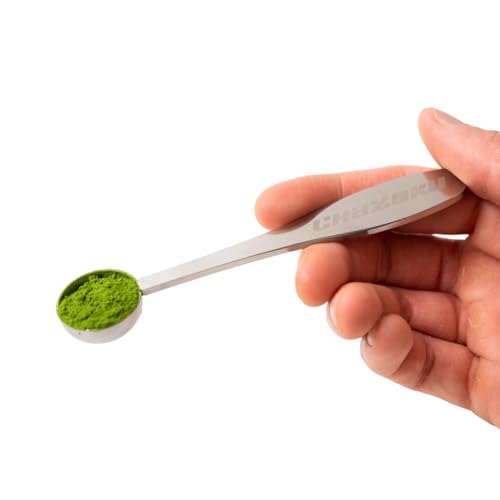
Measures 1.5 grams per level scoop, allowing two scoops to hit the ideal three-gram serving for stronger cups.
The Chazoku spoon holds 1. 5 grams per level half-teaspoon, offering a different calibration than one-gram models. Two level scoops yield exactly three grams, landing perfectly in the recommended range for usucha or robust lattes.
Made from stainless steel rather than bamboo, it won’t crack, warp, or absorb lingering odors, and the slim four-inch profile fits directly inside most standard matcha tins.
This higher capacity suits drinkers who prefer a stronger, more concentrated cup without doing mental math. It pairs well with fine hojicha or other dense powders beyond just matcha.
The trade-off is reduced flexibility for very light servings; if someone only wants a delicate one-gram cup, they must carefully under-fill the bowl rather than relying on a natural level scoop, which slightly defeats the purpose of a precision tool.
|
6
|
2 Pcs Brown Bamboo Matcha Scoop Japanese Chashaku Hooked Green Tea Spoon Japanese Bamboo M |

Traditional bamboo chashaku design lets users measure matcha per cup using authentic heaped portions rather than strict grams.
This package includes two brown bamboo scoops, each 18. 5cm long. Unlike rigid metal spoons, the traditional chashaku shape relies on a gentle heap to determine the dose, typically delivering around one gram.
The organic bamboo material ensures no metallic taste transfers to delicate tea, answering the measurement question through heritage technique rather than stamped metric lines.
Bamboo scoops excel in traditional ceremonies where mindfulness and tactile feedback matter as much as precision. Having two allows keeping one dedicated solely to matcha while using the other for spices. The major limitation is maintenance; bamboo absorbs moisture and can harbor mold if not dried thoroughly.
They require far more careful upkeep than stainless steel alternatives to maintain their smooth, burr-free finish over time.
|
7
|
2 PCS Matcha Tools, Stainless steel Matcha Strainer |

Pairs a five-milliliter measuring spoon with a strainer, ensuring the measured matcha per cup is completely clump-free.
This set combines a stainless steel strainer with a matching five-milliliter spoon. Five milliliters of lightly packed matcha approximates the ideal one-to-two-gram serving, addressing dosage through a two-step process: measure first, then sift.
The ultra-fine mesh catches compressed clumps formed during storage, guaranteeing that whatever lands in the bowl is both accurately portioned and aerated for whisking.
The integrated approach benefits users who struggle with gritty textures even when their gram measurements are correct. Hanging holes save counter space in small kitchens, though buying a combined set might feel redundant if you already own a quality sieve.
The spoon itself is functional but basic, lacking the refined ergonomic curves found on dedicated standalone matcha measuring tools.
|
8
|
Ryetvok Golden Stainless Steel Matcha Measuring Spoon 1 Gram (1/2 Teaspoon) – Precise Scoo |

The golden stainless steel bowl is strictly sized to hold exactly one gram, preventing accidental over-pouring per cup.
Ryetvok crafted this golden spoon to hold exactly one gram (half a teaspoon), enforcing strict portion control through rigid dimensions. It solves the dosage problem by making it physically impossible to accidentally scoop three grams when aiming for one.
The comfortable grip and shaped bowl prevent messy spills during transfer, handling daily use without the corrosion risks associated with cheaper plated metals.
This scoop fits beautifully into kitchens where brass or gold accents dominate. Its versatility extends smoothly to cocoa powder or supplement dosing beyond tea.
One drawback is the highly reflective surface, which shows water spots immediately; while top-rack dishwasher safe, hand drying preserves the pristine look better than letting hard water minerals etch into the polished finish over months.
|
9
|
1 Gram Stainless Steel Matcha Scoop, Measuring Spoon for Matcha Tea Powder |
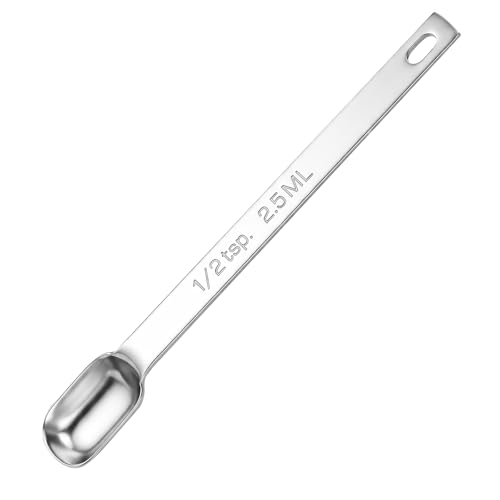
WLLHYF engineered this rust-resistant scoop to measure exactly half a teaspoon, standardizing how much matcha goes per cup.
This stainless steel scoop measures exactly half a teaspoon, delivering a consistent one-gram serving via an ergonomic handle that reduces hand fatigue. It replaces variable pinches with a fixed, reliable volume, and the rust-resistant construction ensures longevity in humid environments near boiling kettles.
It functions purely as a precision instrument for fine powders without unnecessary decorative elements.
I’d recommend this straightforward tool for pragmatists who want reliability without paying for fancy finishes or brand prestige. It transitions easily to espresso powder or protein additives when needed. The main limitation is its generic appearance; it looks identical to many bulk kitchen spoons.
Users who enjoy the ritualistic aspect of tea prep might find its utilitarian vibe uninspiring compared to artisanal options.
|
10
|
3 Pcs Matcha Spoon, Bamboo Matcha Scoop Japanese Chashaku Hooked Tea Leaf Sticks Tea Whisk |

Offers three distinct bamboo scoops, letting users dedicate one specific size to dial in their perfect matcha per cup ratio.
This set provides three handcrafted bamboo chashaku scoops with natural stripes and smooth finishes. Having multiple scoops allows experimentation to find the exact heap size that yields your preferred gram count.
Traditional shapes naturally limit volume, preventing heavy-handed pours common with deep metal spoons, and the lightweight design makes them easy to store inside narrow tins.
Three distinct colors let households separate matcha tools from coffee or spice scoops to avoid cross-contamination. They travel exceptionally well for enthusiasts who brew away from home.
The inherent fragility of bamboo remains the primary concern; dropping them on hard tile can snap thin necks, unlike resilient stainless steel alternatives that survive accidental falls without structural damage.
These ten tools demonstrate that answering ‘how much matcha per cup’ requires more than knowing a number; the right scoop enforces that number physically. Whether opting for rigid stainless steel or traditional carved bamboo, eliminating guesswork transforms the brewing process.
With measurement solved, applying it correctly becomes the final step toward better flavor.
Turning One Gram Into The Perfect Brew
Accurate measuring is only the first step. How that single gram interacts with water temperature and whisking technique determines the final result. Even perfect measurements fail if the brewing method ignores basic chemistry.
Heat filtered water to roughly 175 degrees Fahrenheit, avoiding a rolling boil that scorches delicate green tea leaves.
Place your precisely measured one or two gram scoop into a dry, pre-warmed bowl or wide mug.
Add just two ounces of the hot water initially to create a thick, concentrated paste without dry clumps remaining.
Whisk vigorously in a rapid zigzag motion until a fine layer of jade-green microfoam covers the entire surface.
Top off the bowl with the remaining six ounces of water or steamed milk for a standard latte preparation.
Temperature control matters as much as gram count. Boiling water burns matcha, releasing harsh tannins that make even a perfectly measured cup taste bitter; keeping the kettle around 175°F preserves the amino acids responsible for umami sweetness.
Hydrating the measured gram slowly with a tiny splash first forces particles to suspend evenly, preventing the floating clumps caused by dumping water directly onto dry powder. Whisking should come from the wrist to create microfoam rather than large bubbles.
Mastering this sequence turns accurate measurement into a consistently excellent beverage.
Common Mistakes That Skew Your Matcha Dose
Even with a dedicated scoop, habits can quietly alter how much powder ends up in the cup. Environmental factors and handling techniques introduce hidden variables that affect consistency.
- Always scoop from a freshly opened or recently sifted tin to prevent compacted density variations.
- Never tap the spoon against the rim, as this settles powder and accidentally increases the gram weight.
- Store your measuring scoop completely dry to prevent matcha from sticking and building up residue over time.
- Use a level scrape across the tin edge if your specific recipe calls for exactly one gram flat.
- Avoid using the same scoop for sugar or spices without washing it thoroughly between different ingredients first.
Humidity plays a surprisingly large role in how matcha behaves inside the tin. In damp climates, fine powder absorbs moisture and compresses; a scoop that held one gram last month might hold 1. 3 grams today if the powder has clumped densely. This is why sifting before measuring remains non-negotiable.
Tapping the spoon packs more product than intended, the goal is a light, airy fill. Also, leaving a scoop buried in the container exposes it to constant moisture; pulling it out for use and wiping it down afterward preserves both the tool and the remaining supply better than lazy storage habits.
One to two grams, or roughly half a teaspoon, is exactly how much matcha per cup you need for a balanced brew. Grab a dedicated one-gram scoop and stop guessing with oversized kitchen spoons that ruin the flavor.
Once you lock in that precise measurement, focus on lowering water temperature below boiling; that single adjustment paired with accurate dosing eliminates bitterness almost entirely. Try measuring your next batch with intention and notice how dramatically the taste shifts when the ratio finally clicks into place.

- 10 Best Battery For Generator Ev Battery Bank Marine 2026 - October 27, 2026
- 10 Best Battery For Generator Ev Battery Bank Lto 2026 - October 27, 2026
- 10 Best Battery For Generator Ev Battery Bank Low Voltage 2026 - October 27, 2026