Thermostat Power Options: Honeywell Battery Types and Nest Packs
If your Honeywell thermostat screen goes dark or starts showing erratic temperatures, the battery is usually the culprit. It’s easy to assume you’re facing a complex wiring issue, but the fix is often straightforward.
In this guide, I’ll help you figure out whether your model needs standard AA batteries or a specialized internal rechargeable unit. There’s also frequent confusion with Nest thermostats, which require specific lithium replacements. Pinpointing your exact device type ensures you grab the right power source on the first try.
Identifying Your Thermostat’s Power Needs
Honeywell thermostats aren’t one-size-fits-all when it comes to power. Older manual dials typically run on standard alkalines, while newer smart versions often rely on internal rechargeable cells. Mixing these up leads to buying the wrong parts and unnecessary frustration.
My advice is to locate your exact model number before purchasing; it saves both time and money during the repair process.
Common Honeywell Battery Types
| Thermostat Type | Battery Style | Replacement Frequency |
|---|---|---|
| Manual Dial Models | AA Alkaline | Every 1-2 Years |
| Basic Digital Screens | AA or AAA | Every 6-12 Months |
| Smart Wi-Fi Units | Internal Li-Polymer | Rarely (3-5 Years) |
Most standard Honeywell programmable thermostats use removable AA batteries, which you can usually access behind the front panel. However, users sometimes mistake Honeywell smart hubs for devices needing soldered components. Generally, consumer-grade Honeywell units prioritize easy maintenance. I’d recommend checking the backplate label for specific voltage ratings.
If you see low-battery warnings frequently, switching to high-quality lithium alkalines is a smart move. Steer clear of cheap carbon-zinc batteries, as they tend to leak corrosive fluid.
Properly disposing of old batteries helps prevent environmental harm, and always double-check the polarity indicators inside the compartment, inserting them backward causes immediate malfunction, though rarely permanent damage.
Power Solutions For Smart Thermostats
While many Honeywell models stick to standard AAs, some smart variants look surprisingly like Nest designs. Users often confuse the brands or seek upgrades for older smart units. The products below address niche replacement needs for compatible smart thermostats, offering high-capacity energy storage for devices that demand precise lithium-polymer specs.
Please ensure compatibility before purchasing any specialized battery kit.
|
1
|
For Nest Thermostat Battery 3rd Generation: TL284443 Battery Replacement | for Nest Learni |

Provides a 650mAh Li-Polymer cell specifically designed for Nest Gen 3 hardware compatibility.
This TL284443 battery targets Nest Learning Thermostat third-generation models like the T3007ES. It offers 650mAh capacity using safe lithium polymer chemistry, and its compact size fits precisely within tight housing constraints. Included tools assist with delicate removal processes. Voltage remains steady at 3.
7V throughout discharge cycles, and protection circuits help prevent overheating during installation. At just 12. 1 grams, the weight is minimal.
This option is ideal for DIY enthusiasts replacing dead internal batteries, though it requires careful handling due to small connectors. It’s not suitable for standard Honeywell AA slots. Performance tends to optimize after several charge cycles.
Warranty coverage varies by seller reputation, so ensure your model matches the part numbers exactly before ordering.
|
2
|
RRUHHK TL284443 Battery, 3.7V 780mAh (2026 Upgrade) Higher Capacity Battery Replacement fo |

Offers upgraded 780mAh capacity with a comprehensive repair toolkit for multiple Nest generations.
The RRUHHK upgrade boosts capacity to 780mAh for longer runtime and is compatible with both second and third-generation Nest units. It includes magnetic screwdrivers and adhesive strips for secure mounting. Safety certifications cover overcharging and short-circuit risks, and zero-cycle fresh stock guarantees maximum initial performance.
It’s designed for easy integration into existing smart systems.
This kit is perfect for users wanting extended battery life, as the included tools simplify difficult disassembly tasks. Note that the higher density might generate slightly more heat. You should verify fitment against your specific serial number.
The twelve-month warranty provides peace of mind, making it best for those comfortable with minor electronics work.
|
3
|
OHZHAO Upgraded 980mAh TL284443 Battery, High Capacity Li-Polymer Replacement Battery for |

Delivers massive 980mAh capacity for extended operation in compatible Nest learning thermostats.
OHZHAO’s 980mAh battery represents peak capacity for this form factor, fitting T3007ES and similar second/third-gen models. High-density cells ensure stable voltage output, while built-in microchips manage thermal regulation effectively. CE and FCC certifications confirm safety standards, and repair tools facilitate precise installation procedures. The durable construction withstands repeated cycling usage.
This unit is suited for homes with frequent power fluctuations, though the larger size requires checking physical clearance. Premium grade materials enhance longevity expectations, and customer support reportedly responds quickly to inquiries. The money-back guarantee reduces purchase risk, making it ideal for maximizing uptime between charges.
|
4
|
Cameron Sino New 380mAh Replacement Battery for Nest A0013, Learning Thermostat 2nd Genera |
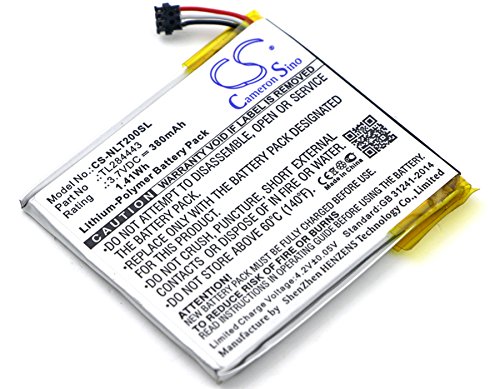
Camron Sino provides a reliable 380mAh option for various Nest E and Gen 3 models.
Cameron Sino focuses on reliability rather than extreme capacity. The 380mAh rating suits lighter usage patterns and is compatible with Nest E and select third-gen units. Standard lithium-polymer composition ensures predictable discharge curves. Minimalist packaging reflects straightforward engineering goals, making it suitable for basic replacement needs without extra features.
This is a good option for budget-conscious consumers avoiding premium prices, though the lower capacity means shorter intervals between charges. The lack of bundled tools requires separate acquisition. However, the brand’s trusted history supports consistent quality control.
Its simple design aids quick identification during sales, making it best for occasional backup or light-duty use.
|
5
|
CHEELBORSI TL284443 Battery for Nest Learning Thermostat 2nd 3rd Generation, Compatible wi |

CHEELBORSI balances 1000mAh capacity with robust safety protections for multi-model compatibility.
This CHEELBORSI unit pushes limits with 1000mAh capacity and supports extensive model lists including the T4000ES. Intelligent chips monitor current flow continuously, while overvoltage protection safeguards sensitive motherboard components. A five-hundred cycle lifespan promises durability, and included tools streamline the tricky opening process.
The high watt-hour rating extends daily usability significantly.
This is an excellent choice for heavy-use environments, but maximum capacity demands strict adherence to cooling guidelines. There is a risk of swelling if improperly installed. Warranty terms clarify liability boundaries clearly, and responsive support handles technical questions efficiently. I’d prioritize professional help if you are unsure about connections.
|
6
|
For Nest Thermostat Battery 3rd Generation: TL284443 Battery Replacement | for Nest Learni |

Specifically tailored for Nest Thermostat E Gen 3 with standardized 650mAh performance metrics.
Designed explicitly for Nest E Gen 3 configurations, this battery matches original factory specifications closely. Sixty-five milliamp-hours offer balanced efficiency, and the lithium polymer structure resists memory effects. Compact dimensions align perfectly with chassis slots, while a basic tool set assists non-expert installers. Consistent voltage delivery maintains display clarity.
This is a targeted solution for specific error codes, with limited flexibility beyond designated models. Capacity is average compared to newer alternatives, but straightforward instructions aid successful completion. It’s a cost-effective approach for targeted repairs that ensures seamless reintegration into smart ecosystems.
|
7
|
MPF Products 200mAh TL363844 Battery Replacement Compatible with Nest Learning Thermostat |

MPF Products restores legacy first-generation Nest functionality with precise 200mAh calibration.
Tailored exclusively for first-generation Nest thermostats, this small 200mAh footprint matches historical specs. The TL363844 part number ensures accurate fitting, and the lightweight design preserves original balance dynamics. An installation tool simplifies fragile connector access, and a one-year warranty covers manufacturing defects thoroughly.
It reliably restores responsiveness to aging smart devices.
This is essential for maintaining obsolete smart home tech, though low capacity limits modern feature usage. Fragile internals demand gentle handling care. Niche availability makes early purchase wise. It’s perfect for collectors or stubborn holdouts, reviving utility without expensive full-unit replacement costs.
|
8
|
Upgraded Replacement Battery for TL284443【450mAh】 Battery Compatible with Nest Learning Th |

Upgraded 450mAh cell enhances stability for second and third-generation Nest learning models.
Balancing cost and performance with 450mAh capacity, this cell calibrates fully after three complete cycles. Premium cells reduce degradation rates noticeably, and smart IC chips regulate temperature spikes safely. Compatible across a broad range of T-series models, the repair tools minimize accidental component damage risks.
Stable power output supports continuous connectivity features.
This is a solid mid-range option for general upgrades. Moderate capacity meets typical household demands, though an initial calibration period affects early accuracy perceptions. Robust protection mechanisms extend overall service life. It represents good value for average users and serves as a reliable alternative to ultra-high-capacity variants.
|
9
|
WRUMI for Nest Thermostat 2nd Gen Battery: TL284443 Battery Replacement |
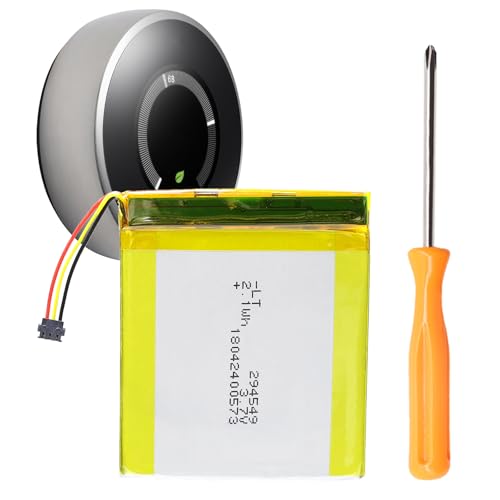
WRUMI supplies dependable 650mAh replacements optimized for second-generation Nest hardware structures.
Focusing on second-generation compatibility with a proven 650mAh spec, this battery uses no-memory-effect chemistry allowing flexible charging habits. Overcurrent protection shields against electrical surges, and precise sizing avoids strain on internal clips. Tool inclusion eases the tedious prying task.
A consistent discharge profile keeps sensors reading true, and durability tests suggest resistance to vibration stress.
This is a reliable pick for aging gen-two devices, though its specific focus excludes newer generation models. Standard capacity suffices for most climates, and easy installation guides accompany each package. Warranty details should be verified prior to buying, as it maintains system integrity through regular operational cycles.
These specialized batteries serve smart thermostat niches, particularly for Nest-compatible hardware. Standard Honeywell units rarely need such components. Always verify your model number before ordering, as correct selection prevents unnecessary complexity and expense. When dealing with traditional dial-based controls, I suggest focusing on simplicity.
Executing The Battery Swap Safely
Replacing batteries in Honeywell thermostats requires precision and patience. Rushing leads to broken tabs or lost screws. Follow systematic steps to maintain device integrity: disconnect power sources where applicable and handle electronic contacts gently to avoid oxidation issues. If necessary, document wire positions before removing faceplates.
Turn off HVAC power at the breaker box.
Gently pry off the thermostat front panel.
Locate the battery compartment on the rear plate.
Remove old batteries noting positive/negative orientation.
Insert new AA batteries matching polarity marks.
Reattach the panel and restore power supply.
- Never force plastic clips open aggressively.
- Avoid touching circuit boards with bare hands.
- Use only recommended battery chemistries listed.
- Check expiration dates on sealed packs.
- Dispose of leaking batteries responsibly.
- Wait ten seconds after power restoration.
Troubleshooting Post-Replacement Issues
Sometimes swapping batteries does not resolve underlying problems. Persistent errors indicate deeper faults, so assess symptoms methodically before assuming total failure. Contact issues often mimic battery depletion signs, and calibration drift occurs after prolonged outages. Recognize when professional intervention becomes unavoidable.
Screen Remains Blank
If the display stays dark, check contact corrosion first. Clean terminals with isopropyl alcohol swabs and inspect for bent spring loads preventing connection. Test batteries in another device to rule out defects. Loose wires behind the wall plate cause intermittent power loss, so secure all terminal screws tightly.
Reset the unit according to manufacturer manuals. If darkness persists, it suggests mainboard failure requiring expert diagnosis.
Erratic Temperature Readings
Fluctuating temps often stem from poor sensor seating. Ensure the thermostat sits flat against the wall, as dust accumulation insulates sensors causing false highs. Gently clean vents with compressed air blasts and recalibrate settings via menu options if available.
External heat sources like lamps skew readings nearby, so relocate furniture blocking airflow paths. Software glitches occasionally persist; perform a hard reset. Hardware degradation necessitates eventual unit replacement soon.
Replace standard AA batteries in most Honeywell thermostats by accessing the rear panel. Start by turning off power, then swap cells carefully. If issues persist, inspect contacts for corrosion. For smart units, verify compatibility before buying specialized kits. Take action today by checking your current battery age.

- Marine Chargers and Backup Batteries: 9 Options Compared (2026) - October 27, 2026
- LTO Cells vs. SLA Generator Batteries: 5 Options Compared (2026) - October 27, 2026
- 12V/24V Backup Batteries and the EcoFlow DELTA Pro 3 (2026) - October 27, 2026