Is A Battery Ac Or Dc Current?
A battery can power a camera, toy, or vehicle without being plugged into a wall. That raises a practical question: is the current coming from the battery AC or DC?
The distinction matters when matching a battery, charger, or adapter, because their inputs and outputs may use different kinds of current. A battery supplies direct current, while a charger may take alternating current from a household socket and convert it.
The explanation below clarifies the difference and compares specific charger options as examples.
Is Battery Current AC or DC?
Recommended Products
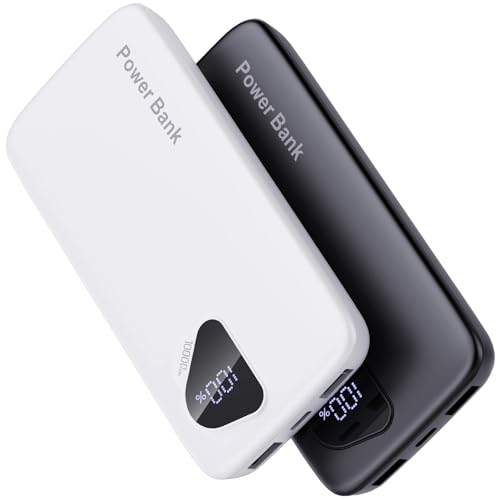

Batteries supply direct current, commonly shortened to DC. Their positive and negative terminals maintain fixed polarity during ordinary operation, so current flows in one direction through a connected circuit. Household mains power, by contrast, is alternating current, or AC, which repeatedly changes direction.
Understanding that distinction explains why a battery charger can have both AC and DC in its description.
A battery stores energy chemically and delivers electrical energy as DC. In a typical battery-powered device, current leaves the positive terminal, passes through the circuit, and returns to the negative terminal. The direction does not periodically reverse as it does with AC mains power.
Battery voltage can rise or fall as the battery charges or discharges, but that change does not make its output AC. Some electronic systems convert battery DC into AC internally, such as an inverter powering household equipment. That conversion happens in the device, not in the battery itself.
Rechargeable batteries also receive DC during charging, although the charger may first draw AC from a wall socket. The charger converts and regulates that incoming power to suit the battery chemistry and configuration.
Therefore, check the battery or device specifications for voltage, chemistry, polarity, and charging requirements rather than relying only on an adapter’s broad AC/DC label.
Where AC And DC Appear
| Part | Typical current | What to verify |
|---|---|---|
| Wall outlet | AC input | Regional voltage and plug |
| Battery terminals | DC output | Voltage and polarity |
| Charger output | Regulated DC | Chemistry and cell count |
| Inverter output | Converted AC | Waveform and rated power |
Charger Picks For Matching Battery DC
Recommended Products

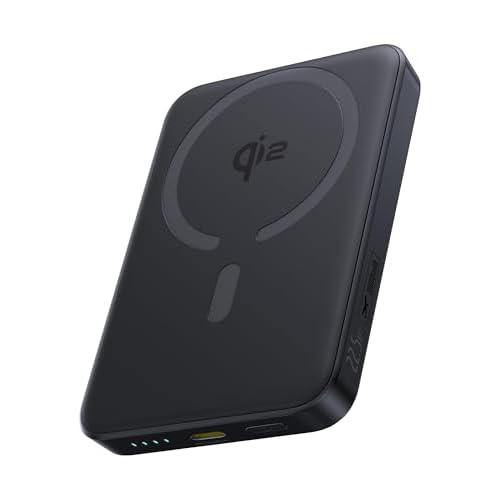
These products illustrate why charger labels can mention both AC and DC. Most accept AC from a wall outlet and deliver DC to a device or battery, while the SKYRC model also accepts DC input. The right match depends on battery chemistry, series count, output voltage, current, connector, and polarity.
Treat the listed compatibility as a starting point, then confirm the exact requirements printed on your battery or device.
|
1
|
21V 1A Universal Lithium Battery Charger AC/DC Adapter Power Supply Cord 24Volt 1000mA 800 |

Its 21V DC output demonstrates how a wall-powered adapter converts AC input for a compatible device or pack.
This universal adapter lists 100-240V AC input and 21V, 1A output, making the AC-to-DC distinction explicit. Its 5. 5 × 2. 5/2. 1mm plug options are intended for compatible equipment, including cameras and monitors. The title mentions several possible output ratings, but the listed specification identifies 21V1A.
That makes checking the actual label and connector essential before connecting it to a battery-powered device.
The stated protection features include overvoltage, overcurrent, temperature, overload, and short-circuit protection. Those features do not establish compatibility with every battery pack, and the listing provides no price or rating data. It is best considered for equipment whose manufacturer specifies a 21V DC supply and matching polarity.
Do not assume that an adapter described for battery packs can safely charge every rechargeable chemistry.
|
2
|
24V Power Cord for Hypervolt Massage Gun HPI5300000100 53000 001-00 Charger for Hyperice 4 |

The Hypervolt replacement takes 110-240V AC and supplies 24V DC, while clearly excluding several versions.
This replacement charger is listed for specified Hypervolt massage devices and related models. Its input accepts 110-240V AC, while its stated output is 24V DC. That is a straightforward example of a charger converting wall current into the DC required by a device.
The title includes several model identifiers, so matching the exact model number matters more than the broad Hypervolt name.
The listing explicitly says it does not fit 16. 8V or 18V versions, Hyperice Vyper, or Hyperice Go. That restriction is important because similar-looking devices can require different supplies. The stated ETL, CE, FCC, and RoHS listings are product claims, not a substitute for checking the device label.
This option suits owners who can verify the specified 24V requirement and connector.
|
3
|
Arkare 5V 1A DC Power Supply Adapter 5W AC/DC Charger AC 100V-240V to D C 5 Volt 1Amp 0.5A |

Eight interchangeable tips accompany a 5V DC output, showing that adapter output remains DC despite AC wall input.
Arkare’s adapter accepts 100-240V AC and provides up to 5V, 1A DC output. It includes eight tips, including Micro-USB, Type-C, and several barrel connectors. Its stated center-positive polarity and maximum 5W output make the specifications particularly important for camera, monitor, and small-electronics use.
The product is a power adapter, not a universal battery charger for arbitrary battery packs.
The listing says devices must require 5V and no more than 1A, and warns that it is not a phone or laptop charger. The range of included tips helps with connector fit, but a matching plug alone does not guarantee electrical compatibility.
Check voltage, current needs, and polarity on the device label. It best suits low-power equipment with confirmed 5V DC requirements.
|
4
|
TalentCell AC/DC 12V LiFePO4 Battery Charger, 14.4 14.6V/1.5A Output with Dual Alligator C |

This LiFePO4 model converts AC input to 14.4-14.6V DC for specified four-series-cell battery packs.
TalentCell’s charger is designed for 12V or 12. 8V LiFePO4 packs, with 100-240V AC input and 14. 4-14. 6V DC output at 1. 5A. Dual alligator clips provide a direct connection, with red assigned to positive and black to negative.
The included LED indicates charging in red and a charged state in green. These details show why battery chemistry and configuration determine the required DC charging output.
The manufacturer specifically warns that this model cannot charge a three-series 12V lithium-ion pack. It also lists compatibility with certain sealed lead-acid batteries, but users should verify their battery’s charging requirements before relying on that claim. Clip connections require careful polarity checks to avoid damage.
This charger fits owners of compatible four-series LiFePO4 packs who need a modest 1. 5A charge rate.
|
5
|
TalentCell AC/DC 12.6V/2A Lithium Battery Charger for 3S 12V Rechargeable Li-ion Battery P |
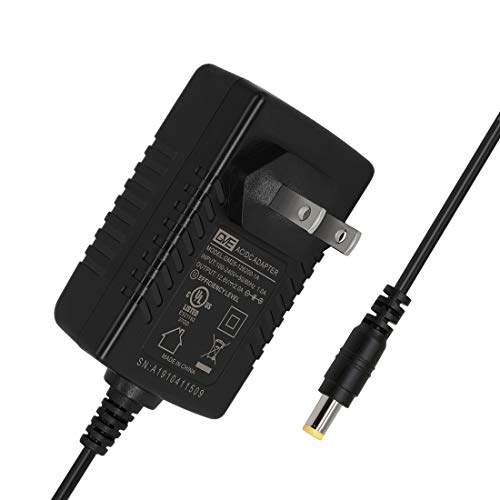
Its 12.6V, 2A DC output is specified for three-series lithium-ion packs, unlike the LiFePO4 model.
This TalentCell charger takes 100-240V AC and outputs 12. 6V DC at 2A. It is described for 3-series lithium-ion batteries and compatible TalentCell models. The 5. 5 × 2. 1mm barrel connector is center positive, so both connector size and polarity must match.
Its red and green LED indicates charging and charged status, respectively. This is a specific charger, not a general answer for all batteries.
The listing says it cannot charge a hoverboard, despite the broad 12V wording in its title. That warning reinforces the need to match the pack’s chemistry and series configuration instead of choosing by nominal voltage alone. Its 2A rating may not suit every compatible-looking pack.
It is most appropriate for owners whose battery documentation specifies a 12. 6V charger and matching connector.
|
6
|
Wefomey Universal Power Supply Variable 3V~24V 3A 72W Multi Voltage Adapter | Adjustable A |
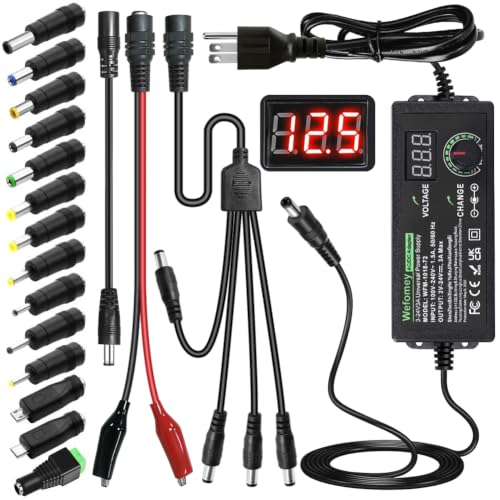
An adjustable 3-24V DC output makes this adapter a flexible example of converting wall AC to selected DC voltage.
Wefomey’s variable supply accepts 100-240V AC and offers adjustable 3-24V DC output, up to 3A and 72W. An LCD displays the selected output voltage, and the package includes multiple tips, polarity conversion, clips, and a splitter.
This flexibility helps power compatible devices, but it does not make the unit a suitable charger for every battery. Batteries need charging profiles matched to their chemistry.
The listing notes voltage tolerance of ±5% and provides a default center-positive setting, with a cable to reverse polarity. Users must select the correct voltage and connector before connecting equipment. The splitter is for powering multiple devices, not evidence that several batteries can be charged safely together.
This option suits technically confident users who need adjustable DC for compatible electronics or projects.
|
7
|
AC-DC Battery Charger Replacement for Li-ion Li-Po 2S 8.4V 2A Wall Socket |

This replacement specifies AC input and an 8.4V, 2A output for compatible two-series lithium packs.
The listing identifies this wall charger as a replacement for 2S Li-ion or Li-Po batteries, with 100-240V AC input and 8. 4V, 2A output. Its four-foot cable and portable form address practical placement and travel.
The AC/DC wording describes the conversion from household AC to charging output; the battery itself still supplies DC during use. The exact connector and charging termination details are not supplied in the provided listing.
Compatibility claims are broad, and the listing gives limited detail about connectors, indicators, or protection behavior. Confirm the battery chemistry, two-cell series configuration, polarity, and required connector before use. A nominally similar battery may need a different charging arrangement. This charger is best for users replacing an 8.
4V, 2A supply for a specifically compatible 2S pack.
|
8
|
UpBright 16.8V AC/DC Adapter Alligator Clips Smart Charger Compatible with 14.8v – 16.8v L |

Alligator clips and a 16.8V DC rating illustrate direct charging connections for compatible four-series lithium-ion packs.
UpBright’s charger is listed for 14. 8-16. 8V, four-series lithium-ion packs and includes alligator charging clips. It accepts 100-240V AC and offers versions described as 2A or 2. 5A, with overvoltage, overcurrent, and short-circuit protection claims.
Its output demonstrates that a charger can convert AC mains into DC suited to a particular battery range. Verify which current version is actually supplied.
The listing’s compatibility range does not replace checking the pack’s chemistry, cell count, maximum charging voltage, and polarity. Clip leads also require a secure connection and correct terminal orientation. The product provides a 30-day refund and 24-month exchange according to its listing, but no customer rating data is supplied here.
It suits owners of confirmed four-series lithium-ion packs needing a clip-based charger.
|
9
|
SKYRC B6AC Neo Balance Charger 200W DC / 60W AC | Tiny Smart Charger for RC Battery, LiPo/ |

The B6AC Neo accepts AC or DC input and charges several chemistries with configurable modes and cell counts.
SKYRC’s B6AC Neo is a programmable balance charger with dual AC/DC input, rated for up to 60W on AC and 200W on DC. It supports multiple lithium chemistries, nickel-based batteries, and lead-acid packs across stated cell ranges. Charge, discharge, and balance modes make it different from fixed-voltage wall adapters.
Its battery checker displays individual cell voltages when a balance port is connected.
The broad support is useful only when users select the correct battery type, cell count, and settings. Incorrect configuration can damage a battery, so the pack’s documentation remains essential. The listed 10A maximum current and DC power rating also depend on the input and operating conditions.
This charger fits RC users who need adjustable charging and balancing rather than a single-purpose replacement cord.
The examples show that AC/DC labels often describe two sides of a charger: AC enters from the outlet, and regulated DC leaves for a compatible device or battery. Fixed-output adapters suit specific equipment, while adjustable or balance chargers require more careful setup. No product should be selected by voltage alone.
Battery chemistry, series count, polarity, connector, and charging current all matter.
Match The Charger To The Battery
Recommended Products


Once the current types are clear, the practical decision is whether a charger matches the exact battery. Similar voltage labels can conceal different chemistries and cell arrangements. Confirming several specifications before connection reduces the risk of charging errors and damaged equipment.
- Read the battery label for chemistry, nominal voltage, cell or series count, and permitted charging voltage.
- Confirm the charger’s output is DC and matches the battery manufacturer’s specified charging voltage.
- Compare the charger’s current rating with the battery documentation; a higher number is not automatically appropriate.
- Match connector dimensions and polarity, including center-positive or center-negative barrel plugs.
- Use a charger specifically intended for the battery chemistry, such as LiFePO4 or lithium-ion.
- Stop if labels are missing, contradictory, or incompatible; ask the battery or device manufacturer.
Specifications That Must Agree
| Specification | Why it matters | Where to check |
|---|---|---|
| Chemistry | Charging profile differs | Battery label or manual |
| Series count | Sets charge voltage | Pack documentation |
| Polarity | Prevents wrong connection | Diagram or markings |
| Current | Controls charge rate | Battery specifications |
| Connector | Ensures physical fit | Device and charger |
Charge And Store Batteries Carefully
Recommended Products


A correctly matched charger still needs sensible use. Charging conditions, cable condition, and storage habits affect reliability, especially with rechargeable lithium packs. Follow the battery maker’s instructions rather than treating an adapter indicator as a complete safety check.
Inspect the battery, charger, and cable for swelling, cracks, exposed wires, or unusual heat before each charging session.
Place the battery on a stable, clear surface and use the charger specified for its chemistry and cell configuration.
Connect the correct plug or clips with polarity checked, then connect the charger to its AC source as directed.
Stay nearby during charging, and disconnect the equipment if it becomes unusually hot, smells abnormal, or behaves unexpectedly.
When charging finishes, unplug according to the manufacturer’s instructions and store the battery in its recommended conditions.
Indicator lights are useful, but they do not prove that a battery and charger are compatible. A green light may mean the charger has reached its programmed threshold; it cannot verify that the selected chemistry or cell count was correct.
Likewise, a charger listing protection features cannot prevent every misuse or fault. Retire damaged cables and stop using batteries that swell, leak, or become unusually hot. Avoid improvising adapters or reversing polarity based only on connector fit.
For rechargeable packs, use the manufacturer’s charging guidance and keep the model number available when buying a replacement. If the battery label is unreadable, identify the pack through its manufacturer before applying power. That small check is more dependable than guessing from a device’s advertised voltage.
A battery supplies DC current; a charger may accept AC from a wall outlet and convert it to DC for charging. Today, check the battery label for chemistry, voltage, and series count, then compare those details with the charger’s output before connecting anything. A matching plug alone is not enough.
When the specifications disagree or remain unclear, leave the battery disconnected and confirm the correct charger with the device or battery manufacturer.

- 10 Best Battery For Generator Ev Battery Bank Marine 2026 - October 27, 2026
- 10 Best Battery For Generator Ev Battery Bank Lto 2026 - October 27, 2026
- 10 Best Battery For Generator Ev Battery Bank Low Voltage 2026 - October 27, 2026