Battery Ah Ratings: Capacity Labels vs. Guaranteed Runtime
If you are looking at a battery marked 300Ah, the number is telling you about its charge capacity, not a guaranteed number of hours. Ah means amp-hours: a way to describe how much electrical charge the battery can deliver over time.
This guide breaks down what 300Ah means, how it relates to watt-hours and runtime, and what to check before choosing a battery for your setup.
What Ah Measures in a Battery
The simplest way to read an Ah rating is to think of it as current delivered over time. In theory, a 300Ah battery could supply 300 amps for one hour, 30 amps for ten hours, or 10 amps for about 30 hours before it is fully depleted.
Amp-hours give you a starting point for estimating runtime, but the result depends on the device’s current draw, the battery voltage, usable capacity, and operating conditions. As a rough example, a device drawing 10 amps could run for about 30 hours from a 300Ah battery under ideal conditions.
A 300-watt load on a 12-volt battery draws about 25 amps, which suggests roughly 12 hours before accounting for losses or reserve capacity. The basic calculation is capacity divided by current draw, though real-world results are usually shorter.
Why Capacity Rating Matters
A higher Ah rating generally means longer operation between charges, but it also usually means a larger, heavier, or more expensive battery. The right capacity depends on the loads you expect to run and how often you can recharge.
Typical Devices by Capacity Need
| Capacity Range | Common Uses | Example Runtime |
|---|---|---|
| 10-30 Ah | Portable tools, LED lighting | 4-12 hours |
| 50-100 Ah | Camping, small solar systems | 1-3 days |
| 200-300 Ah | RV, small cabin power | 3-7 days |
| 500+ Ah | Marine, full-time RV living | 1-2 weeks |
A 50Ah battery may be enough for modest loads such as LED lighting and a small fridge over a short trip. An RV running a refrigerator, water pump, and entertainment equipment may call for 200Ah to 300Ah, depending on usage. Larger marine systems can need still more capacity.
I would list each load, estimate its daily use, and leave some reserve instead of choosing a battery from the Ah number alone.
Batteries With High Capacity For Extended Runtime
The products below show how Ah ratings translate across very different jobs, from mobility equipment and cordless tools to off-grid and electric-bike use. I would compare capacity alongside voltage, battery chemistry, compatibility, charging requirements, and the conditions in which the battery will operate.
|
1
|
Renogy 300Ah LiFePO4 Lithium Battery, 12V Mini Size Deep Cycle Battery | 200A BMS, Deep Cy |
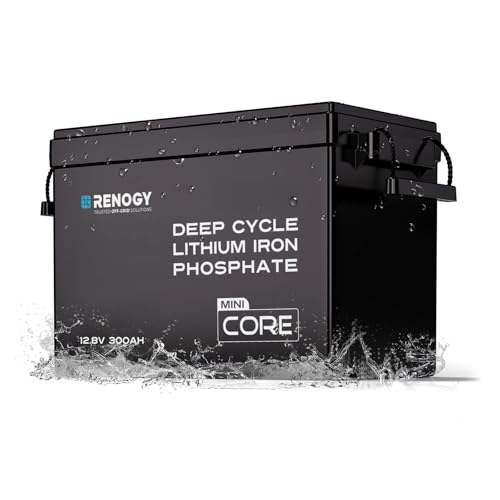
Its 300Ah rating is aimed at long-duration 12V use, such as RV, solar, cabin, and marine systems where available energy and weight both matter.
Renogy’s 300Ah LiFePO4 battery pairs a high-capacity 12V format with a compact design and a listed weight of 55. 1 pounds. The product description highlights Grade-A prismatic cells, more than 5,000 cycles at 80% depth of discharge, and a 200A battery management system.
That BMS is designed to address overcharging, over-discharge, excess current, short circuits, and charging or use in very cold conditions.
My read is that this is best suited to a fixed or semi-permanent setup where the extra capacity can reduce charging frequency. The 15. 12-by-7. 64-by-9.
96-inch dimensions may help in a tight RV or solar compartment, but I would still verify clearances, cabling, charger compatibility, and the system’s continuous current demands before buying. LiFePO4 also costs more upfront than many lead-acid alternatives.
|
2
|
Interstate Batteries 12V 35Ah SLA AGM Deep Cycle Battery Insert Terminal |

The 35Ah rating fits smaller deep-cycle applications such as mobility equipment, where sealed construction and terminal compatibility may matter more than maximum capacity.
The Interstate DCM0035 is a 12V, 35Ah AGM battery designed for electric wheelchairs, scooters, and similar equipment. Its sealed, valve-regulated construction is described as rechargeable, maintenance-free, and spill-proof.
The insert-terminal format and Group U1 or GT9L sizing are important details here because the battery needs to match both the device’s physical fit and its connection style.
I would shortlist this for a compatible wheelchair, scooter, or other modest deep-cycle application rather than a large power system. The listed 35Ah capacity is useful for estimating runtime, but actual results depend on the equipment’s load and condition.
Check the compatibility guide and terminal arrangement carefully; the listing specifically says this is not a golf-cart replacement.
|
3
|
BLACK + DECKER BL4018-XJ 4.0 Ah Lithium Ion Battery, 18 V |

A 4.0Ah rating on an 18V tool battery indicates a relatively extended operating window between charges for compatible cordless tools.
The BLACK+DECKER BL4018-XJ provides 4. 0Ah at 18V, which works out to about 72 watt-hours in nominal terms. The listing positions it for longer tasks and heavier cutting or grinding work, and it notes that the pack has no memory effect and very little power discharge while stored.
That combination should make it a practical capacity upgrade over smaller packs in the same compatible tool system.
I would check the exact BLACK+DECKER tool compatibility before treating the pack as a universal 18V battery. Runtime will vary sharply with the tool and task: a drill and a cutting tool will not draw power at the same rate. The 4.
0Ah figure is useful for comparison, but it does not promise a fixed number of minutes on every device.
|
4
|
Electric Dirt Bike for Teens Adults, 50 Miles Long Range, 4000W Peak Motor | Up to 40 MPH, |

Its removable 48V, 24Ah battery has a listed 1,152Wh nominal capacity and is intended to support long electric-bike rides between charges.
This electric dirt bike lists a removable 48V 24Ah lithium battery and a claimed range of up to 50 miles under stated conditions. Removing the pack for charging is convenient when the bike is stored outside or away from an outlet.
The listing also pairs the battery with a 4,000W peak motor, but that peak figure should not be treated as a continuous energy draw or as a guarantee of range.
Range will depend on rider weight, terrain, riding style, speed, temperature, and how often the motor is pushed uphill. I would treat the 50-mile figure as an upper-end claim and verify charging access, battery removal clearance, safety certifications, and local riding rules before purchase.
The hydraulic disc brakes, suspension, lighting, and knobby tires are relevant to the overall use case, but they do not change the battery’s 24Ah rating.
|
5
|
18-Volt ONE+ Cordless Hybrid Floor Dryer Fan 4.0 Ah LITHIUM+ Battery & Charger |

The included 4.0Ah 18V battery gives the cordless floor dryer a portable power option while retaining the ability to run from an AC cord.
This Ryobi ONE+ floor dryer includes a 4. 0Ah LITHIUM+ battery and a compact charger. At 18V, that capacity represents roughly 72 watt-hours in nominal terms, although actual fan runtime will depend on the selected airflow and the dryer’s load.
The dual-power design is the main practical feature: you can use the battery where an outlet is inconvenient or switch to AC power for longer sessions.
The compatibility claim is useful for existing ONE+ owners because the listing says the battery works with more than 125 Ryobi 18V tools. I would confirm the exact kit contents and charger details, then compare expected runtime with the job length.
For repeated floor-drying work, access to AC power may matter more than the battery’s Ah rating.
|
6
|
Electric Dirt Bike for Teens Adults, 50 Miles Long Range, 4000W Peak Motor | Up to 40 MPH, |

Its 48V, 24Ah removable pack gives the electric dirt bike a stated high-capacity battery setup, with charging access that does not require moving the whole bike.
The second dirt-bike listing describes a removable 48V 24Ah lithium battery and a claimed range of up to 50 miles on a full charge. The battery can be taken out for charging, while the bike’s brushless motor is rated at 4,000W peak and 230Nm of torque.
Those specifications describe the bike’s intended performance, but the 24Ah figure remains the clearest measure of stored charge in the listing.
I would evaluate this model by treating range as condition-dependent, especially on steep or loose terrain where acceleration and climbing can consume more energy.
The hydraulic disc brakes, suspension, lighting, and safety certifications add useful context, while age guidance, licensing, speed limits, charging location, and replacement-battery availability should be checked locally before riding.
|
7
|
Ryobi ONE+ HP User Guide: Setup, Battery Compatibility, and Real-World Performance Tips fo |

The listing centers on compatibility within the Ryobi ONE+ 18V system, which is the key concern when matching a 4.0Ah or 5.0Ah pack to a cordless tool.
This product entry is presented as information about Ryobi ONE+ battery compatibility rather than as a clearly specified standalone battery. It focuses on identifying which 18V tools accept 4. 0Ah and 5. 0Ah packs, along with runtime and storage considerations.
That distinction matters: an Ah rating only becomes useful after the battery voltage, connector, and tool platform all match.
I would use the compatibility information to confirm the tool model before purchasing a higher-capacity pack. Check the manufacturer’s current fitment details rather than assuming every Ryobi-branded battery or tool is interchangeable. The listing does not describe a separate battery included with this entry, so verify the package contents carefully.
|
8
|
Illuminated Christian Scripture Keepsake Ornaments (#C) | Acrylic Xmas Tree Decor with Ran |

The ornament’s built-in battery is intended to power its LED display without a nearby outlet or visible cord.
This illuminated Christian ornament uses a built-in battery to power warm LED lighting inside a 3. 14-inch acrylic sphere. The acrylic construction avoids the breakage concerns associated with glass, and the listing describes several religious design variations, including Nativity, Angel, and Cross themes.
Because the battery is integrated into the ornament, there is no separate power cable to route around the tree.
It should suit a tree, wreath, or tabletop holiday display where outlet access is limited. I would check the exact design shipped, battery replacement method, and storage instructions before ordering, especially if the ornament will be reused each year.
The listing describes the product as a decorative battery-powered ornament rather than a high-capacity rechargeable battery.
|
9
|
Illuminated Christian Scripture Keepsake Ornaments (#H) | Acrylic Xmas Tree Decor with Ran |

Its internal button-cell battery provides the power needed for the ornament’s illuminated display without an outlet.
This Christian Scripture keepsake ornament is described as a 3. 14-inch clear acrylic ball with an internal button-cell battery and LED illumination. The acrylic construction avoids glass breakage, while the available design variations give it a collectible holiday-display angle.
The built-in power source keeps the ornament free of cords and reduces the need to place it near a socket.
For seasonal use, I would confirm the battery type, expected operating time, and whether the cell is replaceable. Removing or checking the battery before storage can help avoid leakage damage, but the precise procedure should follow the manufacturer’s instructions.
The design is aimed at religious holiday decor, not at general-purpose battery capacity.
|
10
|
Illuminated Christian Scripture Keepsake Ornaments (#B) | Acrylic Xmas Tree Decor with Ran |

The ornament’s internal battery lets it glow on a tree or mantel without a plug, which is the relevant meaning of its battery feature here.
This 8cm acrylic Christian ornament includes an internal battery for warm LED lighting and arrives ready to hang. Its clear sphere is intended to show a nativity scene while avoiding the breakage risk of glass.
The listing mentions eight possible designs, so buyers should expect the shipped variation to depend on the seller’s available selection.
It fits a seasonal display on a tree branch, mantel, or similar surface, particularly where running a cord would be inconvenient. I would verify the expected battery life, replacement process, and storage guidance because those details determine how practical the ornament will be across multiple holiday seasons.
The plastic construction favors durability over the look of a glass ornament.
These examples show why Ah cannot be compared in isolation. A 300Ah 12V battery is intended for very different work from a 35Ah mobility battery, a 4. 0Ah cordless-tool pack, or a 24Ah electric-bike battery.
Lithium products often prioritize lower weight and longer cycle life, while AGM and built-in cells serve narrower applications. Compare voltage, usable capacity, chemistry, compatibility, and expected load before relying on the largest number.
How to Calculate Runtime From Ah Ratings
To estimate runtime, connect the battery’s capacity with the voltage and power draw of the device. Dividing capacity by current gives a rough number of hours, while watt-hours make comparisons across voltage systems clearer.
Amp-hours and watt-hours are not interchangeable. A 200Ah, 12V battery stores about 2,400Wh, while a 100Ah, 24V battery also stores about 2,400Wh. The Ah figures differ because the voltages differ.
Before comparing batteries, I would check both ratings and allow for inverter losses, charging losses, reserve capacity, and the manufacturer’s usable-discharge limits.
Important Factors Beyond Capacity
The Ah label is only one part of real-world battery performance. Temperature, chemistry, age, discharge depth, and charging habits can all change how much energy is available.
Battery Chemistry Comparison
| Characteristic | Lithium | AGM | NiMH |
|---|---|---|---|
| Weight | Lightest | Heavy | Medium |
| Cycle Life | 2,000-5,000 | 300-500 | 500-1,000 |
| Cold Performance | Good | Poor | Fair |
| Self-Discharge | Slow | Moderate | Fast |
| Initial Cost | High | Low | Medium |
Cold conditions can reduce the capacity a battery can deliver, with the effect varying by chemistry and battery design. Lithium and AGM batteries also have different charging and storage requirements, so follow the relevant manufacturer’s guidance rather than applying one rule to every pack.
Avoiding unnecessary deep discharges and storing a battery in appropriate conditions can support longer service life.
Safety Practices for Different Battery Types
Battery handling depends on the chemistry, size, and application. Good storage and connection practices reduce avoidable capacity loss and help keep seasonal or mobile equipment ready to use.
- Wear safety glasses when handling lithium batteries to protect from case breakage debris.
- Ensure proper ventilation when charging AGM batteries to prevent hydrogen gas buildup.
- Never mix old and new batteries in the same system to avoid current imbalance.
- Check connections monthly for corrosion, especially on lead-acid terminals.
- Store spare batteries at 40-60% charge in cool, dry locations away from children.
For camping gear, RV systems, tools, bikes, and holiday decorations, check the battery before putting it away for a long period. Keep terminals clean and connections secure, use the correct charger, and follow the maker’s instructions for storage charge and temperature.
A poor connection can create voltage drop and make a healthy battery appear to run out sooner.
Ah means amp-hours, a measure of how much charge a battery can deliver over time. In theory, a 300Ah battery could supply 300 amps for one hour or 30 amps for ten hours, although real runtime is affected by voltage, load, usable capacity, temperature, and battery condition.
To estimate your own runtime, identify the device’s current draw, divide the battery’s usable Ah by that draw, and treat the result as a starting estimate rather than a guarantee.

- Marine Chargers and Backup Batteries: 9 Options Compared (2026) - October 27, 2026
- LTO Cells vs. SLA Generator Batteries: 5 Options Compared (2026) - October 27, 2026
- 12V/24V Backup Batteries and the EcoFlow DELTA Pro 3 (2026) - October 27, 2026