What Is Second Degree Battery?
If you’re seeing ‘second degree battery’ in search results alongside coin cells and chargers, you’ve hit a classic keyword collision. In the legal world, second degree battery is a criminal charge involving unlawful physical contact, not a household power source.
It appears on court dockets and police reports, often causing confusion with product names or military units. The definition shifts by state: some codes classify it as a felony if serious injury or a weapon is involved, while others reserve the label for specific victims.
This guide clarifies the legal meaning and explains why your shopping results don’t define the crime.
What Second Degree Battery Usually Means
Recommended Products


Let’s clear up the legal concept first. Second degree battery is a crime label, not a voltage rating or product size. It describes how a state grades unlawful contact under its criminal code.
The details vary by jurisdiction, so the points below sketch the common pattern without offering legal advice for any specific case.
In criminal law, battery means unlawful physical contact with another person, while assault is often the threat or attempt. Battery is the actual contact. ‘Second degree’ is a grading label, not a medical score, usually marking a step up from the lowest grade in that code. Elements differ by state.
Louisiana, for instance, defines it as battery intentionally inflicting serious bodily injury. Other states might look at deadly weapons, the victim’s profession (like law enforcement), or prior convictions. Some codes don’t use this exact title but still grade battery by felony class.
The charging document controls the theory, so a dictionary won’t match every element. The statute in the charging state is your source.
How Battery Grades Often Split
| Factor | Lower Grade | Second Degree Pattern |
|---|---|---|
| Contact | Unwanted touch | Touch plus extra facts |
| Injury | Little or none | Serious harm in some states |
| Weapon | Usually none | Deadly weapon in some codes |
| Victim | Any person | Protected role in some codes |
| Typical class | Misdemeanor often | Felony in many states |
Reading A Second Degree Battery Charge
Recommended Products


Once you have the basic definition, the next question is what a real charge actually entails. Headlines compress the story; charging papers do not. This section helps you read the label without guessing the penalty, flagging common mix-ups.
Keep in mind this guidance is general and doesn’t replace a lawyer or the specific statute.
A second degree battery conviction can lead to jail or prison time, fines, probation, and a permanent record. The range depends on the statute and the person’s history, with many states classifying this grade as a felony. A felony can impact jobs, housing, firearms rights, and immigration status.
Courts may also order restitution for medical costs or issue no-contact orders. None of these outcomes are automatic from the label alone; judges weigh facts, pleas, and statutory ranges. Remember, a charge is not a conviction.
Police language on a report can differ from the final count, and only the filed statute number tells you which theory the state chose. Public summaries online often mix states, creating false certainty.
- Do not treat one state’s second degree battery statute as the rule in every state.
- Do not assume second degree always means a weapon or a hospital-level injury.
- Do not confuse criminal battery with electrical cells or with military gun units.
- Ask which statute number was filed before comparing penalties or elements.
- Remember that a charge, an arrest, and a conviction are different legal events.
- Seek a licensed lawyer in the charging state for advice about a real case.
Lookalikes For Second Degree Battery
Recommended Products


Search results for this phrase pull consumer goods and old unit names, none of which state a criminal element. They still help illustrate how the word ‘battery’ travels.
A coin cell, a charger pack, a car terminal, a puppet series, and Confederate artillery history all share the letters but not the legal meaning. The notes below separate each listing from the charge.
|
1
|
Energizer 2025 Batteries (2 Pack), 3V Lithium Coin Lithium Batteries with 3-in-1 Child Shi |

This 3V Energizer 2025 coin cell is electrical power, not a criminal battery charge.
The Energizer 2025 is a two-pack of 3-volt lithium coin cells. The size code ‘2025’ names the cell, not a crime degree. Its Child Shield feature adds a color alert, bitter coating, and child-resistant packaging. The color alert can dye the mouth blue after saliva contact, warning caregivers about ingestion.
This has nothing to do with unlawful touching under a battery statute. Shoppers won’t learn crime elements or penalties from this pack; it answers a power need for small devices.
This pack fits remotes, small lights, and other gear calling for a 2025 cell. Caregivers might appreciate the bitter coat and blue color alert around children, with the child-resistant pack serving as the first barrier.
A real limit is scope: the coating and dye do not define second degree battery, nor do they replace safe storage of all coin cells. With price unlisted, value is hard to judge. Buy it for devices, not for legal research.
|
2
|
KAIMC Motorized Rotating Display Stand 3-in-1, Small Lazy Susan | 360 Degree Electric Phot |

A 360 degree photo turntable uses ‘degree’ for rotation, not for a battery crime grade.
The KAIMC stand is a small motorized lazy Susan for product photos and live sales. It offers three speeds (about eight, fifteen, or thirty seconds per turn) and angle modes including forty-five, ninety, one-eighty, and a full three-sixty trip.
Power can come from USB, three AAA cells, or one 18650 cell. Here, ‘battery’ means a power source for the motor. ‘Second degree’ does not appear as a legal term, and this stand cannot explain a criminal charge.
Sellers use this turntable for jewelry, watches, bottles, and small collectibles. A quiet motor under thirty-five decibels suits video work. Load limits change with speed and power, ranging from about five and a half pounds up to eleven. USB power is the steadier choice, and cells are not included.
For this article, the mismatch is total: rotation degrees do not map onto felony grades. Outdoor use still needs fresh cells or a charged 18650. The stand is a display tool only.
|
3
|
POWEROWL Rechargeable AA Batteries with Charger, 8 Pack of 2800mAh High Capacity Low Self |
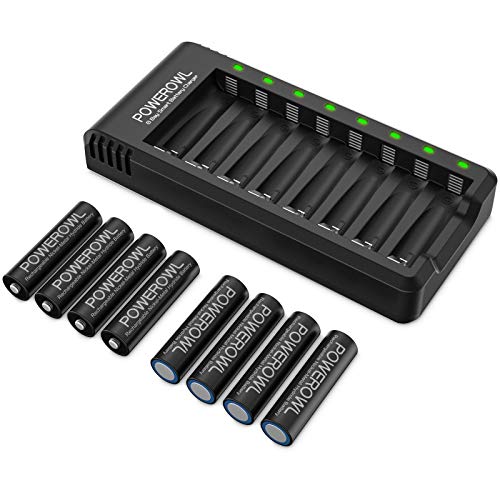
These 2800mAh AA cells recharge devices, and they do not describe a criminal offense.
POWEROWL sells eight 2800mAh AA nickel-metal hydride cells and an eight-bay charger. The charger uses chip control to stop when a cell is full, with independent slots allowing partial sets to charge.
Trickle charging aims to reach about ninety-nine percent and spare the cells, claiming up to twelve hundred recharge cycles. None of that language is a penal code. Second degree battery is unlawful contact graded by statute; this kit is household power.
These cells suit cameras, toothbrushes, flashlights, and controllers accepting 1. 2 volt rechargeables. The maker says the chemistry avoids harmful substances, and smart stops reduce overcharge risk, though users should still watch heat. The honest limit is relevance: capacity and cycle life never define second degree battery.
With price and star ratings missing, quality claims are hard to verify. Independent slots help mixed charging. Buy the set to cut disposable AA waste, not to study criminal law.
|
4
|
Torchy The Battery Boy: The Complete First And Second Series |

Torchy is a vintage children’s series titled Battery Boy, not a second degree crime guide.
Torchy The Battery Boy is a complete set of the first and second series. The title uses ‘battery’ as a character name from mid-century children’s television. ‘Second series’ means the later run of episodes, not a felony grade. There is no statute summary, element list, or penalty chart.
Someone searching the legal phrase might land here because both words appear, but the disc or recording tells a story for young viewers, not explaining unlawful contact.
Collectors of old children’s shows are the real audience, and families might watch it as period entertainment. The ‘second series’ label only orders the episodes. A clear limit is usefulness for this question: the show will not say what prosecutors must prove or compare state codes.
Age of the material may also mean pacing and themes feel dated. Price and ratings are not listed. Treat it as media history, not as a law explainer.
|
5
|
EDS 926-601 926601 Positive Battery Terminal Connector |

This positive car terminal joins a battery cable, and it is not a criminal charge.
The EDS 926-601 is a positive battery terminal, also cross-listed as 7T4Z-14450-AF. It replaces a corroded post on some Ford cars, including Focus and Ranger, though fitment depends on year, engine, and cable size.
The part includes a six-millimeter auxiliary post and nut, accepting cable up to 2 AWG with heat-shrink tubing. ‘Battery’ here means the car‘s electrical battery; ‘second degree’ never enters the description. Installing it restores a connection, not interpreting a statute.
DIY owners and technicians with crimp tools are the fit. The auxiliary post can feed a second cable, and heat-shrink helps limit corrosion after the crimp. Verify the terminal layout before buying, as multi-fit claims still miss some years.
The limit for the legal question is complete: a car part cannot define bodily injury, weapon use, or protected victims. Price is unlisted, and no rating helps compare sellers. Use it for an electrical repair only.
|
6
|
Rechargeable AAA Batteries with Charger, Advanced Individual Cell Battery Charger, High Ca |
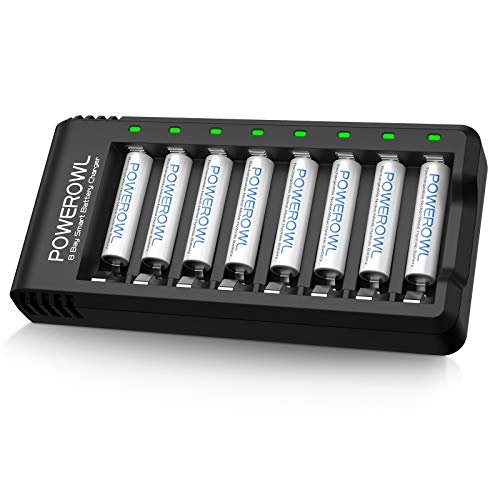
These 1000mAh AAA cells store charge for gadgets, not facts about criminal battery.
This pack offers eight 1000mAh AAA cells plus an eight-bay charger. The maker says cells hold about seventy percent after three years unused and can be recharged over twelve hundred times. Slots charge independently, and trickle charge targets about ninety-nine percent.
Cells ship partly charged from wind-generated power, with peak performance after three to five full cycles. That is energy storage, not second degree battery. The crime asks about unlawful contact and how a state grades it.
Clocks, remotes, and small toys are typical homes for AAA cells. The low self-discharge claim helps gear that sits for months. Independent bays let a user charge one cell or eight. A limit is the same mismatch as the AA kit: cycle life does not teach criminal elements.
Another limit is the break-in period before full capacity. Price and ratings are absent. Choose this when AAA devices need reusable cells.
|
7
|
A History of Lumsden’s Battery, C.S.A. |

Lumsden’s Battery was a Confederate artillery unit, not the modern crime called second degree battery.
A History of Lumsden’s Battery, C. S. A. is a history title about a Civil War artillery battery. In military use, a battery is a unit of guns and the soldiers who served them, with C. S. A. marking the Confederate States Army.
The product data lists no features, page count, or author notes. ‘Second degree’ does not describe a rank inside that unit name. Readers wanting the criminal meaning will not find elements or penalties in a unit history; the shared word is the only overlap.
Civil War readers and unit researchers are the audience. The title can help someone tracing Confederate artillery, muster context, or campaign narrative. It will not help a defendant, a victim, or a student of modern criminal codes. The limit is category: artillery history uses ‘battery’ in an older sense.
No price or rating is shown, so the edition is unclear. Confirm the author and publication details before buying. Keep it separate from any charging document.
|
8
|
Energizer 2016 3V Batteries, 3 Volt Battery Lithium Coin, 1 Count (Pack of 4) |
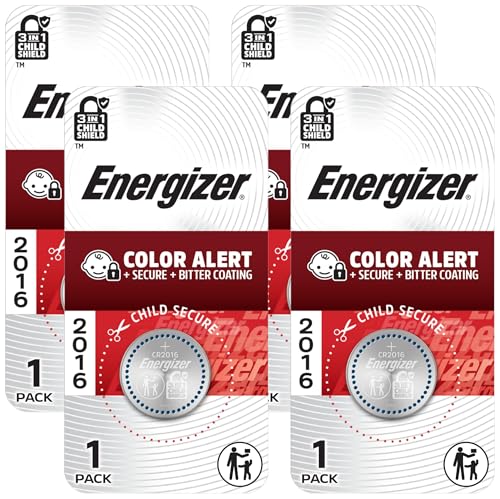
Energizer 2016 cells are 3-volt coins with child shields, unrelated to second degree battery law.
Energizer 2016 is sold here as a pack of four single-count 3-volt lithium coin cells. The 2016 code is a cell size, often thinner than a 2025. Child Shield again adds color alert, a bitter coating, and child-resistant packaging. The dye can turn the mouth blue after saliva contact.
Those safety layers address swallowing risk, not criminal battery. A shopper will not learn what second degree requires from this item.
Use these cells where a device specifies a 2016 coin, such as some remotes, scales, or small lights. The bitter coat is meant to discourage a child from swallowing a cell, with packaging resistance as another layer, not a lock on every home.
The limit is plain: four coins cannot define a felony. They also cannot stand in for the 2025 pack if the device needs that thicker cell. Price and ratings are not listed. Match the size printed in the device bay.
|
9
|
POWEROWL Rechargeable AA and AAA Batteries with Fast Charger, High Capacity NiMH – 4 x 280 |

This mixed AA and AAA charger kit powers electronics and never states a battery offense.
POWEROWL combines four 2800mAh AA cells and four 1000mAh AAA cells with one eight-bay smart charger. Both sizes are 1. 2 volt nickel-metal hydride. The charger stops at full charge under chip control and shows status with LEDs. Trickle charge is meant to extend life and approach ninety-nine percent.
The brand claims about twelve hundred cycles and says the cells lack harmful substances. All of that concerns reusable power; second degree battery remains a criminal grading term.
Homes that burn through both AA and AAA sizes get one box instead of two. Cameras, brushes, and lights are common matches if they tolerate 1. 2 volts. The charger can fill any count up to eight. A limit is overlap with the separate AA and AAA kits above.
Another limit is the legal search: mixed capacities do not explain injury thresholds or victim categories. Ratings and price are missing. Pick this combo for convenience, then read the statute for the charge.
Every listing above uses ‘battery,’ ‘degree,’ or both in a non-legal way. Coin cells and rechargeable packs store energy. The turntable measures rotation. The Ford terminal clamps a cable. Torchy names a character, and the second series orders episodes. Lumsden’s Battery was an artillery unit.
None states elements, defenses, or penalties. For the typed question, set these results aside. Return to the statute number on the charging paper.
How To Check The Charge In Your State
Recommended Products


Once the product noise is cleared, the useful step is local law. Second degree battery is defined by a statute, then applied to facts. This section walks through a careful reading. It stays educational, does not tell anyone how to harm another person, and does not predict a sentence.
Find the state named in the paperwork, then search that state’s official code for the exact statute number, not a blog summary.
Read the definition of battery first, then read the subsection that creates the second degree grade and list each extra fact.
Note whether the grade turns on injury level, a weapon, the victim’s role, or a prior conviction, because states pick different triggers.
Compare the charge language to the statute elements one by one, and mark any fact the paper does not actually allege.
Check the penalty range in the same code, including felony class, fines, and any add-on for protected victims or repeat conduct.
A statute number is more useful than the nickname ‘second degree battery.’ Two states can share the nickname and demand different proof. One may require great bodily harm; another may require only simple battery against a listed professional. The complaint or information should cite the section.
If it does not, the clerk’s site or defense paperwork often does. Reading the full section matters because definitions sit above the degree subsection. Words like ‘intentionally,’ ‘great bodily harm,’ and ‘deadly weapon’ are defined nearby or in a general chapter, and those definitions control. News articles shorten them.
A careful reader also separates the charge from a conviction. Until a plea or verdict, allegations are unproved. Penalty charts online may be outdated after a legislative session. The official code site, or a current print, is safer. This process answers the question for a specific place.
It does not create a single national definition.
Mistakes That Confuse The Legal Term
People mix this charge with other ideas that share a word, leading to bad assumptions about guilt and punishment. This section lists the mix-ups that matter after you know the basic definition. Use it as a check before you rely on a headline or a search result.
- Do not swap second degree battery for simple battery, because the extra facts are what raise the grade.
- Do not swap it for assault in states that keep threat and contact as separate crimes.
- Do not treat a medical second-degree burn scale as the injury test in the criminal code.
- Do not treat an electrical battery, a car terminal, or an artillery unit as the offense.
- Do not assume every second degree count is a felony until that state’s classification says so.
- Do not use a general article as advice about pleas, defenses, or what to say in court.
The burn-scale mistake is common because both systems use degrees. Medicine grades burns by skin depth. Criminal law grades battery by conduct and result as the legislature wrote them. A shallow unwanted strike can still be battery. A serious injury can support a higher grade if the statute says so.
The two scales do not convert. The military mistake is older. Artillery batteries appear in histories and unit names, including Confederate rosters. Those pages explain guns and service. They do not explain mens rea or bodily injury elements. The product mistake is newer.
Search engines match the words and return chargers and coin cells. Those objects hold voltage. Voltage is irrelevant to guilt. When a real case is in view, the only useful comparison is between the charging paper and the current statute.
Everything else is a different subject that happens to share vocabulary.
Second degree battery is a state crime label for unlawful physical contact. The statute treats that contact as more serious than the lowest battery grade. The extra facts differ by state. They may include serious injury, a weapon, a protected victim, or a prior offense.
It is not a coin cell, a charger, or a photo turntable. It is not a children’s show, a car terminal, or a Civil War gun unit. Today, write down the state and the statute number from the paper in front of you.
Open that state’s official code and read the degree subsection next to the definition. If the paper is about a real case, ask a lawyer licensed there to walk through the elements.

- 10 Best Battery For Generator Ev Battery Bank Marine 2026 - October 27, 2026
- 10 Best Battery For Generator Ev Battery Bank Lto 2026 - October 27, 2026
- 10 Best Battery For Generator Ev Battery Bank Low Voltage 2026 - October 27, 2026