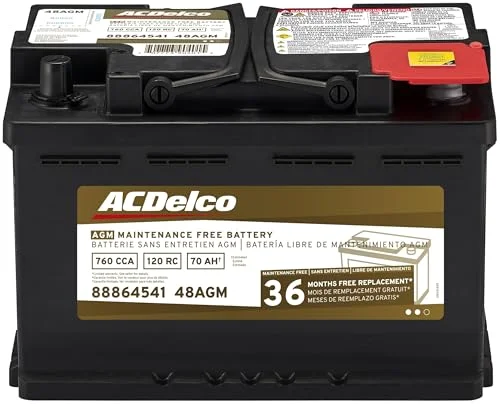
What Do Battery Saver Active Mean?
Seeing a ‘battery saver‘ alert on your dashboard or phone usually means the system is throttling power to keep essential functions alive. It’s not necessarily a crisis, but it is a signal that voltage has dropped below the threshold for normal operation.
My approach here is to distinguish between temporary energy conservation and genuine battery degradation. We’ll look at how these modes work mechanically and then review specific tools, chargers, maintainers, and memory savers, that help you diagnose whether your battery needs conditioning or replacement.
Understanding Why Battery Saver Modes Engage
Battery saver protocols act as a last line of defense against complete power loss. When the vehicle’s computer detects low voltage or excessive drain, it sheds non-critical loads to preserve engine management and safety systems.
Understanding this distinction helps you decide if you’re dealing with a minor electrical hiccup or a failing component that requires immediate attention.
When the mode engages, your car is intentionally reducing performance to extend its operational window. You might notice dimmed interior lights, slower HVAC response, or disabled infotainment features. These adjustments lower the amperage draw from the alternator and battery, preventing a sudden shutdown while you drive.
This is particularly important for protecting sensitive electronics from voltage spikes or drops that could corrupt data. If the warning clears after a drive, the system was likely just managing a heavy load.
However, if the alert persists even after reaching full charge capacity, I would suspect the battery can no longer hold its rated voltage. In those cases, a desulfation cycle or professional load test becomes necessary.
- Check for interior lights left on overnight that might be draining your charge.
- Monitor if the battery saver mode engages shortly after you start the engine.
- Verify that your battery terminals are clean and free of corrosion for better connectivity.
- Look for software updates if the notification appears on a digital device or infotainment screen.
- Listen for slow engine turnover during ignition, which suggests the battery is losing power.
Tools To Maintain Power and Battery Health
If your vehicle frequently dips into power-saving states, quick fixes won’t solve the underlying issue. The products below focus on monitoring voltage health, maintaining proper charge levels, and rejuvenating plate chemistry.
These tools provide the data and conditioning needed to determine if your battery is genuinely failing or simply suffering from sulfation buildup.
|
1
|
Battery Saver Premium 6 & 12 Volt 25W Pulse Charger, Maintainer & Tester (Gen. 3), Yellow, |

Combines pulse desulphation to extend life with a digital tester for real-time health monitoring.
The Battery Saver 3015L-G3 is a 25W unit designed for 6 and 12-volt systems. Its core feature is pulse desulphation technology, which targets lead sulfate crystals on the plates, a common cause of reduced capacity.
The built-in LCD screen displays voltage, amps, and a health percentage bar, allowing you to track progress without guessing.
This model supports two batteries in parallel, making it suitable for vehicles with dual-battery setups. It handles various chemistries, including AGM and deep cycle. Keep in mind that its pulse features require a stable wall outlet, so it’s best used in a garage setting rather than for roadside emergencies.
|
2
|
Battery Saver 2365-lcd Battery Charger, Maintainer, Pulse Cleaner and Tester- 50 W (6V and |

Higher wattage output handles larger vehicles and multiple batteries, using pulse cleaning to improve condition over time.
With a 50W output, the Battery Saver 2365-lcd provides more robust charging capability for larger engines or fleet use. It can manage up to six batteries simultaneously.
The integrated LCD gives continuous feedback on charge status, helping you verify if a persistent saver mode is due to low surface charge or deeper structural issues.
This is my pick for users managing multiple project cars or commercial fleets. The automatic switching between 6V and 12V adds convenience. The trade-off is physical size; it’s bulkier than compact maintainers, so storage space is a consideration. It prioritizes long-term health metrics over portability.
|
3
|
9V Battery Powered Memory Saver for Car Battery Fit for All OBD ll 16-Pin Interface |

Maintains electronic memory via OBD2 during swaps, preventing resets and security lockouts.
This 9V-powered device connects to the 16-pin OBD2 port, acting as a bridge to keep vehicle systems powered while the main battery is removed. It preserves radio presets, seat positions, and ECU settings, ensuring the car doesn’t trigger immobilizer locks or error codes immediately after installation.
For DIY mechanics, this tool eliminates the hassle of reprogramming modern vehicle computers. It’s compact enough to live in a glove box. Note that it requires a separate 9V alkaline battery, which isn’t included. It’s a low-cost insurance policy against expensive dealer resets.
|
4
|
Battery Saver 6V/12V 10 Watt Pulse Maintainer & Tester (Gen. 3) for 1 Vehicle Battery with |

Plug-and-play automation recognizes battery type instantly, using pulse tech to prevent premature replacement.
The Battery Saver 10 Watt maintainer is fully automatic. Upon connection, it identifies the battery’s size, voltage, and condition without user input. Once in maintenance mode, it initiates pulse desulfation to break down sulfate layers.
This proactive care helps sustain voltage stability, potentially avoiding situations where the vehicle triggers saver modes due to weak holding power.
This unit suits single-vehicle owners whose cars sit idle for weeks. It’s lightweight and simple to deploy. The 10W output limits its speed, making it ideal for long-term preservation rather than rapid recovery of a dead cell. It’s a reliable ‘set it and forget it’ option for standard garages.
|
5
|
Battery Life Saver BLS-12/24C Desulfator |

Specialized desulfator that works with existing chargers to rejuvenate aging batteries and extend service life.
The Battery Life Saver BLS-12/24C is dedicated solely to desulfation for 12 and 24-volt systems. It attaches via eye rings and works alongside a standard charger to remove sulfate deposits.
This is particularly useful for batteries that show a false ‘full charge’ on basic testers but fail under load, triggering power-saving alerts prematurely.
I recommend this for squeezing extra years out of older batteries before replacing them. Installation is straightforward. Since it relies on an external power source, it cannot revive a completely dead battery on its own. It serves as a restorative additive to your regular maintenance routine.
|
6
|
Battery Memory Saver Automotive 12V ,Save Memory Data of On-Board Computer |

Plugs into the cigarette lighter to preserve onboard computer data and prevent immobilizer activation.
This memory saver connects to the 12-volt receptacle, providing minimal power to retain radio stations, climate settings, and security codes during a swap. By keeping the ECU awake, it prevents the electronic glitches often seen when a car loses all power mid-maintenance.
It’s a practical tool for everyday drivers who want to avoid dealership visits for resets. Ease of use is high, though it requires a 9V battery (not included).
Be aware that some vehicles cut power to the lighter socket when the ignition is off, so you must confirm your port stays live to make this work effectively.
|
7
|
24 & 36 Volt Industrial Battery Life Saver |

Industrial-grade desulfator for 24V and 36V systems, ensuring consistent power delivery in heavy-duty applications.
Designed for higher-voltage banks, the 24 & 36 Volt Industrial Battery Life Saver targets sulfate accumulation in large systems. This prevents the gradual voltage sag that leads to performance drop-offs and simulated ‘saver’ behaviors in electric motors. Clean plates mean better efficiency and extended runtime.
This unit fits industrial equipment or large RVs relying on high-capacity banks. Durability is the priority here. Because it is calibrated for specific voltages, it won’t work with standard automotive batteries. It’s a niche solution for maintaining specialized high-power systems.
|
8
|
Battery Life Saver BLS-48A 48v Battery System Desulfator Rejuvenator |

Prevents power slowdown in 48V motorized vehicles by keeping plates free of sulfate buildup.
The Battery Life Saver BLS-48A is engineered for 48-volt electric systems. It rejuvenates weak cells and maintains new ones, combating the range anxiety caused by aging batteries. By inhibiting crystal formation, it helps golf carts and similar vehicles retain their original torque and speed capabilities.
Ideal for owners noticing decreased performance in electric mobility devices. Installation is typically permanent and passive (‘set and forget’). The limitation is strict voltage compatibility, it cannot be used for standard 12V car batteries. It’s a targeted fix for maximizing the lifespan of 48V setups.
|
9
|
Battery Life Saver BLS-48BW 48 Volt Battery System Desulfator Rejuvenator |

Restores capacity and performance specifically for 48V electric motorized vehicles.
Another entry in the 48V category, the Battery Life Saver BLS-48BW focuses on restoring lost capacity through advanced desulfation. It addresses the slow decline in run-time that occurs as batteries age, ensuring that each charge delivers near-original power. This keeps electric motors running smoothly without unexpected brownouts.
This device appeals to users who see their equipment fading faster than expected. It’s designed for one-time installation with zero ongoing effort. Like its counterparts, it lacks versatility for other voltages, serving strictly as a specialist tool for 48V battery bank health.
|
10
|
Battery Life Saver BLS-48B 48 volt Battery System Desulfator Rejuvenator |
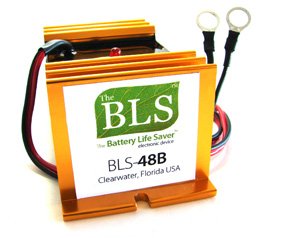
Uses square sine technology to potentially double or triple battery life in 48V systems.
The Battery Life Saver BLS-48B employs patented square sine wave technology to aggressively strip sulfate from plates. Claims suggest it can significantly extend service life, reducing the frequency of costly replacements for trolling motors and golf carts. It balances rejuvenation of old units with protection for new ones.
For those invested in high-end electric equipment, this offers a proven method to maintain peak output. Reverse polarity protection adds a safety margin during hookup. Again, note the specific 48V constraint; it is not a general-purpose charger but a precision instrument for high-voltage maintenance.
These selections tackle the root causes of voltage instability that trigger battery saver warnings. From smart monitors to specialized desulfators, the right tool depends on your vehicle’s voltage and usage patterns.
Regularly checking battery health allows you to intervene before performance degrades to the point of failure, keeping your systems ready for the road.
Maintaining Your Battery After The Warning
After resolving immediate power concerns, consistent upkeep prevents future interruptions. This section outlines long-term monitoring strategies and routine checks to ensure your electrical system remains stable.
- Inspect battery terminals every six months for corrosion and clean them with a wire brush.
- Test your battery’s voltage with a multimeter if the vehicle sits for more than two weeks.
- Ensure all aftermarket electronics are properly grounded to prevent unnecessary parasitic power draw.
- Drive your vehicle for at least thirty minutes weekly to allow the alternator to fully recharge the battery.
- Replace your battery every three to five years, even if it appears to be functioning normally.
Even with optimal maintenance, batteries have a finite chemical lifespan. If you find yourself engaging saver modes more often despite using a desulfator, it may be time for replacement. Internal resistance increases over time, reducing the ability to deliver current under load.
When the battery can’t meet the computer’s demands, the car defaults to protective protocols. Track your battery’s age and service history. If uncertain, most auto parts stores offer free load testing. This provides a concrete answer on viability versus end-of-life status.
Troubleshooting Persistent Power Issues
Sometimes the battery is fine, but the charging system or a hidden electrical draw is the culprit. If a new battery still triggers saver modes, investigate these alternative sources of power imbalance.
Check your alternator output with a multimeter to ensure it provides sufficient voltage while the engine is running.
Inspect all fuses to see if a specific circuit is drawing power when the vehicle is turned off.
Use a clamp meter to measure parasitic draw while the car is locked and in sleep mode.
Consult your vehicle’s manual to determine the acceptable level of parasitic drain for your specific make and model.
Seek professional diagnostic help if the draw exceeds manufacturer specifications to avoid damaging your new battery.
Persistent low-voltage alerts often stem from a failing alternator or parasitic drains. An underperforming alternator leaves the battery chronically undercharged, forcing the vehicle into power-saving states repeatedly. Similarly, aftermarket accessories like dashcams or alarms can draw significant current while parked.
To diagnose this, isolate circuits by pulling fuses one by one until the drain stops. If the charging system is at fault, a technician should verify alternator output. Addressing these mechanical or electrical faults early protects your battery from deep discharge cycles, extending its overall life and saving replacement costs.
A ‘battery saver active’ message is your vehicle’s way of rationing electricity to stay online. Start by checking terminals for corrosion and seeing if recent idleness caused a surface charge deficit, a long drive might resolve it.
If the warning lingers after a full charge, the battery likely lacks the capacity to support normal operations. Don’t dismiss the alert; treat it as a prompt for a load test or conditioning session before total failure strikes.

- 10 Best Battery For Generator Ev Battery Bank Marine 2026 - October 27, 2026
- 10 Best Battery For Generator Ev Battery Bank Lto 2026 - October 27, 2026
- 10 Best Battery For Generator Ev Battery Bank Low Voltage 2026 - October 27, 2026