How To Wire 2 12 Volt Batteries In Parallel?
Hooking up two 12-volt batteries in parallel sounds straightforward until you‘re staring at a tangle of copper cables wondering if you’ve got the polarity right. The idea is simple: you keep the system at twelve volts but double your amp-hour capacity so your gear runs longer before everything goes dark.
I’ve seen plenty of DIY setups where crossed terminals or undersized wiring turned a weekend project into a headache. This rundown walks through exactly how to join your batteries safely, followed by a look at the hardware that actually holds up under load.
Understanding Parallel Battery Physics And Capacity Gains
Recommended Products


Before you start stripping wire, it helps to understand what linking your batteries in parallel actually does to your electrical output. You’re essentially building one larger battery out of two smaller ones without changing the voltage.
When you wire two 12-volt batteries in parallel, you connect positive to positive and negative to negative. Your system stays at twelve volts, but your total amp-hour capacity doubles. Join two 100Ah batteries, and you’re looking at 200Ah of usable runtime.
Your trolling motor, fridge, or inverter pulls from both batteries evenly instead of draining one down first. I see this setup constantly in marine applications, off-grid solar arrays, and RVs where people need serious endurance. The catch is cable sizing.
Because your available current has doubled, your wiring needs to handle that extra flow without heating up. My read is that you should always pair identical batteries, same brand, same age, same chemistry.
If you mix a fresh battery with an old one, the stronger unit will constantly try to charge the weaker one, which just degrades both of them faster.
- Always match battery capacities and chemistries before connecting them together.
- Verify that both units sit at the exact same state of charge.
- Never cross positive and negative terminals during the wiring process.
- Use heavy-gauge copper cables rated for your maximum expected current draw.
- Clean all terminal posts thoroughly to remove corrosion before attaching lugs.
Hardware Choices To Link Your Batteries
Recommended Products


The cables and connectors you choose dictate whether your parallel setup runs cool or becomes a fire hazard. Here are the options I’d shortlist for automotive, marine, and solar builds, based on their gauge, terminal quality, and copper purity.
|
1
|
Connect-Ease Easy 12V Parallel Battery Connector, Dual Battery | Two 12V batteries in para |

This connector links two 12-volt batteries together while letting your charging system top them both off at once.
The Connect-Ease Easy 12V Parallel Battery Connector uses marine-rated UL1426 tinned copper wire with heat-shrink sealed splices to fight off corrosion. It’s built specifically to wire two 12-volt batteries in parallel, combining their amp-hour capacity so you draw from one shared pool rather than stressing a single battery.
That shared pool approach raises your continuous-amp ceiling, which matters if you’re running heavy accessories.
I really like that the quick-connect terminals let you hook up or remove the second battery in minutes without cutting into your boat’s factory wiring. When you leave it connected, your alternator or onboard charger tops off both batteries simultaneously.
Just keep in mind that this harness is designed for specific marine layouts, so it might not be the right fit if you need custom lengths for a van build.
|
2
|
Connect-Ease 12V Parallel Battery Connection Kit, Dual Battery | Two 12V batteries in para |

This kit combines dual 12-volt capacities using quick-connect leads, making it fast to install on a boat.
The Connect-Ease 12V Parallel Battery Connection Kit relies on marine-grade tinned copper to resist salt spray and bilge moisture. Every splice gets sealed with heat-shrink tubing, which is exactly what I look for in anything living near water.
Like the simpler version, this harness combines your amp-hour capacity and raises the continuous-amp ceiling so your trolling motor or livewell pump draws from a bigger shared reserve.
Because the batteries stay linked, your onboard charger or alternator fills them both at the same time. The quick-connect leads mean you aren’t permanently splicing into your existing boat wiring, which saves a lot of frustration if you ever need to reconfigure things.
I would check your specific battery manual first to make sure the manufacturer permits this type of connection before you start routing cables.
|
3
|
ALFFAA 2 AWG Gauge Red + Black 1ft Parallel Battery Power Inverter Cables for Solar, Auto, |

These pure oxygen-free copper cables handle heavy inverter loads when space is tight in a vehicle or boat.
The ALFFAA 2 AWG Gauge Red and Black Inverter Cables use pure oxygen-free copper wire to maximize conductivity. Each one-foot cable fits 3/8-inch studs and can withstand currents exceeding 200 amps. The tinned copper terminals help reduce corrosion over time, which is critical when you’re pushing that much power.
At just one foot long, these leads are meant for tight spaces where your inverter sits right next to your battery bank, like in a compact RV cabinet or a small solar enclosure. The soft jacket stays flexible even when temperatures drop.
They won’t work if your batteries are mounted far apart, but for close-quarters high-draw connections, my read is that 2 AWG oxygen-free copper is hard to beat.
|
4
|
12 Gauge 2 Conductor Copper Electrical Wire 20 FT Red & Black, OFC Zipper Parallel Hookup |

This flexible red-and-black zipper wire makes polarity identification easy for custom low-voltage connections.
The 12 Gauge 2 Conductor Copper Electrical Wire uses 99. 99% pure oxygen-free copper strands to keep voltage drop minimal. The side-by-side red and black zipper design means you never have to guess which lead is positive, which prevents a lot of installation headaches.
The PVC jacket resists oil, water, and abrasion, and the internal stranded construction gives it enough flexibility to route through tight corners.
A 20-foot spool gives you plenty of room for custom runs like trailer lighting, car audio upgrades, or low-voltage solar connections. It also includes heat-shrink tubes to seal your terminal joints against moisture.
I would note that 12-gauge wire is perfect for low-draw accessories, but it’s far too light for massive multi-hundred-amp inverter banks or primary battery links. Match the gauge to your actual amperage needs.
|
5
|
CERRXIAN 3.3FT 12V/24V Battery Ring Terminal Connectors Cable,1 Pair M8 10AWG Car Battery |
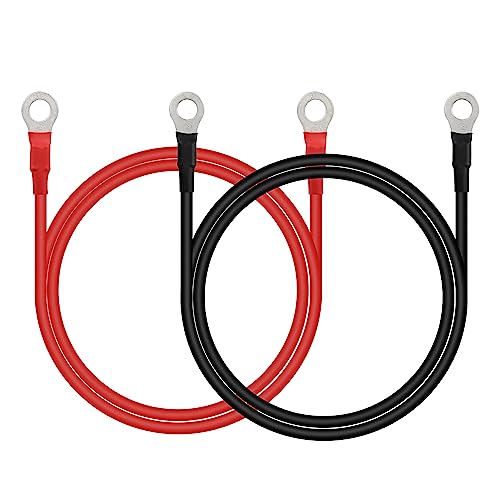
These 10-gauge ring terminal cables provide a reliable way to link batteries for general solar and automotive use.
The CERRXIAN 3. 3FT Battery Ring Terminal Connectors feature 10 AWG oxygen-free copper fitted with 8mm metal ring terminals. The flexible PVC insulation resists moisture, flame, and general wear, which makes sense for cables living in engine bays or outdoor enclosures.
They’re designed to handle standard automotive, solar, and marine applications without breaking a sweat.
At 3. 3 feet, these cables give you enough reach to position auxiliary batteries near each other without leaving excess wire coiled up in the compartment. The pre-attached ring terminals bolt directly onto standard battery posts, saving you from crimping your own ends.
Just remember they aren’t rated for ultra-high amp winches or massive industrial inverters; they’re best suited for moderate parallel links.
|
6
|
2 AWG Gauge Red + Black 2ft Parallel Battery Power Inverter Cables for Solar, Auto, RV & M |

These 2-gauge inverter cables deliver the heavy-duty current handling needed for high-draw automotive systems.
The ALFFAA 2 AWG Gauge 2ft Parallel Battery Power Inverter Cables use pure oxygen-free copper strands paired with tinned copper terminals to fight off corrosion. The jacket is designed to resist flame, water, and extreme temperatures, which is necessary when you’re safely supporting currents over 200 amps.
These two-foot leads fit 3/8-inch studs, making them practical for golf carts, trucks, and solar power banks where the batteries sit relatively close together. The flexible insulation allows tight bends in crowded compartments without kinking the copper inside.
If your batteries are spaced further apart, though, the two-foot length will limit your placement options, so measure your layout first.
|
7
|
XT60 Parallel Battery Connector 3-Way 12AWG Silicone Wire | Male/Female Dual Extension Y S |

This three-way XT60 parallel splitter expands capacity for hobby motors and portable power packs.
The XT60 Parallel Battery Connector uses 12-gauge silicone wire to minimize resistance and heat buildup. It features a 100mm extension length with a one-female to three-male layout, allowing you to gang multiple small packs together.
The assembly is built to handle demanding hobby and portable power configurations without melting down under load.
This connector simplifies parallel layouts for drones, RC vehicles, and small mobile power systems where standard automotive lugs are overkill. The soft silicone leads reduce strain on solder joints when you’re packing gear into tight fuselages or chassis.
Keep in mind it’s strictly built for hobby-scale XT60 plugs rather than heavy stud batteries used in boats or vans.
|
8
|
Malictele Anderson Connector, 8AWG 50AMP Battery Quick Connect/Disconnect Connector 6 to 1 |

These quick-connect plugs provide 50-amp high-current linking for winches and trolling motors.
The Malictele Anderson Connector kit includes 15-inch 8-gauge tinned copper wires securely crimped into housing plugs. The assembly supports up to 60 volts and 50 amps of electrical load.
Silicone jackets protect the wiring against high temperatures and corrosion, which is exactly what you want when pulling heavy loads near water or mud.
I’d shortlist these quick-disconnect plugs for winches, trolling motors, and trailer power applications where you need to unplug things fast. The 8-gauge wire prevents overheating under sustained load. The 15-inch cable length does require your batteries or components to sit fairly close together, so plan your mounting points accordingly.
|
9
|
QWORK 2 Pack 50A Battery Quick Connector with 7AWG Tinned Copper Wire, Quick Disconnect Ba |

These quick-disconnect terminal plugs deliver secure 50-amp power transfer for electric vehicles and trailers.
The QWORK 50A Battery Quick Connector pairs 7-gauge tinned copper wire with a flame-retardant PC housing. Silver-plated copper terminals ensure high conductivity and stable power transfer, resisting temperatures up to 200 degrees Celsius. That kind of thermal headroom matters when you’re drawing 50 amps continuously.
These plugs offer fast connection and disconnection for golf carts, forklifts, and trailer battery banks. Spring steel connectors inside the housing maintain firm contact even under heavy vibration.
If you decide to modify or extend the leads, you’ll need proper crimping tools to ensure the 7-gauge wire stays securely seated in the terminals.
Choosing the right hardware keeps your parallel setup running cool and safe. Always match your cable gauge to your expected current draw, if you’re pushing 200 amps through a thin wire, it’s going to get dangerously hot.
Next, let’s look at the maintenance steps that keep linked batteries healthy over the long haul.
Maintaining Your Parallel Power Bank Over Time
Recommended Products


Parallel batteries don’t take care of themselves. A little routine monitoring prevents one failing cell from dragging down your entire setup.
Disconnect all loads and charging sources before performing any maintenance on your battery bank.
Inspect every cable and terminal lug for signs of corrosion, fraying, or discoloration.
Check terminal bolt tightness to ensure high-resistance loose connections do not develop.
Measure individual battery voltages with a digital multimeter to confirm they remain balanced.
Clean terminal posts with a wire brush and apply protective terminal spray if needed.
Checking your battery bank periodically catches failing cells before they damage the healthy one. If you notice one battery dropping voltage rapidly under load, my read is that you should replace both units as a matched pair.
Mixing a brand-new battery with an old, degraded one ruins your efficiency because the new one constantly works overtime to compensate. Keep the battery tops clean and dry, too, moisture and dirt create paths for stray current to leak between terminals. Those small precautions add years to your electrical system.
Common Wiring Mistakes To Avoid
Recommended Products


Basic installation errors are usually what cause melted wires or ruined batteries. These are the pitfalls I’d watch out for during setup.
The most dangerous mistake you can make is crossing your positive and negative terminals. That creates an immediate dead short capable of melting copper and destroying batteries in seconds. I would always double-check polarity with a multimeter before tightening down any terminal nuts.
Another frequent issue is using undersized wire for high-current loads. Thin cables restrict flow and generate dangerous heat, so match your wire gauge to your maximum potential amperage draw every single time. Finally, never connect dissimilar battery chemistries or wildly different amp-hour ratings in parallel.
Imbalanced internal resistances cause constant cross-charging, which drains both batteries prematurely and shortens their lifespan.
Wiring two 12-volt batteries in parallel comes down to connecting positive to positive and negative to negative using appropriately sized copper cables. Grab your multimeter, verify that both batteries are sitting at the same resting voltage today, and then make your final connections.

- 10 Best Battery For Generator Ev Battery Bank Marine 2026 - October 27, 2026
- 10 Best Battery For Generator Ev Battery Bank Lto 2026 - October 27, 2026
- 10 Best Battery For Generator Ev Battery Bank Low Voltage 2026 - October 27, 2026