How To Wire A Battery In Parallel?
Wiring batteries in parallel is one of the most effective ways to double your amp-hour capacity without changing your system voltage, letting your gear run longer between charges.
Whether you’re expanding a solar bank, upgrading an RV house battery setup, or just trying to get more runtime from a trolling motor, the cabling matters as much as the batteries themselves.
I’ve found that balanced current flow really comes down to using matched cables and clean connections; sloppy wiring here leads to uneven discharge and premature battery failure. This breakdown covers the electrical fundamentals and points out specific components that make parallel wiring safer and more reliable.
Understanding Parallel Battery Connections
Recommended Products


Parallel wiring essentially pools identical batteries into a single, larger energy reserve. You connect positive to positive and negative to negative, which keeps voltage steady while adding up the total capacity.
The whole point of going parallel is extending runtime. By linking positives together and negatives together, both batteries share the load simultaneously. My read is that this only works well if every battery in the bank matches in voltage, chemistry, and ideally age.
Mixing old and new cells causes the stronger battery to constantly charge the weaker one, wasting energy and degrading both. I’d also stress checking your wire gauge against your total expected draw; undersized cables are a common failure point that can overheat during peak inverter loads.
- Use identical batteries with the same voltage, capacity, and age for stable performance.
- Maintain equal cable lengths between batteries to ensure balanced resistance and current draw.
- Clean all contact points thoroughly before tightening lugs to prevent high-resistance connections.
- Use high-quality tinned copper lugs to minimize long-term corrosion in humid or marine environments.
- Verify your battery manual permits parallel connections, especially with integrated lithium battery management systems.
Picks To Safely Wire Batteries In Parallel
Recommended Products

Picking the right cables removes a lot of guesswork from installation. I’ve shortlisted options here based on insulation quality, terminal corrosion resistance, and appropriate gauges for parallel banks.
Whether you need pre-terminated heavy-duty leads or a marine-specific harness, these picks should give you a secure starting point for building out your system.
|
1
|
A ABIGAIL 2 AWG Battery Cable 2AWG Gauge Pure Copper Battery Inverter Cables with 3/8 in L |

These 2 AWG cables offer a pre-terminated, heavy-duty solution specifically sized for tight parallel battery spacing.
The A ABIGAIL 2 AWG set uses pure copper conductors with tinned lugs, which I consider essential for maintaining conductivity over time. The 1-foot length hits the sweet spot for batteries mounted directly next to each other.
Heat-shrink sealed ends are a nice touch to prevent oxidation at the crimp point, helping keep resistance low where it matters most. The 3/8-inch lugs fit standard automotive and marine posts without issue.
I’d recommend this set for RVs, solar setups, or automotive relocations where high current is expected. The flexible PVC jacket makes routing through tight battery boxes manageable.
Just be aware that 1 foot is quite short; if your batteries aren’t practically touching, you’ll likely need a custom length to avoid straining the terminals.
|
2
|
ALFFAA 2 AWG Gauge Red + Black 1ft Parallel Battery Power Inverter Cables for Solar, Auto, |

Oxygen-free copper construction targets maximum conductivity for compact, high-draw parallel inverter setups.
ALFFAA’s 1ft cables use oxygen-free copper to minimize voltage drop across connections, which is critical when running inverters near their limit. The set includes red and black cables with 3/8-inch tinned terminals.
I appreciate the soft silicone insulation here, it stays flexible in cramped engine bays or battery compartments where stiff PVC can crack or fight back during installation.
Rated for over 200A, these handle serious inverter loads and marine applications confidently. They’re built to withstand heat and moisture exposure. The trade-off is the fixed 1-foot length; there’s zero margin for error if your terminal orientation is awkward, so I’d measure twice before committing to this specific size.
|
3
|
Linkstyle 6PCS 4 AWG Battery Cables 12 Inch, 30CM Heavy Duty Marine Battery Power Inverter |

A 6-pack of 4 AWG cables gives you enough matched leads to wire a multi-battery parallel bank cleanly.
Linkstyle’s 6-piece 4 AWG set is practical for larger arrays needing multiple interconnects. The standardized 12-inch length helps keep wiring neat and balanced, which supports even current sharing across the bank.
Pre-crimped tinned copper terminals save you from buying a dedicated crimper, making this a convenient grab-and-go option for DIY builds.
This kit suits 12V through 48V systems in trucks, RVs, and solar setups. The flame-retardant, moisture-proof PVC adds safety for under-hood or outdoor installs.
One caveat: 4 AWG may not suffice for very large inverters drawing extreme current, so I’d verify your peak amperage needs before assuming this gauge is adequate.
|
4
|
CARTMAN 4 AWG 24-Inch Battery Inverter Cables Set, 3/8 in Lugs | Positive/Negative Set, Co |
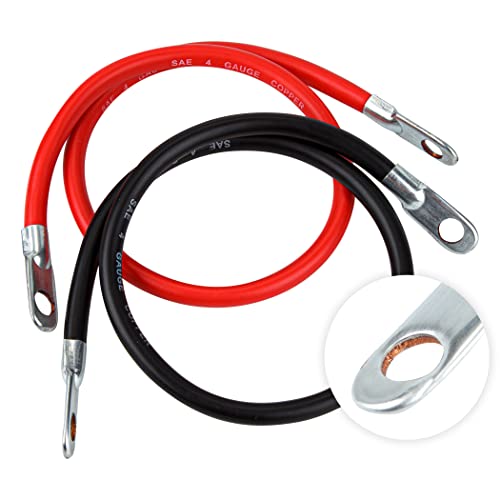
The 24-inch length bridges gaps when batteries can’t be placed side-by-side in a parallel configuration.
CARTMAN’s 4 AWG cables feature zinc-plated copper lugs that hold up well against corrosion. The 2-foot length provides necessary slack for spaced-out battery layouts where 12-inch cables would be too taut. High-temp rated insulation stays pliable even in hot engine bays or enclosed solar sheds, which prevents cracking over time.
Built for marine and RV durability, these emphasize low-resistance construction to help your parallel bank behave as a unified source. The downside is potential clutter; if your batteries are actually close together, 24 inches creates excess loop that needs managing.
Always measure your actual span first to avoid unnecessary wire management headaches.
|
5
|
Linkstyle 6PCS 2 AWG Battery Cables 12 Inch, 30CM 2 Gauge Pure Copper Heavy Duty Battery I |
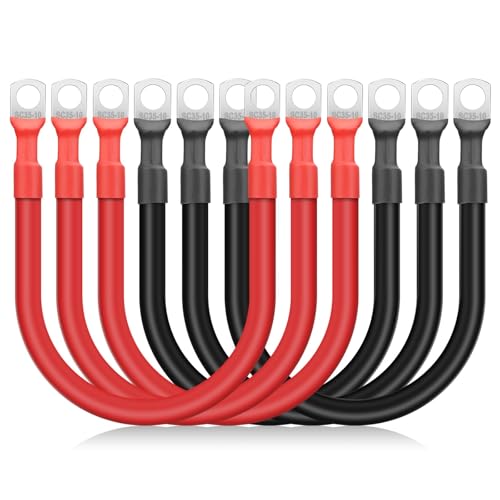
Bulk 2 AWG cabling in a 6-piece kit supports professional-grade parallel interconnections for three-battery setups.
Linkstyle’s 2 AWG 6-piece set handles heavy power transfer between batteries. With six cables, you can properly parallel three batteries with dedicated positive and negative runs. Nickel-plated terminals resist corrosion and vibration loosening, making them suitable for off-road or marine environments where movement is constant.
The 12-inch length keeps standard parallel spacing compact and efficient. Robust PVC sheathing protects against grease and moisture in engine bays. Note that 2 AWG cable is inherently stiff; ensure your battery box has enough clearance for the bend radius to avoid stressing the lugs or terminals.
|
6
|
3FT 2 AWG Battery Cables 2 Gauge Pure Copper Battery Inverter Cables with 5/16 in Lugs Bot |

3-foot length accommodates remote battery placement in larger parallel systems where adjacency isn’t possible.
A ABIGAIL’s 3FT 2 AWG cables solve spacing issues in boats, RVs, or solar arrays where batteries must be separated. The extra reach allows flexible positioning without daisy-chaining shorter cables.
5/16-inch lugs work with many terminal types, but I’d double-check your stud size since this is smaller than the common 3/8-inch standard.
Pure copper construction maintains efficiency over longer runs where voltage drop becomes a real concern. Flame-retardant, moisture-resistant PVC suits harsh outdoor conditions. Just confirm your terminal stud diameter matches 5/16-inch before ordering; mismatched lug sizes are a frequent install-day frustration.
|
7
|
40FT 1/0 Battery Cable CCA,0 Gauge Wire with lugs for Amp,Winch,Automotive | 0 Gauge Wire |

40-foot bulk kit enables custom-length parallel wiring for complex relocations or large-scale power systems.
This 40FT 1/0 kit supplies ample 0-gauge wire for high-power custom builds. Included terminals and heat shrink make it a complete package for scratch-built parallel banks. CCA (copper-clad aluminum) balances cost and performance for winches, starters, or expansive solar arrays where pure copper at this gauge gets expensive fast.
Rugged PVC jacketing handles chassis routing and conduit protection well. Since it’s bulk wire, you’ll need crimping skills and tools to terminate correctly for your specific layout. Best suited for experienced DIYers bridging long distances between distributed battery banks and main distribution points.
|
8
|
Connect-Ease 12V Parallel Battery Connection Kit, Dual Battery | Two 12V batteries in para |

Marine-grade quick-connect kit simplifies 12V parallel wiring without permanent splicing or custom fabrication.
Connect-Ease’s 12V kit targets marine users who value simplicity. UL1426 tinned copper wire resists saltwater corrosion effectively. Quick-connect leads let you add a second battery in minutes without cutting, crimping, or soldering, a huge time-saver for seasonal setups or temporary expansions.
Designed to promote even charge/discharge cycles, which preserves battery health long-term. Especially useful for trolling motors and bilge pumps. Strictly 12V-only though; don’t attempt series or higher-voltage configs, as the topology is hardcoded for parallel use.
|
9
|
Connect-Ease Double Time 36V Parallel Trolling Motor Wiring Kit | Two 36V lithium batterie |

Specialized 36V kit ensures balanced current delivery for parallel lithium trolling motor banks.
Connect-Ease Double Time addresses 36V parallel lithium setups where mismatched draw is a known pain point. Matched cable lengths force equal load sharing between batteries. Integrated charging lead lets you charge both batteries through one port, eliminating redundant charger connections on the water.
Ideal for anglers running high-draw 36V trolling motors who need extended runtime. Marine-grade tinned wire and heat-shrink seals defend against moisture intrusion. Compatibility is brand-specific though; verify your motor model is listed before purchasing to avoid fitment issues.
|
10
|
QWORK 3 AWG Battery Inverter Cables 12 Inch 25mm² 125A – Heavy Duty Battery Leads with Bra |

3 AWG offers a middle-ground gauge for mid-sized parallel applications where 4 AWG is marginal and 2 AWG is overkill.
QWORK’s 3 AWG cables fill the niche between 4 and 2 AWG. Brass terminals and ring lugs deliver solid conductivity and corrosion resistance. Standard 12-inch length works for typical parallel spacing, and flexible PVC routes easily in tight RV or motorcycle compartments.
Rated to 125A, they suit moderate inverter loads and interconnect duties. Brass terminals stay tight under vibration better than some alternatives. Trade-off: 3 AWG is less common, so sourcing matching extensions or accessories later may require more hunting than standard 2 or 4 AWG parts.
Your best pick hinges on battery spacing and total amperage. Pre-made sets work great for standard adjacent layouts, while specialized kits like Connect-Ease shine in marine/trolling scenarios. Always confirm terminal stud size and calculate your max current draw before buying; getting these two details right prevents most parallel wiring headaches.
Maintaining Your Parallel Battery Bank
Recommended Products


After installation, ongoing maintenance keeps your parallel bank performing as intended. Regular checks catch small issues before they become systemic failures.
- Inspect terminal connections every six months for signs of corrosion or looseness.
- Apply a thin layer of terminal protector spray to inhibit oxidation on exposed metal surfaces.
- Check for any signs of heat discoloration on the cable insulation, which indicates a loose or overloaded connection.
- Periodically verify that all batteries in the parallel bank are maintaining similar voltage levels during rest.
- Ensure the battery box remains well-ventilated to prevent heat buildup around the wiring.
Vibration loosens connections over time, especially in mobile platforms like RVs and boats. I’d build a quick visual check into your regular maintenance routine. Any green or white crust on terminals should be cleaned immediately with baking soda and water, then dried thoroughly.
If one battery consistently reads lower than others after resting, isolate and test individually; a weak cell will drag down healthy ones and accelerate overall bank degradation. Clean, tight connections are non-negotiable for long-term reliability.
Troubleshooting Common Connection Issues
Recommended Products

Even premium cables develop issues. Knowing how to troubleshoot keeps downtime minimal and prevents cascading damage.
Use a multimeter to measure the voltage at each individual battery terminal to ensure they match.
Check for voltage drop by measuring the voltage at the inverter input while the system is under a load.
Tighten any connections that show a voltage difference between the battery post and the cable lug.
Replace any cables that show signs of fraying or cracked insulation to prevent short circuits.
Consult your battery manufacturer if the voltage remains unbalanced after confirming all connections are tight and clean.
Voltage drop kills parallel bank performance. It usually stems from loose connections or undersized cables. If equipment cuts out prematurely under load, inspect terminals first, even slight resistance generates heat and saps power. Keep runs short and torque lugs to spec.
When adding a new battery to an existing bank, always fully charge it first; connecting a depleted cell to charged ones causes massive current surges that stress both batteries and wiring. This one habit prevents most balance-related failures.
Parallel wiring boils down to connecting all positives together and all negatives together with matched, quality cables. Start by measuring your exact terminal-to-terminal distance and confirming stud size; guessing here leads to returns or unsafe installs. Clean every connection surface before tightening, oxidation is invisible but costly.
Take your time torquing each lug properly; loose connections cause more parallel system failures than any other factor. Ready to start? Grab a tape measure, note your stud size, and order cables that match your actual layout, not what you hope will fit.

- 10 Best Battery For Generator Ev Battery Bank Marine 2026 - October 27, 2026
- 10 Best Battery For Generator Ev Battery Bank Lto 2026 - October 27, 2026
- 10 Best Battery For Generator Ev Battery Bank Low Voltage 2026 - October 27, 2026