
Can You Charge A 6v Battery With A 12v Charger?
A 12 volt charger versus a 6 volt battery is a clear mismatch, and that mismatch can do real damage fast. If you hook a 12V supply straight to a 6V battery, expect overheating, venting, or permanent loss of capacity. First thing to check is the charger output voltage label before you make any connection.
Charging a 6V battery with a 12V charger is not safe directly, because 12V exceeds the battery voltage (12V versus 6V) and will overvoltage the pack; only do it if the charger is explicitly adjustable to 6V, or you use a proper DC-DC step-down or a charger set to the correct charging profile and current limit.
Can you charge 6V with 12V?
Recommended Products


Short answer: No, you should not connect a fixed 12V charger directly to a single 6V battery. A 12V source will overvoltage the 6V battery and can cause overheating, gassing, permanent capacity loss, or safety hazards unless specific safe conditions are met.
Safe conditional scenarios where a 12V charger can be used include only when the charger or wiring changes the effective voltage at the battery, or when the battery arrangement matches the charger output. If the charger has a true selectable 6V output or is an adjustable bench supply you set to 6V, it is safe for a 6V battery provided the charger also matches the battery chemistry and current limit. If you have two identical 6V batteries wired in series to make a 12V string, a 12V charger can charge the pair, but both batteries must be the same type, age, and state of charge and be monitored for imbalance.
| Scenario | Will it work? | Notes / Action |
|---|---|---|
| 12V fixed-output charger to single 6V battery | No | Disconnect immediately; risk of damage and venting. |
| Charger with selectable 6V output | Yes | Set correct voltage and chemistry, limit current to recommended rate. |
| Two 6V batteries in series, charged with 12V charger | Yes, with cautions | Only if batteries match and you monitor for imbalance. |
| 12V source plus external current-limited regulator set to 6V | Yes | Use proper charging algorithm for the battery chemistry. |
Safety warning: If a 6V battery is hot, swollen, leaking, or emitting gas or smell after being connected to a 12V source, stop charging, move it to a ventilated area, and handle as damaged; do not continue to use or attempt to recover it at home.
Why voltage difference matters
Recommended Products


No, a 6 volt battery will be harmed by most 12 volt chargers unless the charger specifically can output the correct 6 volt charge profile or has a selectable 6 volt mode. A charger that tries to hold 12 volt battery charging voltages will push far more voltage and current into a 6 volt battery than it needs, causing heating, gassing, lost capacity, or immediate damage.
Battery nominal voltage is a label, not the target charging voltage. For common lead acid 6 volt batteries the bulk or absorption charge voltage is typically around 7.2 to 7.6 volts, with a lower float voltage to hold charge. A 12 volt charging system, by contrast, expects to reach roughly twice those numbers for absorption and float, so the charger’s setpoint is incompatible unless it down-converts or switches modes.
Open-circuit voltage is what a rested battery measures with no load, but charging requires the source to be higher than that voltage to force current in. A fixed 12 volt supply that delivers 14 volts or more will therefore drive heavy current into a 6 volt battery until either the battery is damaged or the supply folds back. Smart chargers regulate voltage and current through stages, and that regulation is the difference between safe charging and an overvoltage event.
| Source / Charger type | Typical output | What happens with a 6V battery | Risk / Notes |
|---|---|---|---|
| Proper 6V charger | 7.2 – 7.6V absorption, 6.6 – 6.9V float | Charges correctly, limits current, stops at float | Lowest risk when matched to chemistry and capacity |
| 12V fixed automotive supply | ~13.8 – 14.8V | Will overvoltage a 6V battery, large current flow | High risk: heat, gassing, plate damage |
| 12V smart charger with selectable 6V mode | Selectable to 6V or 12V profiles | Safe if set to 6V mode and chemistry matches | Verify mode and voltage targets on the label |
| Adjustable bench supply set to 7.2V | User-settable | Can charge safely if current limited and monitored | Only for users who can set voltage and limit current |
Battery types and chemistry
Recommended Products
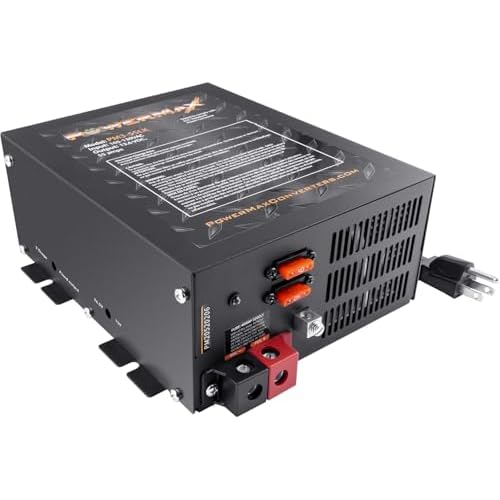

You usually cannot safely charge a single 6V battery with a 12V charger, because the charger voltage is well above the proper charging voltage for both 6V lead acid and 6V lithium packs. Using a 12V source on a single 6V battery will overvoltage the cells, cause excessive current, and risk overheating, venting, or permanent damage unless you change the wiring or use proper voltage regulation and charging profiles.
For example, common 6V lead acid batteries (flooded, AGM, gel) are built from three 2V cells and expect bulk/absorption voltages in the low 7 volt range and float voltages near 6.6 to 6.9 volts. Gel cells are more sensitive to overvoltage than flooded or AGM, and all sealed types will vent or lose capacity if held at a 12+ volt level intended for a 12V string.
In practice, most 6V “lithium” packs you see are LiFePO4 in 2-series (2S) format with nominal 6.4 volts and full-charge around 6.6 to 6.8 volts, and they need a strict CC/CV profile and a BMS for cell balance and safety. A 12V charger does not provide the correct charging curve or BMS control for those packs, so it will either be ineffective or unsafe.
| Chemistry / construction | Typical full/absorption voltage | Can a 12V charger be used on a single 6V battery? |
|---|---|---|
| 6V flooded lead acid | About 7.2 – 7.5V | No, will overcharge and gas |
| 6V AGM / sealed SLA | About 7.2 – 7.4V (lower float) | No, sensitive to overvoltage and venting |
| 6V gel | About 7.0 – 7.2V (tighter limits) | No, especially tight tolerance to overvoltage |
| 6V LiFePO4 (2S) | About 6.6 – 6.8V full, needs CC/CV and BMS | No, requires correct profile and BMS control |
Charger types and outputs
Recommended Products


You cannot safely charge a 6V battery with a fixed 12V charger unless the charger can be set to the correct voltage and provides proper charge control. A 12V supply that stays near 12 to 14.4 volts will overvoltage and overheat a 6V battery unless you reduce the voltage and limit current with the right equipment.
People call different devices “12V chargers,” but they behave very differently at the battery terminals. The three common categories are fixed unregulated 12V supplies, smart/automatic 12V chargers with selectable modes, and adjustable supplies or DC-DC converters that can be set to the battery’s required voltage and current profile.
For example, a common automotive 12V “trickle” charger that outputs around 13.8 to 14.4 volts will push far more voltage into a 6V lead-acid battery than it needs, causing gassing, heating, and permanent capacity loss within a short time.
| Charger type | Output behavior | Can safely charge a 6V battery? |
|---|---|---|
| Fixed unregulated 12V adapter | Constant ~12 – 14+ V, no CC/CV | No |
| Smart/automatic 12V charger | Selectable modes, CC/CV multi-stage when switched | Yes, if set to 6V/chemistry mode |
| Bench supply / CC/CV buck | Adjustable voltage and current, can enforce CC/CV | Yes, if configured correctly |
Risks: heat, swelling, damage
Connecting a 12V charger to a 6V battery can lead to severe risks, including rapid heating, gas venting, and irreversible damage to the battery cells. This mismatch in voltage can also void warranties and create a significant fire hazard.
Early warning signs of imminent battery failure include:
Safe charging methods
Recommended Products
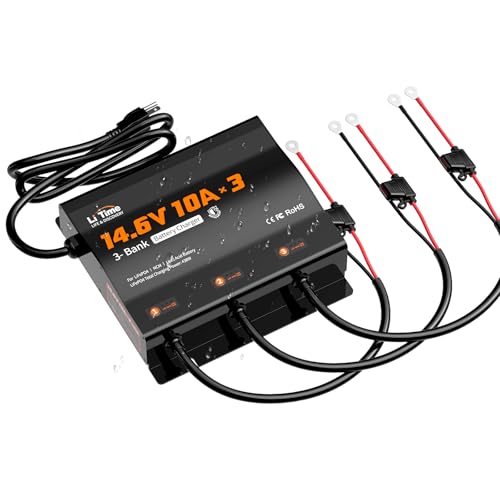
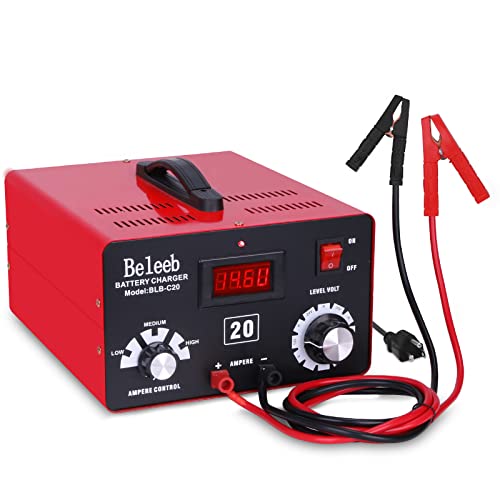
Charging a 6V battery with a 12V charger is not recommended due to the risk of overcharging and damaging the battery. The best approach is to use a proper 6V charger specifically designed for that voltage. If a 6V charger is unavailable, a DC-DC buck converter can safely reduce the 12V output to 6V.
A DC-DC buck converter can step down the voltage while providing a constant current (CC) and constant voltage (CV), which is essential for safely charging batteries. Ensure that the converter is set correctly to output 6V before connecting it to the battery.
Using a dropping resistor or guessing the required voltage is unsafe. This method can lead to incorrect voltage being applied, potentially causing overheating, swelling, or even battery failure. Always verify the voltage output of any charging method you use.
Charging a lower voltage battery with a higher voltage charger can result in irreversible damage. Always adhere to the manufacturer’s specifications for charging.
In summary, avoid using a 12V charger directly on a 6V battery. For temporary measures, a DC-DC buck converter can serve as a viable option. Always prioritize safety by confirming the voltage and current specifications to prevent damage to the battery or create hazardous situations.
Buying, inspection, troubleshooting
Using a 12V charger on a 6V battery is not advisable, as it can lead to overheating, damage, or even failure of the battery. Always match the charger voltage to the battery specifications to ensure safe and effective charging.
For instance, if you connected a 12V charger to a 6V battery and noticed that the battery was hot to the touch or swollen, these are clear indications that the battery is compromised. Always err on the side of caution and prioritize safety over convenience when handling batteries.
Quick Summary
Charging a 6V battery with a 12V charger is generally unsafe and not recommended due to potential damage.
Frequently Asked Questions
Can you safely charge a 6v battery with a 12v charger?
No, you should not charge a 6v battery with a 12v charger. Doing so can lead to overheating and potential damage to the battery, as the voltage exceeds the battery’s rated capacity.
What happens if you use a 12v charger on a 6v battery?
Using a 12v charger on a 6v battery can cause excessive heat and even swelling, potentially leading to battery failure or leakage. It is crucial to use the appropriate charger designed for the specific battery voltage.
How can you determine the right charger for your battery?
Always check the battery’s specifications, particularly the voltage and capacity ratings. A charger should match the voltage of the battery closely, typically within 5% of the rated voltage for safe charging.
What are the risks of using an incompatible charger?
Using an incompatible charger can result in overheating, reduced battery life, or even dangerous situations such as fires or explosions. Always prioritize using chargers that are specifically designed for your battery type.
How often should you replace a battery charger?
You should replace a battery charger if you notice signs of damage, such as frayed wires or a malfunctioning indicator light. Regularly inspect your charger to ensure it is functioning properly to prevent potential hazards.

- 10 Best Battery For Generator Battery Safety System 2026 - October 12, 2026
- 10 Best Battery For Generator Battery Safety Option 2026 - October 12, 2026
- 10 Best Battery For Generator Battery Safety 2026 - October 12, 2026