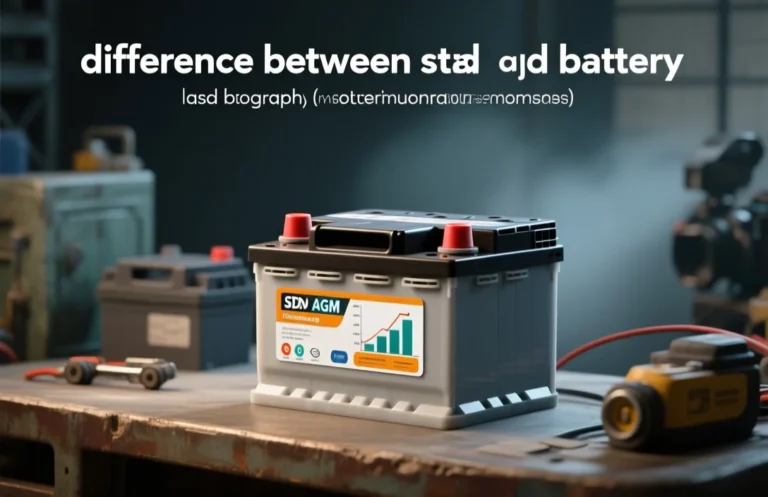
Difference Between Agm And Gel Batteries
Pick the right battery and the single most important spec is the correct charge voltage. A common mistake is treating AGM and Gel as interchangeable and charging both with the same settings, which shortens life. First check the battery label for type, then set your charger to the matching Gel or AGM mode.

AGM and Gel batteries are both sealed 12V lead-acid types; AGM uses a glass-mat to hold liquid electrolyte and handles high-rate discharge, while Gel traps electrolyte in a silica gel, tolerates deep discharges and vibration better, but needs lower charge voltage and stricter charging control.
AGM and Gel Defined
AGM batteries use a glass-mat separator to keep the electrolyte held against the plates, which gives fast charge acceptance and good high-current output; Gel batteries use a silica-thickened electrolyte, which immobilizes the acid and lowers self-discharge and leakage risk. Both types are sealed, valve-regulated lead acid batteries, but they behave differently under charge, discharge, temperature, and vibration conditions.
AGM is typically chosen where high discharge bursts, low internal resistance, and robust cold-start or UPS performance matter. Gel is chosen where long, slow discharges, deep cycle longevity at steady rates, or resistance to spills and vibration are priorities.
| Attribute | AGM | Gel |
|---|---|---|
| Electrolyte form | Electrolyte held in glass mat | Electrolyte gelled with silica |
| Charge acceptance | Faster, handles higher charge currents | Slower, sensitive to overcharge |
| Low-temperature performance | Better for cold starts and high-current draw | Reduced performance at low temperatures |
| Vibration and leak resistance | Good | Very good |
| Typical uses | Start/stop, UPS, traction, motorcycle, RV | Deep-cycle solar, off-grid, vibration-heavy vehicles |
| Cost and lifespan | Often lower initial cost for similar Ah, life depends on use | Can cost more and needs correct charging for long life |
Choose AGM when you need high discharge capability and simple charging; choose Gel when you need sealed, leak-resistant deep cycling at steady rates and can match the charger to the battery.
For example, if you plan an RV house bank with long, steady draws and a reliable charge controller you can program, Gel can be attractive; if you need cold cranking or UPS headroom, AGM is usually a better fit. Always verify the manufacturer’s recommended charge voltages and cycle-life numbers before buying or replacing batteries, because real-world performance depends on match between charger and battery chemistry.
Construction and Electrolyte Differences
AGM batteries hold the sulfuric acid in thin glass-fiber mats pressed between the lead plates so the electrolyte wets the mat but is not free-flowing, while gel batteries suspend the acid inside a silica-thickened gel that immobilizes the electrolyte inside each cell. That difference in electrolyte state changes separator choice, pressure behavior, venting needs, and how the cell reacts to overcharge, vibration, and partial state-of-charge cycling.
| Feature | AGM | Gel |
|---|---|---|
| Separator | Glass-fiber mat | Gel plus minimal separators |
| Electrolyte state | Absorbed liquid | Semi-solid gel |
| Venting behavior | Recombines, vents if overpressured | Sealed but sensitive to overvoltage |
| Case layout | Dense plate stacks, compressed | Wider spacing, pockets common |
For example, a charging routine that is fast and high-voltage may be handled by AGM because the mat promotes recombination, but the same routine can form bubbles in gel that reduce plate contact; this is why charge profiles and float voltages often differ between the two. Check the battery label for “AGM” or “Gel” and the recommended charge voltages before connecting to a charger or solar regulator.
Performance: Capacity, Runtime, Heat
AGM batteries usually deliver usable capacity closer to their rated capacity under moderate to high loads because they have lower internal resistance and less voltage sag; gel batteries typically show more voltage drop under high-rate discharge and therefore yield less usable capacity at the same C-rate. Gel cells can tolerate deep, slow discharges with less risk of stratification, but they are more sensitive to improper charging and temperature, which affects long-term usable energy.
Rated capacity, quoted in amp-hours or watt-hours, is a start point, but usable capacity depends on discharge rate and end-of-discharge voltage. AGM often retains a larger fraction of rated amp-hours during high current draws, while gel may reach the end-of-discharge voltage earlier, so runtime under the same load is usually shorter for gel at high C-rates.
Internal resistance controls voltage sag and heat. Because AGM typically has lower DC internal resistance, it shows less instantaneous voltage drop under load, so inverters, starters, and motors get more of the battery’s energy. Gel batteries run hotter for a given high load, increasing internal stress and effective energy loss, which shortens useful runtime in those situations.
For example, with a 500 watt inverter load on two similar-rated batteries, expect the AGM pack to sustain near-rated runtime longer than the gel pack; the gel pack will reach the inverter low-voltage cutoff sooner due to greater sag, even if both have the same nominal amp-hour rating.
| Performance Metric | AGM | Gel |
|---|---|---|
| Usable vs rated capacity | Closer to rated at higher C-rates | Lower usable share at high C-rates, better at slow discharge |
| Internal resistance / voltage sag | Lower resistance, less sag | Higher resistance, more sag under load |
| High-rate discharge behavior | Handles high currents well, less heat | Performance falls off sooner, more heat per amp |
| Self-discharge & standby drain | Similar low self-discharge, check spec sheet | Also low, may retain charge slightly longer at low currents |
| Temperature sensitivity | Better cold performance for short bursts | More sensitive to high temp and overcharging |
| Expected runtime behavior | More stable under variable or high loads | Better for steady, low-rate deep discharge cycles |
Charging Compatibility and Settings
AGM and gel lead-acid batteries need different charge voltages and handling: gel cells are more sensitive to overvoltage and usually require lower absorption and float setpoints and must not be equalized, while AGM cells can accept slightly higher absorption voltages and occasional equalization. Always verify the battery label and the manufacturer’s charging profile before connecting any charger or inverter/charger to avoid permanent damage.
Equalization is a controlled overvoltage charge used to mix electrolytes and restore capacity in flooded and some AGM batteries, but it is generally contraindicated for gel batteries because it can cause gas pockets and irreversible damage. If a manual or datasheet says “no equalization” or “do not overcharge,” treat that as a hard limit for gel cells.
| AGM (typical for 12 V) | Gel (typical for 12 V) | |
|---|---|---|
| Bulk / Absorption | 14.4 V to 14.6 V | 14.0 V to 14.2 V |
| Float | 13.5 V to 13.8 V | 13.4 V to 13.6 V |
| Equalization | Occasional, controlled (check manual) | Usually forbidden |
If you cannot find voltages on the battery label or datasheet, contact the manufacturer before charging. Incorrect settings are a faster route to battery failure than regular cycling.
Safety, Storage, Failure Modes
AGM and gel are both sealed, valve-regulated lead-acid batteries, but they fail and show danger signs differently: AGM tends to dry out or vent under sustained overcharge and heat, while gel can form gas pockets and harden when exposed to overvoltage, losing capacity irreversibly. Both types can overheat, swell, leak, or produce hydrogen gas if abused, so safety checks and proper storage matter more than brand claims.
For example, if a gel battery in an RV shows reduced night-to-night capacity and the case feels unusually hard or warm after charging, suspect overvoltage damage rather than simple age; stop using the charger until you verify the charge voltage and consider replacing the battery to avoid leakage or fire risk.
Side-by-Side Pros and Costs
AGM and Gel are both valve regulated, sealed lead acid batteries that keep the electrolyte immobilized, but they differ in form of electrolyte and charging sensitivity. AGM uses glass mats to trap the acid and accepts higher charge currents, while Gel uses silica to form a stiff gel and is more sensitive to overcharge and higher voltages.
| Spec to check | AGM | Gel |
|---|---|---|
| Electrolyte form | Fiberglass mat, liquid acid held in the mat | Acid thickened into a gel, immobilized inside plates |
| Charge behavior | Generally accepts higher current, tolerates faster recharge | Requires lower charging voltages and gentler charge profile |
| Charge sensitivity | More forgiving of short overcharge events | More sensitive to overcharge, risk of voids if charged too fast |
| Vibration and shock | Good resistance, common in vehicles and marine use | Good resistance, also used where spill prevention matters |
| Temperature sensitivity | Performance drops at high and low extremes | Also sensitive, can be worse if charger settings are wrong |
| Maintenance | Sealed, maintenance free under correct charging | Sealed, maintenance free under correct charging |
| Typical applications | Start/stop, UPS, RVs, marine starting and house bank | Deep cycle solar, medical devices, long-term float if charger is set correctly |
| Upfront cost | Usually lower cost per Ah than gel, depends on brand | Often higher price per Ah, varies by capacity and maker |
| Cycle life | Varies by design and depth of discharge, check manufacturer cycle rating | Also varies; long life if charged properly and not deeply cycled daily |
| Charger compatibility | Works with AGM/VRLA profiles, can need lower float than flooded | Requires charger set specifically for gel or a selectable VRLA mode |
| Warranty notes | Warranty terms depend on cycle rating and usage, check exclusions | Same, but warranties may exclude damage from improper charging |
AGM pros
AGM cons
Gel pros
Gel cons
Lifecycle and warranty tips
For example, if you expect daily deep discharges from a solar bank, compare the vendor’s cycles at the same DoD and then divide cost by usable cycles to estimate real cost per year. If you only need occasional starting power, upfront cost and convenience weigh more than long term cycle economics.
Safety note: never use a charger set for a different sealed chemistry without checking voltages and settings. Swollen batteries, overheating, damaged cables, and mixing incompatible cells are common causes of early failure and warranty denial.
Applications and Buy Checklist
AGM batteries use a glass-mat to hold electrolyte, so they can deliver higher peak currents and tolerate faster charge rates, while gel batteries use silica-thickened electrolyte, which makes them more tolerant of deep, slow discharges and long float storage but sensitive to overvoltage. Always verify the manufacturer’s recommended charge voltages and temperature limits before choosing either type.
Solar and off-grid: AGM is a strong choice when the system sees frequent high charging currents from MPPT controllers and inverters that demand high surge current, for example for pumps or motors. Gel is useful where long, slow discharge cycles and long-term float with minimal maintenance are needed, but you must set the charge controller to the gel charge profile and avoid aggressive equalization voltages.
RV, marine, and mobility: AGM is generally better when vibration, rapid charging from alternators, and high starting or inverter surge currents occur, such as in boats and motorhomes. Gel can be selected for mobility scooters or remote equipment that stay discharged for long periods and require deep-cycle tolerance, but check whether your vehicle charger can be programmed to gel settings.
UPS and standby: For UPS and standby that require fast recovery and high peak start currents, AGM usually performs better because of lower internal resistance. Gel can work in float-duty standby if the charger is set to lower float voltage and the application avoids frequent high-rate charge cycles.
Quick Summary
AGM and gel are both sealed lead acid batteries, but gel is more sensitive to overcharge while AGM tolerates higher charge currents.
Frequently Asked Questions
What is the main difference between AGM and gel batteries?
The main difference is in the electrolyte used; AGM batteries use a fiberglass mat to absorb the electrolyte, while gel batteries mix the electrolyte with silica to form a gel. This makes gel batteries generally more resistant to temperature extremes, with a typical operating range of -20 to 50 degrees Celsius.
Which type of battery is safer: AGM or gel?
Both AGM and gel batteries are sealed and spill-proof, but gel batteries are less likely to vent gases under overcharging conditions. This characteristic can reduce the risk of explosion, making gel batteries often considered safer in high-temperature environments.
How do AGM and gel batteries compare in terms of lifespan?
AGM batteries typically have a lifespan of 3 to 5 years, while gel batteries can last up to 7 years with proper maintenance. You can maximize their lifespan by avoiding deep discharges and keeping them within optimal temperature ranges.
Can I use a standard charger for both AGM and gel batteries?
No, using a standard charger might overcharge gel batteries, leading to damage. Always check the charger’s specifications and ensure it is compatible with the specific type of battery you are using.
What common mistakes should I avoid when buying AGM or gel batteries?
A common mistake is not verifying the compatibility of the battery with your device, which can lead to performance issues. Always check the voltage and capacity requirements of your application before making a purchase.

- Home Solar Battery Backup Systems: Cost-focused Guide And Top Picks - July 29, 2026
- Rechargeable 9v Batteries With Usb-c Charging For Smoke Detectors And Tools - July 29, 2026
- Top 10 Best Solar Backup Batteries Austin 2026 - July 28, 2026