How Long Can A 12v Battery Last?
A “12V battery” can run anywhere from minutes to days, depending on the load and how far you let the voltage sag. The spec that matters most is amp-hours (Ah) or watt-hours (Wh), not the “12V” number on the label. The common mistake is assuming the rated Ah gives the same runtime at high watts. First thing to check: your battery capacity (Ah or Wh) and your device draw (watts or amps).
12V battery runtime depends on capacity and load. A quick estimate is runtime (hours) ≈ battery Wh ÷ device watts, then reduce for real losses and a safe cutoff (often around 10.5 to 11.8V depending on chemistry). For lead-acid, high current use shortens runtime further due to the Peukert effect, sometimes by 20% or more.
How Long Can A 12v Battery Last?
Recommended Products

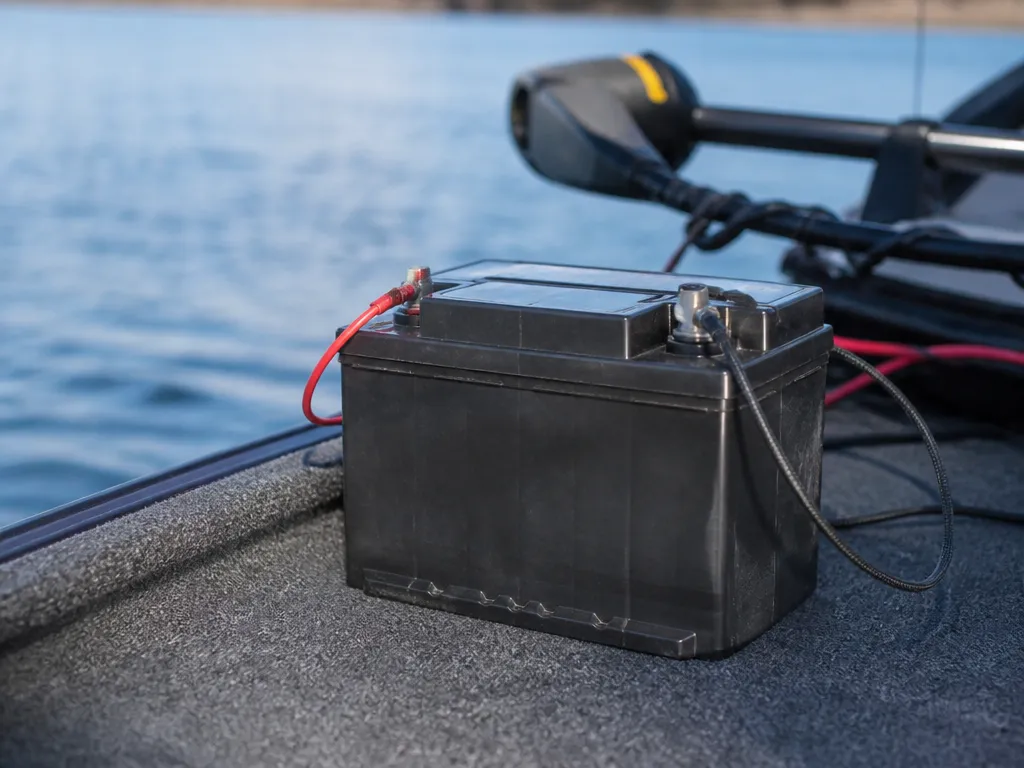
A 12V battery “lasting” usually means how many hours you get before the battery voltage sags and the load starts to dim, reset, or shut down. A battery rated in amp-hours (Ah) is a storage rating, but real runtime depends on load watts, cutoff voltage, battery chemistry, and age. The rest of the article estimates runtime using watt-hours (Wh) and then applies practical losses and cutoff logic.
Usable time is the interval from “fully charged” to “stopped working safely.” In many systems, you must stop before the battery reaches the lowest voltage the datasheet allows, because deep discharge reduces capacity and can harm some battery types. Inverters add their own cutoff behavior, and even devices that keep running can lose speed and brightness as voltage drops.
Rated Ah does not equal runtime because the battery is not a perfect reservoir. Higher current draws typically reduce effective capacity (lead-acid shows this clearly through the Peukert effect), and the inverter plus wiring cause additional voltage drop. Small loads also matter, because battery management or low-voltage cutoff may trigger early if the load has pulsed current.
For example, a battery that is “100 Ah” at a slow 20-hour discharge rate can give noticeably less usable capacity when you run a higher wattage load. For the same battery, an LED load at 10W might run far longer than a power tool load that spikes several times its average wattage. You can treat these as two different discharge profiles even though the battery model name is the same.
Battery chemistry changes the practical cutoff and how strongly performance falls under higher current. Flooded lead-acid, AGM, and lithium variants behave differently in voltage sag, acceptable depth of discharge, and how quickly capacity disappears as they age. Runtime estimates also drift faster in cold weather because internal resistance rises and usable capacity drops.
Runtime Math For 12v Systems
12V runtime is the time until you hit an acceptable cutoff, after accounting for inverter losses and battery chemistry limits. Start from energy (Wh) or power (W), then apply a realistic derating for lead-acid at higher loads.
DC side cutoff voltage affects runtime because the battery voltage can fall below your device’s minimum as load current stays high. Time remaining is real when you measure it by voltage under load, not when the battery sits at rest after you disconnect it.
| What you track | Why it changes runtime | What to do |
|---|---|---|
| Cutoff voltage at the load (DC) | Voltage sag can hit the cutoff early even if energy remains | Use the inverter/device low-voltage setting, or measure battery voltage while running |
| Inverter low-battery cutoff (AC-side device protection) | Inverter may shut down before the battery is “empty” | Set a safe cutoff per the inverter manual and your battery type |
| Surge vs average power | Short peaks can trip overload, reducing usable runtime in real life | Compare inverter surge rating to motor starting current and locked-rotor behavior |
For example, a 12V 100Ah battery has 1200Wh nominal (12V × 100Ah). A 60W load on DC is 60Wh per hour, so ideal runtime is about 20 hours (1200 ÷ 60), but real runtime is lower after voltage sag, cutoff, and any chemistry derating.
For instance, with an inverter you might estimate usable energy as 1200Wh × 0.87 (efficiency) and then apply a further lead-acid derating if the discharge current is high. The runtime then becomes (1200 × 0.87 × derate) ÷ 60W, and the derate is where many “it lasted half as long” surprises come from.
Lead-acid, Agm, Gel, Lithium Differences
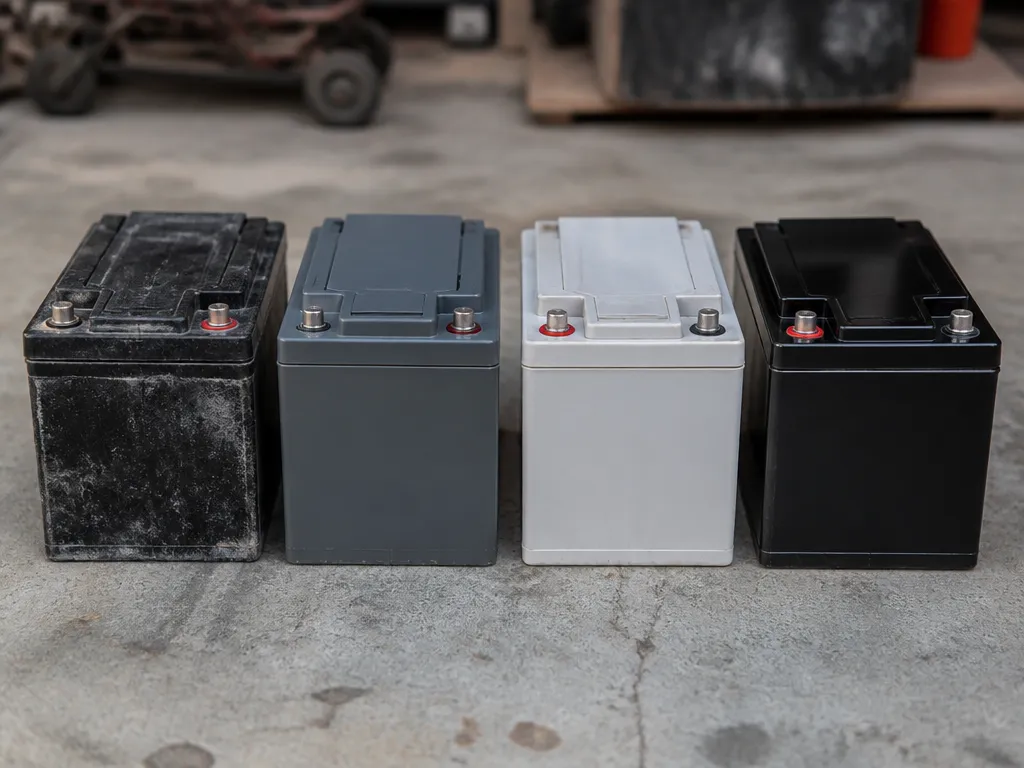
Battery chemistry changes how much of the label capacity you can actually use and at what voltage you must stop. Lead-acid, AGM, and gel usually want a higher practical cutoff than lithium, so real runtime can be shorter than a simple watt-hours division suggests.
Practical usable voltage ranges are the fastest way to avoid overestimating runtime. A 12V “system” includes a wide spread of cell states, so the battery voltage under load matters more than the resting “12.6V” style numbers you see online.
| Chemistry | Typical “usable stop” idea for runtime estimates | What to verify |
|---|---|---|
| Flooded lead-acid | Often treat deeper discharge as harmful, so use a conservative cutoff for runtime planning | Battery datasheet or manufacturer guidance for discharge cutoff |
| AGM | Use a conservative cutoff similar to flooded, because reaching very low voltage increases sulfation risk | Manufacturer cutoff voltage under load and recommended charging profile |
| Gel | Use a conservative cutoff and avoid abusive charging voltage, because gel is sensitive to overvoltage | Gel charging voltage limits and discharge cutoff from the maker |
| Lithium (12V class, with BMS) | Usable window depends on BMS settings; cutoff is often controlled by the BMS | BMS cutoff behavior and the supported charger type, since charging rules differ |
Aging changes the effective capacity you can use even if the battery still “works.” Sulfation (lead types), electrolyte dry-out (flooded), and lost active material (all lead types) reduce capacity first, then voltage drops faster as internal resistance rises.
Charging profile matters because it affects cycle life, which determines runtime weeks and months from now. Overvoltage shortens life for lead-acid and gel, while undercharging can leave lead-acid partially sulfated and permanently reduce usable capacity.
For example, a 12V lead-acid battery that regularly sits undercharged or gets the wrong charger setting can lose capacity gradually, so the first discharge run looks “fine” and later runs end sooner because voltage hits cutoff sooner.
For instance, a lithium pack with an incompatible charger can hit BMS limits, reducing effective capacity and increasing the chance of early shutdown under load.
Safety check: a swollen case, hot terminals, or a battery that smells strongly during charging is a stop-and-check situation. Damaged wiring, loose connections, and wrong-charge settings can increase resistance, create heat, and cause early cutoff that feels like “short runtime” but is actually a fault.
Peukert Effect And Why It Matters
Peukert effect is the reason a lead-acid 12V battery delivers less usable capacity when you draw higher current than the rating conditions. The battery is still “X Ah” on the label, but the effective capacity drops at heavy loads because internal resistance, diffusion limits, and chemical reaction rate cannot keep up.
Peukert effect mainly hits flooded lead-acid, AGM, and gel at higher discharge currents. Even when voltage looks okay at first, the battery reaches its cutoff voltage faster under load because the voltage sag gets worse and the average cell voltage spends more time near the end of discharge.
For example, consider the same 12V 100Ah lead-acid battery: a 5A load might let it run close to an “ideal” 20 hour story, while a 25A load can shrink runtime dramatically, sometimes by a large fraction. Peukert effect is why simple Ah divided by A can overestimate real runtime when your device pulls tens of amps, such as an inverter feeding heating elements, certain power tools, or large compressor starts.
| Scenario (12V lead-acid, same battery) | Current draw | Ah math (ideal) | Reality with Peukert and cutoff |
|---|---|---|---|
| Small LED lighting + phone charging | 5A | ~20 hours (100Ah / 5A) | Often closer to label-like behavior |
| Inverter load with higher draw | 25A | ~4 hours (100Ah / 25A) | Runtime can be much shorter than 4 hours due to Peukert and voltage sag |
In practice, the “how long” answer for a 12V lead-acid battery is best treated as a load-dependent estimate. Use the device wattage to compute current, include inverter efficiency (if you are converting DC to AC), then pick a conservative runtime based on the current level.
Peukert effect is a “rate capacity” behavior. If your battery spec only gives one Ah figure without test-rate context, runtime estimates should be treated as upper bounds, then adjusted downward based on how hard the load pulls and where your cutoff hits.
Inverter Loads: Dc To Ac Timing
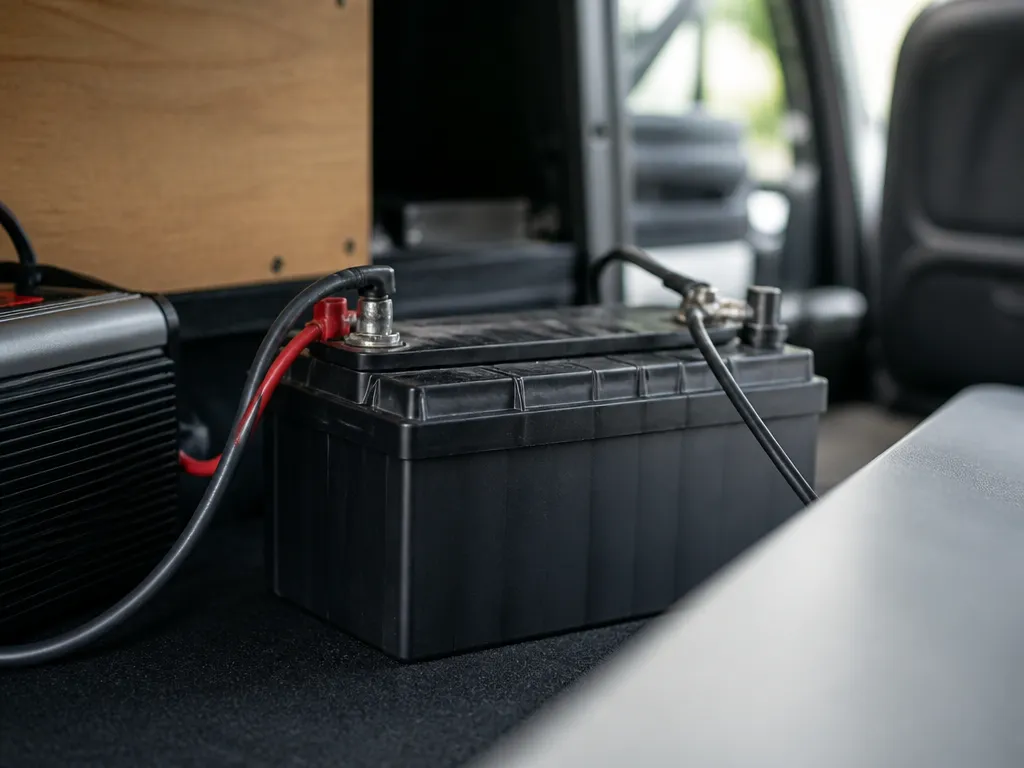
Inverter power timings are decided on the DC side by watts and amperage, then stretched or squeezed by inverter efficiency, surge behavior, and how the inverter cuts out at low voltage. A 120 W AC appliance can pull closer to 130 to 180 W from a 12 V battery depending on inverter efficiency and wiring losses, so runtime ends sooner than “AC watts only” math predicts.
For example, a 12 V battery with 100 Ah is often described as about 1200 Wh, but real “available Wh” for inverter use depends on cutoff and load rate. A 60 W average AC device with surge can easily average higher than 60 W DC after efficiency losses, so the practical hours can land much closer to “usable Wh divided by 70 to 90 W” than to “1200 ÷ 60.”
| Appliance type | Timing effect on inverter runtime | What to check |
|---|---|---|
| Motor or compressor loads | Frequent surges and voltage dips reduce runtime and can trip some inverters | Inverter surge rating, start-up current, and cutoff setting |
| Resistive loads (heater, simple lights) | Runtime tracks power draw closely, fewer surprises | Steady watt rating and DC wiring drop |
| Electronics (TV, router, laptop charger) | Lower average draw, but power supplies can create short high-current pulses | Inverter stability at small loads and surge endurance |
Worked Runtime Examples (Real Loads)
Runtime depends on your battery’s usable watt-hours, your load watts, and how soon the battery reaches a cutoff voltage (plus losses from inverter efficiency). For quick “plug-in” estimates, assume you can use about 50% to 60% of a lead-acid battery’s rated capacity before you hit a practical cutoff.
Example assumptions for these calculations: battery is 12V nominal lead-acid unless noted, temperature is ~20°C (room temp), you stop at ~11.5V under load for lead-acid, and inverter loads run through a ~85% efficient inverter. Battery capacity example is 100Ah at 12V, so rated energy is about 1200Wh.
| Scenario | Battery / cutoff / assumptions | Load | Estimate |
|---|---|---|---|
| 12V LED lights | 100Ah lead-acid, use 55% before cutoff | 6W (0.5A at 12V) | ~110 hours |
| 12V fan | 100Ah lead-acid, use 55% before cutoff | 30W | ~22 hours |
| 12V pump (variable draw) | 100Ah lead-acid, use 50% before cutoff | 60W average | ~10 hours |
| 100W inverter appliance | 100Ah lead-acid, use 50% before cutoff, 85% inverter | 100W continuous with surge headroom | ~5 to 6 hours |
For 12V LED lighting (low continuous draw), use usable energy of ~0.55 × 1200Wh = 660Wh. With a 6W LED strip, runtime is 660Wh / 6W = 110 hours (a real-world figure where long use may further reduce capacity if the battery is older).
For a 12V fan (medium draw, long runtime), assume the fan is a steady 30W, which is common for small circulation fans and many 12V blower styles. Using the same ~660Wh usable energy, runtime is 660Wh / 30W = 22 hours. Lead-acid voltage sag under moderate current can hit cutoff earlier than math suggests, so plan on a bit less if you measure voltage at the battery while the fan runs.
For a 12V pump or automotive-style accessory (higher or variable draw), treat it as an average load and protect against start surges.
For example, a pump that spikes during cycling can average ~60W over the run, so runtime is (0.50 × 1200Wh) / 60W = 600Wh / 60W = 10 hours.
For a 100W inverter appliance (TV or a laptop charger via AC), include inverter losses. With usable energy ~600Wh (0.50 × 1200Wh) and inverter efficiency ~85%, usable AC energy is about 600Wh × 0.85 = 510Wh, so runtime is 510Wh / 100W = 5.1 hours. If the appliance has a compressor or display backlight behaviors, plan extra headroom for surge moments, because surge affects voltage sag and may trigger shutdown.
Quick Summary
The practical runtime range is broad because chemistry, cutoff voltage, inverter efficiency, wiring, aging, and temperature all affect usable capacity. Lead-acid batteries also lose more effective capacity at high current because of the Peukert effect.
Use the device or inverter’s specified cutoff rather than the battery’s absolute minimum, and measure voltage under load when checking performance. Stop using a battery that is swollen, unusually hot, leaking, or producing a strong odor.
Frequently Asked Questions
How Long Can A 12v Car Battery Last On A Charge?
A typical 12V car battery is meant to last for years in standby use, but the practical runtime depends on load. A common rule is that even a small draw (like 10 A) will drain a 12V battery in well under a day, so check your device current and battery capacity (Ah) to estimate.
How Do I Calculate Runtime For A 12v Battery With My Inverter Or Device?
For an inverter, account for efficiency losses, startup surges, wiring voltage drop, and the inverter’s low-voltage cutoff. Do not assume “rated watts” equals constant power draw.
Will A 12v Battery Last Longer If I Use A Faster Charger?
Using a compatible charger is what matters, not just higher speed. If the charger uses the correct charging profile for your battery type (for example, lead-acid versus lithium), you can avoid overcharging and heat, because excess heat is a major battery-life killer.
Can A 12v Battery Overheat While Charging, And Is That Dangerous?
Yes, overheating can happen with the wrong charger, wrong voltage profile, or poor ventilation, and it is a safety concern. If the battery casing feels very hot to the touch, smells unusual, or the charger shuts off repeatedly, stop charging and let it cool before investigating.
When Should I Replace A 12v Battery, And What Buying Mistake Shortens Its Life?
Replace it when it cannot hold a charge under your normal load, or when voltage drops too quickly after charging, rather than waiting for total failure. A common mistake is buying a battery with the wrong chemistry or capacity rating for your charger and use, because mismatch can cause chronic undercharging or overcharging.

- 10 Best Battery For Generator Battery Safety System 2026 - October 12, 2026
- 10 Best Battery For Generator Battery Safety Option 2026 - October 12, 2026
- 10 Best Battery For Generator Battery Safety 2026 - October 12, 2026