How Long Do Motorcycle Batteries Last?
Motorcycle battery “life” usually ends the same way it starts failing: slow cranking and a voltage drop that never fully recovers. The biggest spec to watch is battery chemistry and the charger’s charge profile, because the common mistake is using the wrong charger for lead-acid vs AGM vs gel vs lithium. Below you’ll get realistic lifespan ranges, the failure causes that shorten them, and a simple voltmeter workflow to decide test versus replace.
Motorcycle batteries usually last about 2 to 4 years for conventional lead-acid, 3 to 5 years for AGM, and 3 to 5 years for gel when charged correctly. Lithium motorcycle batteries often last about 3 to 8 years or longer, but they still die early from deep discharges, heat, or a mismatched charger. Resting voltage and cranking speed reveal problems fast.
How Long Do Motorcycle Batteries Last?
Recommended Products


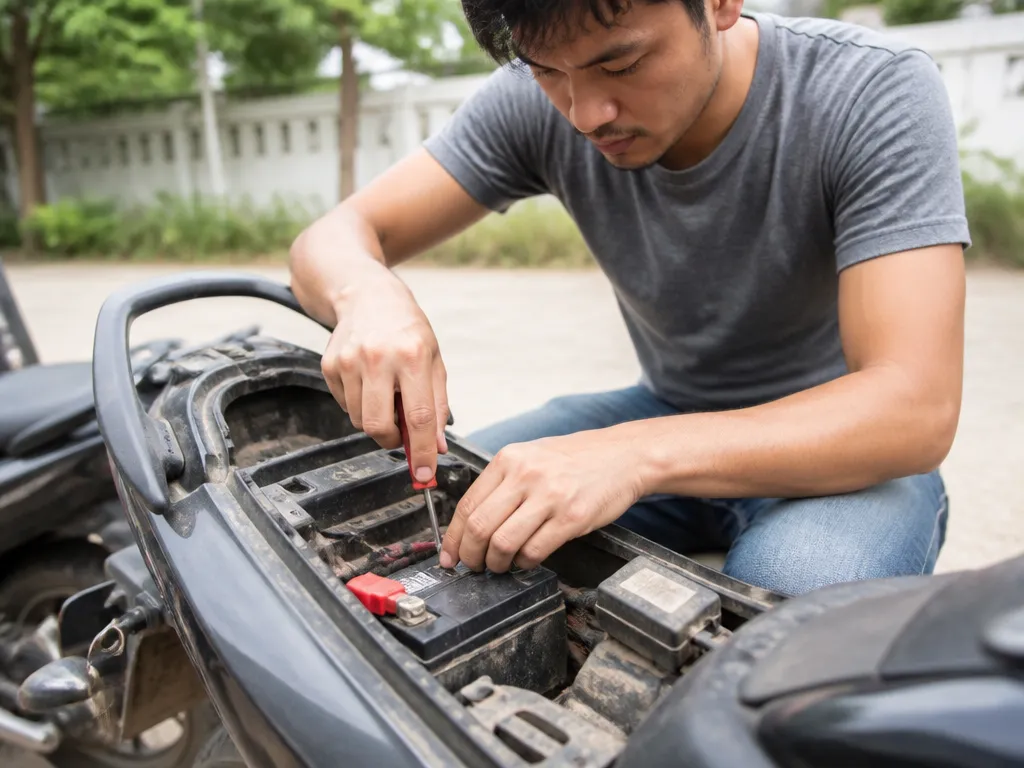
Motorcycle batteries commonly last about 2 to 5 years, with extremes based on chemistry and how you charge and store the bike. AGM and gel types usually stay healthier longer than basic flooded lead-acid, while lithium can last longer if its charging system and temperature stay within spec. The biggest lifespan killers are repeated deep discharges, chronic undercharging, and charging the wrong way for the battery type.
Typical Lifespan By Battery Type
Battery chemistry and construction change both calendar life and how much damage happens from bad charging habits. Lead-acid batteries are more tolerant of occasional abuse, but they age faster when left partially charged. AGM and gel are more resistant to vibration and can handle some charging stress better, yet they still lose capacity if they sit discharged or get overheated.
In practice, expect the following broad ranges:
| Battery type | Typical service life (years) | What it tends to reward |
|---|---|---|
| Flooded lead-acid | ~2 to 4 | Regular full charges and correct electrolyte level |
| AGM | ~3 to 5 | Good charging voltage and avoiding long, low-charge sits |
| Gel | ~3 to 5 | Lower charging stress and proper gel-compatible charging |
| Lithium (drop-in motorcycle packs) | ~3 to 8+ | Charging system support, temperature control, and shallow cycles |
What Shifts Lifespan Up Or Down
Motorcycle use is harder than car use because motorcycles get colder, sit more between rides, and rely on higher current starting from a smaller battery. Short trips heat up less, so the bike’s charging system may not fully restore charge after starting and accessory loads. Vibration is also constant, which can break internal connections over time in any chemistry.
Early Warning Signs That The Battery Is Already Aging
Motorcycle battery failure often starts as performance loss before it becomes a hard no-start. Slow cranking, dim dash lights during starter engagement, weaker horn, and a starter that spins slower than usual are classic early signs. Rapid voltage drop after charging, frequent jump starts, or a big mismatch between rest voltage (reads okay) and load behavior (still weak) often points to capacity loss.
Use simple checks before buying.
Practical rule: If you are consistently relying on jump starts or the battery needs frequent recharging just to start normally, plan for replacement soon and verify charging system output and parasitic drain to prevent the next battery from dying early.
Key Causes Of Early Failure
Recommended Products


Heat and deep discharge are the two fastest ways to shorten motorcycle battery life because they accelerate chemical wear and encourage internal damage. Charging problems from the bike can keep the battery undercharged or overcharged, which then drives the same failure patterns (sulfation, plate damage, and electrolyte loss) sooner than expected.
Different battery types age differently, but the early-failure triggers overlap. A motorcycle battery that spends months hot, then gets left partially charged, will usually die earlier than the same battery kept cool and fully charged.
Flooded, AGM, gel, and lithium pack these causes in different ways, so the same bike problem can “look different” by chemistry.
| Battery type | Main early-failure mechanism | Common real-world trigger |
|---|---|---|
| Flooded lead-acid | Electrolyte stratification and electrolyte drying | Overcharge plus long hot storage |
| AGM | Drying and internal failure from heat and overcharge | High charging voltage or weak charging that keeps cycling |
| Gel | Overvoltage intolerance and gas management issues | Using the wrong charger voltage profile |
| Lithium (with BMS) | BMS limits, cell imbalance, cycle-life limits | Wrong charger, storage at high state of charge, high heat |
Vibration and mounting issues also shorten life across all types. Loose mounting lets the battery bounce, which can crack plate structures in lead types and stress internal connections in AGM and lithium packs. Heat rises even when riding frequency is low because the battery gets exposed to engine bay temperatures while still absorbing vibration.
Practical takeaway for lifespan: treat charge health and temperature as daily issues, not seasonal chores. A short battery life often comes from one recurring driver, like a charging regulator fault, the wrong charger profile for gel/AGM, high heat exposure, or parasitic drain that leaves the battery undercharged between rides.
Battery Aging Symptoms On Bikes
Recommended Products


For example, a rider may jump the bike at the trailhead, ride for an hour, then return the next morning to find it will crank briefly and then stop. That pattern usually means the battery cannot accept and hold charge correctly, or it has internal damage that charging cannot reverse.
What “won’t recover after charging” usually means depends on the chemistry. Flooded lead-acid and AGM can recover from mild undercharging, but severe sulfation, warped plates, or internal cell failure often will not. Gel batteries also can be permanently capacity-limited after repeated deep discharge, especially if charged improperly.
Safety warning: If you see swelling, crusty leaks, a strong hot-electrical smell, or the casing feels abnormally warm during a charge attempt, stop and disconnect. Swollen or overheated batteries can vent and ignite, especially with damaged terminals or incorrect chargers.
When to suspect corrosion or loose terminals instead of the battery is straightforward: the bike shows a “battery symptoms” pattern after any vibration event, battery movement, or clamp work, and the terminals look dull, powdery, or wet. Cleaning and re-tightening can restore performance quickly if connection resistance is the main problem.
| Symptom | More likely meaning | Most useful quick check |
|---|---|---|
| Clicks, then fails | Low voltage during solenoid pull-in (battery or connection) | Inspect and re-tighten terminals |
| Lights dim hard while cranking | Battery cannot sustain high-current draw | Compare idle brightness vs cranking drop |
| Starts after a rest, fails again after another attempt | High internal resistance or sulfation | Note recovery time between attempts |
| No improvement after charging | Internal cell damage or severe sulfation (chemistry dependent) | Re-check charger settings and then test battery under load |
Fast Voltmeter Checks
Recommended Products

A simple voltmeter can sort “battery is fine” from “battery is failing” faster than guessing. Take readings in the right order: resting voltage first, then cranking and recharge behavior. Use conservative cutoffs because temperature, battery type, and meter accuracy shift the numbers.
For lead-acid systems, resting voltage and cranking sag are the two clues that correlate best with real-world starting. For AGM and gel, the same idea applies, but conservative interpretation is smarter because these types can show higher surface-charge effects right after charging.
| Battery type | What to look for at rest (conservative guidance) | Cranking behavior |
|---|---|---|
| Lead-acid (flooded) | Low resting voltage suggests undercharge or sulfation | Large drop during cranking points to high internal resistance |
| AGM | Lower resting voltage suggests capacity loss | Fast sag during cranking indicates internal resistance rise |
| Gel | Low resting voltage suggests capacity loss or long-term undercharge | Pronounced cranking sag suggests weak cells |
| Lithium (with BMS) | Voltage can read “normal-ish” while the BMS limits output under load | Sudden shutoff or no-crank behavior under load points to BMS protection |
Because exact volt thresholds vary by temperature and manufacturer, use a decision mindset instead of single magic numbers. If resting voltage is clearly low, or if voltage sags heavily under cranking, the battery is already in “shortened lifespan territory.”
A real load test (CCA-style or vendor bench test) is warranted when the voltmeter results are mixed, for example low resting voltage but “not that bad” cranking, or a charging recovery that seems inconsistent. A load test measures how much voltage stays under a heavier draw, which is what you feel as slow cranking and weak ignition in real use.
Charger Compatibility Matters
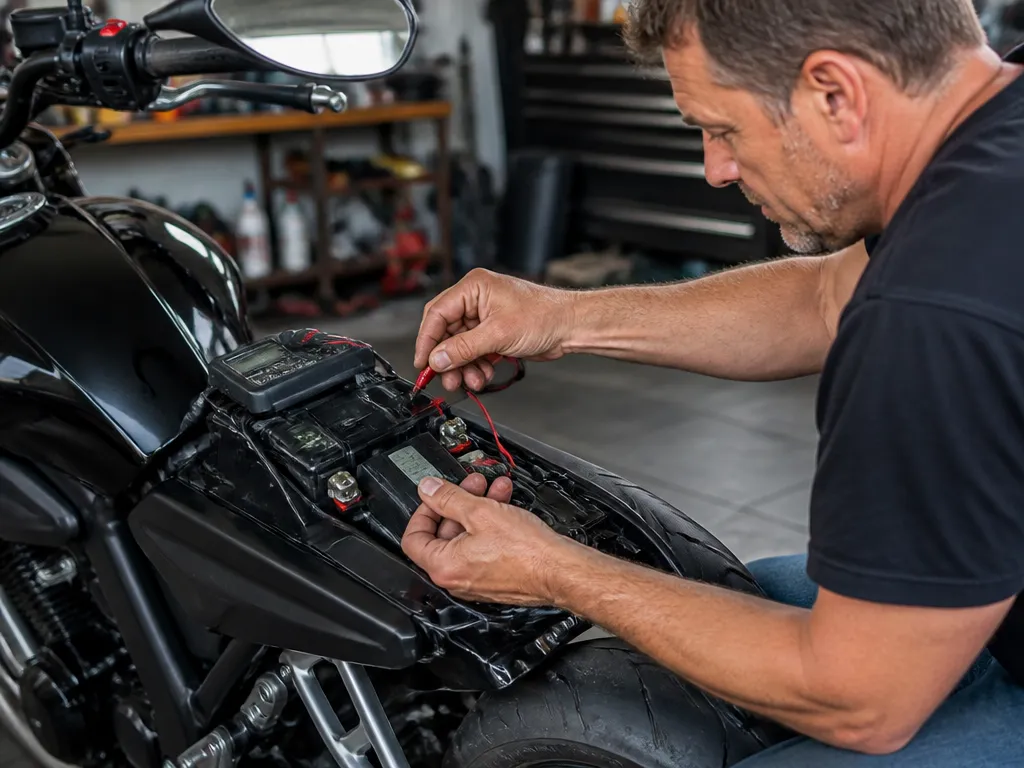
Motorcycle batteries last longer when the charger matches the battery chemistry and uses the correct voltage profile. Wrong mode or sustained overvoltage is a common reason for early capacity loss, especially with AGM and gel. Charger compatibility is also what stops “good intentions” from turning into heat and venting.
Match Chemistry To Charger Profile (Lead-acid Vs Agm Vs Gel Vs Lithium)
Motorcycles often use 12 V lead-acid batteries, with common subtypes: flooded lead-acid, AGM, and gel. Each subtype needs a different charge curve, and many modern chargers include a chemistry selector or program name. Lithium motorcycle packs usually require a dedicated lithium profile and a charger that is explicitly compatible with that pack’s BMS behavior.
For lead-acid chargers, the worst mismatch is an AGM or gel pack being charged as if it were flooded lead-acid. That can drive the battery hotter than expected and raise the chance of permanent damage from overcharge. For lithium packs, using an incorrect profile can trigger the BMS to refuse charge or to stop the charge early.
Overvoltage And Wrong Mode Risk: Why “Always On” Isn’t Always Safe
Overvoltage accelerates grid corrosion and water loss in flooded cells, and it can permanently reduce capacity in AGM. Gel batteries are more sensitive to high voltage, because their electrolyte is immobilized and gas behavior differs from flooded types. Even “smart” chargers can misbehave if the chemistry selector is wrong or if the battery is already failing and not accepting charge normally.
Some riders leave a maintainer connected all winter. That can be fine with a true maintainer that holds a correct float level for the battery type, but a generic 12 V power supply set too high acts like a slow overcharger. When unsure, use the charger mode intended for your battery subtype and verify it is actually switching to a maintenance stage.
Safety signs to stop charging: battery case swelling, hot casing, strong odor, leaking, or rapidly rising temperature. Disconnect and check the battery before continuing.
Maintainer Vs Regular Charger (And When To Use Each)
A regular charger is for bringing the battery up from a low state, usually using a bulk and absorption stage. A maintainer is for keeping a battery near full without pushing extra energy in during storage. If you use a charger as a “leave it forever” setup, it can drift into overcharge depending on its control method and the temperature around the battery.
Use a maintainer when the battery is already fully charged and you are waiting for long storage or infrequent riding. Use a proper charger when you suspect undercharging or when the battery is significantly discharged. For sealed batteries (AGM and gel), this distinction matters because you cannot correct damage by adding water.
Winter Storage And Maintenance
Cold storage helps, but winter kill switches are usually sulfation from undercharging and faster self-discharge from bad storage habits. A smart storage routine keeps the battery near full charge, limits corrosion at the terminals, and prevents parasitic drains from quietly depleting it.
Storage Targets That Prevent Sulfation And Self-discharge
For lead-acid (including AGM and gel), the safest general goal is a cool, dry place with stable temperatures, since wide temperature swings increase condensation risk and stress the battery plates. Store the battery fully charged before you park the motorcycle, and keep it in a ventilated spot so any normal venting (flooded types) is not trapped.
For lithium motorcycle packs, store according to the manufacturer’s state-of-charge guidance and temperature limits printed on the pack label or manual. If the pack has a battery management system (BMS), it will protect against many electrical faults, but long periods at very low charge can still reduce usable capacity over time.
Charging Cadence And Safe Top-ups During Storage
A good storage charger is usually an automatic maintainer or a multi-stage charger with a battery chemistry setting (flooded, AGM, gel, or lithium). Charge cadences should be triggered by monitored voltage, not by a fixed calendar, because temperature changes self-discharge rates.
For lead-acid batteries, short “refresh” charges are better than letting the battery sink low for weeks. A constant high-voltage attempt to “catch up” can overheat flooded cells and increase grid corrosion in some AGM designs, so respect the charger’s algorithm and do not defeat it.
Terminal Cleaning And Corrosion Prevention
Corroded terminals increase resistance, which makes cranking weaker and can cause voltage drop during starting. Winter humidity accelerates corrosion, so clean and protect terminals before storage and keep them dry after any service.
Parasitic Drain During Storage, And When To Disconnect
Modern motorcycles can draw current even while “off,” especially if alarm systems, trackers, or certain electronic modules remain active. Parasitic drain can erase months of charge, and the battery ends up sulfated even if you had it “fully charged” at the start of winter.
Disconnecting the battery can stop most drains, but some motorcycles require reset procedures for clocks or throttle learn. If your bike has an always-on system, use a battery maintainer rather than unplugging and forgetting.
Test Vs Replace Decisions
Charging trouble is usually easier to fix than internal battery failure, so your goal is to decide whether a correct charge can recover performance. Battery replacement is the safest money-saving move when health tests keep confirming low capacity after proper charging, or when the battery shows damage like swelling or heavy shedding.
Installation practices can prevent “false failures” caused by poor connections or repeated deep cycling. Terminal cleanliness, correct torque, tight mounting to reduce vibration, and fixing charging-system issues often extend battery life more than any aftermarket trick.
Quick Summary
Motorcycle batteries commonly last about 2 to 4 years for flooded lead-acid, 3 to 5 years for AGM and gel, and 3 to 8 years or longer for lithium packs. Chemistry, charging profile, heat, vibration, storage, and parasitic drain all affect service life. Slow cranking, low resting voltage, and heavy cranking sag indicate that further testing or replacement may be needed.
Frequently Asked Questions
How Long Do Motorcycle Batteries Typically Last Before They Need Replacing?
Most motorcycle batteries last around 3 to 5 years when they are kept charged and stored properly. If your bike has frequent short rides, deep discharges, or long storage without a maintainer, the battery can fail sooner.
What Charger Should I Use If I Want To Charge My Motorcycle Battery Safely?
Use a charger that matches your battery type and output voltage, typically a 12V charger for 12V lead-acid batteries. For lead-acid, a multi-stage smart charger or a battery maintainer with a proper charge profile is safer than a basic trickle charger.
How Does Heat Affect Motorcycle Battery Life?
Heat shortens battery life, and it also speeds up corrosion and electrolyte breakdown in lead-acid batteries. If your battery sits near exhaust heat or you store the bike in a hot area, you can see earlier capacity loss.
How Can I Tell If My Motorcycle Battery Is Getting Unsafe Or Failing?
If you notice swelling, a cracked case, leaking, strong odor, or corrosion around terminals, stop using it and replace it. For charging, also avoid overheating, and never charge a damaged battery, since venting and internal failures can create fire risk.
What Are Common Buying Mistakes That Make Motorcycle Batteries Last Less Time?
Two big mistakes are buying the wrong battery size or terminal layout and using the wrong charge system, like a charger meant for a different chemistry or voltage. Also avoid letting a battery sit discharged, since repeated deep discharge is one of the fastest ways to cut lifespan.

- 10 Best Battery For Generator Battery Safety Option 2026 - October 12, 2026
- 10 Best Battery For Generator Battery Safety 2026 - October 12, 2026
- 10 Best Battery For Generator Battery Rv Upgrade 2026 - October 12, 2026