How Long Do Boat Batteries Last?
Boat battery life usually comes down to one spec: how deep you routinely discharge it. A starting battery might crank for years, but a house battery can age fast if it sits half-charged or gets the wrong charger settings. The common mistake is trusting the alternator alone. You will get practical lifespan ranges by battery type, the charging habits that shorten life, and quick checks to spot failure before you are stranded.
Lead-acid boat batteries typically last about 3 to 5 years, depending on use and maintenance. AGM and gel often run longer, commonly around 4 to 7 years. Lithium batteries are usually longer-lived, often 8 to 12 years. Starting batteries can often last more calendar years than deep-cycle house batteries, although house batteries are designed for repeated cycling.
How Long Do Boat Batteries Last?

Typical marine battery life ranges from about 3 to 5 years for many lead-acid boat setups, with some systems reaching closer to 6 to 8 years when they are charged correctly and stay healthy. Starting batteries often last more calendar years than house or deep-cycle batteries because they are used mainly for short, high-current cranking events, while house batteries are cycled more frequently. Chemistry and your charging habits change the outcome as much as calendar age.
Typical Lifespan By Chemistry And Use Pattern
Lead-acid batteries (flooded, AGM, and gel) age quickly when they run hot, sit undercharged, or get overcharged. Lithium (with an appropriate marine BMS and charger profile) can last longer in cycle terms, but it still depends on charge voltage limits, temperature management, and whether the battery ever gets stressed outside its ratings.
| Battery type | Common marine role | Realistic lifespan range | What most limits it |
|---|---|---|---|
| Flooded lead-acid (FLA) | Starting or house | ~3 to 5 years | Sulfation from low charge, water loss, vibration damage |
| AGM lead-acid | Starting or house | ~4 to 7 years | Overcharging heat, chronic undercharge, internal plate aging |
| Gel | House (less common on cranking-only roles) | ~4 to 7 years | Wrong charger profile (too high voltage), heat |
| Lithium (LiFePO4) | House (most common) | ~8 to 12+ years | Out-of-range charge/temperature, BMS trips, rare but possible abuse |
For practical boat ownership, expect different “death modes” for starting versus house batteries. A starting battery usually survives a few seasons if it gets fully recharged after cranking, but it still ages when it is repeatedly left at a low state of charge or when charging voltage is consistently wrong. A house or deep-cycle battery is cycled more often, so depth of discharge and how long it sits partially charged drive lifespan harder than the occasional crank.
Why “Years” Is Not The Same As “Cycles”
Calendar life is real, but cycle life is usually the swing factor for house batteries. “Cycles” count meaningful charge and discharge events, yet two identical boats can rack up very different cycle stress because one owner regularly discharges deeper and then leaves the battery sitting for hours or overnight.
In practice, the same battery can last far longer when it is held near a healthy state of charge and charged with the correct profile.
For example, a deep-cycle battery that frequently drops low and then sits undercharged before charging can accumulate sulfation, which reduces capacity even if the battery looks “fine” on the surface. A lithium pack can also age faster if it repeatedly sees excessive heat or is charged above its limits, even when the battery seems to accept charge normally.
Safety note: Stop charging and investigate if you see swelling, cracked cases, strong odor, hot terminals, or rapid venting. These conditions can indicate internal damage or severe overcharge.
Lifespan Factors On Boats
Boat battery life is shortened most by staying too long at a low state of charge, running at the wrong charge voltage, and letting heat plus vibration do damage to the plates and connections. Marine electrics also create extra corrosion risk at terminals, and that raises resistance so the battery works harder for the same starting power.
Charging Behavior And Depth Of Discharge
Lead-acid batteries age faster when they see frequent deep discharge (high depth of discharge) and when they sit partially charged for long periods. A typical on-boat pattern, used for days then charged back up, can still be hard on batteries if charging never reaches a full “absorb” stage or if the charge controller cycles oddly.
Charging mistakes often come from alternator limits or wiring voltage drops. Alternator charge that is too low leads to chronic undercharging, sulfate buildup, and loss of capacity, while too high voltage (or the wrong charger settings) increases gassing and grid corrosion in flooded types, dries electrolyte, and can overheat sealed designs.
Temperature, Vibration, And Physical Damage
Heat is the quickest aging accelerator for most marine battery types, because it speeds grid corrosion and electrolyte degradation. Cold weather also hurts usable capacity, and cold starts force higher current draw, which can increase voltage sag and stress the battery when it matters most.
Vibration loosens internal connections and damages thin plates over time, especially with starting loads and rough boarding ramps. Venting issues matter too: flooded batteries need proper venting to prevent pressure and fumes buildup, while AGM and gel batteries need sealed behavior maintained, so a cracked case or blocked vent can shorten life.
| Condition on the boat | What it damages | What to check |
|---|---|---|
| Heat soak in bilge or under a tight cover | Accelerated corrosion, capacity loss | Casing temperature after charging, airflow around the battery compartment |
| Loose hold-downs or poorly supported cables | Cracked lugs, internal connection fatigue | Wobble by hand, fretting marks, visible cable strain |
| Overfilled flooded cells or blocked venting | Electrolyte loss, contamination, pressure stress | Electrolyte level, vent openings clear |
Corrosion, Terminals, And Off-season Storage
Corroded terminals raise contact resistance, which makes the battery run hotter and causes larger voltage drops during cranking. Loose or mismatched hardware worsens the problem, so clean posts and lugs, tighten to the correct torque per the battery and terminal manufacturer, and replace any cable ends that look burned, greened, or pitted.
Off-season habits often decide whether a battery survives to next season. Batteries left at a low state of charge for months develop sulfate buildup, and many failures show up after winter storage because the battery never fully recovered. Storing at a controlled cool temperature and keeping a correct maintenance charge reduces self-discharge effects.
Safety warning: Swollen cases, hissing/venting that won’t stop, cracked plastic, or a strong burning smell are replacement triggers. Disconnect power, ventilate the area, and avoid charging a damaged battery.
Maintenance Differences By Battery Type
Flooded lead-acid batteries need routine electrolyte level checks; aging accelerates when electrolyte drops below plate surfaces because parts of the plates dry out. AGM and gel are sealed, so they tolerate vibration better and need less routine attention, but they are more sensitive to incorrect charging voltage and trapped heat.
Sealed units also have less warning before they fail, since there is no water to “save” the situation and no easy visual indicator of electrolyte loss.
Charging Strategy That Ages Batteries
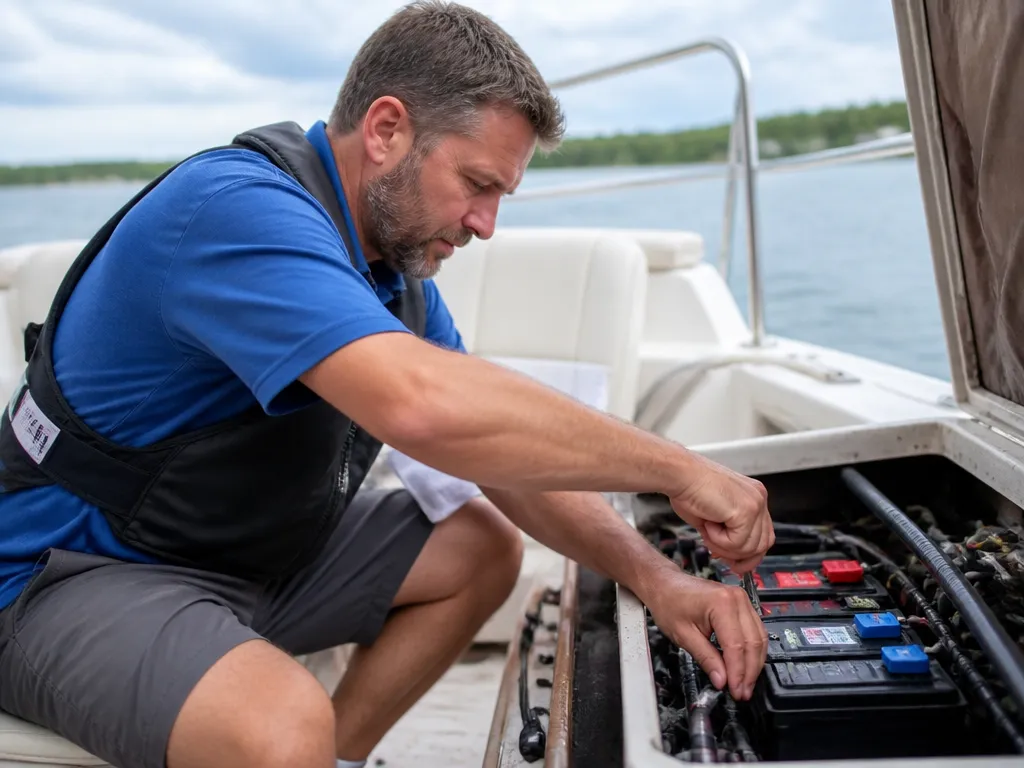
Correct charging profile is a major reason marine batteries last longer or fail early. A charger that keeps the battery at the wrong voltage, spends weeks undercharged, or pushes constant high voltage can reduce capacity through plate corrosion, sulfation, and heat.
Most good marine chargers use a multi-stage profile. Bulk brings the battery up quickly (higher current), absorption holds a target voltage until the current tapers, and float maintains the battery at a lower voltage for long-term storage. A “float” charger that never completes absorption can keep a lead battery in a high-voltage, gassing condition for hours or days, which accelerates wear.
| Chemistry | What to verify on the charger label/manual |
|---|---|
| Flooded lead-acid | Has a flooded setting and a float voltage appropriate for flooded batteries, plus overcharge control. |
| AGM | Has an AGM setting with absorption and float voltages for AGM, not flooded. |
| Gel | Has a gel setting, because gel batteries are more sensitive to overvoltage. |
| Lithium (drop-in or DIY) | Specifies lithium charge voltage and uses a matching BMS protocol, since lithium profiles differ widely. |
Boats add a twist: alternators and smart chargers can fight each other. Some alternator regulators push a high charging voltage during engine run, while a shore charger may be set for a different chemistry or stage behavior. Before you assume compatibility, confirm that the charger has the correct chemistry selection and that the alternator does not exceed the battery’s accepted charge regime.
For example, a common issue is using a flooded-lead profile on AGM house batteries. AGM typically needs different absorption and float behavior, and the wrong setting can shorten lifespan even if the batteries seem to “work” for a season.
Maintenance is part of charging strategy. Clean terminals, ensure tight connections, and replace damaged charger leads, because higher resistance forces extra voltage under load and creates heat at the battery posts.
End-of-life Signs You Can See
Weak cranking, voltage sag during start, and a charger that cannot hold a full charge are the clearest end-of-life clues. Corrosion, bulging, leaks, or heavy buildup at terminals are visual red flags that mean “replace soon” rather than “recondition and hope.”
Cranking Gets Weaker Or Slower
Slow cranking or the starter sounding strained is the most common “getting old” symptom on boats. This can come from sulfation (lead-acid), loss of effective capacity (AGM/gel), or a failing connection that adds resistance (loose, corroded, or heat-damaged terminals).
Start with the battery and cables together: check for tight, clean connections and look for heat discoloration near lugs. If terminals are clean and tight but the battery still cranks poorly, the battery is likely near end-of-life because internal resistance has risen and causes the voltage to collapse under high current.
Voltage Sags Under Start Or High Load
Voltage that drops hard when the engine cranks, then refuses to rebound after rest, is a strong diagnostic. For lead-acid batteries, this often tracks with a capacity loss or a cell imbalance, and you may see the same problem with inverters and high-draw loads.
For example, a battery that reads “okay” at rest (after sitting) but collapses during cranking usually has high internal resistance. Measure voltage during the event if you can, then repeat after charging fully with the correct charger type and settings.
Frequent Recharging With Little Lasting Recovery
In practice, frequent top-ups that do not restore normal performance usually means the battery is not reaching a healthy fully charged condition. Undercharging accelerates sulfation in flooded and sealed lead-acid batteries, while chronic heat plus partial state of charge can shrink usable capacity over time.
For house banks, this shows up as “it lasted a short outing, then needs charging again” even when loads are similar. If you also see slow recovery after charging, the battery is more likely worn out than your onboard charging plan.
Poor Charge Acceptance, Or A Charger That Will Not Finish Normally
Chargers that repeatedly stall at an early stage, cycle through stages without reaching a stable finish, or keep drawing current with little improvement are common failure behavior. This can be battery-related (bad cell(s), sulfation, or a failing internal connection) or charger-related (wrong profile for flooded versus AGM or gel).
Before condemning the battery, confirm the charger matches the chemistry and voltage settings shown on the battery label and your charger manual. A mismatched profile can make a good battery behave “bad,” so the fix can be as simple as selecting the correct battery type.
Visible Damage: Bulging, Leaks, And Heavy Corrosion
Bulging cases, leaking electrolyte, or a strong, persistent sulfur smell are immediate replacement triggers. Terminal corrosion that is thick, wet-looking, or spreading around the posts can raise resistance and heat the joint, which makes batteries fail faster.
Safety warning: swollen or leaking batteries can vent and overheat. If any case deformation or liquid is present, stop charging, keep the battery in a ventilated area away from flames, and plan a proper disposal or recycling path.
Age-based Rules Of Thumb (And When To Ignore Them)
Age helps estimate risk, but it is not proof. A well-maintained starting battery might outlast a neglected one by years, while a battery exposed to repeated heat, deep discharges, or long storage in a low state can fail early even if it is “not that old.”
Ignore age when symptoms are clear: weak cranking, voltage collapse under load, and inability to charge fully are direct indicators. Use age as a tie-breaker only after you rule out corrosion, loose wiring, and charger mismatch.
Simple Battery Health Checks
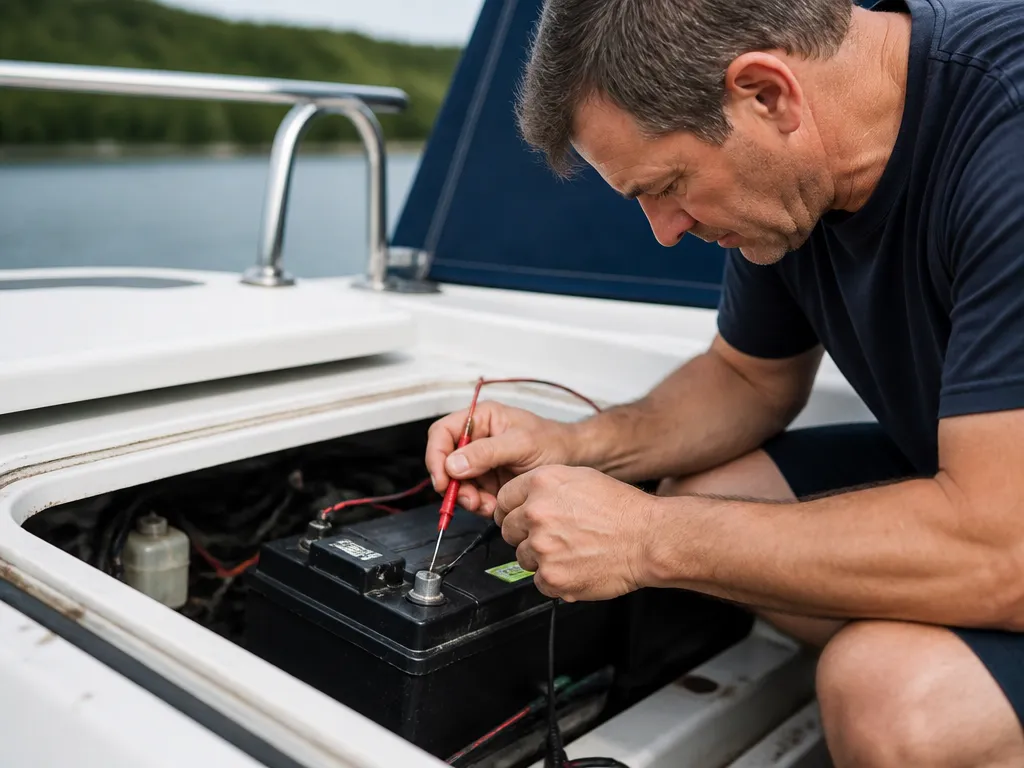
Resting voltage plus a controlled load test style check can tell you a lot about whether a boat battery is sick or just needs a better charge. Use a voltmeter, check recovery after load, and treat any major voltage sag or inability to recover as a replacement trigger. Stop guessing once readings contradict the charger settings you are using.
Extend Battery Life On Your Boat
Battery lifespan on boats is mainly won or lost through charging correctness, how deeply you discharge, and how long the battery sits cold or undercharged. Most “early deaths” come from a charger that does not match the battery chemistry, repeated low state-of-charge storage, or heat and vibration that drive corrosion and plate damage.
Match The Charger To The Battery Chemistry
Marine charging is chemistry-specific. Flooded lead-acid needs regular absorption and periodic equalization (when the manufacturer allows it), AGM typically needs higher absorption voltage control with a strict no-equalization policy (unless the battery maker states otherwise), and gel batteries require gel-compatible voltage limits.
Install only a charger or alternator-regulator setup that your battery manufacturer supports. Check the battery case label for the exact chemistry and model series, then confirm the charger manual lists compatible modes and voltage targets for that chemistry.
Use A Maintainer During Off-season Storage
A maintainer prevents sulfation, the slow buildup that happens when lead-acid batteries sit at a low state-of-charge. Use a charger that is labeled for battery type and supports a storage/float mode, or a smart maintainer that senses state-of-charge and tapers appropriately.
For example, storing a flooded or AGM house battery over winter works best when it starts storage fully charged and stays near full charge rather than hovering at “half empty.” Keep ventilation open so charging gases (flooded types) can dissipate, and avoid sealing batteries in tight compartments.
Set Realistic Discharge Limits For Longer Cycle Life
Deep cycling shortens lead-acid life because more active material is stressed each discharge. Flooded lead-acid and AGM can tolerate more depth than starting batteries, but repeated heavy discharges still reduce lifespan.
Practical targets by use case help you plan loads without guessing:
| Use case | Typical battery type | Practical depth of discharge (DoD) target | Trade-off |
|---|---|---|---|
| Starting only (cranking) | Starting lead-acid | Keep discharges shallow, avoid repeated drain cycles | Prioritize reliable starts over energy capacity |
| House power, lights, electronics | AGM or deep-cycle flooded | Often best to stay around 25% to 50% DoD | More cycles and less early capacity loss |
| Boondocking, heavy loads | Deep-cycle flooded or AGM (if designed for it) | Use 50% to 60% DoD only when you must, then recharge fully | Shorter lifespan but better than chronic undercharge |
Safety and longevity rule: after any deeper discharge, recharge promptly with the correct charger profile and do not leave the battery partially depleted.
Service Terminals, Water Levels (If Flooded), And Installation Vibration
Corrosion at terminals increases resistance, which creates heat, voltage sag, and extra stress on cables and battery plates. Clean the posts and cable clamps with a battery-safe cleaner, tighten to the manufacturer’s torque spec, and coat with a corrosion inhibitor if the terminal kit recommends it.
Flooded lead-acid batteries need water maintenance to replace electrolyte lost to charging. Add only distilled water, stop at the marked fill level, and keep plates covered before charging; overfilling during active charging can overflow and accelerate corrosion.
Storage Checklist That Avoids Sulfation And Damage
Storage quality is the difference between “works for years” and “fails early.” Store batteries at a high state-of-charge, keep them cool but not freezing, and use the correct maintainer so voltage stays in the intended range for your chemistry.
End-of-life signs to act on: starting slows noticeably, voltage sags quickly under load, the battery repeatedly fails to reach charge acceptance, or the case shows swelling. Any swollen or hot battery needs immediate isolation from charging and further use until inspected by a qualified technician.
Replacement And Compatibility Guide
Battery life on a boat mostly ends due to charging mismatch, repeated deep discharge, or heat, so the replacement decision should start with troubleshooting and compatibility checks. Matching the battery chemistry to your charger and alternator charging behavior is the fastest way to avoid a “new battery, same failure” cycle.
Replace Vs Troubleshoot: Decide In Order
Start with quick tests before you buy, because a sulfated or undercharged battery can look “dead” while the charger, wiring, or charging profile is the real problem.
For example, a failing charger can cause chronic undercharging that shortens life, so replacing the battery alone delays the next failure.
Use age as a triage signal, but do not treat age alone as proof. A battery that is consistently run low, stored discharged, or overheats can fail far earlier than the calendar suggests.
Match Battery Type To Charger And Alternator Behavior
Lead-acid batteries want correct voltage stages and a charger designed for that chemistry. AGM, gel, and flooded lead-acid differ in their acceptance voltage and how they tolerate overvoltage, so the wrong charger profile can vent, dry out, warp plates, or trigger protective behavior.
Alternators also matter, because some boat charging systems run higher voltage during bulk charging and then rely on a later absorption phase.
For example, a battery wired through a battery isolator or a smart regulator can experience different charging history than you expect, especially if you idle a short time frequently.
| Battery chemistry | Compatibility must-check | Common mismatch failure mode |
|---|---|---|
| Flooded lead-acid | Charger mode for flooded, ventilation, water access | Overvoltage dries water; undercharging accelerates sulfation |
| AGM | AGM charge profile, correct absorption voltage | Overvoltage can permanently reduce capacity; chronic undercharge still sulfates |
| Gel | Gel-specific profile (lower voltage tolerance) | Overvoltage can cause damage and lasting capacity loss |
| Lithium (drop-in “marine” packs vary) | Charger explicitly rated for lithium, correct voltage targeting, BMS protections | Wrong charging voltage can trigger cutoffs or early wear |
Size Capacity For Your Loads (How To Calculate What You Need)
Capacity sizing is where “premature failure” becomes predictable, because batteries die faster when you repeatedly discharge deeply and then do not recharge fully. Start by measuring daily energy use (hours multiplied by watts for each device) and convert it to amp-hours at your system voltage.
To estimate amp-hours, divide watt-hours by the system voltage and allow additional capacity so normal use does not require excessive depth of discharge.
For example, if you run a refrigerator plus electronics and you only motor for a short time, the battery may never reach full absorption, which steadily reduces capacity over seasons.
If Switching Chemistries: Verify First Before You Connect
Changing chemistry is not a “bolt it on” swap because the charging profile and safety behavior are different. Before connecting a new chemistry, verify your charger settings (including battery type selection), and confirm your alternator charging path delivers the expected voltage pattern to the battery.
Switching from a flooded or AGM bank to lithium often improves usable energy, but a charger that is still set for lead-acid can cause charging instability and premature degradation. Switching the chemistry without updating charging settings is a common reason “new lithium” fails early.
Core Buying Checks: What To Inspect And What To Document
Buy and install with paperwork in hand, because warranty and performance claims depend on condition at time of service. Inspect the battery date code, check the case for damage, and verify the battery type matches what your charging system supports.
Replacement batteries also fail when you repeat the original mismatch, such as using an incorrect charger mode, leaving a parasitic load running, or storing the boat with a low state of charge. Treat the battery and the charging system as one system so the new pack has the same chance to last.
Quick Summary
Boat battery life usually depends on how deeply you discharge it, because a starting battery can keep cranking for years while a house battery ages faster if it sits half-charged or is charged with the wrong settings. The article gives practical ranges by chemistry, with lead-acid often lasting about 3 to 5 years, AGM and gel commonly around 4 to 7 years, and lithium often 8 to 12 years. It also warns that relying on the alternator alone can be a mistake.
Charging strategy controls lifespan as much as calendar age, because undercharging leads to sulfation, letting batteries sit low-charge for weeks accelerates damage, and overcharging can overheat and dry out lead-acid. Watch for end-of-life signs like slow cranking, big voltage sag, and poor charge acceptance, then confirm you have the correct chemistry and system voltage from the label. If you see swelling, cracked cases, strong odor, hot terminals, or rapid venting, stop charging and investigate, and the single most important takeaway is to match charger profile to battery chemistry.
Frequently Asked Questions
How Long Do Boat Batteries Usually Last Before They Need Replacing?
It varies a lot, but many lead-acid boat batteries are replaced after roughly 3 to 6 years of service when used and charged correctly. Heavy cycling, long storage while partially charged, and frequent heat acceleration can shorten that, so check age and performance rather than the calendar alone.
What Charger Specs Do I Need So My Boat Battery Charges Correctly?
Match the charger to the battery type, voltage, and charge profile, for example 12 V lead-acid versus 12 V lithium. If your battery is lead-acid, use a charger labeled for the right charging mode (bulk, absorption, and float), and keep the charger voltage within the manufacturer’s limits to avoid overheating and premature failure.
Can Heat From Engine Charging Or A Charger Reduce Boat Battery Life?
Yes, heat can significantly shorten battery life, especially for lead-acid batteries. Aim to keep batteries as cool as practical, vent them properly, and avoid mounting where they bake in direct sun or sit right beside hot exhaust or high-current wiring.
Is It Safe To Leave A Boat Battery On A Charger For Days?
It can be safe if the charger is an appropriate, battery-type compatible model with a correct float or maintenance mode. If you are using a basic or underspecified charger, do not leave it connected unattended for long periods, and always ensure ventilation because charging can produce hydrogen gas (a fire risk).
What’s A Common Buying Mistake That Makes Boat Batteries Die Early?
Buying the wrong battery type or mismatched charger profile is a common mistake, especially switching to lithium without changing the charging setup. Also avoid under-capacity batteries and chargers, because chronic undercharging can leave lead-acid batteries sulfated and shorten life rapidly, even if the battery still shows some voltage.

- 10 Best Battery For Generator Battery Safety System 2026 - October 12, 2026
- 10 Best Battery For Generator Battery Safety Option 2026 - October 12, 2026
- 10 Best Battery For Generator Battery Safety 2026 - October 12, 2026