How Long Do Watch Batteries Last?
Most watch batteries last years, but the exact number depends on the battery size, chemistry (silver-oxide or lithium), and how hard your watch is working. If your timekeeping starts drifting, the battery is usually already weak. This guide helps you estimate lifespan ranges, spot early failure signs, and replace the battery safely without destroying seals or risking leakage.
Watch batteries usually last about 1 to 5 years, depending on size and chemistry. Silver-oxide button cells in quartz analog watches often run closer to 3 years, while some lithium types (like CR series) can last closer to 4 to 5 years. Battery life drops with high drain features and extreme temperatures.
How Long Do Watch Batteries Last? Chemistry
Recommended Products


Most wristwatch batteries are silver-oxide or lithium primary cells, and typical service life is commonly measured in about 1 to 3 years, sometimes longer depending on the watch’s power draw and the exact cell. Your watch’s indicator type matters too, a three-hand quartz watch usually lasts longer than a chronograph or any model that runs motors or displays more often.
Battery chemistry affects how the cell‘s voltage holds up under load, how quickly capacity falls with time, and how sensitive the cell is to temperature. Silver-oxide cells are known for stable voltage during discharge, while lithium primary cells often do well in watches that draw power in pulses and may tolerate cold better.
| Chemistry (typical in watches) | Common behavior | Longevity trade-off |
|---|---|---|
| Silver-oxide | More stable voltage under many quartz loads | Capacity can still drop faster in high draw watches |
| Lithium primary (often “coin cell” types) | Good performance with pulse loads | High temperature storage can reduce real lifespan |
| Alkaline (less common in watches) | Higher self-discharge risk | More likely to age out sooner |
Real-world longevity is mostly driven by power draw and how the battery is treated after installation. Watches that run seconds continuously, drive backlights, or update displays frequently drain cells faster, and cold weather can increase apparent “weak battery” symptoms even if the cell is not fully spent.
Rule of thumb: A battery with the correct type can still fail early if the watch’s drain is higher than normal or if the contacts are compromised.
Watch for these dying-battery signs before the watch fully stops. A second hand that jumps in larger increments, delayed start after you tap the watch, dim or unstable display segments (for digital models), or intermittent operation are common warning patterns.
For a battery replacement later, treat the cell like a safety-critical component. Swollen, hot, leaking, or crusty contact areas are stop-immediately signs and the movement should be serviced rather than “troubleshot” with repeated attempts.
Common Watch Battery Sizes
Recommended Products


Watch batteries are coin cells, and the size code on the metal edge tells you the physical diameter and thickness. Most brands use either silver-oxide (SR series) or lithium manganese dioxide (CR series) chemistry in common sizes like SR44, SR621SW, and CR2032.
Swapping by “looks similar” is a bad idea because a wrong thickness or polarity can damage the movement or prevent reliable contact. The two big cues are the stamped code (for example, SR626SW) and the cell chemistry (SR vs CR), since chemistry affects voltage and drain behavior.
Quick Sizing And Chemistry Reference
Below are widely encountered coin-cell codes in watches and key fobs. The exact chemistry matters for function, since SR and CR coin cells have different nominal voltages and discharge curves.
| Code | Chemistry | Common use | Compatibility notes |
|---|---|---|---|
| SR44 | Silver-oxide | Many quartz watches, sports watches | Often longer service than older zinc systems, needs exact size match. |
| SR621SW | Silver-oxide | Compact dress and fashion watches | “SW” variants share form factor, still verify the full code. |
| SR626SW | Silver-oxide | Very common quartz watch size | Thickness and label matter, confirm it matches the old cell. |
| SR936SW | Silver-oxide | Some mid-size quartz watches | Be strict about code and diameter, this size is easy to mix up. |
| CR2032 | Lithium manganese dioxide | Watches, but also electronics and calculators | Common in small devices, often not a direct replacement for SR cells. |
| CR2025 | Lithium manganese dioxide | Ultra-slim watches and key fobs | CR2025 is thinner than CR2032, fit is sensitive. |
For example, a CR2032 may physically fit a watch cutout but still cause poor timekeeping if the device expects an SR626SW cell’s voltage and load profile. Physical fit and correct code are both required.
In practice, watch battery replacement is easiest when you measure what is already in the case. Identify the exact code printed on the original coin cell, match it at the same chemistry prefix, then confirm the cell sits flush without stress on the holder.
Safety note: If a coin cell looks swollen, leaks fluid, or shows heavy corrosion, stop and clean the compartment gently with appropriate care before installing a new cell.
Compatibility is usually straightforward when you match the stamped size code, but it gets tricky with generic “equivalents” listings. If the exact code is not available, confirm the watch model’s battery specification rather than guessing between similar-looking coin cells.
When A Battery Dies: Signs And Timing
Recommended Products


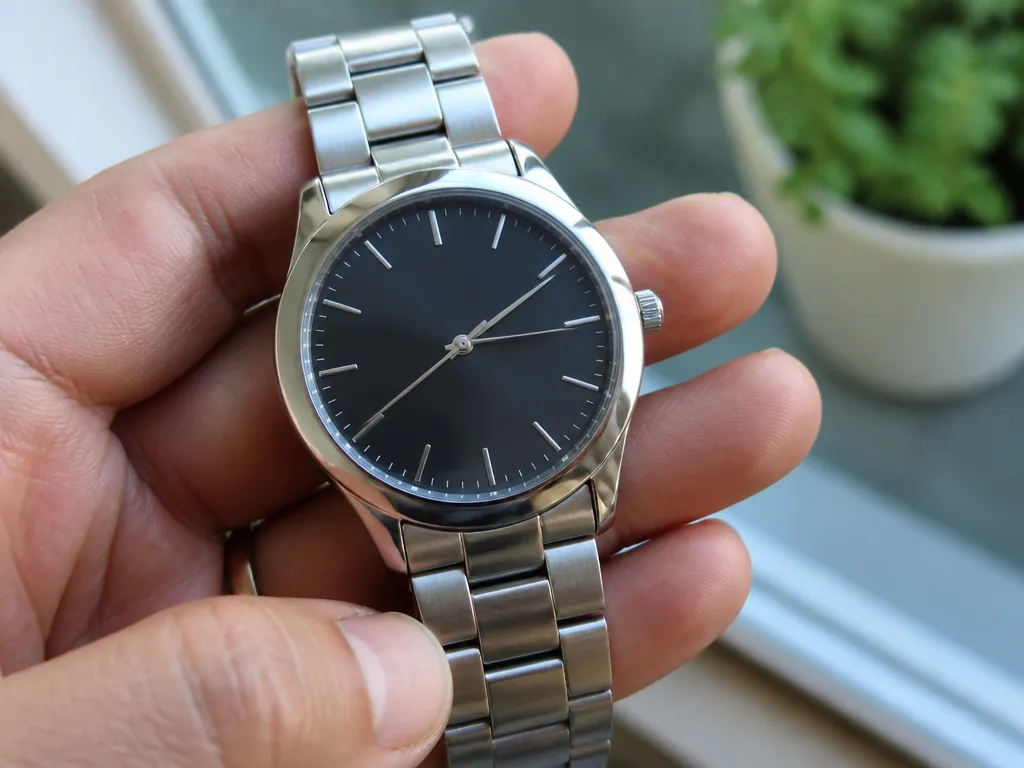
A watch battery usually gives warning before it stops completely, so early behavior changes help you schedule a swap. The fastest symptom is often the seconds hand starting to skip, then running slower, then restarting, and finally stopping when the voltage drops too low.
Watch power draw is small, so a “near-dead” battery can still run the movement for days or weeks while timing quality gets worse. A battery replacement is worth doing when timing errors appear, because repeated low-voltage operation can increase wear on the movement.
Early Warning Signs In Timekeeping
Seconds-hand behavior is the best clue for many quartz watches. A healthy battery keeps the seconds hand moving in a steady rhythm, while a failing battery tends to show irregular steps, longer pauses, or a hand that advances in inconsistent jumps.
For watches with other indicators, a dying battery can also trigger “odd” mode behavior. Common examples include the date changing slowly, the chronograph stuttering, or the watch resetting to a default state after it sits for a while, because the movement momentarily loses enough voltage to maintain its electronics.
Additional Symptoms To Confirm Replacement Needs
Battery failure can be battery-only, but it can also be battery-plus-corrosion. If you open the case back for inspection later, look for white or green crust around the battery contact, a loose or cracked battery holder, or any wet or oily residue that suggests leakage.
Temperature changes can temporarily mask failure, so treat “it works in the cold” as a weak signal.
In practice, if the watch keeps drifting or behaving erratically after being at room temperature, the battery is likely already below the movement’s reliable operating range.
Safety note: If the battery is swollen, hot, or the watch casing smells strongly of chemicals, stop handling and have it serviced. Swollen cells can vent, and leaking cells can damage movement parts even if the watch starts again briefly.
Do-it-yourself Replacement Guide
Recommended Products

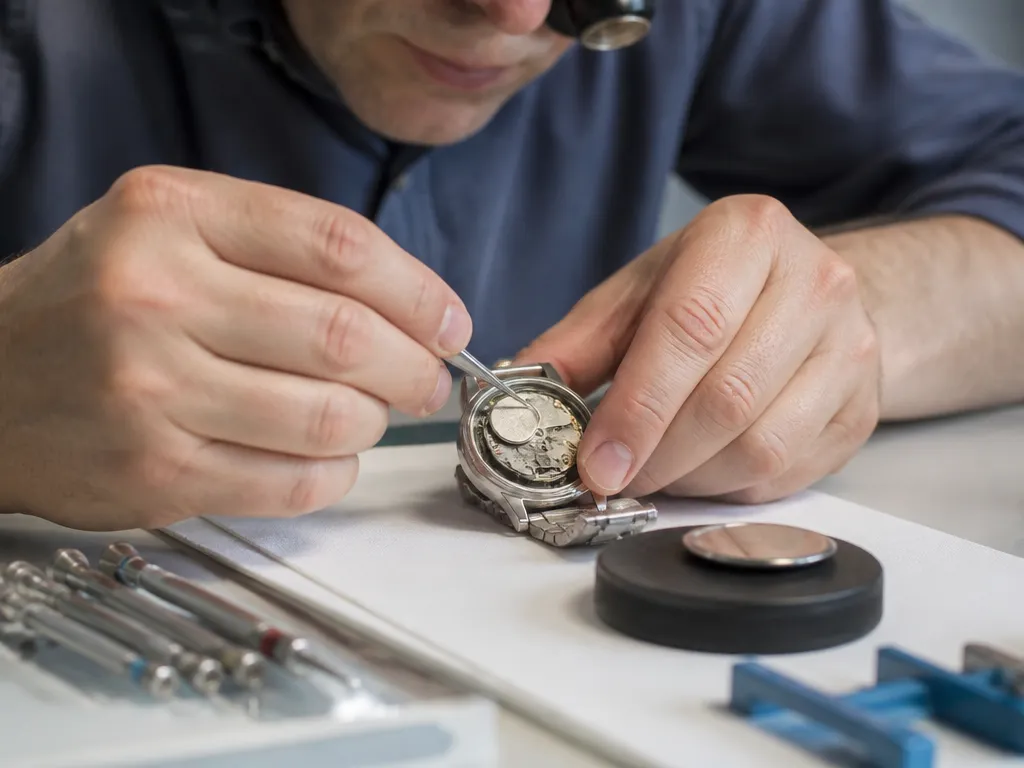
Most watch batteries last 1 to 5 years depending on the watch type and how it is used, and a worn cell can leak and corrode parts. A careful DIY swap takes only a few minutes once you have the right cell size, a clean contact surface, and a proper gasket and case-seal method.
Before opening the case, prepare a clean workspace and confirm the exact battery reference on the old cell, since “close enough” sizes cause poor fit and unreliable contact. Gather non-metal tools, a magnifier, and a bright light, then plan to inspect for corrosion (green or white crust), cracks, or a swollen battery.
Care rule: if battery leakage is present, corrosion is inside the movement area, so cleaning and sealing become precision work. Stop DIY and get professional service to prevent ongoing damage.
Safety And Water Resistance
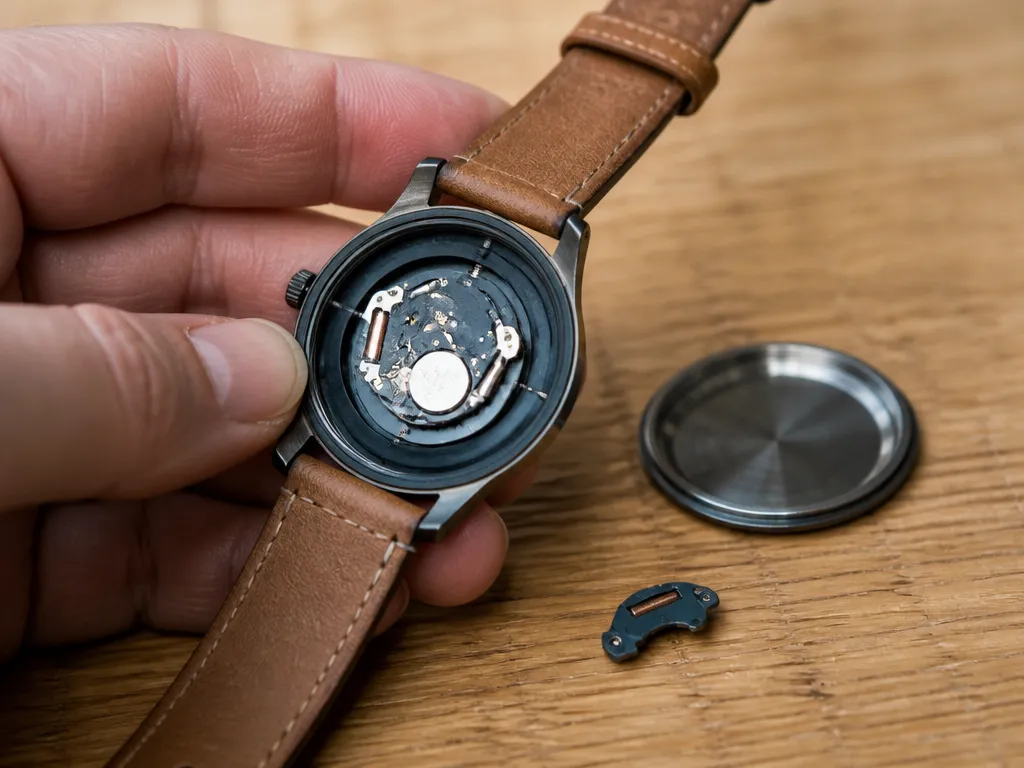
Watch batteries can leak potassium hydroxide electrolyte, which corrodes metal and can burn skin on contact. Water resistance also depends on the case sealing surfaces and gasket condition, so a careless opening increases the chance of later moisture intrusion.
Battery leakage risk rises when a cell is old, physically damaged, or left in a hot environment. For sealed watch cases, the real threat is that corrosion spreads under the battery and along spring contacts, creating higher resistance and erratic stopping.
Immediate safety steps if you see residue: stop using the watch, remove it from your wrist, and keep it away from food areas. Work over a disposable surface, wear eye protection, and avoid touching leaked fluid. Neutralize and clean only with materials recommended for your watch or battery type, because harsh solvents can attack plastics, coatings, and gasket material.
Short-circuit And Handling Precautions
Short circuits are most likely during replacement when metal tools bridge the battery’s terminals, or when a loose metal chip falls into the movement. Static discharge can also stress sensitive electronics, especially on modern quartz watches with integrated modules, so handle with clean, dry tools and avoid rubbing plastic against the movement.
Swollen batteries, scorched wrappers, or a cell that won’t sit flat are red flags. Do not attempt to “make it fit.” If the compartment is deformed or contacts are corroded, professional service is the safer path.
Maintaining Water Resistance After A Swap
Water resistance after a battery change is mostly about the integrity of the gasket and the tightness of the case back, not the age of the new cell. Many watches include an O-ring that can flatten, tear, or pick up lint during opening, and even a small nick can create a leak path.
After closure, test the watch as your manufacturer recommends, especially if you rely on it for swimming or shower exposure.
For example, a watch used in water should not be treated as safe just because it “feels sealed,” since gasket damage can be invisible until later.
When water resistance is critical, take a cautious stance on DIY. If you find corrosion, a damaged gasket, a cloudy lens, or a loose-feeling case back, professional resealing is usually the right trade-off for safety and long-term reliability.
Choosing Replacements And Avoiding Mistakes
Picking the right watch battery is mostly about matching chemistry (primary vs rechargeable, and silver-oxide vs lithium types), voltage, and exact size. A wrong size or voltage can cause poor performance, leakage, or a dead movement. A wrong chemistry can also change the discharge curve, so the watch may stop early even if the “fit” looks correct.
Brand Vs. Generic Options
Brand batteries tend to be more consistent, especially for difficult-to-replace sizes, but good generic options are often fine if they match the label exactly (voltage, chemistry, and dimensions). For common watch cells, a generic that truly matches the spec is usually a reasonable value, since the watch circuit expects a specific voltage and capacity profile. For vintage watches or thin cases, prioritize exact physical dimensions and tab style (if present), because small build differences can affect contact pressure.
For example, a “drop-in” battery that sits slightly looser can intermittently disconnect, which looks like an early end of life.
In practice, that failure pattern feels like the battery is dying faster, but the root cause is often the contact pressure or battery height, not capacity.
Avoid Mixing Brands Or Chemistries
Mixing brands within a single watch is uncommon because most watches use one cell, but mixing chemistries across replacements is a common mistake. If the label says one chemistry and voltage (such as a silver-oxide style cell versus a lithium coin cell), replace with that same chemistry class. Even when the size code matches, different chemistries have different discharge behavior, which can shorten runtime or cause premature stopping.
Mixing a rechargeable-style cell into a watch meant for a primary cell is risky because the watch may not regulate charging properly, and some rechargeable chemistries prefer different voltage windows. If a watch is designed to use a non-rechargeable cell, treat that specification as a safety requirement, not a suggestion.
What To Verify On Labels (Size, Voltage, Chemistry, Dimensions)
Verify the battery markings, then cross-check them against the old cell and the watch case or manual. Watch size codes are part of compatibility, but the voltage and chemistry are the parts your watch is actually built around. Dimensions matter because “same code” batteries from different suppliers can vary slightly in thickness or terminal style.
Replacement quality also depends on handling. Store spares dry and cool, avoid touching the battery terminals with bare skin, and keep batteries away from metal jewelry that can short them in a pocket.
If the watch stops immediately after a clean installation, suspect a contact issue, a worn insulator, or a movement fault rather than assuming the new battery is defective. If you see corrosion, liquid residue, or repeated failures within a short time, seek professional service to inspect the movement and the battery contact system.
Quick Reference Checklist
Watch batteries typically last between 1 and 5 years, with many modern button cells commonly running closer to the middle of that range when kept stable in storage conditions. Frequent crown use, high hand movement load, and age-related corrosion can shorten life, while a battery kept cool and mostly dormant can last longer.
Replacement trigger rule: if the watch loses time quickly after a new battery, or if the contacts show corrosion again soon, treat it as a watch-side issue. Record the pattern and hand it to a watchmaker so you do not keep buying batteries for the wrong problem.
Quick Summary
Most watch batteries last years, but the exact lifespan depends on battery size, chemistry such as silver-oxide or lithium, and the watch’s power draw. The article gives typical ranges of about 1 to 5 years, with silver-oxide button cells in quartz analog watches often closer to 3 years, while some lithium types like CR series can last about 4 to 5 years. High drain functions and extreme temperatures shorten life.
Beyond chemistry, real-world battery life depends on how hard the watch works, including continuous seconds, backlights, or frequent display updates, and also on temperature effects like heat speeding aging and cold increasing internal resistance. For replacement, match markings like SR, CR, and SW plus the printed voltage, clean and orient contacts correctly, reseat the gasket to preserve water resistance, and stop if the cell is swollen, hot, or leaking, because that is the most important takeaway.
Frequently Asked Questions
How Long Do Watch Batteries Typically Last Before Needing Replacement?
Most quartz watch batteries last about 1 to 3 years, but some can run up to 5 years depending on the watch type and power use. If you notice the second hand skipping irregularly or the time drifting, it is often a sign the battery is near end of life.
Can I Use A Usb-c Power Bank Or Charger To Run My Watch Instead Of A Watch Battery?
Usually no, because most watches that use a “watch battery” are designed for a specific cell type and voltage, not general USB-C power. If your watch supports charging (rechargeable battery or solar), check the manual for the exact charging method and any recommended charger specs.
Why Does My Watch Battery Get Hot Or The Back Of The Watch Feel Warm After Replacing It?
That can indicate a poor seal, short circuit, wrong battery type, or incorrect installation, and heat is a safety red flag. Stop using it, let it cool, and verify the battery part number and polarity before trying again.
How Soon Should I Replace A Watch Battery After I See The Second Hand Slowing Or Stopping?
When the second hand skips more than usual or the watch stops, it is time to replace the battery within days to a couple of weeks, especially if you want to avoid time drift. Waiting longer can lead to increased contact oxidation, which makes the next replacement harder.
What Is The Most Common Buying Mistake When Purchasing A Replacement Watch Battery?
The biggest mistake is buying the right-looking battery without matching the exact size and chemistry code printed on the old battery (for example, common button-cell codes vary by model). Also avoid mixing brands, because terminals and packaging can differ, and wrong-fit cells are more likely to cause poor contact or heat.

- 10 Best Battery For Generator Battery Powered Lighting 2026 - October 11, 2026
- 10 Best Battery For Generator Battery Power Upgrade 2026 - October 11, 2026
- 10 Best Battery For Generator Battery Power System 2026 - October 11, 2026