How Long Does A Motorcycle Battery Last?
A motorcycle battery that cranks weakly after a season off is usually a lifespan problem, not “bad luck.” The spec that matters most is battery chemistry (lead-acid, AGM, Gel, or lithium), because it controls how long it tolerates sitting and which charger is safe. The common mistake is using the wrong maintainer setting, which can shorten life. Start by checking your battery label for chemistry and voltage rating.
Motorcycle batteries usually last about 2 to 5 years, depending on type and how you ride. Conventional lead-acid often runs shortest (around 2 to 4 years), while AGM and Gel often reach roughly 3 to 6 years. Lithium-ion commonly lasts longer (often 4 to 8 years or more) if charged correctly and not left fully discharged.
How Long Does A Motorcycle Battery Last?
Recommended Products


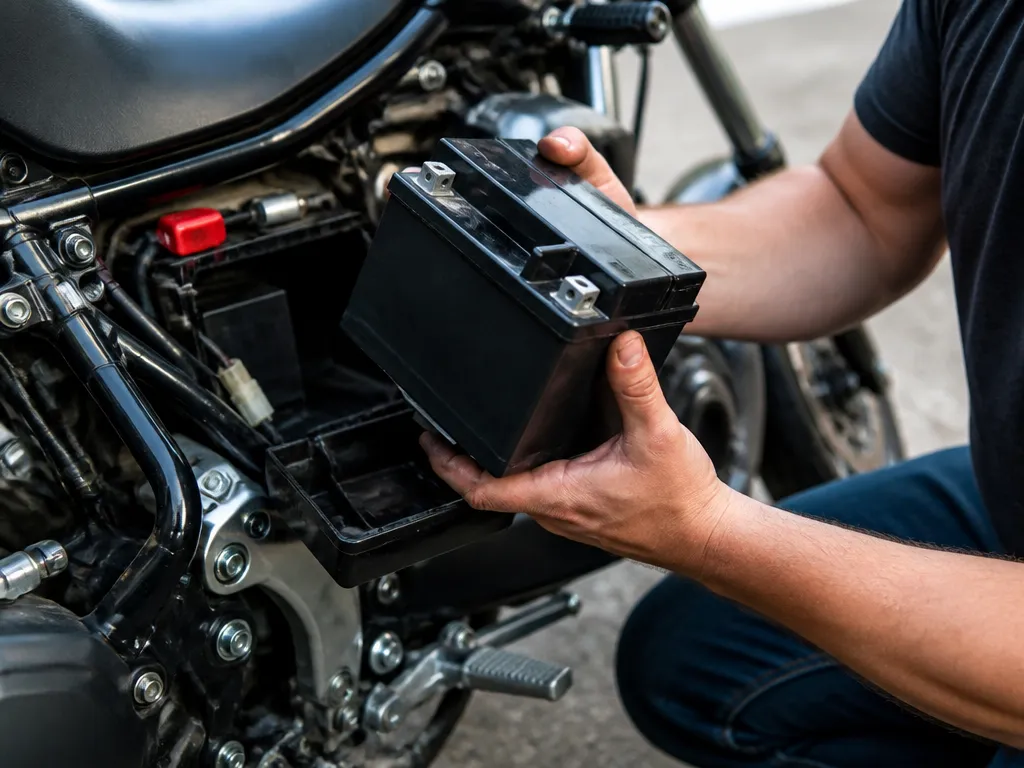
Most motorcycle batteries last about 2 to 5 years in normal use, with shorter lives in stop-and-go riding and longer lives when the bike is ridden regularly and charged correctly. Battery type strongly affects longevity, but riding patterns and charging habits often matter more than the brand label.
Typical lifespan ranges by chemistry are wide because each one ages differently under heat, vibration, and how much time it spends fully charged versus partly discharged. The practical takeaway is simple: if your battery spends a lot of time undercharged, every chemistry ages faster.
| Chemistry | Typical service life (years) | Common end-of-life signs |
|---|---|---|
| Flooded lead-acid | 2 to 4 | Slow cranking, low resting voltage, frequent top-ups needed |
| AGM (Absorbed Glass Mat) | 3 to 6 | Loss of cranking power, reduced voltage under load |
| Gel | 3 to 6 | Sudden weakness after a period of poor charging, low cranking voltage |
| Lithium (Li-ion, often BMS-protected) | 4 to 8+ | Warning behavior from BMS, sharp drop in cranking voltage under cold load |
Why “years” varies so much comes down to charge level and time. A battery that sits near full charge can age slowly, while one that sits partly discharged (or is repeatedly pulled down on short rides) can lose capacity quickly.
Real end-of-life is usually “can it crank reliably?” A battery can still show decent voltage at rest while failing the load test that matters most for starting.
In real riding, “end-of-life” often shows up as a pattern: starts that are fine when the bike is warm, then get sluggish after overnight cold soaks, or a need for frequent external charging to make the first start of the day. Another common trigger is a step-change in behavior, such as normal performance for months followed by sudden poor cranking, especially after storage or an extended period of short rides.
What To Check Before You Replace It (Simple, Practical)
Battery lifespan is easier to predict once you verify health rather than guessing from age alone. Start with voltage and then confirm performance under load, since voltage alone can lie about capacity.
What Shortens Battery Life Fastest
Recommended Products

Short sulfation from frequent deep discharges and chronic undercharging shortens life fastest, especially on lead-acid based motorcycle batteries. Cold and heat cycles, combined with storage parasitic drain and repeated short trips, accelerate aging and shorten usable life across chemistries.
In practice, regular full recharges and a stable charging cadence dramatically slow this process.
Riding Patterns That Age Batteries
Recommended Products


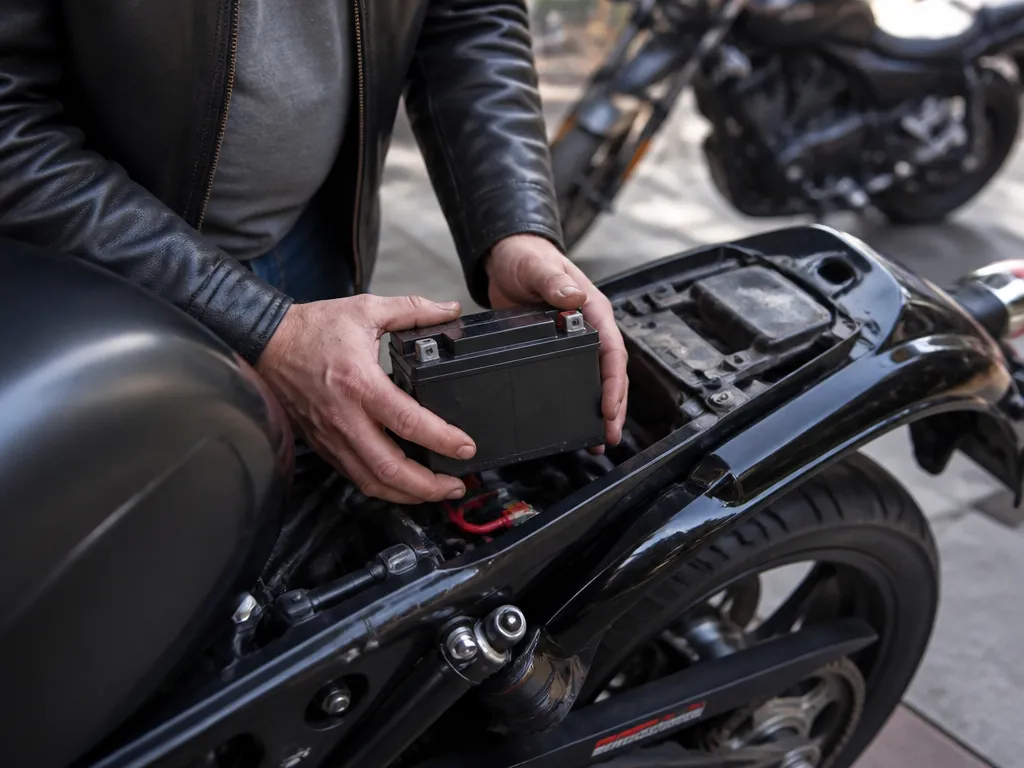
Short trips and long idle times are two riding patterns that age motorcycle batteries faster than steady, longer rides. Starting power is drawn instantly, while charging back that energy takes time and heat-free conditions, so a “start, ride 5 minutes, park” routine often leaves the battery living in partial state-of-charge.
For example, a typical motorcycle start can pull a large burst of current for only a few seconds, but the alternator then has to supply the energy needed to recover the battery. If you ride briefly, the alternator may not replace what was used, and the battery spends more time undercharged. Undercharged lead-acid batteries tend to build up sulfation, which quietly reduces capacity long before the battery “looks dead.”
In practice, charging speed is limited by chemistry and temperature. AGM batteries tolerate charge a bit differently than flooded lead-acid, but they still cannot magically accept full charge during repeated short rides. Gel and lithium batteries also have charge acceptance limits, and pushing them outside their temperature and voltage windows stresses the pack management or increases degradation.
Seasonal shutdown is another common killer because riders assume “it will be fine until spring.” Lead-acid batteries self-discharge in storage, so voltage drifts down even if the bike sits unused. That loss of charge increases sulfation risk and also makes spring recovery harder, since deep recovery cycles add strain.
For example, a battery left at a low state-of-charge is more likely to end up with irreversible capacity loss than one kept near a healthy charge level. Cold storage slows chemical reactions, which can reduce self-discharge, but springtime warming and then repeated starts can reveal damage caused by long periods of undercharge.
| Riding/Storage Pattern | What Typically Happens | Likely Battery Impact |
|---|---|---|
| Many short trips | Alternator cannot replace energy fully | Partial state-of-charge increases sulfation risk (lead-acid) |
| Infrequent riding | Self-discharge runs battery down in storage | Capacity loss shows up at first cold start |
| Seasonal shutdown | Voltage drifts down over weeks | Recovery takes longer, stress increases |
Charging after a long period of sitting is where many failures are “diagnosed late.” A battery that has spent months low may accept current at first, then quickly stall as internal resistance rises, which means it may show decent voltage but still struggle under cranking load. If recovery requires unusually long time or results in repeated failure to crank, treat it as a replacement trigger rather than repeating the same charge cycle.
Charging System Health Matters
Battery life often drops because the motorcycle charging system is overcharging, undercharging, or letting current leak through poor grounds and corroded connections. An alternator and regulator that are slightly off can quietly cook a battery (or keep it chronically undercharged), which both speeds up aging.
Watch the charging system the way you would watch a phone charger, steady is good and instability is a red flag. Many riders assume a battery fails “randomly,” but charging problems tend to show up as repeat symptoms around the same mileage or season, then get worse fast.
Voltage while riding gives the quickest clue without deep electrical theory. A healthy system should keep the battery voltage high enough to recharge it after starting, yet not so high that the battery gasses or heats excessively.
In practice, a simple meter check beats guessing. Measure battery voltage at the battery posts with the bike off, then again while running at a steady RPM (idle, then a typical riding RPM). If you do not know what “normal” is for your specific bike, your owner’s manual or service manual is the safest place to match targets.
Battery failure timing is another tell. A battery that dies after a long period of short trips often died from chronic undercharging and sulfation, while a battery that dies quickly in a healthy riding pattern can be seeing heat from overcharging or repeated voltage spikes.
For example, a rider replaces a battery, then the new one fails months later even though cranking sounds are similar at first. That pattern strongly points to charging voltage problems, not the battery brand, because the new battery is being aged the same way by the bike.
Safety warning: Stop using the bike and investigate if you see swelling, cracking, leaking, or strong heat near the battery. Never keep riding to “see if it improves,” because overcharging can damage the battery fast and leaking cells are a fire and corrosion hazard.
Battery Health Checks At Home
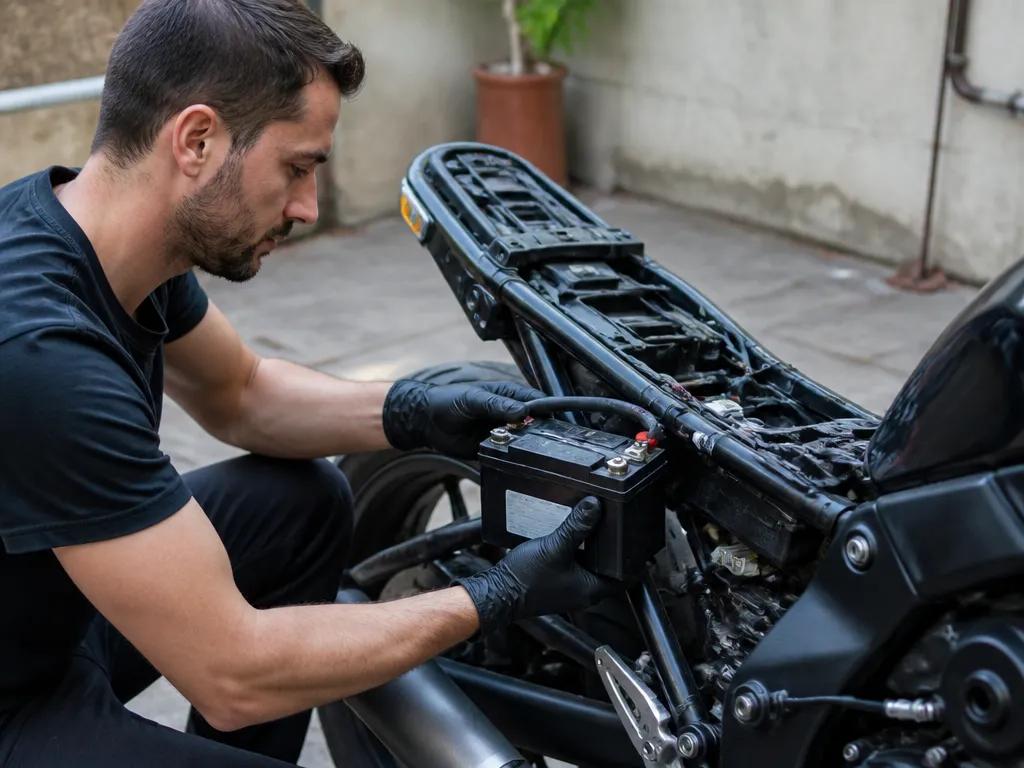
Resting voltage and cranking voltage tell you most of what you need to judge whether a motorcycle battery is aging or failing. A charge-then-recheck test shows whether the battery can accept charge, while a simple load test (if you have one) helps confirm internal weakness.
Safety first: if the battery casing is bulging, the vent caps are leaking, the posts look overheated, or the battery smells strongly “chemical,” stop testing and replace it. Do not jump-start or charge a damaged or swollen battery.
Record-keeping: write down the date, battery model or chemistry, charger used, and each voltage result with conditions (rest time, temperature if you can, and whether you measured cranking voltage). Use a simple log like “Resting V (hours since charge), Cranking voltage min during start, Load test result (if available), Charge acceptance (resting after charge).” When the next check is due, you can spot the trend instead of guessing.
Practical decision rule: a battery that repeatedly shows weak cranking performance, fails a load test, or cannot hold charge after a proper charge is a strong candidate for replacement. A battery that only shows low resting voltage but recovers after charging is more likely undercharged or affected by charging habits.
Replace When These Signs Appear
Slow cranking, dim lights, and electronics glitches after a “full” charge are the most common signs a motorcycle battery is nearing end-of-life or has failed internally. Repeated jump-start cycles often fix the symptom for minutes, then the battery quickly re-fails because the real problem is loss of capacity, sulfation, or a dead cell that a surface charge cannot restore.
Replace promptly when you see symptoms that persist after charging and after starting under a load. If charging overnight does not bring back strong cranking and stable charging behavior, treat the battery as unreliable.
Case example: a rider charges an AGM overnight, then it starts once, then fails again the next morning with dim dash and slow cranking. This pattern usually means the battery cannot sustain load delivery, surface charge is gone, and the replacement decision is overdue.
Once you see these replacement triggers, plan to replace the battery and then verify charging system health, because a bad regulator or ongoing parasitic drain can kill the new unit too. Repeated start-and-charge cycles are a time sink, and they also increase the chance of damaging wiring, connectors, and the starter relay.
Choose The Right Charger/maintainer
Charger compatibility is the biggest factor in how long a motorcycle battery lasts after the initial purchase. The wrong charging mode can overheat flooded lead-acid, damage AGM or Gel, or shorten lithium pack life by stressing the cells and triggering the BMS. Use the battery chemistry label and match the charger’s supported modes before connecting anything.
Battery chemistry determines the charging profile (voltage targets, current taper, and whether the charger allows equalization). Flooded lead-acid often tolerates a higher-charge routine when properly vented, while AGM and Gel require tighter voltage control and can be permanently harmed by “one size fits all” charging. Lithium motorcycle packs require a charger that is explicitly compatible with that pack’s voltage and BMS behavior.
Match Charger Mode To The Battery On Your Bike
Check the battery case label for one of these: “flooded,” “AGM,” “Gel,” or “Li-ion/Lithium,” and confirm the stated system voltage (common motorcycle values are 12 V or, in some cases, 24 V). Then check the charger manual for supported chemistry and a matching charging setting. If your charger only says “car battery” without chemistry/mode details, treat it as a mismatch risk.
| Battery type | What to verify on the charger | Risk if mismatched |
|---|---|---|
| Flooded lead-acid | Wet cell mode, correct voltage phases | Overheat and boil off water, shortened life |
| AGM | AGM mode, controlled absorption/float | Permanent capacity loss from overvoltage |
| Gel | Gel mode with conservative voltage | Gas buildup and plate damage |
| Lithium (BMS) | Explicit lithium compatibility and correct voltage | Cells stressed, BMS trips, reduced cycle life |
Safe connection habits protect both the battery and the bike’s electronics. Always connect the charger leads in the order recommended by the charger manual, keep sparks away from the battery area, and ensure clamps make solid metal contact with clean terminals.
Battery tenders are only helpful when used at the right cadence. For regular riding seasons, a maintainer is best when it matches the chemistry and stays in a low-impact “keep charged” role; for winter storage, plan an interval that prevents deep discharge without cooking the battery.
Cold weather changes the math for storage. A battery will lose voltage faster in winter, and cranking load is harder when oil and metal parts are cold, so keeping the battery from drifting low matters more than “charging as quickly as possible.” A chemistry-matched maintainer with temperature-aware behavior is the safest approach for extended off-bike periods.
Quick setup checklist: verify battery type (flooded/AGM/Gel/Lithium), verify charger mode supports that type, confirm system voltage matches, connect clamps securely, charge in ventilated conditions (if vented), and stop charging if the battery is abnormally hot, swollen, or leaking.
Winter storage steps should be simple and repeatable. Store the battery in a cool, dry area, keep it clean and dry on the outside, and perform periodic checks rather than leaving an incompatible charger running continuously.
Troubleshoot Early Battery Failure
Early battery death usually comes from four buckets: a charging mistake (overcharge or chronic undercharge), a hidden electrical drain, harsh environment damage (heat, cold, vibration), or battery handling (wrong install or ruined cells during storage). A fast checklist helps you sort which bucket you are in before you buy another battery.
Diagnose The Real Cause Before Replacing
Start with symptoms at the bike, because the failure mode points to the culprit. Weak cranking, lights that fade quickly, and recovery after a long ride often trace back to undercharging or internal wear.
For example, a battery that reads “fine” with a multimeter but collapses during cranking usually has high internal resistance from sulfation or plate damage. In contrast, a battery that drains while parked is almost always a parasitic draw issue or a wiring/ground fault.
Catch Charger And Maintenance Mistakes
Wrong settings can cause a “new battery died early” complaint. Compatibility mistakes also happen when people use an automotive charger on a motorcycle battery, skip the correct mode, or leave a charger connected indefinitely without a maintainer setting. Battery warm-up and gassing can be subtle at first, then capacity drops rapidly.
Account For Temperature, Vibration, And Handling
Temperature swings change battery chemistry speed and stress level. Cold weather increases starting demand and reduces available cranking power, while heat accelerates grid corrosion and capacity loss over time.
Vibration is another quiet killer, especially for motorcycles that see frequent hard rides. Loose hold-down hardware, damaged internal welds, or a battery that shifts can cause internal failures long before the expected service life.
What To Test Before Buying Again
Before paying for another replacement, test enough to avoid repeating the same mistake. Check charging voltage with the bike running and inspect for parasitic drain before buying again.
Use the results to choose the next action: if the charging system is wrong, fix it first. If charging voltage is correct and parasitic drain is low, the battery likely has internal degradation.
| Symptom | Most likely cause | Confirm with |
|---|---|---|
| Dies quickly after short rides | Chronic undercharging | Charging voltage with engine running |
| Dies while parked | Parasitic drain or wiring fault | Current draw between battery and bike (key off) |
| Overheating or gassing during charging | Wrong charger settings or failing regulation | Charger mode, and charging voltage at the terminals |
| Resting voltage looks OK, cranks collapse | Internal wear, sulfation, plate damage | Load or crank voltage sag test |
Decision rule: If charging voltage is out of range or parasitic drain is high, fix the bike before replacing the battery. If the charging system is correct and the battery fails load testing, replace the battery.
Quick Summary
Motorcycle batteries that crank weakly after a season off are often aging, not “bad luck,” and the chemistry on the battery label is the key spec for how long it will tolerate sitting and which charger settings are safe. The article notes typical motorcycle battery life is about 2 to 5 years overall, with conventional lead-acid often around 2 to 4 years, and AGM or Gel commonly reaching roughly 3 to 6 years. Lithium-ion is usually longer, often 4 to 8 years or more if not left fully discharged.
Lifespan is shortened by charge level and time, with short trips under 10 to 15 minutes not fully replacing what start-up and electronics use, so charging may never fully recover. Low state-of-charge causes sulfation, and leaving lead-acid batteries discharged for weeks speeds aging, while parasitic drain can quietly waste life.
Frequently Asked Questions
How Long Does A Motorcycle Battery Last On Average Before It Needs Replacement?
Most motorcycle batteries last about 2 to 5 years, depending on type, riding habits, and temperature. If you notice slow cranking, the battery often has low reserve capacity even before it fully fails.
Can I Use Any Motorcycle Battery Charger, Or Do I Need The Right Voltage And Battery Type?
You should match the charger to the battery system, most commonly 12 V lead-acid or a specific 12 V lithium-ion chemistry if the battery is lithium. Using the wrong charger voltage profile or charge mode can cause overheating or damage.
Does Hot Weather Shorten Motorcycle Battery Life And Make Charging More Risky?
Yes, heat can reduce battery life and accelerate wear, so a battery left at high temperatures will typically age faster. For charging, avoid charging a very hot battery, and if the charger or battery manual specifies a temperature limit, follow it closely.
How Long Should I Charge A Motorcycle Battery Before Riding, And What Signs Mean It Is Fully Charged?
If you use a smart charger, let it complete its full-charge or maintenance phase rather than timing it exactly. Look for charger status indicators like “full” or “float,” because charging time varies with battery condition and size.
What Is The Most Common Mistake That Leads To Early Motorcycle Battery Failure When Buying Or Charging?
A common mistake is buying a battery with the wrong capacity, CCA rating, or physical fit, or using a charger without the correct charge profile for that chemistry. Also avoid repeatedly deep-discharging, because that can shorten life more than occasional topping up.

- 10 Best Battery For Generator Battery Safety System 2026 - October 12, 2026
- 10 Best Battery For Generator Battery Safety Option 2026 - October 12, 2026
- 10 Best Battery For Generator Battery Safety 2026 - October 12, 2026