How Long Do Smoke Alarm Batteries Last?
Smoke alarm battery life is less about the battery brand and more about the alarm type and how it’s powered. A fresh set of batteries can still chirp early if you mix battery types, install them backwards, or ignore a unit that’s meant to be replaced on a schedule. Expect a model-agnostic rundown of how long each common battery setup lasts, what the “chirp” really means, and how to swap batteries safely.
Smoke alarm batteries last anywhere from about 1 year (typical 9V alkaline) to 1 to 2 years (common AA or AAA alkaline), and up to around 5 to 10 years for long-life formats like CR123A in compatible units. Sealed 10-year smoke alarms are replaced when the unit reaches its marked service life, even if it still sounds fine.
How Long Do Smoke Alarm Batteries Last?
Recommended Products

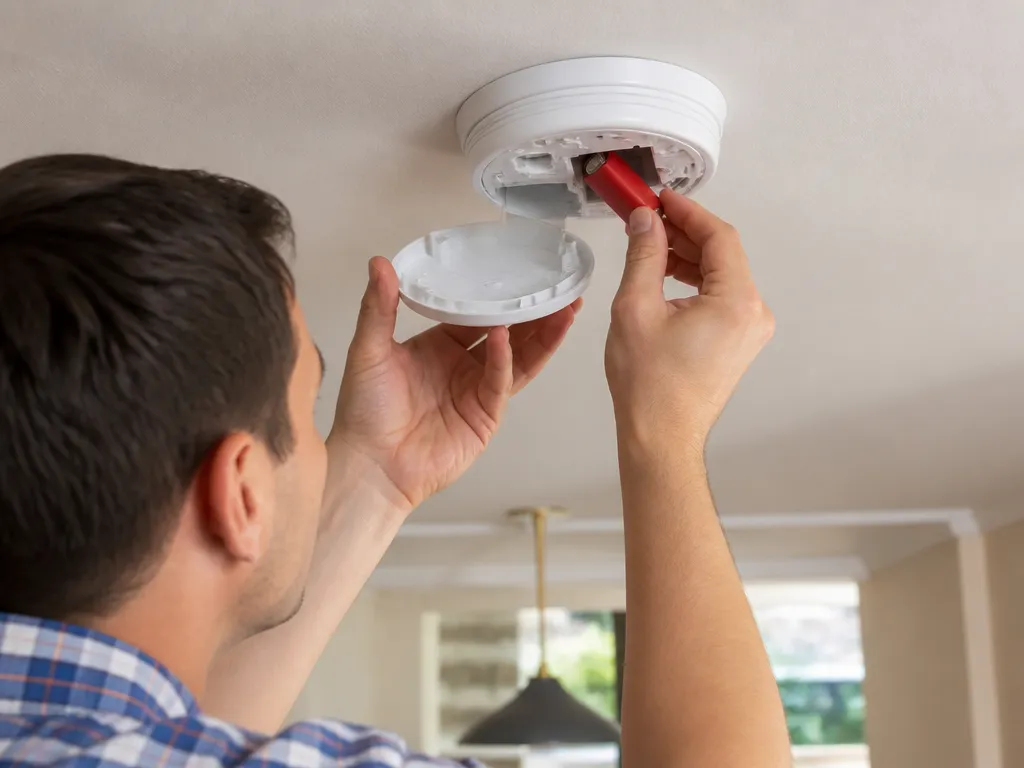
Most smoke alarm battery setups are designed for long service life, but “about yearly” chirps are a common early warning that the battery is already near end-of-life. Typical guidance is to replace batteries at a set interval (often yearly for many models) or when the alarm chirps, and to replace the entire alarm on the schedule printed on the unit or in its manual.
Battery Types And Typical Service Life
Smoke alarms usually use either disposable alkaline batteries (often AA or 9V), long-life lithium batteries (often 10-year rated models in compatible alarms), or sealed battery packs inside some alarms. The battery chemistry can change the way voltage drops over time, which is why two different brands of “AA” can show different chirp timing even in the same style of smoke alarm.
For planning, treat the manufacturer label as the top source of truth. When you see “replace within 1 year” or “10-year sealed battery,” that statement is about the device meeting its required performance over time, not just about the raw battery capacity lasting until it is fully empty.
| Battery setup in the alarm | Typical lifespan you should plan for | What triggers attention | What to verify on your unit |
|---|---|---|---|
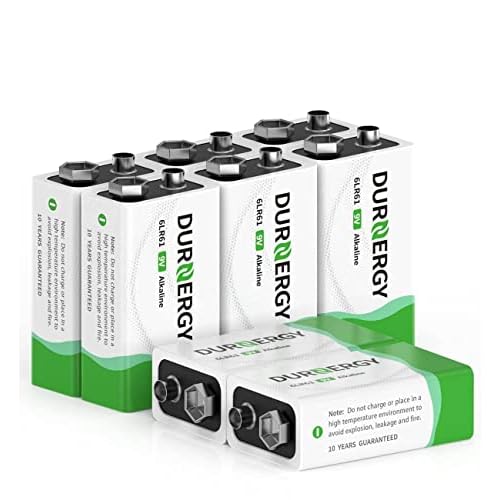
| Alkaline (AA or 9V, user-replaceable) | About 1 year under typical conditions | Frequent chirps, reduced reliability, low-battery message (if equipped) | Battery type and replacement interval stated by the manufacturer |
| Primary lithium (often “10-year” rated, AA/9V style) | Often up to the printed service life if used in compatible alarms | Chirps earlier than expected, or low-battery indicator | “Use only specified battery” wording and the printed service-life claim |
| Sealed-in battery pack (non-user replaceable) | Usually tied to the alarm’s overall replacement date | Low-battery indicator or end-of-life warning, depending on model | Alarm replacement schedule on the label (not just battery behavior) |
Chirps Vs End-of-life, And Why Timing Matters
Smoke alarms often use a chirp pattern to warn that battery voltage has dropped below the device’s operating threshold. A chirp is a practical “replace now” signal, and ignoring it usually gives you less detection margin than you think, especially in cold weather or if the alarm is exposed to frequent temperature swings.
In some models, chirps can start well before the battery is fully dead, so the timing of the first chirp is the key datapoint. A one-time chirp can be maintenance-related in rare cases (for example, after battery replacement), but repeated chirps over days or weeks means the alarm is already asking for new power.
Where The Numbers Come From: Labels And Manuals
Smoke alarms have two different “timelines” printed somewhere on the unit: a battery replacement interval (for user-replaceable batteries) and an overall replacement date for the alarm itself. The alarm replacement date covers electronics, sensing chamber aging, and long-term reliability, so even a battery that still reads “not dead” may not be the reason the unit is due for replacement.
Check the side or back label for the exact battery type and any service-life claim, then confirm it against the manual. If your unit says “use only specified batteries,” follow it, because using the wrong chemistry, size, or brand family can cause early chirping or unreliable operation.
Battery Lifespan By Type
Recommended Products


Smoke alarm battery life depends more on the alarm type and usage pattern than on the chemistry alone, so treat these as planning ranges. For battery-powered models, a “10-year” label usually means an internal sealed pack and a designed end-of-service date, not that the battery is guaranteed to last forever.
Approximate Battery Lifespans By Common Format
Most smoke alarms use AA or 9V batteries (with either standard alkaline or specialty lithium formats in some models). Sealed 10-year units use an internal lithium pack and often stop operating at a set age, even if the battery still looks charged.
| Battery type (common in smoke alarms) | Typical service life (planning range) | Where this applies |
|---|---|---|
| Alkaline 9V (snap connector) | About 1 year | Frequent testing and higher alarm activity can shorten runtime |
| Alkaline AA or AAA (1 to 2 cells, depending on model) | About 1 year to 2 years | Low alarm activity trends toward the high end; heavy chirping, humidity, and older batteries trend lower |
| Lithium “battery alarm” formats (example: CR123A) | About 5 years to 10 years | Some models use CR123A; range depends on alarm electronics and environmental conditions |
| 10-year sealed unit (internal lithium pack) | Label indicates about 10 years total service | Replacement interval is driven by the device’s end-of-life marking, not the last “battery chirp” |
These numbers are broad because smoke alarm electronics draw power in bursts (self-checks, sensor heating, wireless interconnects if present). Temperature swings and high humidity can also shorten real-world life even when the battery looks fine.
Replacement trigger: Any “chirp” low-battery alert means plan to replace immediately for reliability, and replace all units in the same room or interconnect group if your system links alarms.
When a 10-year sealed unit is involved, the “battery life” concept is really “end-of-service life.” The label implies a designed operating period and safety margin, so a unit near that age should be replaced even if it is currently quiet.
What Shortens Battery Life Most?
Recommended Products


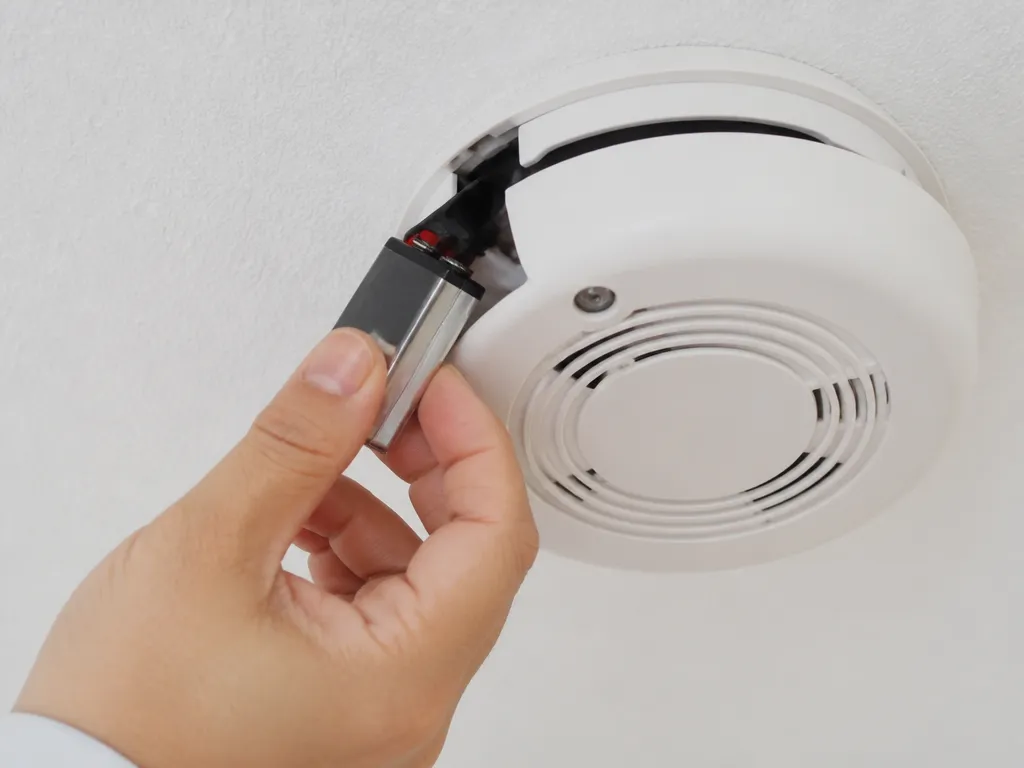
Temperature swings and where the alarm sits are the biggest real-world runtime killers, because they accelerate chemical aging and increase false “low battery” chirps. Dust buildup, humid air, and sensor contamination can also drive the alarm to run more tests or degrade the sensor, which stresses the power budget. Even with the same battery brand, these conditions can shorten service life by months.
Environmental Stress: Heat, Cold, Dust, And Humidity
Smoke alarms do not live in a climate-controlled box. Placement near kitchens, bathrooms, or HVAC vents can push the unit into hot or cold pockets, and repeated expansion and contraction raises internal wear. Moisture and steam can speed corrosion on contacts and in the battery compartment, especially if the compartment seal is worn or the unit is frequently fogged.
Dust is a silent factor. Dust on sensor pathways can force the detector to behave less predictably, and any contamination on the electronics and battery contacts increases resistance and voltage drop under load. Voltage drop can trigger the low-battery warning early even when the battery still has usable capacity.
Operational Drain: Nuisance Testing And Interconnect Power Draw
Frequent alarm testing and “nuisance chirps” increase total energy usage. A smoke alarm typically draws small standby current, then consumes extra during sounder activation and during certain diagnostic cycles, so doing manual tests more than needed shortens battery life. Chirps can also be a warning that the battery is already sagging under load, which means the unit is close to the point where it cannot provide reliable alarm energy.
Interconnected systems can add another drain path. Wired or wireless interconnects may require the alarm to listen more often or transmit status, increasing average current compared with a standalone unit. If one alarm in a network starts chirping early, it may be the weakest power connection point, or it may indicate a failing module that pulls extra current.
| Condition | What it does | Practical effect on battery life |
|---|---|---|
| Hot attic or sun-facing wall | Speeds battery aging and can increase standby losses | Low-battery chirps earlier than expected |
| Kitchen steam, bathroom humidity | Promotes corrosion and sensor fouling | Chirps and sensitivity problems appear sooner |
| Heavy dust exposure | Impacts sensor behavior and contact reliability | More diagnostic activity, higher voltage drop |
| Frequent nuisance testing | Consumes extra sounder and diagnostic energy | Shorter runtime between replacements |
| Interconnected alarms | Increases average power draw | Earlier battery warnings across the system |
Battery Storage And Compartment Issues
Battery age starts before installation. Alkaline cells lose capacity over time even on the shelf, and heat during storage increases that loss, so a “fresh” looking battery can still be older inside the wrapper. Leaky cells can damage the compartment, and damaged contacts create higher resistance that steals energy each time the alarm draws current.
In practice, any sign of leakage, swelling, or a strong chemical odor is a stop condition for that battery and a reason to inspect the alarm contacts. Do not mix battery types or brands in the same alarm (where multiple cells are used), because mismatched cell voltages can accelerate uneven discharge and trigger early warnings.
Quick safety note: If the battery compartment looks wet, corroded, or burned, power down the system as your model allows and replace the alarm if the electronics are contaminated. Never try to recharge non-rechargeable smoke alarm batteries.
Replace Battery Vs Replace Unit
Recommended Products


Smoke alarms with a user-replaceable battery should get a battery swap when the unit warns, runs low, or fails a quick test. Sealed 10-year alarms are designed so the entire unit is replaced when the service life ends, even if you still see charge indicators or the alarm seems quiet.
Replaceable Battery Models: When Batteries Should Be Replaced
Battery replacement is the right move for alarms that use removable cells (common examples are AA or 9V types, depending on model). Replace batteries as soon as the low-battery chirp starts, the test button shows reduced behavior, or the alarm fails its alarm test.
Battery life varies with how often the alarm is triggered, temperature swings, and battery chemistry. If the unit has a removable battery tray, treat any signs of looseness, moisture, or residue as a reason to replace batteries and inspect the contacts.
Sealed 10-year Units: Why You Don’t Extend Life
Sealed 10-year smoke alarms use an internal battery and fixed electronics, then set the end-of-life based on the device design, sensor aging, and stored power budget. Removing or bypassing the seal to “extend” runtime is risky, because it can damage the casing, disrupt sensing paths, and void safety certifications.
Sealed units can also look fine while power headroom is gone, so visible charge cues (if present) are not a reliable “keep it running” signal. Replacement is the correct action when the unit’s end-of-life indicator appears or the date on the label indicates the service period is up.
Visible Damage, Corrosion, Or Intermittent Power
Intermittent operation is a decision alarm: it usually means contact issues, circuit board problems, or internal power faults that a fresh battery will not fix. Replaceable models should be inspected closely for corrosion, carbon tracking, or any melted plastic near the battery contacts.
For sealed alarms, visible damage or repeated intermittent beeping is a stop-sign. Treat any swelling, leaking residue, or warped cover as a reason to replace immediately and keep it powered down until handled safely.
| What you see | Best action |
|---|---|
| Battery contacts corroded or wet | Replace batteries, then inspect; replace the alarm if corrosion is heavy or spreading |
| Intermittent chirp or test inconsistently works | Replace batteries for replaceable models; replace the alarm for sealed models |
| Swelling, heat marks, or melted plastic | Replace immediately; do not keep using |
| Cracks, loose mounting, or water intrusion | Replace the unit |
After Replacement: What To Verify (And When To Stop)
After changing batteries, verify the alarm function with the test button and confirm normal operation for several days. If the unit still chirps shortly after battery replacement, you likely have contact issues, wrong battery type, or a failing alarm circuit.
When replacing a sealed unit, verify correct mounting and alignment and make sure the unit is active after installation. Stop troubleshooting and replace again if low-power or end-of-life warnings persist right after installation.
Safety note: If you see battery leakage, corrosion that spreads onto the housing, or any heat damage, stop using the alarm. Handle it carefully and replace it, since the failure can be electrical, not just “low power.”
How To Replace Smoke Alarm Batteries
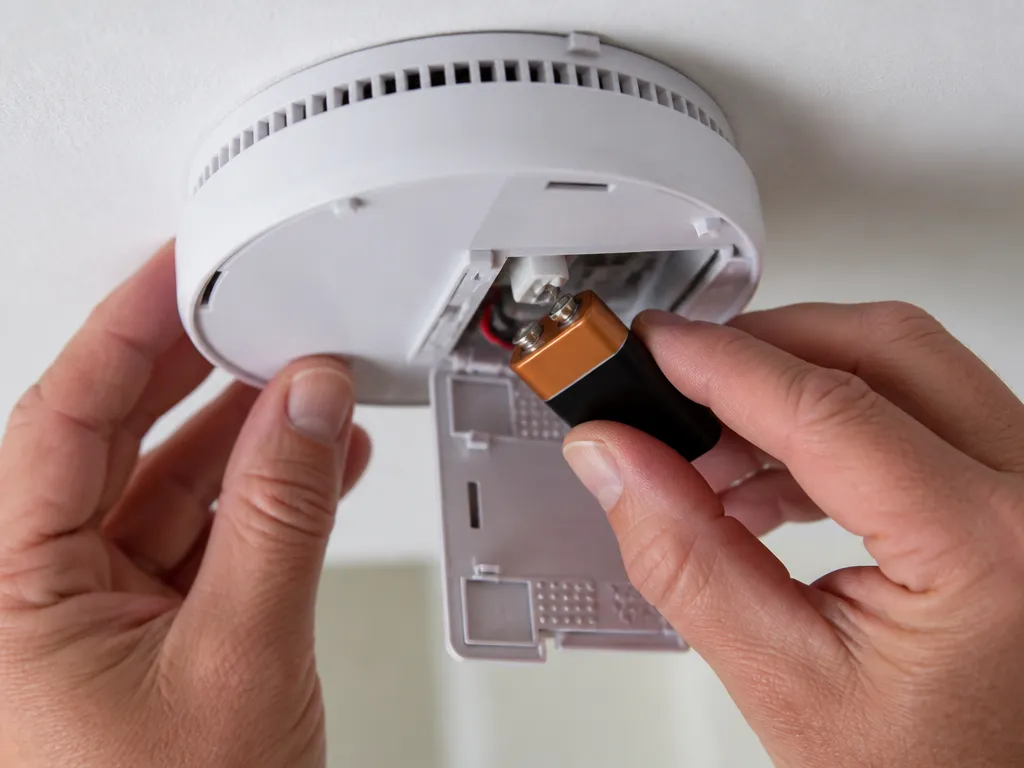
Smoke alarms often use either AA (alkaline or lithium) cells or a sealed, long-life battery pack. Correct battery orientation, matching chemistry, and safe handling matter because wrong cells can trigger nuisance alarms or leave the detector underpowered.
Before you start, treat the alarm as live safety equipment. Keep the area ventilated, avoid touching metal contacts with bare fingers, and remove the detector carefully so you do not pull wires if it is hardwired or interconnected.
Before You Start: Verify Battery Type And Polarity
Check the battery compartment label (or the alarm’s side sticker) for the exact battery type and voltage. Common formats include AA alkaline, AA lithium, or a proprietary sealed battery pack, and the alarm may specify one or the other even if “a different brand fits.”
Interconnected Alarms: What To Check So They Stay Synced
Interconnected systems usually communicate alarm events so one unit can sound all linked units. Battery changes can temporarily disrupt synchronization if a unit powers down longer than usual, so coordinate replacement across the network and then verify alarm response.
Test Sequence After Replacement
After installing new batteries, run the alarm’s test function before you leave the area. The test sequence varies by brand, but many units require pressing a test button and may silence briefly, then resume a normal monitoring state.
Dispose/handle Old Batteries Safely
Old batteries should be treated as hazardous waste. Keep them in their original packaging or tape their terminals to prevent short circuits during transport.
Final safety check: if an alarm shows signs of heat damage, melted plastic, or repeated low-battery chirps right after replacement, replacing the unit is usually the safest fix.
Low-battery Chirp Troubleshooting
Smoke alarms use several warning cues, the most common is a low-battery chirp (often repeating at intervals). An alarm may also show an end-of-life warning (different beep rhythm or a warning LED), so treat the pattern as a diagnosis clue, not a vague “replace when it beeps.”
Chirp And Warning Pattern: What It Usually Means
Low-battery alerts usually sound in a steady, periodic rhythm after the battery voltage drops below the alarm’s threshold. End-of-life indicators can be more frequent, longer, or paired with a LED condition, because the alarm electronics or sensor lifetime may be expiring, even with fresh batteries.
Use the alarm’s manual if available, but as a practical pattern guide, look for these common behaviors:
| What you hear/see | Most likely cause | First action to take |
|---|---|---|
| Periodic chirp | Battery voltage low | Replace with the correct battery type and verify polarity |
| Chirp persists after replacement | Bad contact, corrosion, wrong battery type, or alarm end-of-life | Clean terminals, re-seat batteries, then test with a known-good set |
| Distinct end-of-life beeps or continuous LED warning | Alarm electronics/sensor lifetime expiring | Plan to replace the smoke alarm unit, not only the batteries |
For example, a common “post-swap” failure is a chirp that returns within hours because the battery springs or contacts did not make solid contact, sometimes after corrosion or a bent contact lip. Another frequent cause is using a battery type that is “near enough” voltage but has different discharge behavior under the alarm’s load, so the alarm trips the low-voltage detector sooner.
Safety warning: Never attempt to power a smoke alarm through external supplies, USB chargers, or DIY adapters. Smoke alarm power is safety-critical, and incorrect powering can delay detection or damage the device.
Choosing The Right Battery Type
Smoke alarms usually tell you exactly which battery type to use on the label or inside the battery door. Choosing the correct chemistry, size (AA, 9V), and battery brand type matters because different batteries have different voltage behavior and lifespan under standby loads.
Start by matching what your alarm specifies, then avoid “close enough” substitutions. Check for the battery size and chemistry written on the alarm, such as “AA,” “9V,” “lithium,” or “alkaline,” and follow any wording that mentions “approved” or “recommended” battery types.
| Label/Alarm Requirement | What to verify | Why mismatch hurts |
|---|---|---|
| AA or LR6 (alkaline or lithium) | AA format, chemistry (alkaline vs lithium), and any “do not use rechargeable” note | Some rechargeable cells and some chemistries hold voltage differently, which can shorten useful life or trigger unwanted warnings |
| 9V (typical smoke alarm type) | Exact 9V size, battery chemistry type if stated, and the correct snap style | 9V housings look similar, but internal construction can change how long the alarm stays in its “healthy” voltage window |
| Interconnected alarm system | All units use the same approved battery type and age where possible | Different battery states can cause staggered chirps and confusion about which unit needs service |
Multi-alarm and interconnected homes need extra care. If your system links alarms together, keep batteries consistent across units so one weak cell does not masquerade as a different unit’s problem or generate chain alerts that are harder to diagnose.
Best-practice battery buying is about confidence and freshness. Choose a mainstream brand in the correct chemistry, check the package for expiration or “manufactured date,” and avoid mystery-store or “no-name” packs that do not clearly state cell type.
Compatibility warning: Different smoke alarm platforms can share the same battery sizes (like AA), but they may not share chemistry expectations. Treat the label as the source of truth, especially in multi-alarm or interconnected homes.
Maintenance Schedule And Checks
Smoke alarms depend on battery reliability more than battery “runtime” luck. A simple schedule keeps you ahead of low-voltage failures, especially in high-heat spots like hallways and kitchens. Replace batteries when alarms say to, when power trouble beeps start, or when the battery compartment shows corrosion.
Monthly Test
Monthly testing should confirm the alarm responds instantly and the unit’s indicator light (if present) shows normal operation. Test by pressing and holding the test button until you hear the full alarm pattern, then verify it stops when you release the button. If your model is interconnected, confirm the full system alarm sounds from more than one location.
Monthly test also checks for maintenance issues that shorten battery life, like loose battery contacts or gaps where insects and dust get in. If you hear a chirp after testing, replace those batteries instead of waiting. Keep a quick note of test dates so you spot recurring “early” failures.
Annual Maintenance
Annual maintenance is the difference between “batteries are new” and “the sensor is breathing clean air.” Clean the exterior vents gently with a soft brush or vacuum nozzle on low power, then wipe the casing with a slightly damp cloth if the manual allows it. Avoid spraying cleaners into the alarm. For photoelectric units, dust on the sensing chamber can reduce responsiveness and trigger nuisance alarms that drain batteries indirectly.
Annual maintenance should also include a battery swap decision audit. If your alarm uses replaceable batteries, use the date sticker and your notes to catch weak batteries early, even if they have not started chirping yet. If the alarm is hardwired with a backup battery, confirm the backup battery warning behavior and follow the manufacturer’s instructions for that specific model.
Cleaning, Storage, And Replacement Cadence
Cleaning and sensor-area care are critical because contamination increases sensor “work,” which can lead to nuisance alarms and more frequent battery drain. Keep smoke alarms away from steam, cooking grease, and direct airflow from HVAC vents. When replacing a battery, avoid leaving the compartment open while you hunt for the next pack, since dust can settle into the chamber.
Replacement cadence should be based on the alarm’s full life guidance, not only on whether a battery still “seems fine.” Many alarms have a recommended replacement interval stated on the label or in the manual, and that interval is often shorter than the battery brand’s shelf-life claims. Record the battery brand, type (alkaline, lithium, or other), install date, and the unit’s location, then update the sticker on the compartment if your model includes one.
| Record to keep | Where | Why it helps |
|---|---|---|
| Install date | Sticker on compartment or home log | Prevents “forgotten” replacements |
| Battery type | Battery package label or log | Stops accidental mixing of types |
| Test result | Monthly calendar note | Flags drifting performance early |
| Cleaning date | Annual reminder | Reduces nuisance alarms and drain |
Quick Summary
Smoke alarm battery life depends less on the battery brand and more on the alarm type and power setup. Even with fresh batteries, you may still hear an early “chirp” if you mix battery types, install them backwards, or ignore a unit that’s meant to be replaced on a schedule. Planning ranges run from about 1 year for typical 9V alkaline setups, to about 1 to 2 years for common AA or AAA alkaline, and up to roughly 5 to 10 years for long-life formats like CR123A in compatible alarms.
Chirps are a “replace now” signal, not just an indication the battery is fully dead. Follow what the label and manual say, match the battery chemistry exactly as written (AA, 9V, CR123A), and never mix battery types within one alarm. Sealed 10-year smoke alarms should be replaced at the marked service life even if they still sound fine; check orientation, clean contacts, then test and replace if needed.
Frequently Asked Questions
How Long Do Smoke Alarm Batteries Last In Most Homes?
Typical smoke alarm battery life is often listed by the manufacturer as around 1 year for many single-use alarms, while some models use long-life batteries or have different replacement intervals. If your alarm has a “low battery” chirp, that is your signal to replace, regardless of age.
What Battery Types Are Compatible With My Smoke Alarm, And Can I Use A Charger To Recharge Them?
Check the alarm’s label or manual for the exact battery type, such as 9V, AA, or lithium based on the model. If the battery is a primary (non-rechargeable) type, do not recharge it, because the manufacturer may not allow it and charging can be unsafe.
Do Smoke Alarm Batteries Last Shorter When It Is Hot Or In Direct Sunlight?
Heat can reduce battery performance and lifespan, so alarms mounted in hot areas may need more frequent replacement. Avoid installing alarms where they will be exposed to high temperatures, like directly above stoves or in unventilated hot closets.
Is It Safe To Remove The Batteries Right Away If The Alarm Chirps Low Battery?
Usually you can replace the battery promptly, but do it carefully because smoke alarm power interruptions reduce protection. If the alarm uses a removable battery only, replace immediately and test the unit right after with the test button, using the correct battery type.
What Is The Most Common Buying Mistake That Makes Smoke Alarms Lose Battery Life Faster?
The most common mistake is buying the wrong battery type or chemistry and assuming it will work, even if the size fits. Always match the voltage and type listed on the smoke alarm, and do not use “compatible” chargers or recharge attempts unless the manufacturer explicitly says the cells are rechargeable.

- 10 Best Battery For Generator Battery Safety System 2026 - October 12, 2026
- 10 Best Battery For Generator Battery Safety Option 2026 - October 12, 2026
- 10 Best Battery For Generator Battery Safety 2026 - October 12, 2026