How Long Do Hearing Aid Batteries Last?
Hearing aid “battery life” is usually measured in hours of wear, and size 675 cells can last around 154 hours in typical use. The common mistake is checking the battery number (10, 312, 13, 675) but ignoring how temperature, daily hours, and streaming change output. You’ll get practical expectations for zinc-air disposables, rechargeable runtime, and quick ways to spot low capacity before your day gets wrecked.
Disposable hearing aid zinc-air batteries last about 60 hours (size 10), 73 hours (312), 117 hours (13), and 154 hours (675) under average use. Real life varies with daily wearing hours, loudness, and features like phone streaming. Rechargeable hearing aids depend on the model’s charge cycle, so check the charger rating and the battery indicator.
How Long Do Hearing Aid Batteries Last?
Recommended Products


Typical disposable zinc-air hearing aid cells last about 60 hours (size 10), 73 hours (size 312), 117 hours (size 13), and 154 hours (size 675). Rechargeable hearing aids are planned in hours per charge instead of days, so “lasting” depends on how many hours the device is worn each day. For steady planning, treat disposable life as an average-use estimate, then adjust downward for heavy streaming.
For disposable zinc-air, brands rate capacity, but actual hours vary with microphone use, hearing aid gain, and how often you stream audio. A reasonable planning method is to convert hours of battery use into days by dividing by the hours you wear the device (for example, 16 hours worn per day gives 4.5 days from a 73-hour size 312 cell, before you factor streaming). Rechargeables usually make life easier to predict day-to-day, but only if you know your “hours of listening per charge” baseline.
| Battery type | Cell size | Typical capacity life (average-use hours) | Typical planning window (days worn at 12 hr/day) | Typical planning window (days worn at 16 hr/day) |
|---|---|---|---|---|
| Disposable zinc-air | 10 | ~60 hours | ~5 days | ~3.8 days |
| 312 | ~73 hours | ~6 days | ~4.6 days | |
| 13 | ~117 hours | ~9.5 days | ~7.3 days | |
| 675 | ~154 hours | ~12.8 days | ~9.6 days |
For rechargeable hearing aids, the practical number is “hours you get after a full charge,” because you recharge daily or every other day. Typical expectations in real homes range widely by model and feature set, so use your device’s manual or app battery graph as the reference point, then build a buffer for days with lots of streaming.
Hours-to-days conversion for disposable cells is simple but unforgiving: days are a straight division, days = rated-use-hours ÷ hours-worn-per-day.
For example, a size 312 cell at ~73 hours becomes about 6 days at 12 hours worn daily, but it compresses to about 4 to 5 days if you wear it 16 hours daily. Streaming, high volume, and frequent telecoil or accessories can shift that baseline downward.
Streaming changes the baseline because the hearing aid (and sometimes the streamer) has extra processing and radio activity. When you stream heavily through the day, disposable cells can feel like they “drop faster than expected,” and rechargeable batteries often need more frequent top-ups. For planning, treat your first full week of use as the calibration period: record hours worn and whether streaming was heavy, then update your replacement schedule.
Must-have planning reminder for disposable users: keep a spare cell with you and plan replacements based on the shorter of your last average days or your expected streaming-heavy day, not on the best-case weekend routine.
Disposable Size And Usage Impact
Recommended Products
Battery life changes less with “the battery brand” and more with your hearing aid size, daily wear hours, volume, and wireless features. Zinc air disposables are often rated in the tens to a little over a hundred hours of average use, with smaller cells trending shorter and larger cells trending longer (real world can swing a lot based on loudness and streaming).
Common disposable sizes map to noticeably different runtime. Typical “average hours of use” figures reported by retailers and comparison guides are around 60 hours for Size 10, 73 hours for Size 312, 117 hours for Size 13, and 154 hours for Size 675, assuming typical listening rather than constant high output. For planning, treat these as a baseline, then adjust for how often you run at higher gain or stream audio.
| Hearing aid disposable size | Typical average hours of use (baseline) | What users usually notice |
|---|---|---|
| Size 10 | ~60 hours | Smaller cylinder fits more cosmetically, but runtime drops fast with loud environments. |
| Size 312 | ~73 hours | Often feels “fine” until streaming or long phone calls start happening daily. |
| Size 13 | ~117 hours | More forgiving for volume and longer wear days, especially with intermittent wireless use. |
| Size 675 | ~154 hours | Best runtime headroom, but you still see faster drain at high volume or heavy streaming. |
Streaming and wireless features are usually the biggest swing factor in real life. Microphone use and signal processing also draw power, and “high volume” or “higher gain” increases amplifier draw.
In practice, two people can insert the same battery size and see different longevity because one streams several hours a day while the other uses the wireless link rarely.
| Usage profile (typical day) | Expected battery drain pattern | Best battery-life strategy |
|---|---|---|
| Primarily in-person listening, low-to-moderate volume | Close to baseline runtime | Keep caps and battery drawer sealed, avoid leaving battery “awake” out of the aid |
| Frequent streaming (calls, music, meetings) | Faster decline than baseline, sometimes noticeable within days | Reduce streaming time, switch off wireless when not needed |
| Loud environments (restaurants, groups, TV at higher levels) | Higher current draw, shorter life | Lower the max volume setting if your hearing plan allows |
| Long wear hours (early to late, minimal breaks) | Runtime shortens roughly with on-time | Use scheduled breaks if your clinician’s plan supports it |
Heat, humidity, and moisture can reduce useful life and can also create safety hazards. Warm conditions accelerate chemical reactions inside the cell, which can shorten runtime and make depletion happen sooner than expected. Moist environments, sweat, and condensation can raise leakage risk and increase corrosion on contacts, especially if the battery drawer is opened frequently or not fully seated.
Depletion signs are usually gradual. The aid may sound weaker, alarms may arrive sooner than expected, or the warning tone can become earlier and more frequent. If the battery is physically swollen, the casing is leaking, or the contacts look crusty, stop using it and replace it promptly.
For longer life with zinc air disposables, storage and handling matter. Keep spare batteries sealed in their original packaging until you need one, and avoid leaving an unsealed battery in the open air before insertion, since it can start losing charge right away. When you insert the new cell, make sure it sits correctly in the drawer, and close the compartment fully so the contacts get consistent power transfer.
Estimating Days Left (Simple Formula)
Use a routine-based estimator: remaining days = (remaining wear hours) ÷ (average hours worn per day). Start with your “baseline” battery hours per charge, then adjust for streaming and for your personal loudness and hearing environment.
Simple model (works for disposable zinc air and rechargeables, with one tweak): Estimate total usable hours left, then convert to days with your wear schedule. Treat “streaming” as extra consumption and “normal listening” as your baseline.
For example, with disposable Size 312, baseline 73 hours, and 8 hours worn per day. If streaming is heavy, apply a 40% penalty: adjusted usable hours ≈ 73 × 0.60 = 43.8 hours, so estimated days ≈ 43.8 ÷ 8 = 5.5 days.
For example, with disposable Size 13, baseline 117 hours, and 10 hours worn per day with light streaming. Using a 10% penalty: adjusted usable hours ≈ 117 × 0.90 = 105.3 hours, so estimated days ≈ 105.3 ÷ 10 = 10.5 days. For reloadable batteries, use the same math, but replace “hours per battery” with your charger or manufacturer-stated runtime and your measured baseline.
| Disposable zinc air size | Published baseline (hours of use) | Quick “days” example (8-10 hrs/day) |
|---|---|---|
| Size 10 | ~60 hours | ~7.5 days at 8 hrs/day (before streaming penalty) |
| Size 312 | ~73 hours | ~9.1 days at 8 hrs/day (before streaming penalty) |
| Size 13 | ~117 hours | ~14.6 days at 8 hrs/day (before streaming penalty) |
| Size 675 | ~154 hours | ~19.3 days at 8 hrs/day (before streaming penalty) |
Estimating becomes unreliable when your “hours worn” and “streaming hours” are inconsistent day to day, or when you use strong audio settings for long sessions. Estimating also breaks down if your baseline is based on a short trial (for example, only two days), since zinc air performance can vary with how warm your body and environment are and how the hearing aids are configured.
To measure your personal baseline, treat the next battery like a data logger. Write down the install date and time, then note when the battery reliably reaches a “needs replacement soon” point you can reproduce, and divide that total wear time by your average daily wear hours.
Personal baseline formula: baseline hours per battery = (total hours from insertion to replacement trigger). Replace the published baseline with your measured baseline, then reapply the streaming penalty for day-to-day planning.
Low-battery Signs And Actions
Hearing aids often start sounding weak before they fully cut out, so you usually get a warning window of reduced volume and sharpness. Battery depletion also shows up as more frequent “start-stop” behavior during streaming or louder environments. For disposable zinc-air cells, the warning window can be short, so act as soon as you notice changes.
In practice, weak sounds usually mean the hearing aid is hitting a power threshold where amplification output is limited. For disposable cells, once the cell is near depletion, the remaining capacity can disappear faster than expected.
What To Try Immediately (Before The Battery Dies)
Start with the simplest fixes that reduce wasted power and confirm the battery is making good contact. Replace the battery if you see cutouts, repeated warnings, or a clear drop in loudness that does not improve after resetting or re-seating.
For example, a user may notice speech sounds less crisp during a commute, then experience a brief cutout after 30 to 60 minutes with streaming. Swapping the cell early prevents the more disruptive “fully dead” moment later.
After-replacement Verification Steps
After you install a new disposable cell or recharge the device fully, verify both basic hearing performance and behavior during demanding use. If the aid still sounds weak after a known-good battery, the issue may be settings, contamination, or a mechanical contact problem.
Replacement is urgent when you get frequent cutouts, repeated low-battery alerts within hours, or any signs of a damaged cell or moisture intrusion. Stable sound quality after a fresh battery is the quick “go” signal, then you can resume normal daily wear with fewer surprises.
Step-by-step Replacement Guide
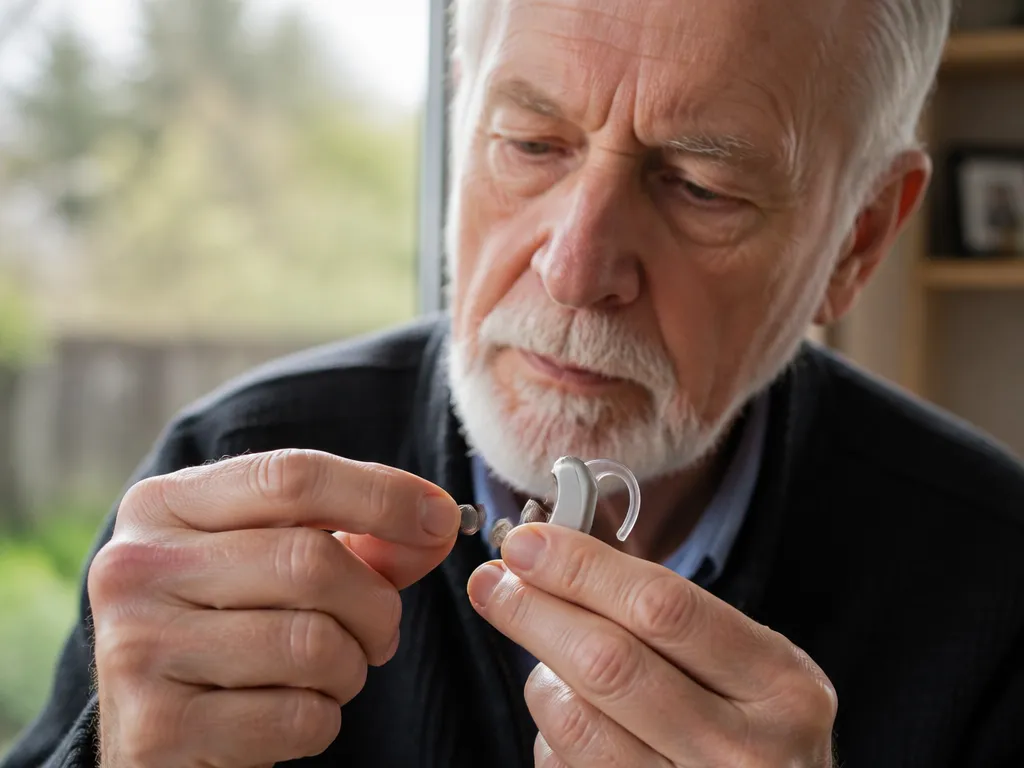
Disposable zinc-air hearing aid cells usually last about 60 hours (size 10), 73 hours (size 312), 117 hours (size 13), and 154 hours (size 675) of actual wear time, but real life varies with loudness and hours used. Battery depletion often feels like a gradual drop in volume before it becomes obvious, so replacement timing depends on your usage and how sharply the output changes.
Rechargeables: Charge, Swap, And Reset
Rechargeable hearing aids may use a sealed internal cell (you charge the device in its cradle) or a user-swappable pack, depending on the model. For cradle charging, connect the official power supply to the wall, seat the hearing aids fully in the contacts, and confirm the indicator light matches your manual. For user-swappable packs, use only the compatible battery module sold for your exact model, then confirm the device recognizes the new pack before pairing or resuming normal use.
Storage And Leaving Batteries Installed
For short storage, leaving a disposable zinc-air cell installed can slowly drain output, so plan on removing it if the hearing aids will sit unused for days to weeks. For long storage, remove the cell, keep the compartment clean and dry, and store the hearing aids in a dry case. For rechargeable models, store the device according to the manual and avoid high heat or direct sunlight, since heat accelerates capacity loss.
Storage, Shelf Life, And Protection
Zinc-air hearing aid batteries age even when you do nothing, so storage conditions can shorten life. Many disposable cells are designed for months to years of storage, but performance drops faster after they are activated or if they get heat and humidity. The practical takeaway is that storage time mainly affects how many hours you get per battery, while daily use affects how quickly the battery drains once in the aid.
Zinc-air Activation And Opened Time
Zinc-air cells are “live” only after the built-in seal is removed (or the battery is installed and air reaches the internal chemistry). Until activation, shelf life is long because the air pathway is blocked; after activation, the battery starts consuming capacity and voltage gradually declines. Some packs are blistered to limit moisture exchange, so leaving an opened pack exposed increases variability between cells.
For example, if you remove batteries from a blister pack days before you plan to use them, you can end up with a noticeable reduction in operating time compared with a fresh, still-sealed cell. If you use multiple aids or rotate batteries daily, keep activated spares to a minimum. For rechargeables, the “opened” concept does not apply, but storing rechargeables at high temperature or with a depleted pack can still reduce usable capacity over time.
Temperature And Humidity Targets
Store hearing aid batteries in the original packaging when possible, and keep them in a dry location away from direct sun and heat sources. Heat speeds up internal reactions, which shortens remaining hours, even if the battery is not installed. Humidity can drive corrosion and leakage risk, especially if packaging is damaged.
For safety and consistency, aim for a cool, dry environment:
Travel, Carrying Spares, And Leak Prevention
Travel is where storage habits break down: bags heat up, compartments get humid, and batteries can shift against metal objects. Carry spares in a sealed case or the original blister strip, so terminals do not short on coins, keys, or tools. If a battery case is not available, use an individual pocket with no metal items, or re-seal each unit in a labeled bag.
Signs a battery is at risk of leaking or already failing include discoloration, wet-looking residue in the pack, or corrosion around the edges. If you find any of these, discard the battery and clean the compartment gently with a dry, lint-free cloth before inserting a new one. Replace immediately if the aid sounds weak or intermittent, or if you notice low-volume behavior that does not recover with a fresh cell.
| Practical storage/protection issue | What can happen | What to do |
|---|---|---|
| Battery stays out in the open after sealing is removed | Capacity drops faster than expected | Activate one day’s worth (or less) and keep spares sealed |
| Heat exposure (car, sun, radiator area) | Shorter remaining hours and more variation | Store cool and keep packs away from warm electronics |
| Humidity or damaged packaging | Corrosion and possible leakage | Keep dry, replace damaged packs, inspect before use |
| Loose batteries touching metal | Contact damage or premature drain from micro-shorts | Use a dedicated battery case and separate from keys/coins |
Zinc-air disposable batteries can leak if moisture or corrosion gets in. If a battery leaks, avoid touching residue directly, keep it away from eyes and skin, and dispose of it according to local battery recycling guidance.
Replacement frequency is tied to usage and storage, but a consistent routine helps: rotate through a fresh sealed cell when you notice reduced output, rather than waiting until the aid repeatedly cuts out. When you remove a battery for storage, keep it sealed and dry, and do not leave it in an unplugged, damp environment. These habits protect both battery life and the hearing aid contacts from corrosion.
Charging Safety And Compatibility Checks
Rechargeable hearing aids lose battery life fastest when their charging conditions are off, such as using the wrong power supply or letting the charger run hot. Checking voltage, current limits, and heat cues on the charger and battery case is a practical way to protect both runtime and safety.
Match the charging method exactly to the hearing aid system you own. Hearing aids that use proprietary charging cradles, magnetic stands, or dedicated power bricks expect a specific input. Use the charger that came with the device or one explicitly approved by the manufacturer.
Usb-c Power Banks And Phone Chargers: Confirm The Power Contract
USB-C power is governed by negotiated profiles (commonly via USB Power Delivery, or USB PD), and many phone chargers and power banks behave differently under light loads. Hearing aid chargers often draw small power, so some power banks only “wake up” when they detect a particular voltage or minimum load.
When you charge from a power bank, check the power bank’s label for supported USB PD voltages and current. A safe approach is using a USB PD charger or power bank that clearly lists the voltage(s) the hearing aid charging brick accepts, and using a reputable brand with good thermal behavior.
Heat And Swelling Triggers: Stop Immediately
Heat is a real battery-life killer and a real safety risk. If the charger base, cable, or hearing aid surface feels unusually hot, or if charging takes much longer than usual, pause charging and let everything cool at room temperature on a hard, non-flammable surface.
Stop using the charger and contact the manufacturer if you see visible swelling, a distorted case, a cracked cradle, or strong chemical odor. Swelling can indicate internal damage, and continuing to charge can worsen it.
Safe charging habits are simple: charge at room temperature, keep the charger uncovered for airflow, and avoid placing it under bedding, in a sealed bag, or against fabric that traps heat. If you need to charge outdoors or while traveling, use a shaded, ventilated setup and check for heat buildup every so often during the first 10 to 15 minutes.
Buying Costs And Replacement Cadence
Most hearing aids use zinc-air disposable cells whose useful life is commonly measured in tens to a bit over a hundred hours of wear, which usually turns into about 4 to 30 days depending on how many hours per day you wear them and which size you use. Typical figures you can use for planning are about 60 hours (Size 10), 73 hours (Size 312), 117 hours (Size 13), and 154 hours (Size 675). Usage patterns like higher volume, more digital processing, or streaming audio will shorten runtime, so this should be treated as a planning baseline, not a promise.
| Battery size | Planning life (hours) | Daily wear assumed | Replacement cadence (days) | What drives shorter life |
|---|---|---|---|---|
| 10 | ~60 | 10-12 hours/day | ~5-6 days | Heavier gain settings, frequent streaming, colder temps |
| 312 | ~73 | 10-12 hours/day | ~6-8 days | Frequent streaming, higher loudness, poor seal from wax or lid fit |
| 13 | ~117 | 10-12 hours/day | ~9-12 days | Streaming at higher volume, more hours worn per day |
| 675 | ~154 | 10-12 hours/day | ~13-15 days | High-intensity use, frequent wireless audio, extreme heat |
Disposable battery cost is mostly “per pack” and varies by brand and retailer, but a conservative planning approach is to budget toward the higher end of whatever your local store charges per pack and then adjust after your first 2 to 4 replacements. Common pack sizes are 6, 8, 10, or 12 cells, so unit cost can swing a lot between small packs and value packs.
Rechargeable systems shift cost structure: you pay for the charger and the rechargeable cells, then you replace only the rechargeable power pack or battery module when capacity drops. A practical way to compare is to estimate “cost per effective full charge” for the rechargeable option versus “cost per disposable cell,” then compare how often you expect to buy new disposables over a year.
Stock Spares: A Simple Cadence You Can Follow
Stock spares based on your real-world worst-case. If you plan for battery life around the table values but you wear them longer (example: 14 hours/day) or you stream a lot, reduce the expected days by 20% to 40% so you do not run out mid-week.
Example, if you use Size 13 and your routine is closer to 14 hours/day with occasional streaming, you might plan from ~9 to 12 days down to roughly 6 to 9 days, then restock when you are down to about a week of supply. This cadence is easy to maintain and keeps emergency buys from becoming a habit.
Compatibility Checks Before You Buy (Brand-agnostic)
Compatibility is size-specific. Before purchasing, verify the device label and the battery size number (10, 312, 13, or 675), then match the battery marking on the blister pack and the tab orientation to your hearing aid battery door style.
Storage and shelf life affect what you pay for later. Zinc-air cells age after activation and exposure to air, so store them sealed and only open a pack when you need it; avoid heat and keep the compartment clean so the lid seals properly when you insert a cell.
Safety note: Replace depleted cells promptly and stop using any battery that looks swollen, is hot, leaks, or has a broken seal. Keep batteries away from children and pets, and dispose of them according to local guidance.
Quick Summary
Hearing aid battery life is usually measured in hours of wear, and size 675 zinc-air cells are rated at about 154 hours in typical use, with smaller sizes lasting less. The article warns that simply checking the cell number like 10, 312, 13, or 675 is not enough, because temperature, how many hours you wear them each day, and phone streaming can change actual output. Average-use planning figures for disposables are about 60 hours for size 10, 73 hours for size 312, and 117 hours for size 13.
For disposable zinc-air, the practical planning method is days = rated-use-hours divided by your hours-worn-per-day, then adjusted downward for heavy streaming.
For example, a size 312 cell at about 73 hours becomes roughly 6 days at 12 hours per day, but compresses to about 4 to 5 days at 16 hours per day. The article also notes a key depletion pattern, sound can become weak or intermittent and the hearing aid may power down sooner than expected. Best next action: use your first week of wear and streaming habits to set a replacement schedule, and keep a spare cell with you.
Frequently Asked Questions
How Long Do Hearing Aid Batteries Usually Last Between Changes?
For zinc-air hearing aid batteries, typical use is about 60 hours for size 10, 73 hours for size 312, 117 hours for size 13, and 154 hours for size 675. Actual time varies a lot with how often you use the hearing aids and how powerful the hearing aid settings are.
Do I Need A Specific Battery Size Or Brand To Fit My Hearing Aids?
You need the correct size number (like 10, 312, 13, or 675) for the hearing aid battery door and contacts. Brand can matter less than size, but it is still smart to stick to a trusted brand and the exact size your manual specifies.
Why Do My Hearing Aid Batteries Get Warm Or Fail Sooner Than Expected?
Hearing aid batteries are usually zinc-air and do not require charging, so any heat or rapid drop in performance is a sign of a problem like storing them in heat, leaving the tab on too long (or removing it and then waiting), or using them past their recommended storage window. Keep batteries sealed until use and store them in a cool, dry place.
Are Rechargeable Hearing Aid Batteries And Chargers Worth It, And How Safe Are They?
If your hearing aids are for rechargeable cells, use only the charger and battery type made for that system, and follow the manufacturer’s charge instructions. For disposable zinc-air batteries, do not try to charge them with a charger, since that can be unsafe.
How Often Should I Replace Hearing Aid Batteries, And What’s A Common Buying Mistake?
Use a simple rule: replace when you notice weaker sound or your hearing aid low-battery alert, since runtimes are not exact and can be shorter with frequent high-volume use. A common mistake is buying the wrong size, so double-check the size number on the battery matches your hearing aid.

- 10 Best Battery For Generator Battery Safety System 2026 - October 12, 2026
- 10 Best Battery For Generator Battery Safety Option 2026 - October 12, 2026
- 10 Best Battery For Generator Battery Safety 2026 - October 12, 2026