How Long Does A Key Fob Battery Last?
Most key fob batteries last only a few years, and that countdown usually speeds up long before the fob “dies.” Smart key remotes often run about 2 to 3 years, while regular key fobs with the key inside can stretch 4 to 6 years. This article helps you estimate your timeline, recognize low-battery symptoms, and replace the right coin cell safely.
Key fob batteries typically last 2 to 3 years in a smart key fob, or 4 to 6 years in a regular fob with the key inside. Lifespan depends on how often you press buttons, temperature, and how often the fob talks to the car. Replace when range drops or responses get intermittent.
How Long Does A Key Fob Battery Last?
Recommended Products

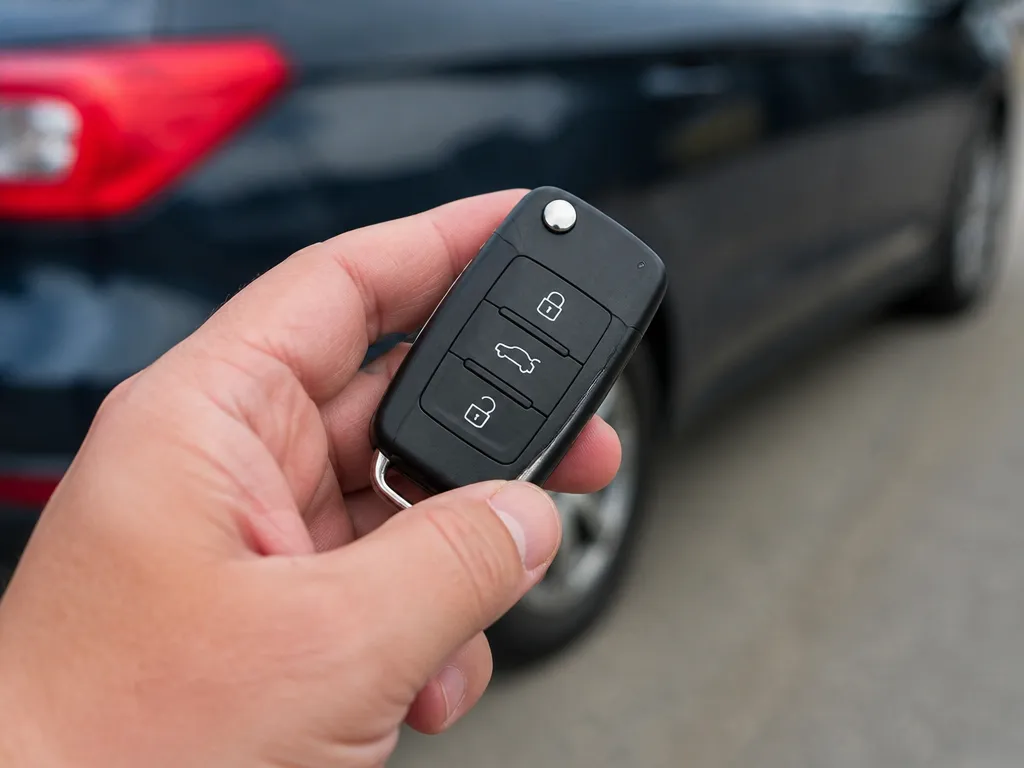
Most smart key fobs run about 2 to 3 years, while many basic key fobs or key remotes last about 4 to 6 years on the same kind of coin cell. Battery life varies because the fob’s electronics and how often it talks to the car can change the load dramatically.
Key fob style is the biggest clue. Smart keys usually wake the radio more often (proximity and passive entry), so the battery drains faster. Traditional key remotes typically spend more time asleep and only transmit when you press a button.
| Key fob type | Typical battery lifespan (years) | Why the range shifts | Battery type you often see |
|---|---|---|---|
| Smart key (passive entry/start) | ~2 to 3 | More frequent signal activity, more electronics “awake” time | Common 3V coin cells such as CR2032 (model-dependent) |
| Regular remote (press-to-lock/unlock) | ~4 to 6 | Lower average transmit time, simpler duty cycle | Common 3V coin cells such as CR2032 or CR2025 (model-dependent) |
In practice, the same car and same fob model can still show different lifespans from driver to driver. Heavy button use, long time spent sending repeated unlock attempts, and carrying the fob close to other electronics can raise average demand. Cold weather also shortens effective battery output, so the “it died early” feeling often shows up in winter.
For example, a fob that gets used every morning to lock and unlock is doing that work constantly, while a fob stored in a drawer and used less often has more “rest time” for the battery. Also, some fobs have thicker or thinner coin-cell designs, which can mean different capacities and slightly different endurance.
Common replacement expectation: if you are around the 2 to 3 year mark for a smart key or 4 to 6 year mark for a regular remote, start paying attention to early low-battery behavior. When the car begins to warn you or the buttons become intermittent, the battery is usually already near the point where reliability drops.
Key Fob Types And Lifespans
Recommended Products

Most car key fobs use a small 3 volt coin cell, and battery life depends heavily on how much the fob is transmitting. Typical ranges are about 4 to 6 years for a regular (non-smart) key fob, and about 2 to 3 years for many smart key fobs. Battery chemistry is usually the same coin-cell family, so usage patterns and electronics matter more than the brand of battery.
Basic Remote Key Fobs
Basic remote fobs send a short unlock/lock signal when you press buttons, so they often last longer. A practical rule of thumb is about 4 to 6 years for many regular key fobs, assuming normal use and no internal damage.
Basic fobs also tend to use thicker coin-cell sizes (for example, CR2032 is common), which often gives more capacity than thinner variants used in some thinner housings. A thinner battery format can reduce service life because there is less stored energy.
Smart Key (Proximity) Fobs
Smart keys keep the receiver and antenna logic ready for proximity detection, so they tend to drain the battery faster than basic remotes. Many smart keys last about 2 to 3 years in typical conditions.
Smart key battery life can vary a lot with climate and how often you approach and use the vehicle. Cold weather can reduce battery output and make the fob feel “weaker” sooner, even when the battery is not yet fully depleted.
| Key fob type | Typical battery life | Why it differs | Common coin-cell notes |
|---|---|---|---|
| Basic remote (lock/unlock buttons) | About 4 to 6 years | Transmits mainly when you press a button | CR2032 is common; CR2025 is thinner (often shorter life) |
| Smart key / proximity | About 2 to 3 years | Stays ready to detect proximity and exchanges more often | 3V coin cells are typical; thin designs can reduce capacity |
Signs the battery is running low: reduced range, the fob sometimes not locking, and a low-battery prompt in the vehicle display. A common quick check is to measure battery voltage with a multimeter, since a 3 volt coin cell that reads notably under 3V is likely weak.
Weak coin cells can still “work” intermittently, so replace at the first clear signs rather than waiting for a complete failure. If a coin cell looks swollen, leaks, or the fob is hot after use, stop and replace it promptly.
What Affects Key Fob Life
Recommended Products


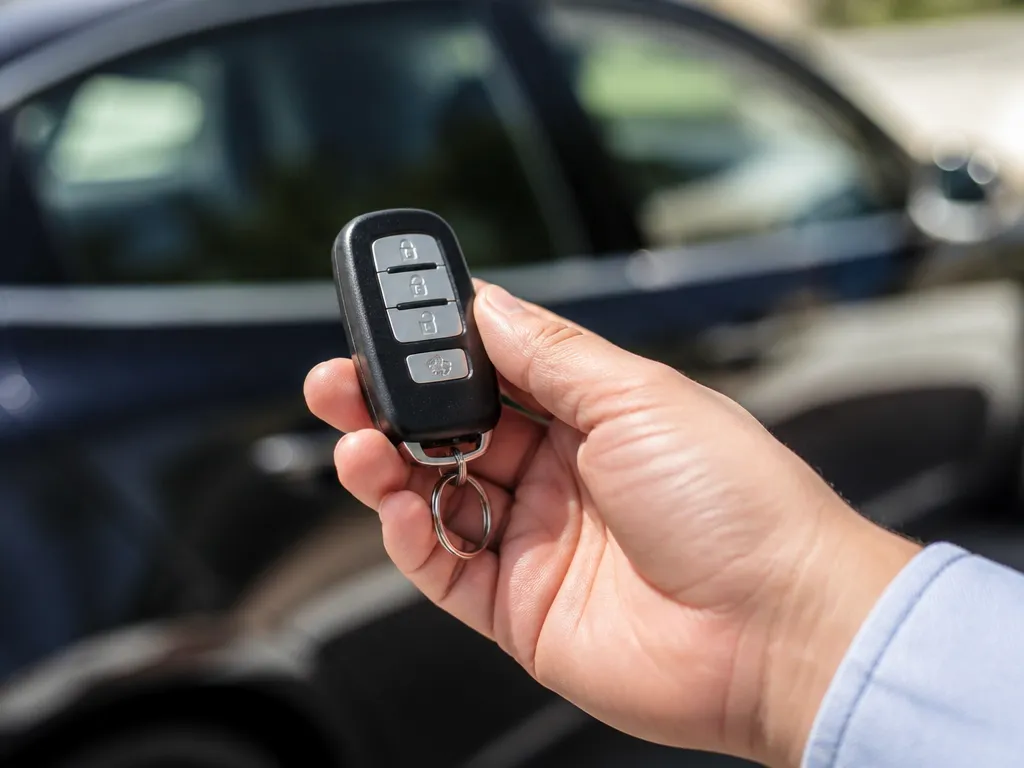
Key fob batteries usually last longer in low-activity use and shorter in frequent, high-signal-demand conditions. Your vehicle’s features can shift the number.
Usage frequency is the biggest day-to-day driver. Every button press draws power, and vehicles that also perform continual proximity checks wake the fob more often than a simple “press to transmit” remote.
Temperature swings also change how quickly a cell’s voltage drops under load. Cold weather increases internal resistance, so the fob may draw more current per attempt and hit the “weak” threshold sooner, even if the battery still measures “okay” at room temperature.
Storage habits matter too. Keeping a fob in a hot car, near a heater, or in direct sun accelerates capacity loss, while long-term storage with a mostly awake state (some proximity setups) can slowly drain the battery.
| Condition | Typical impact on lifespan |
|---|---|
| Hot environments (inside vehicle, sun) | Faster capacity fade over time |
| Cold environments (winter mornings) | Lower usable performance during use, earlier “weak” behavior |
| Low-activity use (rare presses, no proximity) | Longer time before voltage drops under load |
Proximity signaling and wake behavior can shorten life even when you press buttons less. If your fob supports hands-free access, the vehicle and fob exchange signals more regularly, so the battery spends more time powering the receiver/transmitter circuits.
Practical check: if your fob is used for walk-up entry and frequent start requests, expect shorter life than a button-only remote, even if you press the buttons “the same amount.”
Fob age and wear also matter. An older circuit board, worn seals that let moisture in, or corrosion on the battery contacts can create higher resistance, causing the battery voltage to sag more under the same signal demand.
Battery brand and the exact cell type affect real-world duration. Many key fobs use coin cells such as CR2032 (often higher capacity than thinner alternatives like CR2025), so using the correct size and capacity helps you get expected lifespan.
Replacement safety note: if you ever see a swollen coin cell, heat damage, or an unusual smell, do not keep testing or reusing it. Replace the battery and inspect the contacts, and keep the old cell contained until disposal.
Low-battery Symptoms
Recommended Products


Key fob batteries usually show low-power behavior before a full dead state. Reduced performance often starts as range issues or intermittent commands, then escalates to delayed lock and unlock responses.
Car makers may handle warnings differently, but the sequence is often consistent: first you notice that the fob works only at close range, then the vehicle may beep, display a reminder, or require a backup method (like using the key inside the fob). When these signs appear, treat the next “missed” unlock as a strong indicator the battery is already weak.
Common On-road Symptoms
Low voltage reduces the reliability of radio transmission, so the fob can still “work,” just inconsistently. Cold weather also makes weak batteries act weaker, so symptoms can show up more often in winter even if the battery seems fine in summer.
What To Do When You Spot Symptoms
For example, if your fob suddenly stops working from its normal spot in the driveway but works inside the car, the battery is likely sagging under load. Treat “it still works” as a warning sign, because transmissions become unreliable right when you need them most.
Safety check: If the fob battery compartment shows corrosion, wetness, or a battery that looks swollen or overheated, stop and inspect before reinstalling. A damaged coin cell can leak and can damage the electronics.
Test And Verify Battery Health
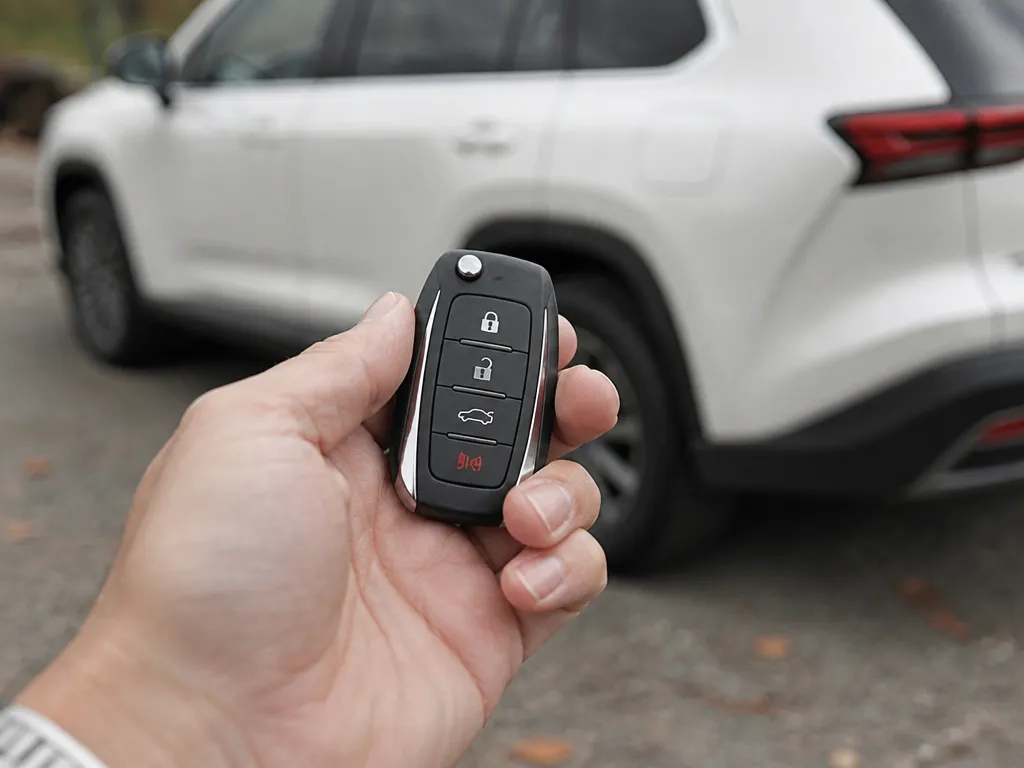
Vehicle “low key fob battery” prompts can be a useful early warning, but they can lag behind actual cell decline, so a simple voltage check is the most direct confirmation.
In-car Prompts And Range Tests
Start with what the car tells you. Many vehicles warn when the fob battery is weak, but prompt timing varies by model, fob design, and how far you usually park from the antenna.
Range testing catches problems before a prompt appears. For a repeatable test, stand outside the car at a consistent spot and press lock or unlock while you slowly walk farther away, note where it stops responding reliably, then repeat the test after you replace the cell to compare.
Manual Voltage Checks
A multimeter reading is the fastest way to verify cell health. Key fobs commonly use a 3 V coin cell (often a CR2032 or similar), and a good 3 V battery should measure slightly above 3.0 V, with a reading below 3 V indicating the cell is getting weak.
For example, one bad 3 V coin cell measured about 2.858 V and was flagged as weak, meaning you can use the “below 3.0 V” rule as a practical threshold. Use caution to avoid shorting the contacts when you open the fob, and keep the coin cell flat so it does not get nicked.
| What you see | What it suggests | Next action |
|---|---|---|
| In-car low-battery prompt | Cell is near end of useful life | Plan a replacement now |
| Fob works only at short distance | RF range shrinking from low cell voltage | Confirm with voltage check, then replace |
| Coin cell measures under 3 V | Battery is weak even if it still “works” | Replace to avoid sudden failure |
When To Rely On Prompts Vs Testing
Use the car prompt when you want a fast decision and you have a working method to lock/unlock in the meantime. Rely on manual voltage checks when the car has no warning but the fob range is shrinking, you have intermittent behavior, or you want confidence before spending time swapping parts.
Replace immediately if you notice any physical damage on the cell or signs of overheating around the battery compartment. Swollen, leaking, or hot-to-the-touch components are a stop-the-clock safety issue, not a “keep monitoring” situation.
Practical rule: if you can measure the coin cell and it is clearly below 3.0 V, treat the fob as weak even if it still triggers near the car.
Replacement Basics: Exact Battery
Recommended Products


Key fobs typically use a 3 V coin cell, most often CR2032 or CR2025, so the replacement must match both the exact part number and thickness. CR2032 (about 3.2 mm thick) usually runs longer in thicker housings, while CR2025 (about 2.5 mm thick) is common in thinner or older designs.
Match The Exact Cell, Not Just “3 Volt”
Coin cells are usually labeled with the format “CR20xx,” where the first two digits relate to diameter and the last two relate to thickness. The voltage is commonly 3 V for both CR2032 and CR2025, so buying the wrong thickness can lead to poor contact, intermittent ranges, or a fob that feels “fine” but behaves inconsistently.
For example, a fob that was built for CR2032 may still accept a CR2025 physically, but the thinner cell can shift and lose contact. The symptom often looks like a low battery warning or reduced button response that comes and goes.
Install Safely And Cleanly For Reliable Contact
Replacement is usually quick, but safety matters because damaged cases, bent contacts, or battery leakage can shorten lifespan. Do not force the battery in, and stop if the cell does not seat flat or the cover does not close without resistance.
In practice, quick handling steps prevent most issues: keep the new cell dry, touch only the edges, and insert it with the correct polarity. If you see crusty residue, wipe the compartment gently with a dry swab and inspect contacts for looseness or corrosion before installing the new cell.
If you have a voltmeter, a healthy 3 V lithium coin cell typically reads a little above 3 V, while a reading around 2.8 V strongly suggests replacement. A low reading is a good reason to replace even if symptoms feel mild.
After installing the new cell, close the fob firmly and test lock, unlock, and any trunk or panic functions from outside your usual range. If the behavior still seems inconsistent, the battery code is likely wrong, the cell is not seating, or a contact is bent.
Quick Summary
As the battery weakens, warning signs include reduced range and intermittent responses, such as having to press multiple times or noticing inconsistent locking. If your car shows a low key-battery message, replace the battery soon. For compatibility, match the cell to your fob’s exact CR-series size, with common examples being CR2032 and CR2025. Safely replace it by keeping the coin cell dry, not puncturing it, and swapping promptly, because reliability drops right as symptoms begin.
Frequently Asked Questions
How Long Does A Key Fob Battery Last Before I Need To Replace It?
Actual life depends on how often you use the fob, temperature, and internal signal range. Replace it when the range drops, responses become intermittent, or the vehicle displays a low-battery warning.
What Battery Type Is Compatible With My Key Fob, Like Cr2032 Or Cr2025?
Most common replacements are CR2032 or CR2025, and they are both 3V but have different thicknesses. Check the old battery marking (for example, CR2032 or CR2025) and match it exactly, not just by voltage.
Does A Charger Or Power Bank Affect Key Fob Battery Life?
You usually do not charge key fob batteries with a charger, because the typical replacements like CR2032 and CR2025 are primary lithium coin cells, not rechargeables. If you want to use rechargeable coin cells, you still need a charger meant for that exact rechargeable chemistry, and the fob may not work as reliably.
Can Key Fob Batteries Get Hot Or Swell, And Is That Unsafe?
A key fob battery should not get hot during normal use, and if you see swelling, leaking, or unusual heat when you open the fob, you should stop using it and replace it promptly. Coin cells can be damaged by short circuits or incorrect polarity, so handle it carefully and install the new battery correctly.
What Is A Common Mistake That Shortens Key Fob Battery Life When Replacing It?
A big mistake is using the wrong coin cell thickness, like swapping a CR2025 where a CR2032 is specified. If the new battery sits loosely or makes poor contact, the fob can drain faster or behave erratically.

- 10 Best Battery For Generator Battery Safety System 2026 - October 12, 2026
- 10 Best Battery For Generator Battery Safety Option 2026 - October 12, 2026
- 10 Best Battery For Generator Battery Safety 2026 - October 12, 2026