How Long Do Electric Bike Batteries Last?
Battery life on an e-bike is mostly about one spec: how much charge capacity is left, not how many miles your motor makes each day. A typical lithium-ion pack ages two ways, cycle aging (from charge and ride) and calendar aging (from time, heat, and storage). Next, you will learn what “end of life” means in measurable range or capacity terms, how to spot normal wear vs a battery or BMS problem, and what to change with charging, temperature, and storage.
Electric bike batteries usually last about 3 to 7 years in real life, depending on heat, how often you charge, and how deeply you discharge. Most riders consider a pack “near end” when range drops to roughly 70 to 80% of the original. Age and storage can still reduce capacity even if you ride less.
How Long Do Electric Bike Batteries Last?
Recommended Products


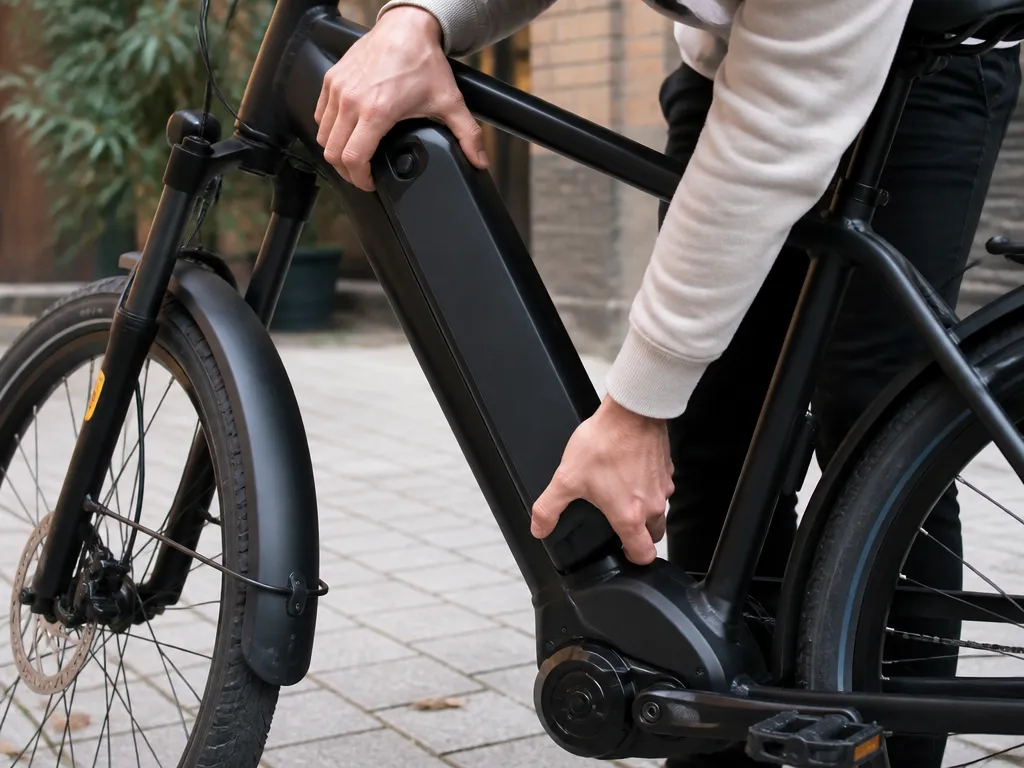
Most e-bike lithium-ion packs age out by a mix of charge cycles and calendar time, so “lifespan” can mean two different numbers. A healthy pack often delivers many rides per year for several years, but range usually declines as the battery reaches end-of-life (commonly measured as noticeably reduced capacity, not a sudden failure).
Battery lifespan is limited by lithium-ion wear mechanisms that happen whenever the cell chemistry cycles and when it sits at elevated charge or temperature. Two metrics matter: cycle aging (wear from repeated charging and discharging) and calendar aging (capacity loss over time even if you ride less). Because people ride and store differently, your results can vary widely even with the same nominal battery size.
What Defines Lifespan: Cycles Vs Calendar Age
Cycle aging is driven by how deep you discharge and how often you return to near-full charge. Using full throttle, riding hard until the battery is very low, and repeatedly charging to 100% can accelerate capacity loss, especially if done in warm conditions. Calendar aging is driven by time, storage state of charge, and temperature; a pack stored hot at high charge can age faster than one stored cool and partially charged.
In practice, “end of life” usually means the battery still powers the bike, but range drops enough that the rider feels the bike is less useful. A good rule for judging your own pack is to compare real-world distance or watt-hours consumed per ride to your original experience, because printed range estimates depend on rider weight, tire pressure, wind, and assist level. If your bike increasingly limits power at higher remaining battery percentages than before, that is also a common sign of capacity fade or increased internal resistance.
Typical Timeframes By Rider Profile
Light riders who charge occasionally and avoid very high or very low battery states often get the best blend of cycle and calendar aging. Heavier, more frequent riders tend to hit capacity fade sooner because they cycle the pack more often and may run deeper discharges while climbing or riding in assist-heavy modes. Commuters who ride daily but charge in the evening and store indoors can still do well if they avoid long periods at 100% and keep the pack away from heat.
Important: Exact year and cycle numbers vary by cell quality, BMS behavior, battery management settings, and thermal conditions. Treat any “cycles-to-failure” claim as a lab-style estimate until you measure your own range and charging behavior.
Use this baseline approach to set expectations, then confirm with your own data.
Lifespan Ranges By Chemistry
Recommended Products

Most e-bike packs use lithium-ion chemistry, and lifespan is usually expressed as both cycle life (how many full charge-discharge cycles) and calendar life (how many years it ages while sitting). Cycle life is driven mostly by how deep and how often you discharge, while calendar life is driven mostly by time at high state of charge and exposure to heat. OEM specs will sometimes quote both, but many list only one, so you need to read what is actually being claimed.
For e-bikes, the most common lithium-ion chemistries are NMC (nickel-manganese-cobalt) and NCA (nickel-cobalt-aluminum). Lithium-ion packs also appear as LFP (lithium iron phosphate) in some models, often with a different charging behavior and a reputation for better cycle endurance. The trade-off is that chemistry affects how the battery ages under heat, how much capacity fades per cycle, and how tolerant it is of being kept at high charge.
For example, NMC and NCA cells often deliver higher energy density, so many bikes feel lighter for the same watt-hours. In practical ownership terms, those chemistries tend to be more sensitive to long periods at very high state of charge and to sustained heat, which can shorten life even if the number of rides is modest. LFP cells typically cope better with cycling and heat exposure, but they can still lose capacity if stored hot or repeatedly charged to the top end and left there.
| Chemistry (common in e-bikes) | Typical lifespan bias | What tends to shorten it first |
|---|---|---|
| LFP | Often better cycle tolerance | High heat exposure and long storage at high state of charge still reduce life |
| NMC | Energy dense, chemistry more sensitive to heat | Warm conditions plus sitting near full charge accelerates calendar aging |
| NCA | Energy dense, similar heat sensitivity patterns | Heat and high state of charge over time accelerate capacity fade |
Safety warning: A battery that smells “hot,” feels unusually hot during charge, or shows swelling or cracked casing is a stop-using situation. Swollen packs can also indicate internal damage that no lifespan chart can correct, and charging them can be dangerous.
Calendar aging and cycle aging can overlap, which is why two packs with the same ride count can age differently. A pack that mostly charges in a cool environment and is stored around mid charge often preserves capacity longer than one that sits at high charge in warm temperatures. Chemistry sets the starting point, but your charging habits and storage temperature determine how closely you match the OEM’s stated life conditions.
End-of-life Indicators
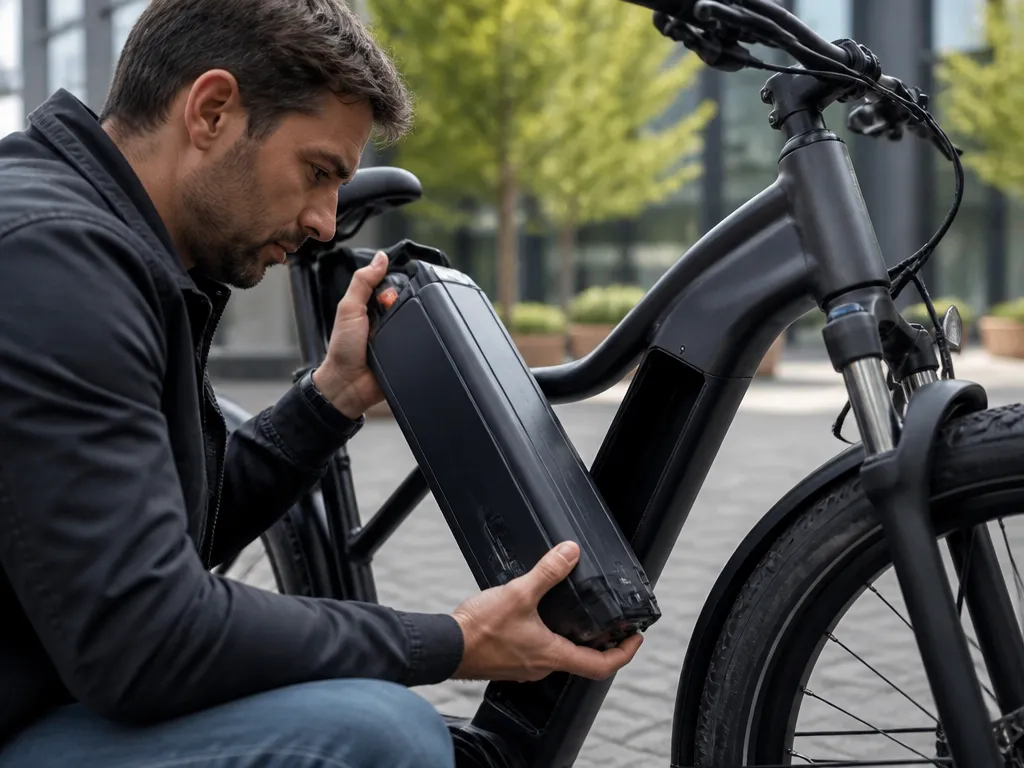
Electric bike battery “end of life” usually shows up first as capacity loss, followed by shorter real-world range and weaker performance under load. A practical cutoff is when the pack delivers only about 70 to 80% of its original usable capacity, which often feels like “the bike goes faster through the remaining miles.”
Capacity loss shows up in two measurable ways: an actual reduction in watt-hours (Wh) the pack can deliver, or a visible range drop compared with your own baseline. If your bike display shows battery percentage but range keeps shrinking faster than before, the pack can still be “working” while already aging. Some packs also report a health metric through the battery app or smart charger, but you still need to confirm it by comparing observed range.
Range loss alone can also come from routine changes like tire pressure, added headwind, cold weather, or choosing a higher assist mode more often. For that reason, compare like-for-like trips: same route, similar temperature, similar assist level, and roughly the same battery start percentage. If those conditions are steady and range still drops sharply, the battery is the likely limiting factor.
For example, a rider may see the last 20% of battery disappear quickly, then the bike may feel unusually inconsistent even on rides that used to be routine. This symptom is consistent with capacity fade and increased voltage sag, and it is more meaningful than day-to-day display percentage fluctuations. Battery discharge behavior also matters: sudden cutoffs at higher state-of-charge can suggest a deeper problem than normal wear.
| End-of-life signal | What you’ll notice | How to interpret it |
|---|---|---|
| Capacity around 70 to 80% | Range is consistently shorter than it used to be | Battery is near the point where replacement planning makes sense |
| Observed range drop | Same rides take fewer miles before the battery feels “empty” | Confirms real-world capacity loss when conditions are similar |
| Performance under load worsens | Assist feels weaker on hills or acceleration, earlier cutoffs | Often matches increased internal resistance from cell aging |
Battery health tools can help, but treat them as a cross-check, not the only evidence. If the bike’s real-world range and load performance keep sliding while charging behavior remains normal, the pack is past its useful margin and replacement becomes the cost-effective move.
Wear Aging: Cycles Vs Calendar
Lithium-ion e-bike packs age two ways: cycle aging from charge and discharge, and calendar aging from time spent storing energy at chemical reactions inside the cells. Cycle aging is driven by how often you ride and how deeply you cycle the battery, while calendar aging accelerates when the pack sits hot and at high or low state of charge. Both paths reduce usable capacity, so “years” and “miles” predict different parts of battery fade.
Cycle Aging (Usage-driven Wear)
Cycle aging tracks the battery’s total electrochemical “work,” shaped by depth of discharge (how low you let it go), charge level (how full it ends up), and charging temperature. Two riders can own the same pack for the same calendar time, yet see very different capacity retention if one rides daily with deep discharge and frequent high state-of-charge charging.
In practice, you see faster range loss when trips regularly end near full and you start the next ride from near full again, because that pattern combines higher average stress with frequent throughput.
Calendar Aging (Time-driven Wear)
Calendar aging happens even if you do not ride, because lithium-ion chemistry still changes slowly at rest. This loss speeds up when the battery is stored at high state of charge or at extreme temperatures, especially in a warm environment such as a closed vehicle or near a heater. Calendar aging matters most for bikes that sit unused, or for owners who frequently keep the pack fully charged between rides.
In practice, a pack can start showing noticeable range reduction before it hits high cycle counts, especially if it is stored hot or kept at near full for weeks. The big trade-off is convenience versus longevity: charging to 100% right before every ride is usually far better than leaving it there for days, and storing at moderate charge is often gentler than storing full.
| Wear path | Main driver | What you observe |
|---|---|---|
| Cycle aging | How much you ride (total cycles), how deep you discharge, and how the pack is charged | Gradual range drop that often tracks riding patterns more than calendar time |
| Calendar aging | Time, average state of charge during storage, and storage temperature | Capacity loss even with low mileage, especially after long warm storage |
Safety note: If a pack ever shows swelling, a strong odor, unusually fast heating, or repeated shutoffs with normal charging, stop using it and get it inspected. Age-related wear can sometimes increase internal resistance, which raises heat risk during charging and high-load riding.
Key Lifespan Factors And Guidance
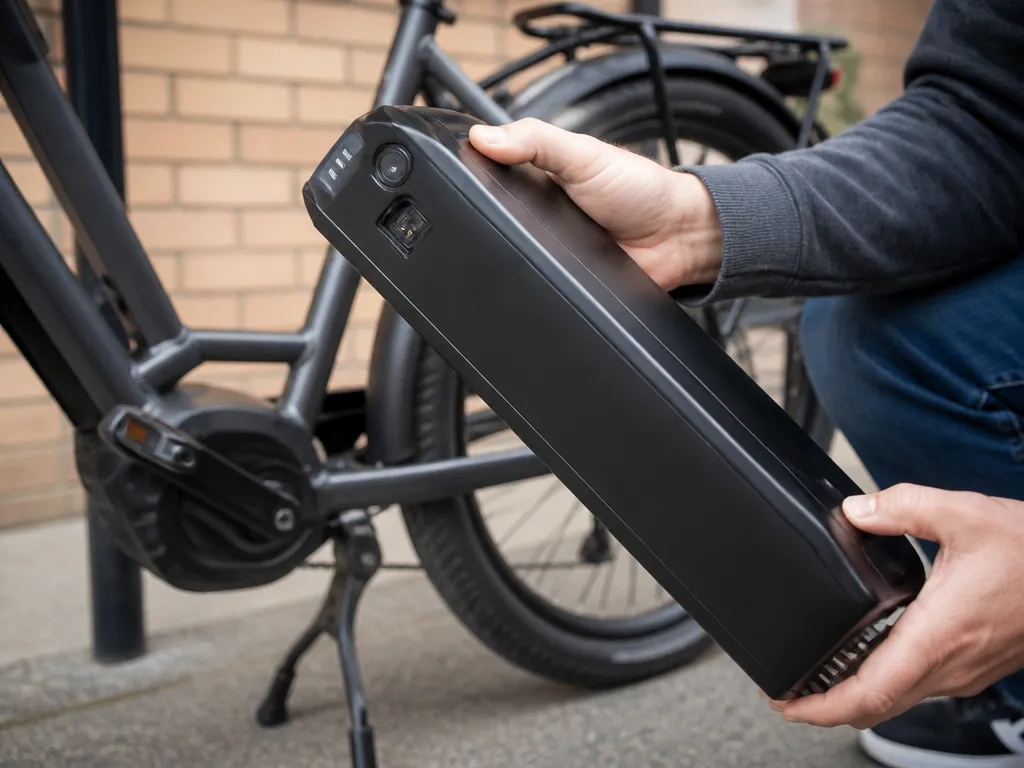
Heat is the fastest way to reduce lithium e-bike battery capacity over time, and aggressive charge and discharge habits accelerate wear. Real-world lifespan is usually limited by both calendar aging (time) and cycle aging (how much you use), so the practical goal is to keep the pack cool and avoid extremes.
Heat And Temperature Management
Battery cells age faster at higher temperatures, especially when you ride hard, store the pack hot, or charge it immediately after a hot ride. Many packs include temperature sensing and charge cutback, but you still get better life by giving the battery time to cool before charging.
Cold also hurts performance and can push the BMS to limit power, which tempts some riders to keep trying until the pack “warms up.” In practice, charge and store in reasonable indoor conditions, and stop using a pack that smells “hot,” looks swollen, or shows repeated fault warnings.
Depth Of Discharge (Dod) And Charging Habits
Battery wear depends heavily on how deeply you drain and how often you push toward full. Deep discharges and spending long periods at very high state-of-charge increase stress, so partial cycles are usually easier than repeated near-empty or near-full use.
For many riders, the best “everyday” compromise is riding with the pack above empty buffer, charging after use rather than waiting until it is fully empty, and avoiding leaving it sitting at 100% for days. If your range planning forces near-empty rides, shorten the discharge time and charge sooner.
Storage State Of Charge And Seasonal Storage
Seasonal storage is where many packs quietly lose capacity, because calendar aging continues even when the bike is parked. Storing at high state-of-charge for months can reduce long-term capacity more than storing at a moderate level.
Storage guidance varies by manufacturer, but practical safety rules are consistent: cool, dry, and out of sun. For best results, check the owner’s manual for an OEM storage charge target, then follow it even if it feels inconvenient.
Fast Charging Limits, Oem Limits, And Bms Compatibility
Fast charging increases heat and charging stress, so “faster” usually means “shorter life” unless the pack is designed and validated for that charge mode. Many e-bike systems also taper charging current as the battery approaches full, which makes charging time less linear than it looks.
BMS compatibility is the hidden risk when mixing components. A pack’s BMS controls safe charge and discharge, but it still expects chargers with the correct voltage behavior and connector wiring for that specific system.
Quick health check in practice: track real-world range at a consistent assist level and temperature. A steep, sudden drop suggests a problem with the cells, BMS, or charger, while gradual decline is usually normal aging.
Real-world Rider Scenarios
Battery life depends on how hard you ride, how deep you drain, and how hot the pack gets during storage and charging. A typical lithium-ion e-bike pack often shows noticeable range decline after years of regular use, long before the pack “fails,” so your daily ride experience is usually a gradual change in assist and distance.
Daily Commuter With Moderate Assist
For a commuter who rides 5 to 6 days a week, uses mid-level assist most of the time, and charges soon after returning, the big lifespan driver is avoiding long time spent either nearly full or nearly empty. Many riders end up with a “good enough” habit (ride, end the day with a safe state of charge, plug in), which reduces stress on the cells and helps the BMS manage balancing.
For example, a 30 minute commute that is mostly steady power can age the pack more gently than stop-and-go bursts that demand frequent high current. The practical sign is range decay you can measure: if you consistently get fewer miles on the same assist level versus a year ago, you are seeing wear rather than a sudden charging problem.
Occasional Rider With Longer Rides
For an occasional rider, calendar aging matters more than cycle count because the pack spends long stretches sitting. If you store the bike for weeks or months, the state of charge you choose becomes critical for longevity, and temperature swings can also accelerate aging even if you never ride much.
For instance, someone who rides 1 weekend per month may see a battery that still has decent immediate voltage but has lost usable capacity. The pack can feel “fine” for a while, then struggle to deliver the same boost during longer climbs as internal resistance rises.
Hot Climate Storage And Charging
Hot climates add a hard constraint: heat is the fastest way to degrade lithium-ion packs over time, even when you charge correctly. Store the battery out of direct sun and avoid keeping the pack in a closed car, garage, or shed that can run much hotter than indoor conditions.
For example, charging immediately after a sweaty ride is fine if the battery is within the manufacturer’s operating temperature range, but repeatedly charging while the pack is already hot can shorten life. If the pack feels unusually warm to the touch during charge, that is a safety and longevity red flag.
| Scenario | What changes in real use | What to do |
|---|---|---|
| Daily moderate assist | Range slowly drops, assist may feel weaker on the same route | Charge promptly, avoid storing at 100% in heat |
| Occasional longer rides | Capacity loss shows up after storage periods, even with fewer cycles | Store with a mid-range charge and stable temperatures |
| Hot storage and charging | Faster aging, earlier cutoff during climbs, possible charge-time instability | Cool storage location, charge only when the pack is not hot |
Safety note: If a pack becomes swollen, smells sweet or “burnt,” or the charger/battery housing gets excessively hot, stop using it. Swelling or overheating can indicate internal damage, and continued use can make a fire risk more likely.
Maintenance, Safety, And Replacement Plan
Proper charging habits and temperature control can add years to lithium-ion e-bike battery life, while neglect can trigger faster capacity loss or dangerous failures. Battery wear shows up as reduced usable range and a higher tendency to hit low-voltage cutoff early, long before the pack becomes completely unusable.
Do And Don’t Maintenance?
Most e-bike battery problems come from heat, water exposure, and charging practices that stress the cells or the battery management system (BMS). Keep the pack clean and dry, and treat “storage charge” and “ride temperature” as performance and safety variables.
For example, a rider who often parks in direct sun and then charges immediately after long climbs can see noticeably faster capacity fade than someone who lets the pack cool and charges at a stable room temperature.
Replacement Decision Framework
Replace the pack when the benefits of keeping it no longer justify the risk and the inconvenience. A practical approach is to define a “capacity loss threshold” based on your real-world range, then decide whether repair or replacement is cheaper and safer.
| Symptom | Likely meaning | Next step |
|---|---|---|
| Range drops steadily over time | Capacity fade or increased internal resistance | Compare against baseline range and log battery warnings |
| Sudden cutoffs or rapid bar drop under load | Sag, BMS protection events, or cell imbalance | Stop riding if warnings persist; test charger and inspect connectors |
| Overheating during charge | Charging imbalance, damaged cells, or charger mismatch | Stop charging and seek service |
| Swelling or hard-to-seat battery | Potential cell failure or venting risk | Do not charge or ride; replace immediately |
What To Verify When Buying A New Pack
Compatibility is more than “same voltage.” Confirm the new pack matches your bike’s electrical requirements, mounting style, and the battery interface your controller expects. If you are unsure, use the bike model and battery part number from the manufacturer documentation.
Safety note: An “almost compatible” pack or charger can cause overheating, BMS faults, or repeated protection trips. When in doubt, match exact voltage and confirm connector and charging specs before purchasing.
Safety Checks For Overheating Or Swelling
Overheating and swelling are failure modes that can escalate quickly. Treat any sign of heat, bulging, chemical odor, or unusual sounds during charge as a hard stop.
In practice, a battery that shows swelling should be treated like a safety hazard, not a “wait and see” project. Replacement is the right move because the mechanical change often correlates with internal cell failure and increased venting risk.
Quick Summary
Electric bike battery life is driven less by how many miles you ride and more by how much usable charge capacity remains, as the pack ages through both cycle aging and calendar aging. Cycle aging comes from charging and riding, while calendar aging comes from time, heat, and storage conditions. In real life, electric bike lithium-ion packs usually last about 3 to 7 years, and “near end of life” is commonly when range drops to roughly 70 to 80% of the original.
Range is the rider-facing signal, but the article emphasizes checking capacity, not miles, because printed range depends on weight, tires, wind, and assist level. Heat management matters, since avoiding hot storage and charging away from hot garages and sun helps slow aging. Repeated extremes are also a problem, with both 0% and long storage at 100% increasing capacity loss. Sudden range cliffs can point to BMS or imbalance issues, so the next step is to measure your own range trends before replacing anything.
Frequently Asked Questions
How Long Does An Electric Bike Battery Usually Last Before It Needs Replacement?
Most e-bike batteries are rated for a certain number of charge cycles by the manufacturer, so the safest answer is to check your specific pack or bike manual.
In practice, you will usually notice performance drop after years of use, especially if you frequently charge at high heat or keep the pack at very high state of charge for long periods, but the exact timeline depends on chemistry, riding style, and charging habits.
Can I Use Any Charger With My Electric Bike Battery, Or Do I Need The Same Voltage And Connector?
You cannot safely substitute chargers unless they match the battery’s required output voltage and charging profile (and of course the connector type). If the charger is not specified for your pack, you risk overcharging, undercharging, or repeatedly stressing the cells, which can shorten battery life and create a safety hazard.
How Hot Is Too Hot When Charging An Electric Bike Battery?
If the battery or charger casing feels uncomfortably hot, you should stop charging and let everything cool before continuing. Heat is a major factor in battery aging, and repeatedly charging while the pack is warm (for example right after riding in hot weather or in an unventilated space) can reduce long term capacity.
What Runtime Should I Expect, And How Does Battery Age Change It Over Time?
Runtime depends on motor power level, rider weight, terrain, wind, tire pressure, and weather, not just battery size. As a battery ages, its usable capacity typically drops, so you may see noticeably shorter rides at the same assist level even if the battery voltage still looks normal.
When Is It Time To Replace My Electric Bike Battery, And What Buying Mistakes Shorten Its Lifespan?
Consider replacement if you see rapid range loss, frequent cutouts, or the pack no longer holds charge well after a normal charge cycle, then confirm with your dealer because some issues are charger or BMS related. Common buying mistakes include choosing a replacement pack that does not match your bike’s voltage and battery management system, buying unbranded chargers, and storing the battery fully charged at high temperatures for weeks.

- 10 Best Battery For Generator Battery Safety System 2026 - October 12, 2026
- 10 Best Battery For Generator Battery Safety Option 2026 - October 12, 2026
- 10 Best Battery For Generator Battery Safety 2026 - October 12, 2026