How Long Do Rv Batteries Last?
Aging RV batteries are one of those problems that can look random until you measure voltage under load. Typical lifespans vary a lot by chemistry, like flooded lead-acid, AGM, GEL, and lithium, and by how deeply you cycle them. You’ll get practical ranges in years, plus the charging mistakes that quietly cut lifespan, and quick checks to confirm whether your battery is healthy or just worn out.
RV batteries usually last about 3 to 5 years for flooded lead-acid, 4 to 7 years for AGM (often 5 to 8), and 6 to 10 years for GEL, depending on temperature and how you charge. Lithium RV batteries are often rated longer, commonly 8 to 15 years. Lifespan drops fast with heat, undercharging, and frequent deep discharges.
How Long Do Rv Batteries Last?
Recommended Products

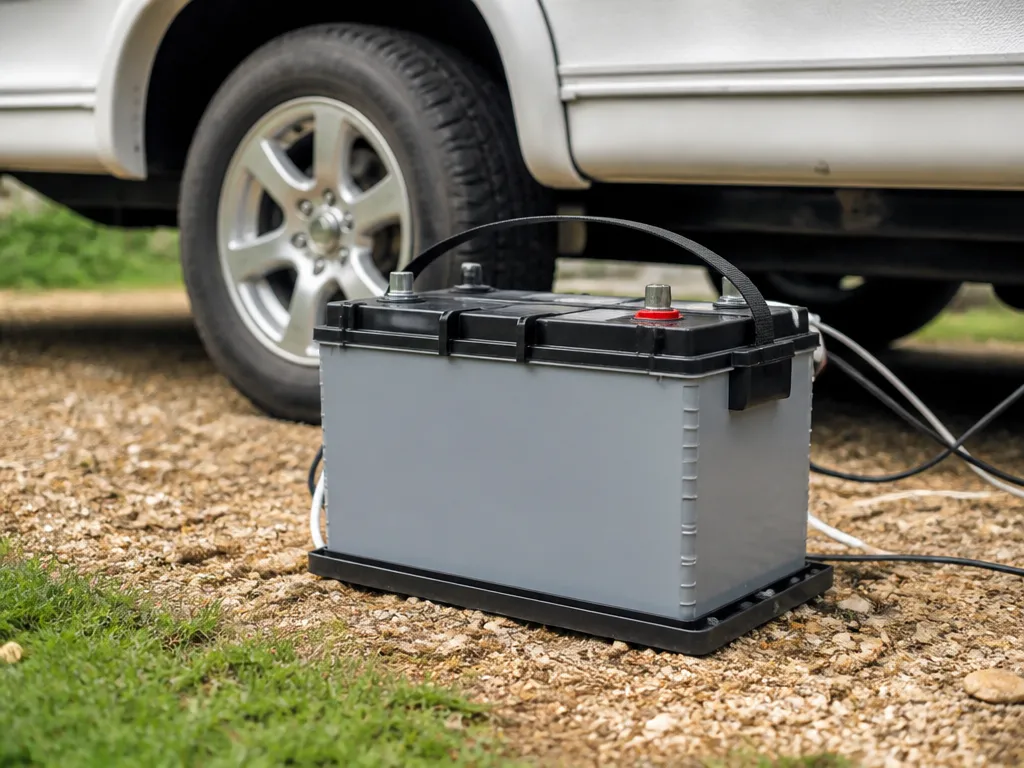
RV batteries typically last 3 to 6 years for common flooded lead-acid, 4 to 8 years for many AGM setups, and 8 to 12 years for quality lithium packs when they are kept within the manufacturer’s charge and temperature limits. “Last” can mean two different things: calendar life (how long until the battery naturally ages) or cycle life (how many charge-discharge cycles it can handle before capacity drops enough to matter). Expect real-world results to swing widely based on charging quality, temperature exposure, and how deeply you discharge between charges.
For RV owners, the biggest divider is duty pattern. Full-timers who cycle batteries regularly tend to wear out cycle life first, while occasional users often see calendar aging first because batteries sit for long periods at partial charge or in hot storage. A battery that is lightly used but parked warm with poor charging can still lose capacity even if it never gets heavily discharged.
Battery type drives the baseline, but wiring and charging determine whether you hit the high end. Lead-acid chemistries are sensitive to sulfation from staying undercharged, and they also lose performance when repeatedly discharged deeply. Lithium chemistry can last much longer, but it still ages faster with heat, long periods at high state of charge, and incorrect charging setpoints.
| Battery chemistry | Typical lifespan (years) | What usually limits it | Common failure signs |
|---|---|---|---|
| Flooded lead-acid (FLA) | 3 to 6 | Sulfation and capacity loss from undercharge and deep cycling | Low resting voltage, sluggish start after charging, frequent need to “top off” |
| AGM | 4 to 8 | Capacity fade from cycling and heat; sometimes wrong charger settings | Noticeable voltage sag under inverter load, reduced run time |
| Gel | 4 to 8 | Voltage and temperature stress, drying effects over time | Weak performance that doesn’t improve with normal charging |
| Lithium (LiFePO4, with BMS) | 8 to 12 | Heat and charge window violations; capacity fade over cycles | BMS trips, “won’t accept charge,” or capacity drops despite correct charging |
Calendar Life Vs Cycle Life (Why The Numbers Differ)
Calendar aging is battery chemistry wear plus corrosion and electrolyte changes that happen even when you are not cycling. Cycle aging is primarily damage from repeated charge and discharge, especially when you regularly go deep and when charging is off target.
For practical decisions, treat “calendar” as the limit for parked RVs and “cycle” as the limit for RVs used week to week. A solar-fed coach that stays near mid charge and avoids heat can do better than a full-timer in a hot storage lot with a charger that never properly reaches absorption or equalization (where applicable). If a battery fails early, the cause is often charging behavior or temperature stress, not just the chemistry.
Common “aging” triggers include a resting voltage that is consistently lower than before, less run time even after a proper full charge, and faster inverter dropouts at the same loads. Swelling, cracking, venting, or strong odor are safety red flags: stop using the battery and investigate before troubleshooting charging settings.
Years Vs Cycles: What Breaks First
Battery life comes from two aging clocks: calendar time and cycle wear. In RV use, cycle depth, how long the battery sits at high or low states of charge, and charging mistakes drive capacity fade (less usable amp-hours) and voltage sag (lower voltage under inverter load).
Capacity fade is easiest to measure in practice: the battery’s labeled amp-hour or “x kWh” value stays on the label, but your usable runtime shrinks as internal resistance rises and the battery reaches “done” sooner. The “failure” many RV owners notice is voltage drop under load, lights dimming, furnace behavior changing, or the inverter cutting out because voltage falls below its cutoff threshold.
Depth of discharge is the biggest lever you can control. Deep cycles increase the number of damaging chemical reversals inside the battery, so running to 80 to 100 percent discharge each cycle shortens life far more than stopping around 50 percent.
For example, two batteries can both be “new,” yet the one that is routinely cycled deeply will hit a point where it seems “fine” at noon but feels exhausted by evening. That pattern is usually capacity fade plus higher internal resistance, so the same load draws more current at the same watts, dragging voltage down sooner.
| What changes with aging | What you see in an RV | Most common cause pattern |
|---|---|---|
| Usable amp-hours drop | Shorter runtime, earlier inverter cutoff, less fridge time per charge | Deep discharge and long periods at partial charge |
| Voltage drops more under load | Flicker, resets, “won’t start” behavior with inrush loads | Rising internal resistance, sulfation, heat damage, loose connections |
| Resting voltage looks “okay” | Everything seems normal until you plug in high draw | Capacity fade plus internal resistance increase |
Charging behavior is where aging accelerates. Chronic undercharging encourages lead-acid sulfation, and chronic overcharging can dry out flooded batteries or overheat valve-regulated designs, both of which increase internal resistance and reduce effective capacity over time.
Temperature also changes the aging rate and charging accuracy. Batteries charge slower and may read differently in cold conditions, and hot conditions speed chemical reactions that drive faster capacity loss, so a charger without proper temperature compensation can quietly shorten usable life.
Signs you are nearing the “end of useful life” are practical: voltage drops too fast under inverter loads, run time shrinks despite similar charging time, and the battery fails to recover with normal bulk-to-float charging. Swollen casing, hot terminals, or a charger that repeatedly reaches absorption then still shows poor performance are safety flags, stop using the pack until you investigate.
Lead-acid: Flooded, Agm, Gel
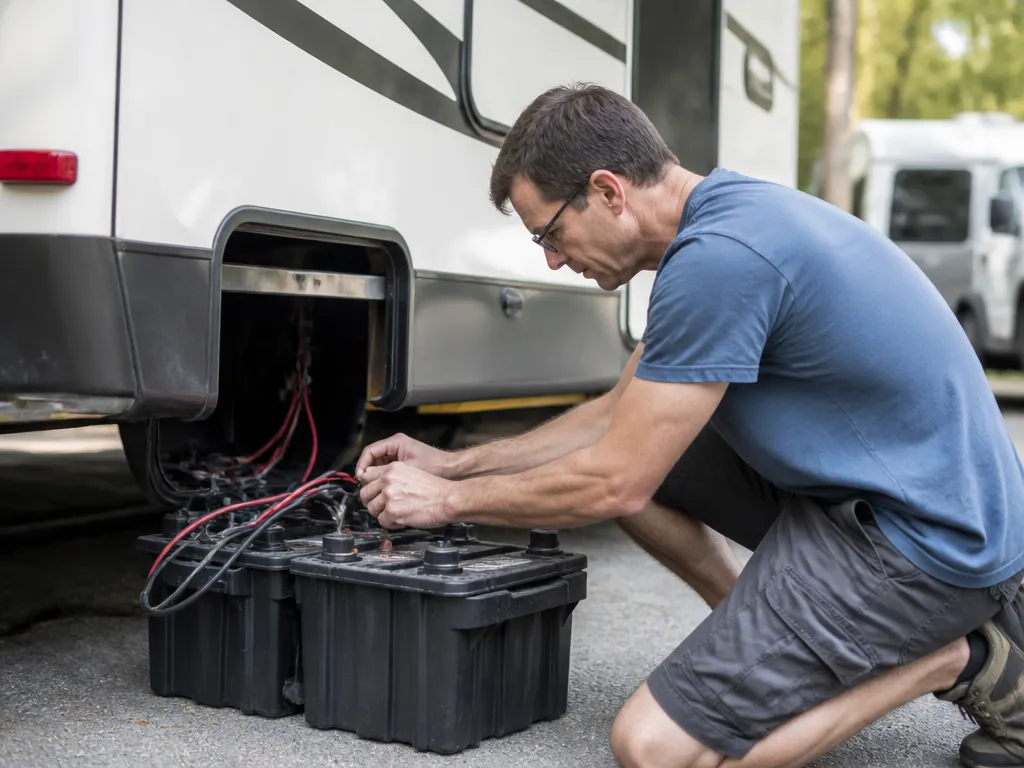
Most RV lead-acid batteries age from two directions: capacity fade over time (calendar life) and damage from poor charging that causes sulfation. Typical “service life” on a well-cared-for setup is often in the 3 to 7 year range, with rougher use dropping that range. Aging signs usually show up as higher voltage sag under load and reduced capacity, even when the battery reads “full” on a quick charge.
Flooded lead-acid is the most maintenance-sensitive of the three. Battery life drops when cells run low on electrolyte, plate surfaces stay sulfated from chronic undercharging, or the battery repeatedly overheats during aggressive charging. Because these batteries vent while charging, you also get more corrosion risk at terminals if the battery is left dirty or dry.
AGM (absorbed glass mat) is sealed and spill resistant, so day-to-day care is easier. AGM does not tolerate the same charging mistakes as well, though, because over-voltage and excessive heat can permanently reduce capacity. Temperature matters because AGM absorbs and reacts to charge faster in warm weather, and slower in cold weather, so chargers must use temperature compensation if you travel across seasons.
In practice, AGM failures often look like “it used to hold voltage better” and then progressively worse inverter starts or shorter run times even after long charging. AGM also tends to show stronger voltage behavior during light loads, then collapse sooner when the load increases, which can fool you if you only do a quick resting-voltage check.
| Type | What most shortens life | Common aging symptom |
|---|---|---|
| Flooded | Low electrolyte, chronic undercharge, wrong equalization, heat | Harder to reach “full,” uneven cell behavior, faster voltage sag |
| AGM | Over-voltage, poor temperature compensation, heat buildup | Great resting voltage, weak heavy-load performance |
| Gel | Charger settings too aggressive, high current during absorption | Slow loss of capacity after repeated charging errors |
Gel lead-acid is the most sensitive to charger settings. Gel batteries need conservative charge voltages, because the gel matrix and internal chemistry can be damaged if the charger pushes too much voltage or too fast a charge current, especially during absorption. If you use the wrong profile, you can get “it charged, so it should be fine,” while the battery quietly loses usable capacity.
Safety: Swelling, casing deformation, a hot battery during charging, and strong venting odors are replacement triggers. Disconnect and stop charging immediately if you see these signs.
Charger/maintenance Habits That Most Affect Lifespan
Flooded, AGM, and gel each benefit from the same practical discipline: avoid leaving the battery partially charged for long periods, and match the charger profile to the battery type. In RV use, parasitic drains (fridge controls, trackers, CO detectors, routers) can keep the battery below full, and frequent short cycles can increase sulfation even if the battery is “recharged” later.
Lithium Rv Battery Life
LiFePO4 RV batteries typically last longer than lead-acid, with many packs rated for thousands of cycles before reaching a specified end-of-life capacity. Real lifespan in an RV is usually limited by calendar aging (time and heat) and depth-of-discharge patterns, with cycle aging speeding up when you routinely drain deep and recharge hard.
Cycle Life Vs Calendar Life (Why “Years” Are Not The Same As “Cycles”)
Cycle life is how many full-to-empty charge cycles a battery can take before capacity drops to a defined limit (often around 80% in vendor cycle ratings). Calendar life is the capacity the battery loses simply from sitting and being charged over months and years, even if you do not cycle much. Temperature is the biggest accelerant for both, heat increases aging and it can trigger earlier BMS protection.
In practice, RV use often pushes both levers. Frequent shallow cycling can stretch cycle count, but leaving the pack at high state of charge (near full) for long periods increases calendar aging. For many owners, the “battery got weaker” symptom appears as higher voltage sag under load and reduced available watt-hours, even if the pack still passes basic checks.
Bms Behavior: Warnings, Derating, And What Counts As True End-of-life
The Battery Management System (BMS) can limit charge current, disconnect loads, or shut down outputs when cells overheat, overcharge, or drop too low. A BMS warning can mean the pack is protecting itself, not that it is permanently ruined. A true end-of-life usually shows up as sustained capacity loss, repeated voltage drop early in discharge, or inability to hold charge through normal charge profiles.
Watch for physical red flags that override troubleshooting. Swollen casing, a hot pack, a strong chemical odor, or any melted/discolored wiring are stop-use signals. If the BMS cuts out under normal loads or the inverter/charger repeatedly hits fault protection, the battery is either out of spec or misconfigured.
| What you observe in the RV | Most likely lithium battery aging cause | What to check next |
|---|---|---|
| Shorter run time, battery “empties” sooner | Capacity fade from calendar or cycle aging | Compare measured usable watt-hours (or amp-hours) across full charge to a baseline |
| More voltage sag when inverter starts | Higher internal resistance from aging | Measure voltage under load, then repeat right after charge to see the rebound behavior |
| BMS shuts off during charge or limits current | Over-temperature, high cell voltage, or charger settings too aggressive | Verify charge profile settings and check battery temperature during charge |
| Frequent “low” warnings after modest use | Deeper discharge exposure over time, sensor calibration drift | Confirm state-of-charge display, then test resting voltage after a rest period |
Charge Limits And Absorption Settings That Affect Longevity
Lithium longevity improves when the pack spends less time at very high state of charge. That means respecting a conservative charge limit (set by the battery manufacturer, or reflected in the system setup) and avoiding schedules that keep the battery at “full” for hours every day. If your inverter/charger offers lead-acid style bulk-absorb-float tuning, lithium can suffer from prolonged high-voltage exposure when absorb and float are misapplied.
Absorption-like behavior matters because many lithium packs want a specific constant-voltage limit followed by taper, then a finish mode that stops charging or reduces current quickly. For an RV, confirm your charger is in the correct lithium program, that it is using the battery’s recommended voltage window, and that it stops at the intended maximum charge current. Temperature compensation is also critical, because a cold pack can accept less current safely, and a hot pack needs reduced stress. If your BMS frequently interrupts charge, the first fix is configuration, not “try a different charger,” because wrong voltage or too-long high-voltage time accelerates aging.
Charging Mistakes That Cut Lifespan
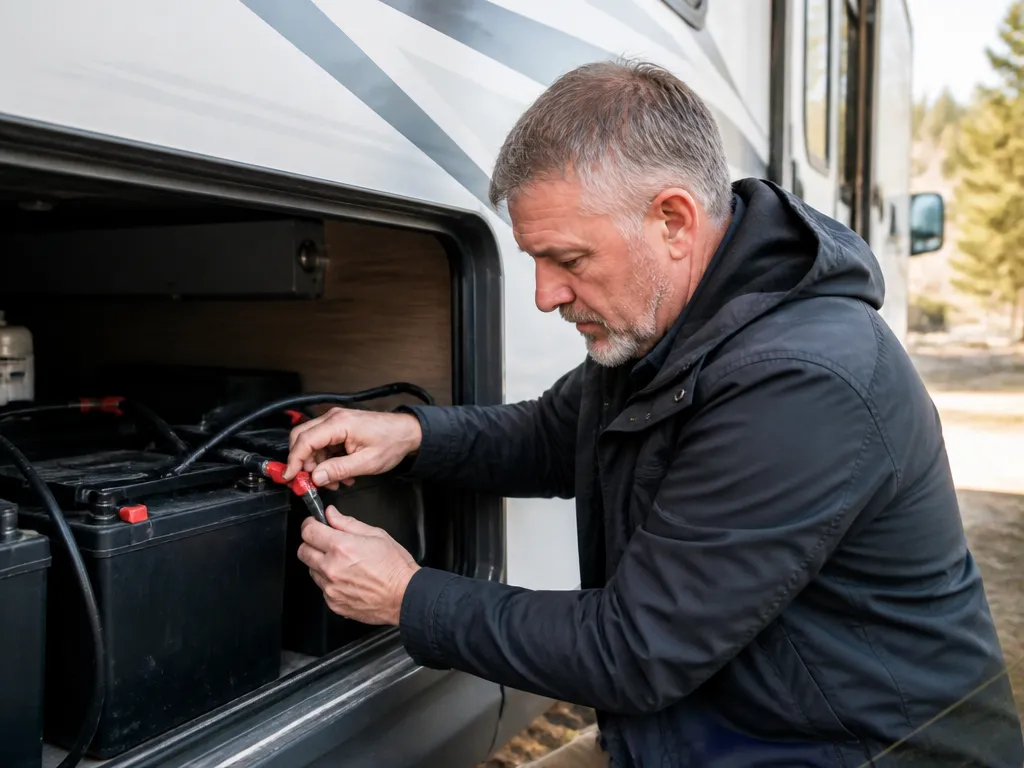
Charger settings and daily use patterns often determine whether an RV battery lasts its expected years. Undercharging accelerates sulfation during storage, while overcharging boils off water or forces lead cells into damaging heat and gas cycles.
Undercharging is the most common failure driver in RVs because many setups sit at a partial state of charge for weeks at a time. Lead-acid and AGM batteries shed capacity when they do not reach full absorption voltage long enough to convert sulfates back.
For example, a battery bank that only ever sees bulk charging and then drops to float early can slowly lose usable capacity, even if it still “starts” appliances.
For stored batteries, the clock gets harsher. A discharged lead-acid battery can develop stronger sulfate crystals faster than you can reverse them, especially in warm conditions. A realistic fix is to use a charger program that is intended for the battery chemistry and to confirm it reaches the correct absorption target before moving to float or maintenance.
Overcharging causes different damage mechanisms. Flooded batteries lose electrolyte to gassing, plates can warp from chronic high current, and AGMs can vent and lose capacity permanently if the voltage is repeatedly too high. Lithium systems are safer when charging is controlled by a proper RV or lithium BMS setup, but excessive heat and incorrect charger voltage still shorten cycle life.
Missing or incorrect temperature compensation is a sneaky install mistake. Battery voltage targets need adjustment as temperature changes because chemical reaction rates shift with cold and hot conditions.
In practice, a charger that holds the same absorption and float voltage in winter and summer can either undercharge in the cold or overcharge in the heat.
Chronic partial state of charge is the lifestyle killer for both lead and lithium. Many RVers run lights, pumps, fans, and entertainment at camp while never forcing a full recharge, so the battery lives in the “middle” most of the time. Aggressive inverter use can worsen this because high loads mean higher voltage sag and deeper usable swings, which increases effective cycling.
High heat near the battery bank speeds aging and can tip the system into dangerous conditions. Poor ventilation traps hydrogen and heat from flooded cells, raising corrosion and accelerating grid loss in lead batteries. For sealed batteries, heat still raises internal resistance and can trigger protective behavior or irreversible capacity loss.
Parasitic draws when parked slowly create an undercharge loop. Parasitic loads include propane detector circuits, Wi-Fi routers, monitors, and sometimes small converter or alarm boards that stay live. Quantify parasitics by measuring DC current draw with a multimeter between the battery negative terminal and the cable, then watching for the reading to settle after a few minutes.
Quick Diagnostics Tied To Charging And Setup
Use the charger and battery voltages together to find which mistake is happening. Start with a resting-voltage check after the loads are off for several hours, then compare that value to the expected state of charge for your battery type. Repeat after a short charge, then again after you disconnect the charger, because the “hold” behavior can reveal weak cells or chronic undercharge.
Perform an absorption and float verification on the RV charger or external charger. Note whether the charger actually reaches the absorption stage and holds it long enough, or whether it drops to float quickly due to incorrect settings or a faulty temperature sensor. Also check that wiring and battery cables have low resistance, since voltage drop can cause the charger to make the wrong decisions.
Confirm the temperature sensor placement and function if your charger supports it. A sensor taped to the wrong location, covered by insulation, or not connected can cause voltage targets to be wrong by enough to shorten lifespan.
In practice, moving to a correct sensor location and tightening connections often improves both charging completion and capacity retention.
Validate inverter-driven cycling by checking how often you discharge far enough to trigger deeper swings. If the inverter runs high loads for long periods, the battery is effectively being cycled daily, even if the RV “feels” like it is just parked. Reduce inverter run time, use DC where appropriate, and charge sooner after heavy use.
| Charging/setup mistake | What it does internally | Typical symptom | What to check next |
|---|---|---|---|
| Undercharging during storage | Sulfation builds and becomes harder to reverse | Capacity fades, voltage seems “fine” at rest, drops fast under load | Charger absorption stage timing, charge history, resting voltage after storage |
| Overcharging or wrong absorption/float targets | Gassing, heat stress, grid corrosion, capacity loss | Hot battery, frequent electrolyte changes (flooded), rapid aging | Charger chemistry profile, target settings, verify temperature compensation |
| No temperature compensation (or wrong sensor) | Voltage targets mismatch the actual battery temperature | Worse performance in cold or heat, faster seasonal aging | Sensor connection, sensor location, charger settings for battery temperature |
| Chronic partial state of charge | Higher sulfation risk (lead) or reduced usable capacity (both via aging/cycling) | Shorter run times, slower recovery after charging | Monitor state of charge trends, add periodic “full” charging per manufacturer guidance |
| High heat and poor ventilation | Accelerated electrochemical aging and corrosion | Hot case, corrosion on terminals, venting (flooded) | Ventilation, keep battery away from engine heat, check airflow around the bank |
| Excessive inverter cycling | Deeper effective discharge cycles increase wear | Battery ages much faster than expected, capacity falls quickly over seasons | Reduce run time, use DC loads, charge sooner after inverter-heavy days |
| Parasitic draws when parked | Battery slowly discharges into undercharge | Battery is lower after storage without obvious usage | Measure current draw with meter, isolate loads and verify what stays on |
Signs Your Battery Is Failing
Voltage behavior under real loads is the fastest way to tell a battery is aging or failing. If your RV battery sags quickly with the inverter running, or if the charger cannot reach or hold the battery’s normal charge stages, the problem is usually the battery, the charge settings, or both.
Rapid voltage sag is a common failure signature. Measure battery voltage at rest and then again while running the biggest inverter or converter loads you can safely reproduce (microwave, air conditioner start, hair dryer). A battery that drops hard and does not rebound well after the load is removed is often losing capacity or has rising internal resistance.
For charger diagnosis, watch what it does during charging. A healthy RV lead-acid battery typically accepts charge, then reaches absorption and eventually settles into float, or into a controlled equalization routine only when appropriate. When the charger repeatedly stalls early, never reaches the expected stage, or immediately returns to bulk with little improvement, the battery is frequently sulfated (lead-acid) or the system is missing correct temperature sensing and charge parameters.
Common Failure Patterns By Chemistry
Lead-acid and lithium fail in different ways, so the symptoms help you narrow the cause. Flooded and sealed lead-acid usually show sulfation clues and cell imbalance behavior. Lithium packs often trip protection quickly, show low-voltage warnings sooner, or cut off during high current even if surface voltage looks “okay.”
For example, frequent low-voltage cutoffs and reduced runtime often point to capacity fade and increased internal resistance.
In practice, you may see the same loads work for a short time, then the inverter shuts down with a warning even though the battery voltage had seemed acceptable earlier.
| Observed symptom | What it usually indicates | Chemistry clues | Fast checks |
|---|---|---|---|
| Voltage drops sharply when inverter draws current | Capacity loss or high internal resistance | Lead-acid often shows weaker recovery after load is removed; lithium may trip BMS | Measure resting voltage and load voltage, then recovery voltage after load ends |
| Charger does not reach/hold absorption or float | Undercharging due to settings/sensor issues or a failing battery | Lead-acid may stay stuck in bulk longer; lithium may hit protection thresholds | Verify charger profile matches battery type and temperature compensation (if used) |
| Frequent inverter low-voltage cutoffs | Capacity fade and earlier voltage sag | Lead-acid shows sag and slow rebound; lithium shows warnings or shutdowns from BMS | Compare cut-off behavior across different loads, confirm battery state-of-charge logic |
| Cell imbalance in flooded/AGM lead-acid (one area worse) | Sulfation or failing cell | Single weak cell drags pack voltage; flooded cells may show irregular behavior | Check cell voltages (if access is available) and compare spread between cells |
| BMS trip, low-voltage warning, or hard cutoff under load | Lithium protection activating from low voltage, overcurrent, or high temperature | Pack cuts power even if a quick voltmeter reading looks close to normal | Review BMS fault codes, check battery temperature and load current path |
Flooded lead-acid clues often include sulfation indicators and uneven cell behavior. Sulfation typically reduces the battery’s ability to accept charge, so the charger may struggle to reach its expected absorption stage, and the pack may recover poorly after sitting. If you can monitor individual cell voltages on a serviceable bank, an out-of-family cell is a strong hint.
Lithium clues are usually more abrupt. Lithium packs have a BMS that can trip to protect the cells, so you may see sudden inverter shutdowns, a warning on the battery monitor, or refusal to charge when the pack thinks conditions are unsafe.
In practice, a lithium pack can show “okay” surface voltage, then collapse immediately when the inverter demands current.
Charger mismatch can mimic a dying battery. If the charger set points, absorption/float behavior, or wiring (including temperature sensors) do not match the installed battery chemistry, the battery can appear “weak” because it never gets the charge it needs.
For instance, an RV with a lead-acid charger profile driving a lithium pack, or a lithium charger profile driving a lead-acid pack, can trigger protection, shorten charge acceptance, and cause early cutoffs. Checking the battery label, charger manual, and any battery-management display is a practical way to avoid blaming the battery when the settings are wrong.
Simple Health Checks To Run Now
Battery age guesses are unreliable, but voltage readings and charger behavior reveal a lot. Run the quick tests below and use the target numbers to estimate whether the battery is still capable, mildly degraded, or failing.
Stop and correct the basics first: loose cable connections, damaged ring terminals, and wrong charger settings are common causes of “battery death” symptoms. If the battery case is hot, swollen, or shows venting, do not continue testing, ventilate the area, and plan a safe replacement.
Make It Last: Charging And Storage Rules
Good battery life is mostly about staying in the right voltage and temperature ranges during charging, then storing the battery without letting it drift down too far. Match your charger to the battery chemistry and profile, because the wrong setpoints can cause sulfation (lead systems) or overheating and permanent capacity loss (lithium).
Match The Charger, Temperature, And Charge Targets
RVs typically use lead-acid (flooded, AGM, or GEL) or lithium (often with a built-in BMS). A charger must use the correct chemistry and stage logic (bulk, absorption, float, and sometimes an equalize step for specific flooded cells). Missing temperature compensation (or using the wrong one) is a common reason batteries age early because heat accelerates corrosion and over-voltage stresses the cells.
For lead-acid, absorption is where the battery is “topped” up and float is where it is held. For lithium, the charger usually ends at a BMS-controlled limit and does not use lead-style float the same way. If your RV charger has a battery type selector, lock it to the actual installed chemistry and capacity.
| Battery type | Charging behavior to plan for | Common lifespan mistake |
|---|---|---|
| Flooded lead-acid | Bulk to absorption, then float; some setups use controlled equalization if specified | Undercharging, which drives sulfation |
| AGM | Bulk and absorption to strict limits, then float suitable for AGM | Overcharging, which dries out electrolyte and warps plates |
| GEL | Lower voltage tolerance than other lead types | Using a charger profile meant for AGM or flooded |
| LiFePO4 | BMS-limited charging, ends when the pack reaches its voltage limits | Applying lead-acid float logic or charging in excessive heat |
Avoid Partial Charge, And Use A Storage Cadence
Leaving any RV battery at a low state of charge is hard on the chemistry. Lead-acid suffers sulfation when it spends long periods undercharged, while lithium can drift toward BMS limits depending on load and temperature. The practical goal is to charge soon after heavy use and keep resting voltage in a healthy band for your battery type.
For storage, plan a cadence based on self-discharge and your RV’s parasitic loads (alarms, monitors, trackers, converters).
For example, a battery can stay “mostly fine” for weeks but fail faster during months if the RV has frequent low draws that quietly keep it partially discharged. A smart charger helps because it can restart charging when needed instead of relying on you to remember.
Storage rule: If the battery will sit for more than a few weeks, check it and plan a re-top charge rather than letting it drift down.
Correct charging is also about avoiding “nearly right” settings. A charger that is a few volts too high or has no temperature compensation can slowly shorten life even if it never trips protection. Treat charger setup like a configuration task, not a set-and-forget installation.
How To Decide Replacement Timing
Battery replacement timing is mostly a health measurement problem, age is only a weak clue. A battery that is “only a few years old” can fail early if it was chronically undercharged or overheated, while an older battery in the right charging setup can still deliver usable capacity.
Use two tracks: calendar/age expectations and real-world performance. Age-only rules help you plan, but test-based decisions prevent waste, especially when the issue is actually wiring, charger settings, or parasitic load.
Age-only Vs Test-based Decisions
Lead-acid batteries (flooded and many AGM setups) wear out from both calendar time and cycling, sulfation, and heat, so they can show capacity loss before they fail completely. Lithium batteries typically age slower in calendar terms if they stay in safe temperature and state-of-charge ranges, yet they can still fail early with sustained high heat, wrong charging profiles, or repeated deep discharge.
Replace sooner when capacity is below what you need for daily use, when voltage collapse happens under load, or when the battery shows physical failure signs. Replace later when health checks show stable voltage, the charger reaches the correct stage consistently, and inverter load behavior is steady.
Troubleshoot Wiring And Charging Before You Buy New Cells
Poor charging can look like a “dead battery,” and many RV owners replace the pack when the real cause is a charger or connection issue. Loose battery terminals, corroded lugs, undersized wire runs, bad grounds, blown inline fuses, or a failed DC distribution component can cause voltage drop, which makes the charger appear ineffective.
What To Check Before Purchasing Replacements
Before you buy new batteries, confirm the system you have can actually charge the chemistry you’re installing. The biggest mistakes come from assuming the existing charger is correct, assuming the bank voltage is what you think it is, or reusing marginal cables and fusing that were already part of the problem.
Practical decision rule: when you measure both resting voltage and voltage under load, and when the charger’s behavior is consistent with the battery type, you can predict whether replacement is money well spent. When those checks point to wiring resistance, incorrect profile settings, or parasitic drain, replacing the battery will usually fail to fix the root cause.
Quick Summary
Understanding how long RV batteries last starts with chemistry and how you use them. The article notes typical lifespans: flooded lead-acid 3 to 5 years, AGM 4 to 7 years (often 5 to 8), GEL 6 to 10 years, and lithium RV packs commonly 8 to 15 years. Temperature and charging quality matter, too, with heat shortening life and under charging or frequent deep discharges cutting capacity fast. A practical check is to ensure the charger’s absorption and float settings are correct and to use temperature compensated charging if supported.
Beyond chemistry, the article emphasizes how you use the battery shapes results. Heat shortens life across chemistries, and undercharging causes sulfation in lead acids while deep cycling accelerates wear. Distinguish calendar life from cycle life, since parked RVs age even without use. The biggest decision factor is duty pattern: full timers see more cycle wear, occasional users experience calendar aging. For a next step, verify health with resting voltage after a full rest, test under load, check voltage sag during inverter use, and correct charger settings to match chemistry, keeping storage above a month at moderate state of charge.
Frequently Asked Questions
How Long Do Rv Batteries Usually Last Before They Need Replacement?
Your RV battery life depends heavily on battery type and how you charge it, but a common rule of thumb is 3 to 5 years for many lead-acid batteries when used and charged normally. If you see frequent deep discharges, chronic undercharging, or the battery struggles to start charging, plan for earlier replacement.
What Charger Should I Use For My Rv Battery, And How Do I Know It Is Compatible?
Match the charger to the battery type (for example, lead-acid, AGM, or lithium), and verify the charger’s charge profile and voltage are correct for your battery bank. If the charge settings are adjustable, set the battery chemistry per the battery manufacturer’s label or manual, not by guesswork.
How Hot Is Too Hot When Charging An Rv Battery?
During charging, batteries can feel warm, but excess heat is a warning sign. If the battery case is hot to the touch, you notice swelling, strong odor, or gassing, stop charging and let it cool, then check connections, ventilation, and the charger settings.
How Can I Estimate Rv Battery Runtime In Hours?
Runtime is determined by battery capacity and your real power draw, so use the formula hours = usable amp-hours ÷ average amps (or watts ÷ battery watt-hours if you track watts). Also factor that lead-acid batteries deliver less usable capacity at higher discharge rates, so measured runtime may be shorter than the rated number.
What Are The Most Common Mistakes That Shorten Rv Battery Life?
The biggest killers are leaving the battery undercharged, letting it sit discharged for long periods, and frequent deep discharges. Buying a mismatched charger, ignoring corrosion on terminals, and poor ventilation can also cause early failure, so inspect cables and keep charging settings aligned to the battery’s spec.

- 10 Best Battery For Generator Battery Safety Option 2026 - October 12, 2026
- 10 Best Battery For Generator Battery Safety 2026 - October 12, 2026
- 10 Best Battery For Generator Battery Rv Upgrade 2026 - October 12, 2026