Honda Key Battery Types: Matching the Cell to the Fob Design
A dead Honda key fob battery is the kind of morning disaster that either locks you out entirely or leaves your car refusing to start. You can absolutely swap it yourself and skip the dealer markup, but the tricky part is figuring out which battery your specific key actually needs.
Modern Honda smart keys usually take a CR2032, while older flip keys and head keys typically run on CR1616 cells. Mixing those up means the fob either won’t close or the battery sits loose inside.
Below is a breakdown of which replacement kits match your model year and key style, plus what tools you’ll want on hand to get the job done without cracking the case.
Identifying Your Honda Key Fob Battery Type
Honda has shifted between battery sizes depending on the generation and key style, so assuming you need the same cell as your neighbor’s fob is a fast track to ordering the wrong part.
Taking thirty seconds to check the existing battery or pull up a fitment guide saves you from a return hassle later.
Battery Size By Key Style
| Key Style | Battery Model | Common Years |
|---|---|---|
| Smart Push-Start | CR2032 | 2008-2026 |
| Traditional Head Key | CR1616 | 2003-2017 |
| Prologue / Element | Check Manual | Varies |
Smart keys with push-button start almost always run on the larger CR2032 lithium coin cell. These remotes power proximity sensors and backlighting, so they need that extra capacity. Traditional flip keys or head keys with a physical blade usually take the thinner CR1616 instead.
This mix-up is the most common reason people end up with a battery that won’t fit. A CR2032 is too chunky for a CR1616 housing, and a smaller cell just rattles around without making contact in a smart key.
Before ordering anything, pop open the existing fob and check the numbers printed on the old battery, or lean on the seller’s fitment guide if yours is already dead. Newer models like the Prologue can also deviate from Honda’s usual patterns, so double-checking never hurts.
Batteries And Tools For Safe Replacement
These options all line up with the right voltage and physical size for Honda remotes, and several come with the kind of prying tools that actually make the job less nerve-wracking.
Your main call comes down to whether you’re working with a smart key or an older head key, and how much you want in the way of extras like instruction videos or protective openers.
|
1
|
Key Fob Replacement Batteries for Honda, Pack of 2 | Fits CRV Civic Accord Pilot Odyssey H |
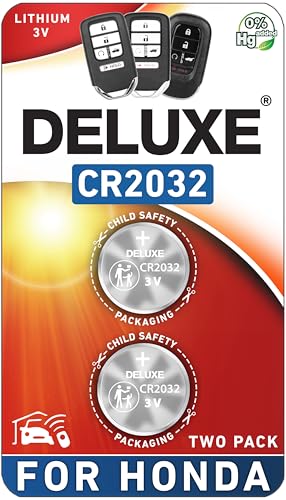
Includes two CR2032 cells specifically validated for 2008-2026 Honda smart key fobs.
This two-pack from KeyFobBatteries. com (under its Premium Deluxe label) is aimed squarely at Honda smart key owners who need CR2032 replacements for models running from 2008 through 2026. The listing breaks down compatibility clearly across Civic, Accord, Pilot, Odyssey, CR-V, and more, which helps you skip the guesswork.
It’s upfront about what it won’t fit, too, standard head keys with the key blade sticking out and newer Prologue or Element models are specifically excluded, which actually cuts down on return headaches.
The fact that it includes a DIY guide and calls out that no dealer reprogramming is needed makes it about as beginner-friendly as these kits get.
I’d put this one on the shortlist for anyone with a confirmed smart key system who wants a straightforward, Honda-specific replacement. The trade-off is that it’s less versatile if you’re juggling multiple key types, and the exclusion of older head keys means you’ll need to double-check before clicking buy.
The two-battery count is sensible, you get your immediate fix plus a backup for later, which matters since these tend to die without warning.
Pricing isn’t listed here, so it’s worth comparing against generics if you’re watching your budget, but the peace of mind from the included guide and tight compatibility window is real.
|
2
|
Duracell 2032 Lithium Battery, 4 Count, AirTag & Key Fob, CR2032 3V Cell |

Child-safe bitter coating adds safety for households replacing Honda fob batteries at home.
Duracell’s four-count CR2032 pack is the safer bet if you’ve got kids at home or just don’t love the idea of loose batteries hanging around.
The bitter coating on both sides is a small detail that actually makes a difference if a curious kid picks up a dropped cell, and it pairs with their child-resistant packaging.
They’re also pretty vocal about longevity, citing ANSI testing that supposedly puts these ahead of Energizer’s three-in-one alternative, though it’s worth keeping in mind that’s specific to the 2032 size.
Compatibility is broad, covers Honda smart keys alongside AirTags and a range of other CR2032 devices, so you’re not pigeonholed into one use case.
Ideal for families with young children where dropped batteries pose ingestion risks. The four-count size suits multi-car households or long-term stocking needs. Higher unit cost may deter single-replacement buyers compared to two-packs. Bitter coating does not affect electrical performance but requires careful handling during installation.
Trusted brand recognition provides confidence over unknown generics for critical vehicle components. Shelf life exceeds typical usage periods ensuring readiness when needed years later.
|
3
|
Duracell 2032 Lithium Battery, 2 Count, AirTag & Key Fob, CR2032 3V Cell |
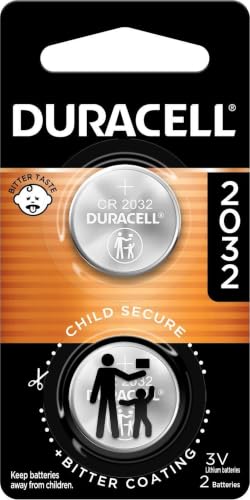
Two-count Duracell CR2032 offers trusted quality for single Honda smart key replacement.
This two-count Duracell CR2032 is the leaner version of their four-pack, and it’s solid if you’re replacing just one Honda smart key battery with no intention of stocking up. Same dual-sided bitter coating and child-resistant packaging, so you’re not sacrificing safety for the smaller quantity.
The cells are built to hold a steady 3V output, which matters since flaky voltage is one of those quiet things that causes intermittent fob issues over time. It’s compatible with Honda smart keys across the board, so you’re not wading through model-year charts to verify fit.
Perfect for individual Honda owners replacing one smart key battery without excess inventory. Safety features match larger packs despite reduced quantity for occasional users. Limited supply means no backup if both cells fail prematurely or get lost. Brand premium reflects safety engineering rather than raw performance gains alone.
Suitable for shared households where child safety concerns persist regardless of purchase size. Expiry dates allow storage confidence for future replacements within warranty periods.
|
4
|
Key Fob Battery Replacement for Honda CR2032, Pack of 2 | Civic, Accord, CR-V, Pilot, Odys |

Video instructions simplify first-time Honda CR2032 battery replacement without scratching fobs.
On the surface, this one from KeyFobBatteryKits. com looks like another generic CR2032 pack, but the video tutorial setup is what sets it apart. Instead of just pointing you toward a fitment guide in the product images, they actually walk you through the replacement process.
It claims OEM-quality performance and lists out specific coverage for Civic, Accord, CR-V, and a roster of other smart key models with year ranges you can actually verify. For anyone who’s hesitant about prying open an expensive-looking smart key housing, that visual reassurance is worth something.
Targets DIY beginners intimidated by prying open expensive smart key housings alone. Video support reduces anxiety about causing irreversible cosmetic damage during first attempt. Lack of included physical tools means sourcing a separate pry instrument separately. Compatibility focus excludes non-Honda vehicles reducing versatility for mixed fleets.
Instructional emphasis benefits those lacking mechanical confidence more than experienced tinkerers. Packaging variations suggest ongoing updates so verify contents upon arrival match expectations.
|
5
|
Key Fob Replacement Batteries for Honda (2008-2024) | Fits Civic CRV Accord Pilot Odyssey |

Included scratch-free opener tool protects Honda smart key cases during CR2032 replacement.
KKNCO’s CR2032 kit is one of the few that bundles in a dual-purpose opener alongside the two batteries. That little tool is the kind of thing you don’t realize you want until you’ve tried prying a smart key apart with a knife and left a permanent scuff.
It’s shaped to work with Honda’s seam design, which sounds minor until you’ve wrestled with a glossy fob that won’t pop the way it’s supposed to. Compatibility spans 2008-2024 across Accord, Pilot, Odyssey, HR-V, and a few others, and they’ve put a video link on the packaging for reference.
Best for owners prioritizing cosmetic preservation alongside functional battery restoration. Dual-purpose tool handles both case separation and old battery removal efficiently. Year range stops at 2024 so newer 2025-2026 models require separate verification. Physical tool adds tangible value over digital-only instruction sets for tactile learners.
Backup battery extends service interval reducing future maintenance frequency significantly. Remote reprogramming confirmation prevents unnecessary dealership visits after successful self-service replacement.
|
6
|
KKNCO Key Fob Battery Replacement for Honda Key CR1616 (Pack of 2) | Fits Accord 03-13, Ci |

Provides correct CR1616 cells and pry tool for older Honda head key replacements.
KKNCO’s CR1616 kit is built for the opposite end of the spectrum, older Honda head keys that need the thinner battery. If your key has a flip-out blade rather than a push-button smart key, there’s a decent chance this is what you’re after.
It covers a wide span of Honda models from 2003-2017, including Accord, Civic, CR-V, and Pilot, and it comes with a pry tool that’s supposed to be gentle on the aged plastic these fobs tend to be made of.
Video instructions are referenced for getting the orientation right, which matters because backwards batteries are more common than you’d think.
Essential for owners of older Hondas whose smart-key-focused kits won’t fit physically. Pry tool inclusion acknowledges brittle plastic risks unique to decade-old fob housings. CR1616 sizing excludes all push-start smart keys preventing costly wrong-size purchases. Five-piece bundle delivers complete solution without supplemental tool hunting required.
Year cutoff at 2017 means newer transitional models need separate verification steps. Video support compensates for lack of printed manuals in compact packaging format.
|
7
|
KKNCO Key Fob Battery Replacement for Honda Key CR2032 (Pack of 2) | Fits CRV Civic Accord |

Combines CR2032 cells with pry tool for safe Honda smart key battery swaps.
Another entry from KKNCO, this CR2032 version mirrors their head key kit but is tailored for smart keys instead. It pairs two lithium cells with a dual-purpose opener that’s meant to sit flush with Honda’s smart key seams.
The blister packaging is individually sealed, which is nice for shelf life if you’re buying ahead of time, and they’ve put the video tutorial link front and center on the package.
Model coverage runs from 2008 to 2024 across Accord, CR-V, Civic, and Pilot, so it’s squarely in the modern Honda wheelhouse.
Suits smart key owners wanting integrated tool-and-battery convenience in one purchase. Sealed packaging ensures freshness unlike bulk bins with unknown storage histories. Tool design specifically accommodates Honda smart key seam geometries reducing slip risk. Year range excludes 2025+ models requiring updated fitment confirmation separately.
Video instruction dependency assumes smartphone access during repair work location. Two-battery quantity balances immediate need with reasonable backup without excess waste.
|
8
|
Key Fob Battery Replacement for Honda CR1616, Pack of 2 | Accord, Civic, Pilot, Odyssey, C |

Includes Phillips screwdriver for Honda head keys secured with screws instead of clips.
This CR1616 kit from KCNCOTech is the outlier with its included Phillips screwdriver, a small but useful detail if your Honda head key is held together with screws instead of snap-fit clips. That’s a real thing for a subset of Honda fobs where prying alone just scuffs the plastic.
It covers a familiar range of older Hondas from 2003-2017 (Accord, Civic, Pilot, Odyssey), and like the other CR1616 option, it’s explicitly not for smart keys.
The OEM-spec batteries line up with factory voltage, and there’s a video tutorial if you need to confirm whether your key requires screw removal first.
Critical for specific head key variants using fasteners rather than snap-fit seams. Screwdriver prevents stripping soft metal screws common in older Japanese automotive electronics. CR1616 sizing confirms incompatibility with modern smart keys avoiding purchase errors. Tool specificity reduces utility for non-screwed fob types limiting cross-application use.
Video support helps identify whether your particular key requires screw removal first. Aging plastic around screw points demands gentle torque application to avoid cracking.
|
9
|
Pinochi CR1616 Key Fob Battery Replacement for Honda (2005-2017) Civic Accord CR-Z CR-V Pi |

Pinochi CR1616 kit includes pry tool for 2005-2017 Honda head key replacements.
Pinochi’s CR1616 pack sits in a middle tier, more curated than a generic coin cell listing but not trying to do anything fancy. It includes a pry tool and is angled at Honda head keys from 2005-2017, with explicit notes around 3- and 4-button round-head fobs.
They’re also leaning on a quality control promise that suggests these aren’t just bulk cells rebranded. Video instructions are available if you want to walk through the process, and there’s a two-battery supply so you’re not caught short.
Appropriate for mid-era Honda owners seeking tested reliability over lowest possible price. Pry tool inclusion recognizes increased brittleness risk in ten-to-twenty-year-old plastics. Round-button specification excludes rectangular smart keys preventing dimensional mismatch issues. Quality testing claims differentiate from commodity cells with uncertain discharge curves.
Video dependency requires internet access during repair which may limit garage usability. Year range gaps before 2005 and after 2017 require alternative solutions outside scope.
Picking the right one mostly comes down to your key style and how much hand-holding you want during the swap. Smart key owners should prioritize CR2032 kits that come with protective openers or video guidance, especially if the thought of prying into a $200 fob makes you nervous.
For older Hondas running head keys, CR1616 sizing is the main filter, and kits that include the right tools, whether that’s a pry tool or a Phillips screwdriver, are worth the slight premium.
If you’ve got kids or just prefer the safety features, coated cells like the Duracell options make sense regardless of which fob you’re opening. Everyone’s basically trying to avoid the same outcome: a stripped case, a loose battery, and a trip back to the drawing board.
Avoiding Damage During Honda Fob Opening
Plastic key fob cases, especially on older Hondas, don’t take well to force.
Getting the shell apart cleanly usually comes down to finding the right seam and using the right technique, which is honestly half the battle when you’re trying not to leave a permanent scuff or crack along the edge.
- Locate the designated notch or seam line before inserting any tool.
- Use plastic pry tools instead of metal screwdrivers to prevent gouging.
- Apply gradual pressure rather than sudden force to avoid snapping tabs.
- Work around the perimeter evenly instead of leveraging one corner excessively.
- Remove the physical emergency key blade first if your fob has one.
- Stop immediately if resistance feels abnormal to reassess hidden fasteners.
A lot of Honda smart keys have a small latch you can press to slide the mechanical key blade out first. Doing that usually exposes the real separation point for the case halves, and skipping this step is what leads to bent internal contacts or cracked housings.
Older head keys sometimes hide tiny Phillips screws under stickers or rubber plugs, so taking a good look under proper lighting before you assume it’s snap-fit saves a lot of headaches.
Work on a soft towel or cloth to keep the fob from sliding around if it does slip, and for the love of not having to buy a new key, go slow.
If the case just won’t budge, step back and check the fitment guide for model-specific quirks rather than muscling it. Sometimes a fob has a slightly different seam angle or an extra clip you didn’t account for.
Testing After Honda Key Fob Battery Replacement
Even if the new battery looks identical, installing it wrong is still surprisingly easy.
Something as simple as reversed polarity or a battery that’s not fully seated can make the fob act like it’s dead anyway, which is usually when you realize you need to double-check everything before snapping the case back together.
Press each button individually while observing LED indicator light response.
Test lock and unlock functions at varying distances from the vehicle.
Verify panic alarm activation works reliably from outside earshot range.
Confirm push-button start proximity detection functions inside the cabin.
Reassemble case fully only after all electronic functions pass verification.
The LED on most Honda fobs gives you an early readout, if nothing lights up at all, it’s usually reversed polarity or a loose connection. A dim or flickering light often means the battery isn’t seated properly or the replacement cell isn’t quite up to the same capacity.
Intermittent responses typically point to bent contact springs inside, which are usually just a gentle nudge with a small tool away from working again. Before you fully reassemble, give the buttons a test and try holding the key near the car to check proximity entry.
If something’s off, you catch it on the bench instead of later when you’re locked out. Most issues actually trace back to orientation or seating rather than a bad battery, especially when you’re sticking with OEM-spec replacements.
Swapping a Honda key fob battery doesn’t have to be a gamble, but it does require matching the right cell size to your key style and going into it with the right tools.
Confirm whether you’re dealing with a CR2032 for a smart key or a CR1616 for an older head key before you buy, your existing battery or a reliable fitment guide will tell you which is which.
Picking a kit that includes a dedicated plastic opener or screwdriver saves you from improvising with something that could leave marks, and testing all the buttons and proximity functions before you snap everything back together catches orientation errors while you can still fix them.

- Marine Chargers and Backup Batteries: 9 Options Compared (2026) - October 27, 2026
- LTO Cells vs. SLA Generator Batteries: 5 Options Compared (2026) - October 27, 2026
- 12V/24V Backup Batteries and the EcoFlow DELTA Pro 3 (2026) - October 27, 2026