How To Replace Battery In Kidde Smoke Detector?
When a Kidde smoke detector starts chirping, it’s usually just asking for fresh batteries, not signaling a fire. Ignoring that beep leaves your home vulnerable when you need protection most. The trick is matching the right voltage and battery chemistry so you don’t get false alarms or a dead sensor.
A lot of homeowners get stuck trying to figure out which replacement works best among alkaline, carbon zinc, and lithium options. Here’s how to pick the right power source for your Kidde unit, followed by specific picks to make your next swap quick and keep your safety coverage uninterrupted.
Why Kidde Detectors Chirp For New Batteries
Recommended Products


Kidde alarms rely on specific voltage levels to decide when to warn you about low power. Knowing those electrical needs upfront saves you from buying the wrong type, which can lead to endless chirping or a unit that won’t work when it matters.
Most Kidde detectors run on standard 9-volt alkaline batteries, though some newer models are built for lithium cells. The internal circuitry watches how fast the voltage drops to estimate how much life is left.
Once it dips below roughly six volts, you’ll hear that familiar chirp every half minute or so. Carbon zinc batteries often trigger these warnings too early because their voltage curve doesn’t match what the alarm expects.
Lithium cells offer very stable power, but they might not play nice with older Kidde units designed around alkaline discharge patterns. My advice: always peek at the label inside the battery compartment before you buy. Mixing old and new batteries creates uneven drain that can eventually damage the contacts.
Swapping in fresh ones properly should restore full monitoring right away, no resets or pro help needed.
- Verify battery type printed inside the Kidde detector‘s battery compartment door before purchasing replacements.
- Replace all batteries simultaneously to prevent uneven discharge cycles that damage internal monitoring circuits.
- Test the alarm button after installation to confirm proper electrical connection and audible alert function.
- Avoid rechargeable batteries as their voltage profile triggers false low-battery warnings in Kidde units.
- Store spare batteries in original packaging to maintain shelf life and prevent terminal corrosion.
- Mark replacement dates on calendar reminders to maintain consistent annual maintenance schedules.
Batteries That Keep Kidde Detectors Active
Recommended Products


I’ve rounded up ten battery options that cover different Kidde model needs and household habits. Each one balances shelf life, steady power, and price for smoke detector use. Think about what your specific unit requires and whether buying in bulk makes sense for you.
|
1
|
Amazon Basics 8-Pack 9V Long-Lasting Alkaline Batteries for Smoke Detector, Electronics & |

If you have multiple Kidde detectors, this eight-pack of alkalines is a smart way to handle annual replacements without breaking the bank.
The Amazon Basics eight-pack of 9V alkaline batteries is a cost-effective way to keep multiple Kidde smoke detectors powered. With a five-year shelf life, you can stash spares knowing they’ll be ready when your next maintenance cycle rolls around.
Since they’re alkaline, they match the discharge curve Kidde expects, which helps avoid those premature chirps you sometimes get with carbon zinc types. The packaging is straightforward, making it easy to toss a few in a utility closet or emergency kit.
Each battery delivers consistent voltage, which is exactly what you need for continuous smoke monitoring without any special gear.
This bulk pack is especially handy if you’re a landlord managing rentals or a family replacing batteries across several floors once a year. The cost per battery drops noticeably compared to smaller packs, making scheduled upkeep more affordable.
Just keep in mind these are single-use alkalines, so they aren’t ideal for high-drain gadgets like cameras. Before buying, double-check that your Kidde model takes standard 9V alkalines, as some newer units actually require lithium. Even with the five-year guarantee, storing them in extreme conditions can still affect their longevity.
|
2
|
Duracell Coppertop 9V Battery, 2 Count, Smoke Detector, Long-lasting |
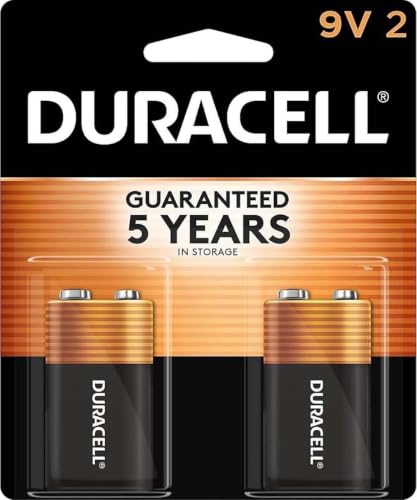
Duracell’s reputation for reliability fits well with Kidde’s recommendation to swap batteries annually for safety peace of mind.
The Duracell Coppertop two-count 9V pack is perfect for homeowners who stick to Kidde’s annual replacement schedule. You get professional-grade reliability, meaning steady voltage delivery throughout the year without surprise failures. The five-year storage guarantee gives you confidence whether you’re using them now or keeping them in an emergency kit.
That quality backing lowers the risk of manufacturing defects causing a silent failure. This pair covers your primary detector and maybe a backup, or just tops up your supply during seasonal checks.
If you prioritize brand trust over bulk savings for critical safety gear, this pack hits the mark. The professional-grade spec means it works beyond smoke detectors too, like for carbon monoxide alarms or security sensors.
The trade-off is a higher cost per battery compared to larger packs, so it’s less economical if you’re doing a whole-house swap. Some users mention the terminals fit quite tightly, so you need to be careful aligning them during installation.
Regardless of the brand, remember to test your detector annually to ensure everything is working.
|
3
|
DURACELL Coppertop 9V Battery, 6 Count, Smoke Detector Battery |
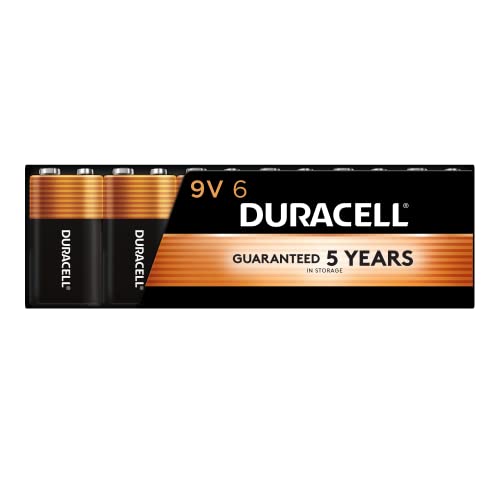
This six-count Duracell pack strikes a nice balance between bulk savings and trusted reliability for medium-sized homes.
The Duracell Coppertop six-count 9V pack offers a middle-ground quantity, ideal for homes with three to six Kidde detectors. The professional-grade build helps maintain voltage stability over long periods without degradation. With a five-year storage guarantee, you can install them immediately or save them for future emergencies.
Quality assurance coverage protects against premature failures that could compromise safety. The pack size also lines up well with biannual testing schedules recommended by fire safety groups for comprehensive home protection.
Medium-sized households benefit from the reduced per-unit cost while keeping Duracell’s reliability standards. Having extras on hand means no frantic late-night store runs when a detector starts chirping unexpectedly.
However, if you live in an apartment with just one detector, six might be more than you need, leading to some sitting on the shelf. The terminal design fits standard Kidde compartments but does require firm pressure when inserting.
Try to rotate your stock so the oldest batteries get used first within that five-year window.
|
4
|
PKNOVA 9V Batteries Carbon 9 Volt Battery for Smoke Detector 9V 6F22 Square Battery, Long- |

Carbon zinc chemistry provides a budget-friendly option for low-drain Kidde detectors, especially in mild climates.
PKNOVA’s four-pack of 9V carbon zinc batteries presents an economical alternative for basic Kidde smoke detector operation. Their low self-discharge design helps maintain charge across a wide temperature range, from negative four to 140 degrees Fahrenheit. The double-sealed construction prevents leakage that could damage your detector’s internals over time.
Plus, they’re mercury-free, meeting environmental safety standards for disposal. Since they come factory pre-charged, you can install them right away without any conditioning period.
If you’re on a tight budget and live in a temperature-stable environment, you might accept the trade-offs of carbon zinc for the significant cost savings. They’re suitable for secondary detectors in garages or basements where premium alkaline isn’t strictly necessary.
However, be aware that carbon zinc voltage curves differ from alkaline, which can trigger earlier low-battery warnings in sensitive Kidde models. They also have a shorter operational lifespan, meaning more frequent replacements compared to alkaline or lithium options.
I wouldn’t recommend them for primary bedroom detectors where reliability outweighs marginal savings.
|
5
|
Energizer MAX 9V Batteries (4 Pack), 9 Volt Alkaline Batteries |

Energizer MAX combines reliable alkaline power with recycled materials, appealing to eco-conscious Kidde owners.
The Energizer MAX four-pack of 9V alkaline batteries combines dependable performance with environmental responsibility by including recycled content. They deliver long-lasting power that matches Kidde detector requirements without premature voltage drops that cause false alerts. With a five-year storage capability, they ensure emergency readiness alongside routine maintenance.
The recycled material composition reduces environmental impact without compromising safety-critical reliability. The standard 9V form factor guarantees compatibility across Kidde’s alkaline-compatible lineup without needing modifications.
Environmentally aware homeowners will appreciate the sustainability efforts while maintaining safety compliance for family protection. The four-pack quantity suits apartments or small homes with limited detector counts efficiently. That said, the recycled content percentage is modest at four percent, so the ecological impact is limited compared to fully sustainable alternatives.
Performance matches conventional alkaline expectations but doesn’t exceed premium brands in extreme temperature resilience. If maximizing green credentials is your top priority, you might want to look for options with higher recycled content elsewhere.
|
6
|
PKCELL 9V Batteries 10 Pack 9 Volt Battery for Smoke Alarms | 6F22 Square Battery Carbon Z |

This ten-pack of carbon zinc batteries offers bulk value for property managers maintaining numerous Kidde units.
PKCELL’s ten-pack of 9V carbon zinc batteries targets high-volume users managing multiple Kidde smoke detectors across properties. The steady power supply design specifically addresses continuous low-drain smoke alarm applications around the clock. Leak-proof construction protects expensive detector electronics from corrosion damage during extended service periods.
Standard 6F22 sizing ensures universal compatibility with most Kidde models without fitment issues. The bulk quantity significantly reduces per-unit cost for scheduled maintenance programs across rental portfolios or commercial buildings.
Property managers and landlords benefit from economical bulk pricing for routine compliance maintenance cycles. While carbon zinc chemistry suffices for basic detection, it lacks the longevity of alkaline in demanding environments. Higher replacement frequency might offset initial savings if detectors experience frequent false alarms from voltage instability.
These are best suited for low-priority areas where premium batteries aren’t cost-justified. With ten units, organizing your storage becomes important to prevent mix-ups with other battery types.
|
7
|
Energizer Alkaline Power 9V Batteries (8 Pack), Long-Lasting | Smoke detector battery for |

An eight-pack of Energizer alkalines balances quantity and reliability for comprehensive home safety coverage.
The Energizer Alkaline Power eight-pack of 9V batteries provides ample supply for whole-home Kidde detector maintenance plus reserves. The long-lasting alkaline formulation delivers consistent voltage throughout monitoring periods without unexpected chirping interruptions. A five-year storage guarantee supports emergency preparedness alongside scheduled annual replacements.
Recycled material inclusion demonstrates environmental commitment without sacrificing safety-critical performance standards. Versatile compatibility extends beyond smoke detectors to radios and handheld meters for household utility.
Families wanting comprehensive coverage will appreciate having spares readily available for unexpected failures or guests’ detectors. The eight-count format aligns well with average home detector counts plus backup inventory needs. Recycled content remains limited at four percent, similar to other mainstream brands.
Alkaline chemistry performs reliably but doesn’t match lithium shelf life for long-term emergency storage. Bulk packaging requires organized storage to prevent terminal contact between loose batteries.
|
8
|
XUNIUZERO 9V Batteries 6F22 Square Battery (4 Pack) for Smoke Detector Alarm System, Wirel |

A mercury-free carbon zinc option meets environmental standards for eco-sensitive Kidde installations.
XUNIUZERO’s four-pack of 9V carbon zinc batteries emphasizes environmental safety through mercury-free composition for responsible disposal. A corrosion-resistant steel shell with sealing technology prevents leakage damage to Kidde detector internals. Wide temperature tolerance from negative four to 140 degrees suits varied climate installations.
Low self-discharge design maintains readiness during storage periods between maintenance cycles. The standard square battery form ensures compatibility across Kidde’s carbon-zinc-compatible detector models without adaptation.
Environmentally conscious users in moderate climates will appreciate the toxin-free composition alongside adequate performance. Suitable for secondary locations where premium alkaline cost isn’t justified by usage patterns. Carbon zinc voltage characteristics may trigger earlier warnings than alkaline in sensitive Kidde circuits.
The four-pack quantity limits bulk savings compared to larger carbon zinc offerings. After-sales support provides recourse for defective units, though quality control varies versus established brands.
|
9
|
HW CR123A 3V Lithium Battery 6-Pack, 1700mAh High Capacity 123 Batteries | 10-year shelf l |

Lithium CR123A chemistry serves newer Kidde models requiring 3V power sources.
HW’s six-pack of CR123A 3V lithium batteries addresses newer Kidde smoke detectors designed for lithium cell compatibility. The 1700 milliamp-hour capacity exceeds standard 1500 ratings for extended service intervals. A ten-year shelf life dramatically outlasts alkaline options for long-term emergency preparedness storage.
Leak-proof construction with PTC protection prevents thermal runaway risks in safety-critical applications. Wide temperature operating range from negative forty to 158 degrees ensures reliability in extreme environments.
Owners of modern Kidde lithium-compatible detectors gain decade-long maintenance freedom versus annual alkaline swaps. Superior cold-weather performance suits unheated garages or attics where alkaline fails prematurely. Higher upfront cost per battery offsets through reduced replacement frequency over the detector lifespan.
Critical verification needed: only works in Kidde models explicitly specifying CR123A or 123 batteries. Incompatible with traditional 9V alkaline compartments despite serving similar safety functions.
|
10
|
Energizer MAX 9V Batteries (4 Pack), 9 Volt Alkaline Batteries |

A duplicate Energizer MAX option ensures availability when your primary choice sells out temporarily.
The Energizer MAX four-pack of 9V alkaline batteries reappears as a reliable backup when preferred brands face supply shortages. Identical specifications to index four ensure consistent performance across mixed-brand detector maintenance routines. Long-lasting alkaline power meets Kidde voltage requirements without premature low-battery warnings.
Five-year storage guarantee maintains emergency readiness alongside scheduled replacement programs. Recycled material inclusion supports sustainability goals while preserving safety-critical reliability standards for home protection.
Shoppers encountering stock issues with primary choices can substitute confidently without performance compromise. Familiar branding reduces decision fatigue during urgent replacement needs at retail locations. Same limitations apply regarding modest recycled content and standard alkaline temperature resilience. Four-pack quantity suits immediate single-detector replacement rather than whole-home bulk stocking.
Availability fluctuates based on regional distribution, making this listing valuable as a contingency option.
These battery selections span alkaline, carbon zinc, and lithium chemistries to match diverse Kidde detector requirements. Bulk packs reduce costs for multi-detector homes while premium options prioritize reliability for critical locations. Verify your specific model’s voltage needs before purchasing to avoid compatibility issues that trigger false alarms.
Installing Batteries Without Triggering False Alarms
Recommended Products


Proper installation technique prevents nuisance alarms and ensures reliable electrical contact within Kidde detector compartments. Rushing this process causes intermittent connections that mimic low-battery conditions despite fresh cells.
Remove old battery and wait sixty seconds to allow internal capacitors to discharge completely before inserting new cell.
Clean battery terminals with dry cloth to remove corrosion or debris that impedes electrical contact reliability.
Align positive and negative terminals precisely according to compartment markings to prevent reverse polarity damage.
Press battery firmly into position until secure, ensuring no wobble that indicates incomplete seating.
Close compartment door completely until latch clicks, as partial closure disables tamper switch and triggers alerts.
Press test button for three seconds to verify audible alarm sounds and LED indicator functions properly.
Skipping the discharge wait period can cause residual capacitor charge to interfere with new battery recognition circuits. This results in continued chirping despite fresh installation, leading users to believe the battery is defective. Terminal cleaning addresses oxidation buildup that accumulates over twelve-month service periods in humid environments.
Reverse polarity insertion can permanently damage voltage regulation components, requiring complete detector replacement. Firm seating ensures spring-loaded contacts maintain pressure despite thermal expansion cycles throughout seasonal changes. Testing confirms successful installation before relying on the unit for life-safety monitoring duties overnight.
When Replacement Fails To Stop Chirping
Recommended Products


Persistent chirping after battery replacement indicates underlying issues beyond simple power depletion. Diagnosing these problems prevents unnecessary battery waste and identifies when detector replacement becomes necessary.
End-of-Life Sensor Degradation
Kidde smoke detectors have ten-year operational lifespans regardless of battery condition. Photoelectric sensors degrade over time, losing sensitivity to smoke particles. Units manufactured over a decade ago chirp continuously to signal mandatory replacement. Check manufacture date printed on back label near mounting plate.
Continuing battery swaps in expired units wastes money while providing false security. Replace entire detector assembly when age exceeds manufacturer specifications for reliable protection.
Dust Accumulation In Sensing Chamber
Airborne dust settles inside optical chambers, scattering light beams and mimicking smoke presence. Compressed air blasts through ventilation slots dislodge accumulated particulates without disassembly. Vacuum cleaner attachments remove surface debris from exterior grilles safely. Avoid liquid cleaners that damage sensitive electronic components permanently.
Regular cleaning during battery changes extends functional lifespan between replacements. Persistent false alarms after cleaning indicate sensor failure requiring unit replacement.
Electrical Interference From Nearby Devices
Wireless routers, microwaves, and cordless phones emit frequencies that interfere with detector circuits. Relocating interfering devices away from ceiling-mounted alarms reduces electromagnetic disruption. Hardwired units may experience ground loop noise from faulty electrical wiring. Consulting electricians identifies circuit issues affecting multiple detectors simultaneously.
Battery-operated units isolated from mains power eliminate wiring-related interference sources. Shielded cable upgrades help hardwired installations in electrically noisy environments.
Replacing Kidde smoke detector batteries comes down to matching the correct chemistry and voltage to your specific model. Pick up alkaline 9V batteries for traditional units or CR123A lithium cells for newer models today. Test each detector after installation to confirm proper operation before relying on it for safety.
Mark your calendar for next year’s replacement to maintain continuous protection without interruption. Your family’s safety depends on this simple maintenance task performed correctly and consistently.

- 10 Best Battery For Generator Ev Battery Bank Marine 2026 - October 27, 2026
- 10 Best Battery For Generator Ev Battery Bank Lto 2026 - October 27, 2026
- 10 Best Battery For Generator Ev Battery Bank Low Voltage 2026 - October 27, 2026