Can A Car Battery Freeze? In 4 Easy Steps
Yes, a car battery can freeze in winter, but the freeze itself is usually not what finishes it off. The electrolyte thickens, voltage drops hard, and cranking power falls away long before you see dramatic case damage. If you live where winter temperatures regularly drop well below freezing, treat the battery as stressed already and plan on warm-up and testing before it fails on you.
A lead-acid car battery freezes because the liquid electrolyte becomes less able to flow as temperatures fall. The freezing point is usually below the obvious 32°F mark, and the risk depends on how cold it gets and how long the battery stays that cold.
Key Takeaways
- Yes, freezing is possible. A car battery can freeze when winter cold is severe and the electrolyte concentration is low.
- Cranking power drops fast. Cold reduces available voltage and slows the chemical reaction, so the starter struggles even if the battery never fully freezes.
- Low charge is the main risk. A sulfated or undercharged battery has electrolyte that freezes more easily.
- Thawing takes time. Warm the battery slowly to avoid sudden stress and venting.
- Start attempts should be controlled. If it seems frozen, try once with jumper assistance, then stop and warm it.
Can a Car Battery Freeze in Winter?
Recommended Products


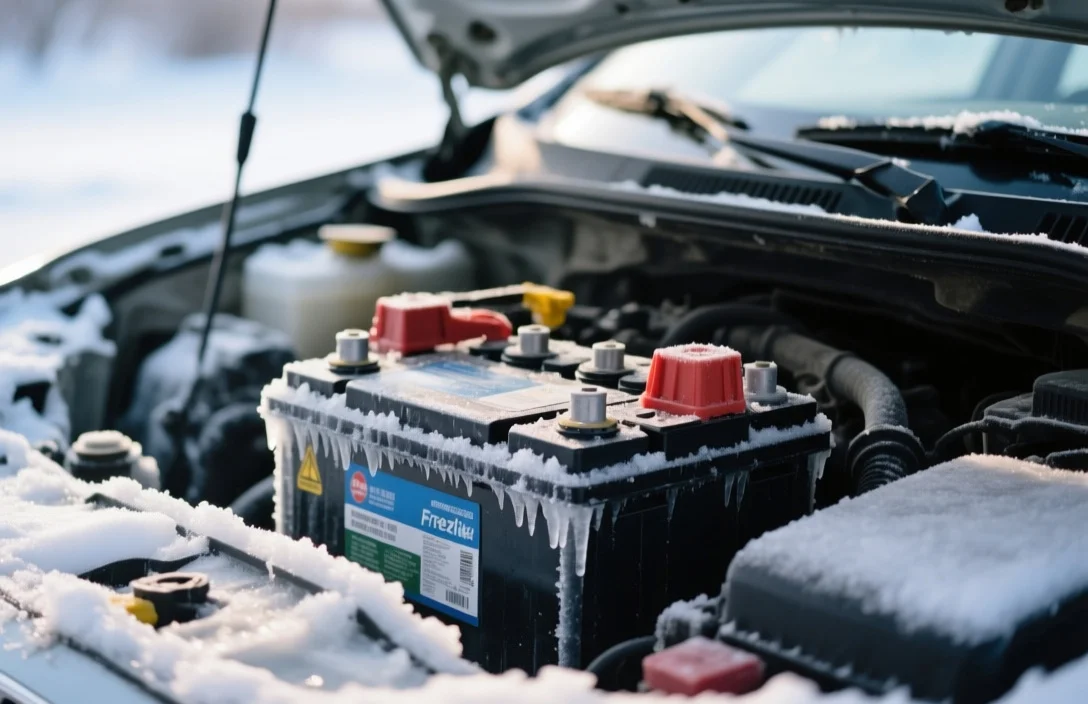
A car battery can freeze when the electrolyte drops below its freezing point, and that point changes with battery state. In practice, many “frozen battery” problems are really a mix of low charge, deep cold, and thickened electrolyte that keeps the battery from delivering current. Even if the case never visibly freezes solid, the battery can still act frozen because it cannot provide enough voltage under load.
In United States winters, the most common setup is simple: temperatures fall, the vehicle sits longer, and the battery slowly loses charge. When the electrolyte is less concentrated because of age, partial charging, or repeated short trips, freezing becomes more likely. If you live in an area with single-digit Fahrenheit temperatures, treat an aging battery as at risk even if it worked fine the year before.
What Freezing Does to Battery Chemistry
Recommended Products


Freezing mainly makes the electrolyte less able to move and react. That matters because a lead-acid battery depends on ion movement in the liquid electrolyte to produce current during cranking. When the electrolyte thickens or freezes, internal resistance rises, voltage under load falls, and the starter asks for more current than the battery can supply.
If a battery actually freezes, the stress can also damage the internal structure over time. That’s why a battery can start once after freezing and still show weak performance, faster voltage sag, and earlier failure at the next cold snap.
There is also the problem that comes before freezing: undercharging. A battery that sits discharged in cold weather is more likely to freeze, and those same conditions encourage sulfation, which permanently reduces capacity. So freezing is both a temperature problem and a battery health problem.
How Cold Weather Affects Battery Voltage
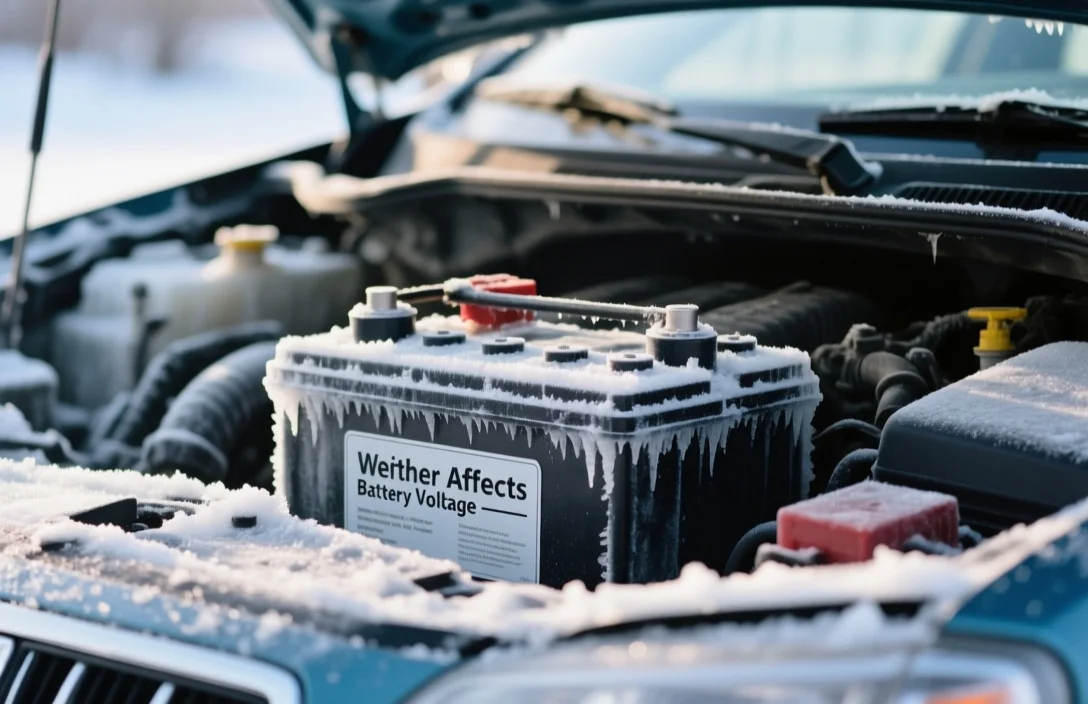
Cold weather lowers battery voltage under load even when the battery does not physically freeze. As temperature drops, chemical reactions slow and internal resistance rises. When you turn the key, the starter draws a big surge of current, and the battery voltage can collapse quickly in severe cold.
A healthy battery has enough margin to keep voltage up while cranking. A weak or older battery may still show a decent resting voltage in the garage, but when you test it outdoors at 0°F or lower, the voltage drops enough that the engine will not turn over. That is why the symptoms are often slow cranking or clicking rather than obvious signs of freezing.
Modern cars also draw power from multiple systems during cold starts, especially if there is remote start use, seat heaters, or heavy infotainment load. If your battery is already marginal, those draws reduce the margin further and make winter performance worse.
Signs Your Battery Is Freezing
The most reliable signs are performance symptoms, not visual proof. A battery that is freezing or close to freezing often shows hard starting, pronounced voltage sag, and poor behavior during repeated attempts. If you turn the key and the dash lights dim quickly or the starter sounds unusually weak, that fits a battery that cannot deliver current at low temperature.
Other common clues include:
- The battery is older, often several years old, and has seen lots of short-trip driving.
- You get repeated slow cranking on cold mornings before full failure.
- The battery has been left discharged more than once, or the car sat unused for a long stretch.
People often look for cracks or bulging cases, but those visible signs are not guaranteed and usually show up after major freezing or physical damage. If the temperature and symptoms point to freezing, treat it as real even if the case looks normal.
Gear That Makes Can a car battery freeze? Easier
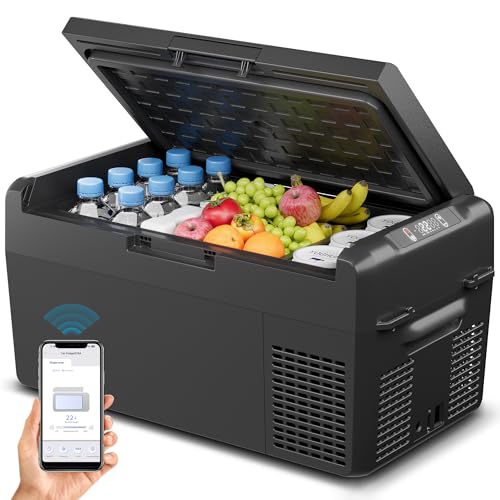
Feelfunn 12 Volt Refrigerator – 21QT(20L) Portable Freezer, Electric Cooler for Car Truck RV Van Camping & Road Trip, Fast Cooling Fridge with 12/24V DC & 110-240V AC for Vehicle & Home Use,-4℉~68℉
Because it runs on 12/24V DC or 110-240V AC, this fridge lets you store perishables without using engine power, helping avoid car battery drain during cold trips.

Feelfunn 12V Refrigerator – 27QT(25L) Portable Freezer, Electric Cooler for Car, Truck, RV, Van, Camping & Road Trip, Fast Cooling Fridge with 12/24V DC & 110-240V AC for Vehicle & Home Use,-4℉~68℉
This 27QT model operates via 12/24V DC or AC, so you can keep groceries cold in a parked vehicle without risking battery damage from engine idling.
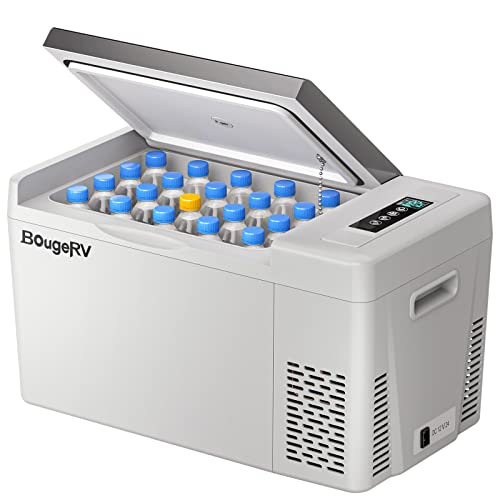
BougeRV 12 Volt Refrigerator 12V Car Fridge 23 Quart Portable Freezer Compressor Cooler 12/24V DC 110~240 Volt AC for Truck Van RV Camper SUV Travel Camping Road Trips Tailgating -7℉~50℉
It supports 12/24V DC and AC, allowing you to pre-cool items before a long drive, reducing battery draw from car cooler use while the engine is off.
How to Check Battery Temperature Safely
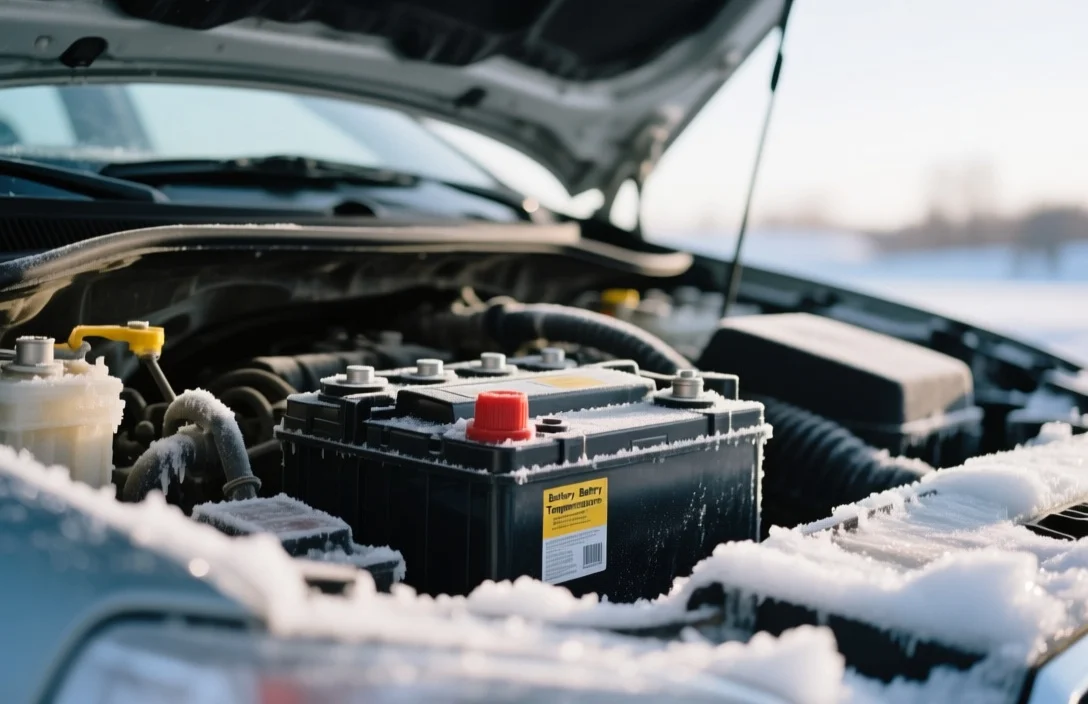
The safest way to check battery temperature is indirect. Use the outside temperature where the car sits, then combine that with the battery’s behavior and a careful touch test only if conditions are safe. Do not press hard on the case with tools, and never chip at ice or try to break up anything around the terminals.
If you have an infrared thermometer, you can measure surface temperature from a short distance. Infrared readings can be off if the battery top is dirty or wet, so treat them as an estimate, not a precise freezing check. For an accurate internal electrolyte reading, you need specialized equipment, and that is not a practical DIY step.
If you are checking manually, keep safety first:
- Avoid touching the battery if you suspect ice on or near the terminals.
- Keep ignition sources away from venting areas.
- Wear eye protection and insulated gloves if you must get close to a very cold battery.
The goal is to decide what to do next, not to prove the battery literally froze. If the weather is extreme and the battery is acting weak, warming and controlled charging or jump starting is the safer path.
What Happens After Thawing a Frozen Battery
After a battery thaws, it may seem normal again because the electrolyte can flow and the chemistry resumes. That is exactly why a warm-up can fool you into thinking everything is fine. The battery may still be damaged internally, and it can fail again the next time the temperature drops.
A thawed battery can also vent if it was forced hard while frozen. Venting happens when the battery is overworked, and if that happened during attempted starting or charging, you may smell sulfur or see residue around the vents. That does not always mean immediate replacement, but it does mean the battery needs attention and testing.
Once it thaws, the right move is to:
- Let it rest at a safe indoor temperature before charging.
- Check battery health and capacity, not just resting voltage.
- Avoid repeated start attempts that keep loading the battery while it is recovering.
If the battery failed during freezing weather, plan on replacement if it tests weak. Winter reliability comes down to capacity, not just whether it can start once.
Can You Start a Frozen Battery?
You can sometimes start a frozen battery, but it is a risky decision with a short window. If the battery is frozen, internal resistance is likely high, which means cranking can draw far more current than the battery can handle. That can worsen damage and raise the chance of venting if the battery is forced to work under bad conditions.
If you decide to try, keep it conservative:
- Assess symptoms first. If cranking is extremely slow or the battery gives repeated click-no-turn behavior, treat that as a stop-and-thaw signal.
- Use a jumper correctly. A jump starter or donor battery can provide the surge current the frozen battery cannot.
- Limit attempts. Try briefly, then stop if the engine does not catch.
- Warm before trying again. Move the car to a garage or warmer space and let the battery thaw before another attempt.
If the case looks damaged, is leaking, or there is heavy corrosion near the terminals, do not keep forcing starts. Replace the battery and inspect for related problems like loose connections or charging issues.
In practice, thawing usually wins. Warming the battery slowly and then testing it is more reliable than repeatedly cranking a battery that is already compromised.
FAQ
Can a car battery freeze at 32°F (0°C)?
Yes, a lead-acid battery can freeze around or below 32°F, but the exact point depends on electrolyte concentration and charge state. A partially discharged or older battery is more likely to freeze at warmer temperatures than a healthy, fully charged one. If severe cold-start failure is happening, assume freezing risk even if you do not know the exact temperature.
What temperature actually freezes a car battery?
The freezing point varies by battery chemistry and electrolyte concentration, so there is no single number that fits every car battery. A discharged battery can freeze at warmer temperatures than you might expect, while a fully charged battery is less likely to freeze. If you need a precise threshold for your battery, check the battery documentation or have it tested.
Can you charge a frozen battery?
You should not charge a frozen battery as a DIY plug-it-in-and-hope move. Charging a frozen or partially frozen battery can add stress and may cause venting if the battery warms unevenly. Thaw the battery first in a safe place, then charge or test it based on its measured condition.
How do I know if my battery is cold or actually frozen?
Cold weather alone often causes slow cranking and voltage sag, while freezing or near-freezing can add repeated failures even when attempts work in milder temperatures. The most practical check is behavior plus the outside temperature, then a proper battery test after thawing. If the battery keeps failing in extreme cold, treat it as likely damaged.
Is a frozen battery the same as a dead battery?
No. A dead battery is depleted and can often be revived temporarily with a jump or charge. A frozen battery may thaw and start, but it can still be internally damaged and fail again quickly. The right move is to thaw it, then test battery health instead of assuming it is fixed.

- 10 Best Battery For Generator Battery Safety System 2026 - October 12, 2026
- 10 Best Battery For Generator Battery Safety Option 2026 - October 12, 2026
- 10 Best Battery For Generator Battery Safety 2026 - October 12, 2026