Car Battery Last For How Long?
A healthy car battery usually lasts 3 to 5 years, but the number you care about is the one that predicts failure: cranking power (CCA) and how well the battery holds voltage. Weather, short trips, and a weak charging system can cut life fast. This article gives you the practical checks to estimate remaining life, spot warning signs early, and charge or replace safely.
Car batteries typically last about 3 to 5 years for flooded lead-acid and 4 to 6 years for AGM in normal conditions. Hot climates often shorten life, while some cold climates stretch it if charging is good. Clear signs include slow cranking, dim headlights, a battery warning light, and failing voltage under load tests.
Car Battery Last For How Long? Lifespan
Recommended Products


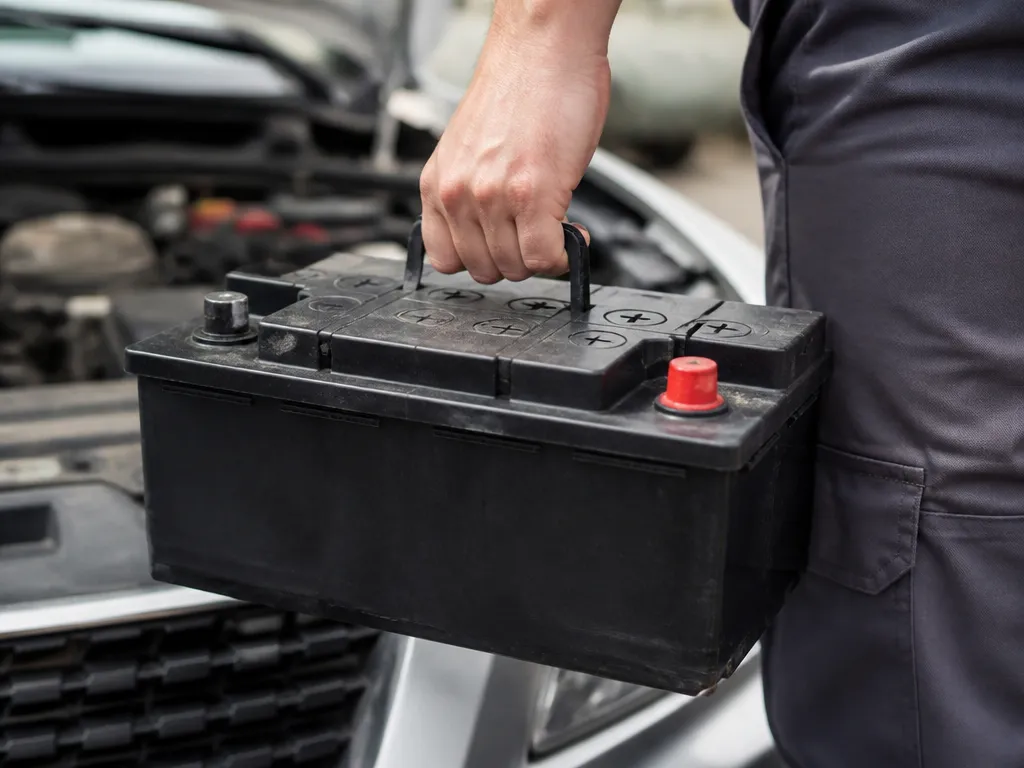
Most car batteries last about 3 to 6 years, with the exact number depending on battery type and the heat and charging conditions your vehicle sees. Flooded lead-acid batteries often land around 3 to 5 years, while AGM batteries are commonly around 4 to 6 years. Hot weather shortens life for both, while moderate temperatures can stretch it closer to the high end.
Battery life is driven by how many “charge and discharge” moments it experiences, plus how hard it runs in temperature extremes. Heat speeds up the chemical aging that reduces capacity, and it also increases the chance that plates shed material over time. Cold weather can reduce available cranking power until the battery warms up, which can look like weak health even when the battery is only temporarily underperforming.
| Car battery type | Typical lifespan (years) | What climate tends to do |
|---|---|---|
| Flooded lead-acid (serviceable) | 3 to 5 | High heat usually shortens life faster |
| AGM (sealed, absorbent glass mat) | 4 to 6 | High heat still shortens life, often less than flooded |
How Heat And Driving Habits Change The Timeline
Hot climates and lots of short trips are a common lifespan killer because the alternator spends more time charging a partially depleted battery. Extreme heat can also increase water loss in flooded batteries, even if charging voltage looks “normal.” In practice, a battery can hit the earlier end of its range when the underhood temperature stays high for long stretches, or when the charging system allows frequent undercharging.
Cold climates behave differently because cranking draws high current and the battery voltage can sag under load. Cold can also mean more engine cranks per trip and more time spent with the battery not fully recharged after use, which stresses the battery indirectly. Longer life in cold areas is possible for some drivers, but only when the battery actually gets fully recharged and you avoid repeated deep discharges.
Quick expectation: if your battery is around 4 to 5 years old in a warm region, you are already in “monitor closely” territory, even if it still starts the car.
Warning Signs Of Nearing Failure
Recommended Products


Slow cranking, longer start times, and weak electrical performance are the most common early indicators that a car battery is nearing end-of-life. These symptoms often get worse in cold weather or after the car sits for several days.
Common Symptoms You Can Feel Right Now
When a battery loses capacity, the starter motor draws the same current but the battery voltage sags more under load. That sag causes dim headlights, slower crank speed, and can also trigger intermittent issues with accessories and vehicle modules.
For example, repeated “it starts after a jump” events can point to battery aging, but they can also come from a weak alternator, corroded connections, or a parasitic drain.
Physical Red Flags Mean Stop And Inspect
Battery cases that bulge and terminals with heavy corrosion can turn a failing battery into a safety hazard. Heat plus gas buildup can deform the case, while corrosion increases resistance at the connection, leading to more voltage loss and more heat.
| Observed sign | Most likely meaning | What to do immediately |
|---|---|---|
| Slow crank, dim headlights | Capacity loss or high internal resistance | Test battery under load at an auto parts store |
| Battery/charging warning light | Low system voltage or charging fault | Check both battery and alternator output with a shop test |
| Bulging case | Internal failure or gas buildup | Do not keep driving, replace and inspect mounts |
| Heavy terminal corrosion | Loose contact or leakage at connections | Inspect and clean connections only if safe, then retest |
Safety note: If the case is swollen or terminals are hot to the touch, wear eye protection and avoid adding any charge until the battery is inspected or replaced.
Extended electrical faults after the engine starts can also show up as repeated resets or unstable accessories. If those issues appear alongside a warning light, prioritize electrical system testing before assuming the battery is the only culprit.
Diagnostics For Battery Health
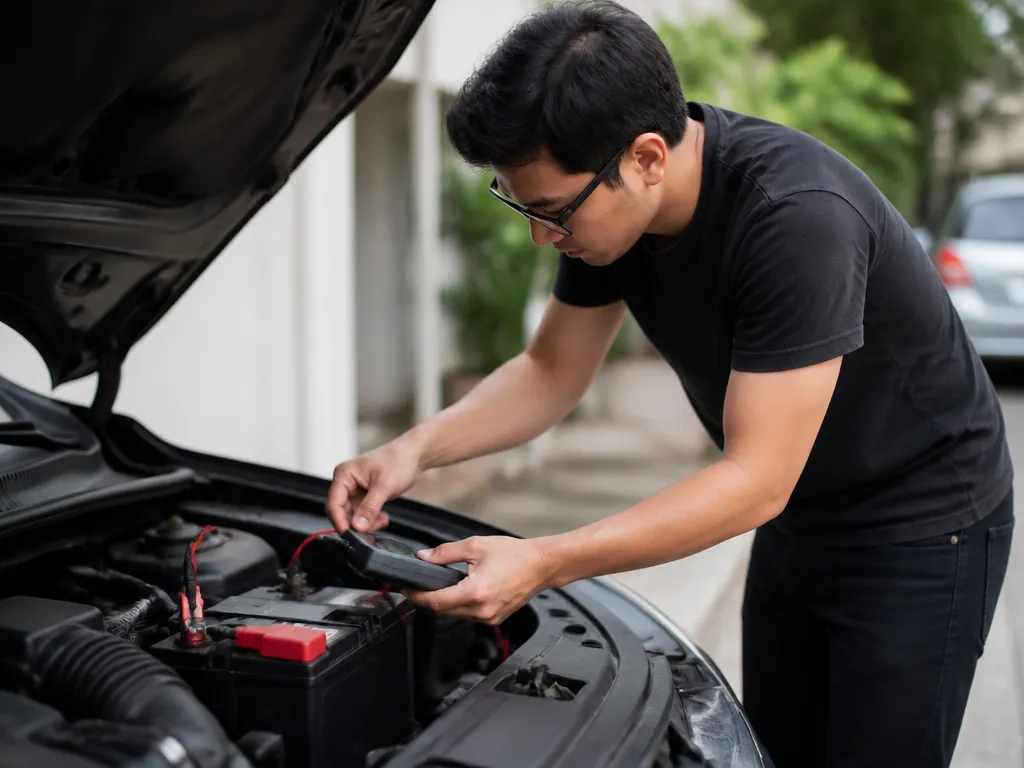
Battery health testing should start with measurements that remove guesswork: resting voltage after 4 to 6 hours off the charger or vehicle, then voltage under a cranking load, then a load test or CCA check. These results show whether the battery is holding capacity or whether the charging system is the real problem.
Safety first: if you see a swollen case, leaking electrolyte, a strong sulfur smell, or melted terminals, stop and replace. Do not run heavy tests with loose clamps or damaged cables, and keep sparks away from vented lead-acid batteries.
Core Electrical Tests And What To Look For
Use a digital multimeter and a battery tester if you have one. Record the numbers, because the pattern matters as much as the absolute value.
| Test | How it’s done | What it reveals | Typical “bad trend” |
|---|---|---|---|
| Resting voltage | Battery sits 4 to 6 hours, no charging, no accessory use | State of charge and gross failure | Low and slow to recover |
| Voltage under cranking | Measure voltage during the starter attempt | Internal resistance and capacity under load | Large drop that doesn’t recover quickly |
| CCA test | Tester compares available cold-cranking output | Actual usable starting power | Below rating and worsening over time |
| Load test | Tester applies a controlled load for a set time | Capacity at a defined draw | Voltage collapses early |
| Alternator output | Measure charging voltage with engine running | Overcharge or undercharge causes | Off-target or unstable charging voltage |
| Parasitic drain | Measure current draw after modules sleep | Loads that kill the battery while parked | Higher-than-normal sleep current |
In practice, a weak battery can still show “near normal” resting voltage if it has enough surface charge, then fails during cranking. That’s why voltage under load and a load or CCA test are the deciding measurements.
Start with the simplest interpretation ladder. If resting voltage is already low, suspect the battery first. If resting voltage is normal but cranking drops hard or the CCA/load test fails, the battery has lost capacity or internal resistance has risen.
Alternator output testing separates a bad battery from a bad charging system. Overcharging can dry out flooded cells and cause premature failure, while undercharging prevents the battery from fully recovering after drives.
Parasitic drain testing catches another common “battery died early” story: the battery is being discharged while the vehicle sits. Parasitic drain depends heavily on whether the car has reached module sleep, so the measurement timing is part of the test quality.
For the most actionable decision, combine results: a failed load/CCA points to replacement, while an alternator or parasitic-drain failure points to fixing the cause first. Replacing a battery without fixing a charging or drain issue often leads to a rapid repeat failure.
Diy Testing Steps And Tools
A healthy car battery should hold voltage under load and pass a cold-cranking (CCA) or conductance style check. DIY testing uses a multimeter for static voltage and a load tester or battery tester for voltage drop and internal resistance. Stop if you see swelling, strong sulfur smell, leaking, or severe heat damage.
Equipment List
Multimeter, load tester, and a battery tester cover the main failure modes: weak voltage, excessive internal resistance, and poor cranking performance. Use tools that match 12 V lead-acid batteries (flooded, AGM, or gel). Keep a small flashlight, nitrile gloves, eye protection, and a wire brush or baking soda solution for safe terminal cleaning if needed.
Interpreting Results And Next Steps
Resting voltage tells you a lot, but it does not prove cranking strength. A battery can show “okay” voltage at rest while failing under load due to high internal resistance, sulfation, or a failing cell.
For example, a multimeter that reads “good” resting voltage but a load test that collapses the voltage during cranking points to sulfation or a bad cell. Next steps are tightening and cleaning terminals, repeating tests after proper settling time, then replacing the battery if load test and CCA/conductance both indicate weakness.
| Tool | What it tells you | What to write down |
|---|---|---|
| Multimeter | Static state of charge and obvious problems | Resting volts, battery temperature, date/time |
| Load tester | Voltage sag under simulated cranking load | Voltage before load, lowest voltage during load, load duration used |
| Battery tester (CCA/conductance) | Internal resistance and cold-cranking capability estimate | Measured CCA (or health %, if shown) vs label CCA |
Safety stop: If you see bubbling near vents, a strong sulfur odor, visible leakage, or the case is hot to the touch, stop the test and disconnect safely. Swollen or leaking batteries should be replaced, not repeatedly tested or recharged.
Care And Charging Habits
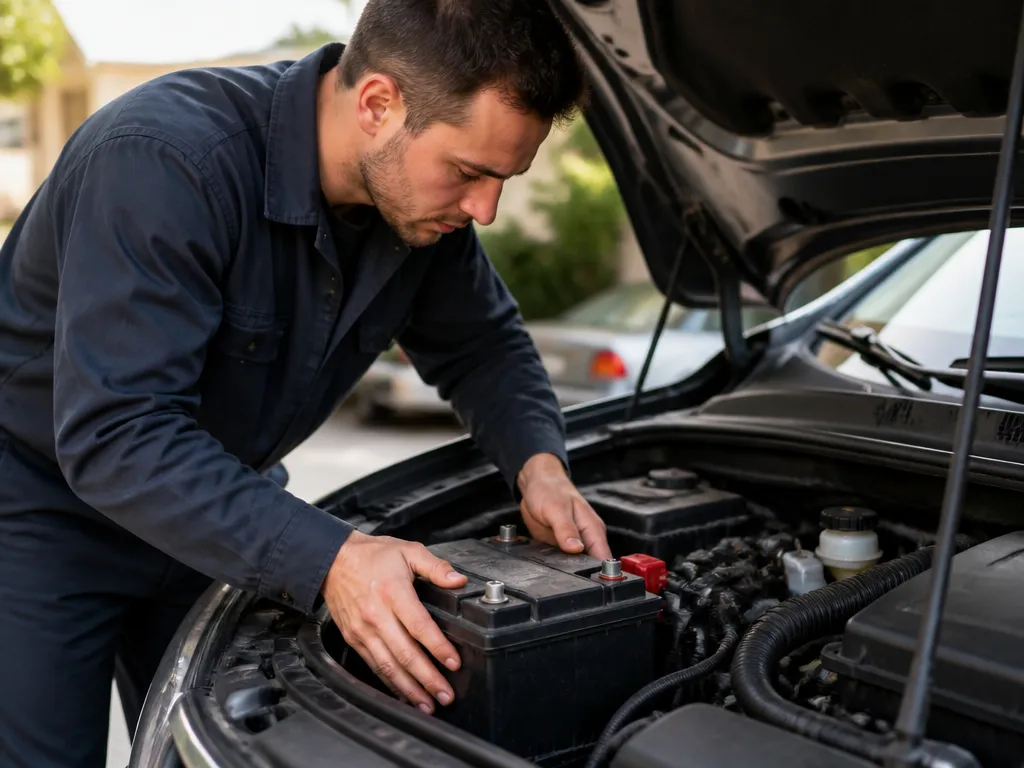
Healthy battery life depends more on staying in the right charge range than on speed. The biggest killers are corrosion at the terminals, loose mounting and vibration, and long periods of undercharging that allow sulfation to build up.
Keep Terminals Clean And Prevent Corrosion
Battery corrosion creates resistance between the post and the clamp, which makes cranking harder and makes charging less effective. If you see a white, bluish, or crusty layer around the terminals, clean it before it grows.
Corrosion prevention is also a safety habit. Keep tools from bridging the two posts, avoid spilling cleaner or grease into the battery case seams, and wear eye protection since dried corrosion can flake.
Secure Mounting And Insulation Prevent Internal Damage
A battery that can move will wear out faster because plate connections and internal grids see repeated stress. Secure the battery tray, verify the hold down clamp is tight, and keep the battery upright during service.
Safety warning: If the case is swollen, the top is bulging, or you smell strong solvent or rotten-egg odor from the battery area, stop and have it checked. Heat and internal failure can get worse quickly.
Minimize Parasitic Drain And Keep Batteries Properly Charged
Even a good battery can die early if something keeps drawing current after shutdown, or if your driving pattern rarely gets the battery fully back to charge. Short trips and heavy accessory use can keep the battery in a partially charged state.
For example, an aftermarket dash cam wired without a proper time-out or low-voltage cutoff can pull enough current to flatten the battery in a week. A clean test setup helps you separate “battery is failing” from “something keeps draining it.”
| Battery type | Charging habit to aim for | Common life-shortening mistake |
|---|---|---|
| Flooded lead-acid | Use the correct charger profile and avoid prolonged over-voltage | Leaving it on a basic charger that keeps pushing too much voltage |
| AGM (Absorbent Glass Mat) | Charge fully with an AGM-compatible profile | Undercharging during short trips and storing it partially charged |
Drive cycles help, but the goal is “enough charge to replace what you used.” If you drive 10 minutes and park daily, consider occasional longer drives or a smart charger to bring the battery back to full charge without overheating it.
For example, a smart charger with an automatic maintenance mode is often safer than leaving a manual charger connected overnight, because it reduces the chance of cooking the battery. If your vehicle has a battery sensor, connect and charge in the way your owner’s manual specifies so the charging algorithm does not fight the battery management.
Replacement Criteria And Costs
Most car batteries are replaced when starting performance drops under load, even if the date code still looks recent. Typical replacement targets are about 3 to 5 years for many vehicles in hot climates and 4 to 6 years in milder climates, with flooded lead-acid and AGM often differing in how they age.
Battery capacity in the real world is limited by CCA (cold cranking amps) and its ability to hold voltage while cranking. RC (reserve capacity, measured in minutes at a specified low discharge rate) predicts how long the battery can supply non-cranking loads, like headlights and blower, after the alternator is weak or temporarily unavailable.
Cca, Rc, And Group Size Selection
CCA and RC are only useful when the battery physically fits and the vehicle’s charging system is compatible. Group size (the case dimensions and terminal layout) is the first constraint, then CCA and RC help you pick the right performance level.
In practice, matching group size and terminal orientation matters more than chasing the highest CCA number. For many cars, using the specified group size with equal or slightly higher CCA is a safe performance upgrade, and RC helps if you frequently sit with accessories running or deal with longer crank events.
Warranty Terms And Typical Durations
Battery warranties are usually stated as a total coverage period and a pro-rated portion, meaning you can get a replacement credit even after the first years if capacity drops faster than expected. Warranty length alone is not a guarantee, because heat, deep discharges, and vibration can shorten life even with correct charging.
For flooded lead-acid batteries, warranty expectations also assume normal water maintenance if the model is serviceable. For AGM and absorbed glass mat batteries, warranties often focus on proper charging voltage and avoiding incorrect chargers that overheat the battery.
Installed Price Ranges And Factors
Installed cost typically includes the battery, disposal fee, and labor, and it varies a lot by region and by battery type. Brand, capacity (CCA and RC), and warranty length all influence the battery price, and “premium” models (often AGM) usually cost more upfront.
Installation cost is higher when the job is awkward, when corrosion treatment is needed, or when the car has extra electronics that require reset or relearn after battery replacement. Cost can also rise if a vehicle’s battery is in a location that needs extra trim removal.
| Replacement factor | What changes | How it affects cost |
|---|---|---|
| Battery type | Flooded, AGM, or other lead-acid variants | AGM is commonly higher priced than basic flooded |
| CCA and RC rating | Higher performance and higher capacity builds | More capacity usually costs more |
| Warranty length | Full replacement years and pro-rating terms | Longer coverage often raises battery price |
| Group size and terminals | Fitment and hardware included | Hard-to-find sizes can cost more |
| Labor complexity | Access, trim removal, corrosion cleanup | More labor time increases installed price |
Important Installation Considerations
After you choose the right group and rating, installation quality matters because incorrect terminal connections and poor corrosion control can cause voltage drop and heat. Tightening torque matters, and it is easy to over-tighten soft posts or under-tighten and create intermittent starting issues.
For many modern vehicles, battery replacement can trigger systems to recalibrate (radio codes, window calibration, stop-start behavior, and driver-assistance sensors). Plan for the manufacturer’s reset procedure and avoid disconnecting the battery in a way that can damage electronics.
Practical rule: If a battery repeatedly dies early, you are often replacing the symptom, not the cause. Battery warranties generally do not cover failures caused by a charging problem, a parasitic drain, or incorrect installation.
Storage, Disposal, And Safety
Corroding terminals, dry-out on flooded batteries, and internal aging accelerate when a battery sits hot, cycles deeply, or stays undercharged. Proper storage means cool, dry conditions and keeping the battery at the right charge state, especially during long parking or seasonal use.
Follow the battery label first. Cars and battery brands differ for charging voltages, temperature compensation, and whether the battery is flooded, AGM, or gel. Using the wrong charger or incorrect settings is one of the fastest ways to shorten life and increase venting risk.
Storage Tips For Vehicles And Spare Batteries
Store batteries in a place that is cool and dry, with good airflow. Keep the battery upright and protected from vibration, and avoid concrete floors directly under the battery terminals (condensation can worsen corrosion).
Charge state matters during storage because lead-acid sulfates more aggressively when left low for weeks. For long-term storage, many owners use a smart maintainer set for the battery type (flooded, AGM, or gel) and stop short of “fast charging” unless the manufacturer calls for it.
Disposal And Recycling Basics
Car batteries are hazardous waste because they contain sulfuric acid and heavy metals. Take them to an automotive parts store, recycling center, or hazardous-waste collection site that accepts lead-acid batteries.
Recycling is the safest end-of-life path and usually includes collection, neutralization, and recovery of lead and plastics. Never dump a battery, burn it, or cut it open, even if it “looks empty.”
| Battery type | What to do at end of life | Handling notes |
|---|---|---|
| Lead-acid (flooded/AGM) | Recycle through a lead-acid battery program | Keep upright, protect terminals, prevent leaks |
| Other chemistries (rare in cars) | Use the site’s accepted battery category | Follow the drop-off rules for damaged or swollen packs |
Safety Reminders: Venting, Acid, And Spill Response
Vented batteries can emit hydrogen gas during charging, which is why sparks and smoking are a hard no near the battery. Keep the charger leads clean, connect in the correct order per your charger instructions, and never lean over the battery while it is actively charging.
Acid contact is the main immediate hazard. Wear eye protection and gloves, and use baking soda (sodium bicarbonate) and water for small neutralization on metal surfaces, then wipe with clean water; for a larger spill or any exposure to skin or eyes, treat it as an emergency and get appropriate medical help.
Quick spill response: Ventilate the area, keep sparks away, isolate the battery, neutralize small acid residue with baking soda solution, then clean and dispose of contaminated materials per local guidance.
Quick Summary
A healthy car battery usually lasts 3 to 5 years. In typical conditions, flooded lead-acid batteries often run about 3 to 5 years, while AGM batteries are commonly about 4 to 6 years, with hot climates usually shortening life.
Watch for slow cranking, dim headlights, battery warning lights, and frequent jump starts. Check resting voltage after 4 to 6 hours off, and inspect the battery and charging system when symptoms appear.
Frequently Asked Questions
How Long Does A Car Battery Typically Last In Years?
Most lead-acid car batteries last around 3 to 5 years, but it can be shorter in hot climates or if the battery gets deep-cycled. If you are unsure, check the date code on the label and watch for slow starts or dim lights.
What Charger Should I Use To Recharge A Car Battery, And Is It Compatible With My Battery Type?
Use a charger meant for 12V lead-acid batteries and match its charging mode to your battery (standard, AGM, or deep-cycle). If your battery is labeled AGM, look for an AGM-compatible charger, and keep the charger output within the range recommended by the battery manufacturer.
How Can I Tell If My Car Battery Is Overheating During Charging?
Any strong hot casing, a strong sulfur or chemical smell, or heavy bubbling during charging is a red flag. Stop charging, let the battery cool, ensure the connections are secure, and only continue if the charger is set to the correct chemistry and charge mode.
How Long Will A Battery Last If I Use A Jump Starter Instead Of Replacing It?
A jump starter does not replace the car battery, it only helps you start the engine temporarily. If your car needs frequent jump starts, the underlying battery is usually failing and should be tested because continued cycling can shorten overall life.
When Should I Replace My Car Battery, And What Is The Most Common Buying Mistake?
Consider replacement when the battery is near the 3 to 5 year window or no longer meets the vehicle’s requirements. A common mistake is buying a battery with the wrong size or specs, so verify the group size, CCA rating, and terminal orientation before you buy.

- 10 Best Battery For Generator Battery Safety System 2026 - October 12, 2026
- 10 Best Battery For Generator Battery Safety Option 2026 - October 12, 2026
- 10 Best Battery For Generator Battery Safety 2026 - October 12, 2026