How Long Should A Car Battery Last Without Driving?
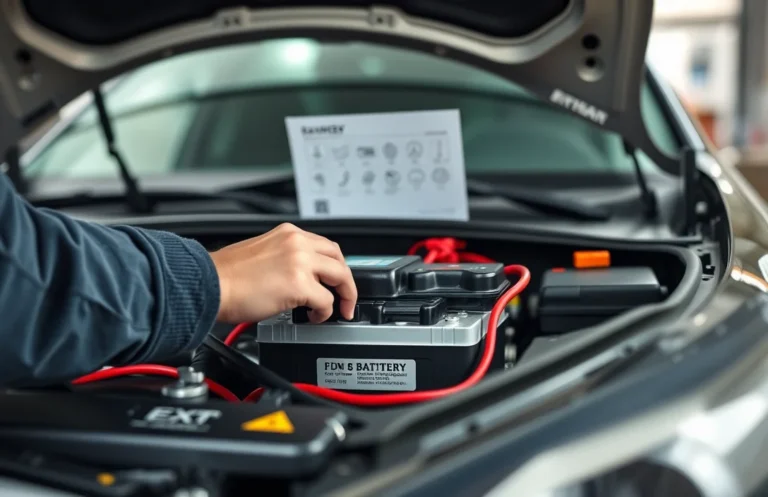
A car battery can die in under a month even if it is “fine,” and most of the time it is not the battery aging, it is sitting voltage plus parasitic drain. The spec that matters most is battery type and resting state-of-charge, not CCA. This guide gives you practical ranges for self-discharge and idle draw, plus how to measure and slow the drain with the right maintainer setting.
Car battery life without driving is usually measured in weeks to months, depending on temperature, battery type, and how much the car draws while parked. A common rule is days ≈ Capacity (Ah) / (Drain (A) × 24). In warm storage, lead-acid self-discharge is faster, while cold weather slows chemical reactions but cranking voltage drops sooner.
How Long Should A Car Battery Last Without Driving?
Recommended Products


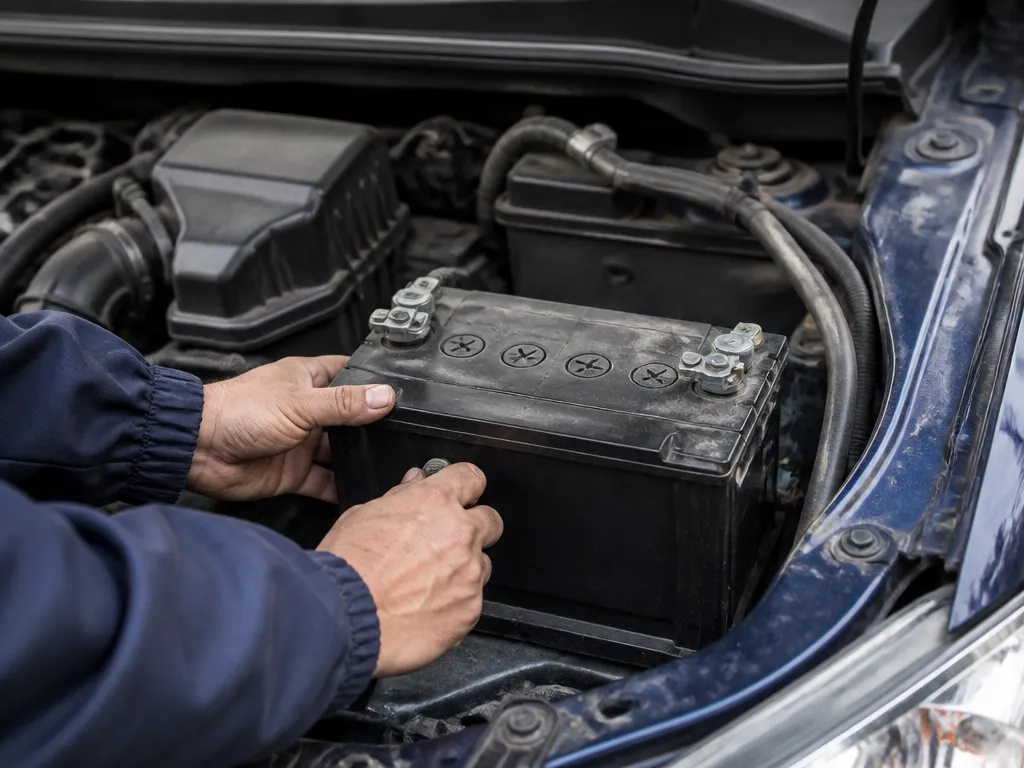
A typical car battery can stay usable for roughly 2 to 8 weeks without driving if the car has normal parasitic loads and the battery is healthy. Many people see longer, like 2 to 6 months, when the battery is well-charged and the car draws very little current while parked. Cold weather usually compresses these timelines faster than any other single factor.
Two loss paths decide the outcome: self-discharge inside the battery and drain outside the battery from the vehicle itself. Self-discharge is the battery slowly losing charge even with everything disconnected, while parasitic drain is current draw from systems like keyless entry receivers, alarm modules, engine control memory, and telematics. The “weeks vs months” difference mostly comes from how big the drain is and how cold the battery is.
What “Not Driving” Really Means
“Not driving” can mean a garage with no additional activity, or it can mean frequent door openings, key fob use, or a car that calls home for data updates. Those actions can increase current draw by waking modules, which speeds up voltage drop. If you disconnect the battery or pull a fuse for noncritical systems (if you know what you are doing), you reduce parasitic drain and buy time.
Battery chemistry and age change the self-discharge rate and the battery’s ability to recover after small drops. A sulfated or aging lead-acid battery hits a low-voltage state sooner, and it also tends to struggle more in cold temperatures.
In practice, a “works now” battery can still fail earlier in the same season if it is already near the edge.
| Condition while parked | Typical outcome window (healthy battery) | Main driver | What to watch |
|---|---|---|---|
| Warm (about 60 to 80°F / 15 to 27°C), low use | 2 to 6 months | Self-discharge plus small parasitic drain | Slow voltage sag, then a weak crank |
| Cool (about 40 to 60°F / 4 to 15°C) | 1 to 3 months | Higher drain impact and reduced cranking power | Hard starts even when voltage looks “not terrible” |
| Cold (near freezing and below) | 2 to 8 weeks | Reduced cold cranking capability and faster voltage drop | Click/no-crank, dashboard resets, dim lighting |
For example, a car with a steady parasitic load might last “months” on a warm day but only “weeks” in winter because the usable starting voltage is harder to reach. For another example, a car with frequent wake-ups can drain much faster than self-discharge alone, even if the battery is new. Treat the timer as load-dependent, not as a fixed calendar guarantee.
Practical takeaway: plan storage time around your coldest period and your vehicle’s sleep behavior, then reduce risk with a maintainer if the car will sit beyond a couple of months. A maintainer sized for your battery type helps prevent the slow voltage fall that leads to “it won’t crank” surprises later.
Self-discharge By Battery Type
Typical lead-acid car batteries lose capacity gradually even while idle due to self-discharge. That loss is fast when the battery is warm and slow when it is cold, so “how many weeks” depends more on temperature and battery chemistry than on brand.
Rules of thumb for open-circuit state of charge (battery sitting disconnected, no charging, no loads): a healthy flooded lead-acid or AGM battery often drops around 1% to 3% per month at moderate temperatures, and can be several percent per month when warm. Cold weather slows chemical reactions, so many batteries idle longer, but cold also increases cranking resistance when you do start the car.
| Battery type | Typical idle self-discharge rate (rule of thumb) | When it tends to be worst |
|---|---|---|
| Flooded lead-acid (wet) | ~1% to 3% per month (moderate temps) | Warm storage, higher average state of charge, aging |
| AGM (absorbed glass mat) | ~1% to 2% per month (often a bit better than wet) | Warm storage, aging, incorrect charging voltages |
| Gel | ~1% to 2% per month (often similar or slightly better) | Warm storage, overcharging, wrong charger settings |
Temperature changes self-discharge enough to matter for planning. Warm storage can multiply loss compared with moderate conditions, while cold can stretch idle time, but you still may see weak starts because the battery chemistry and internal resistance behave differently when cold.
For example, with a 2% per month self-discharge estimate, a 40% drop takes about 20 months (40 ÷ 2). With a warm-storage estimate of 4% per month, the same 40% drop takes about 10 months (40 ÷ 4), which is why warm garages and summer layups often lead to earlier dead batteries.
Parasitic Drain Math
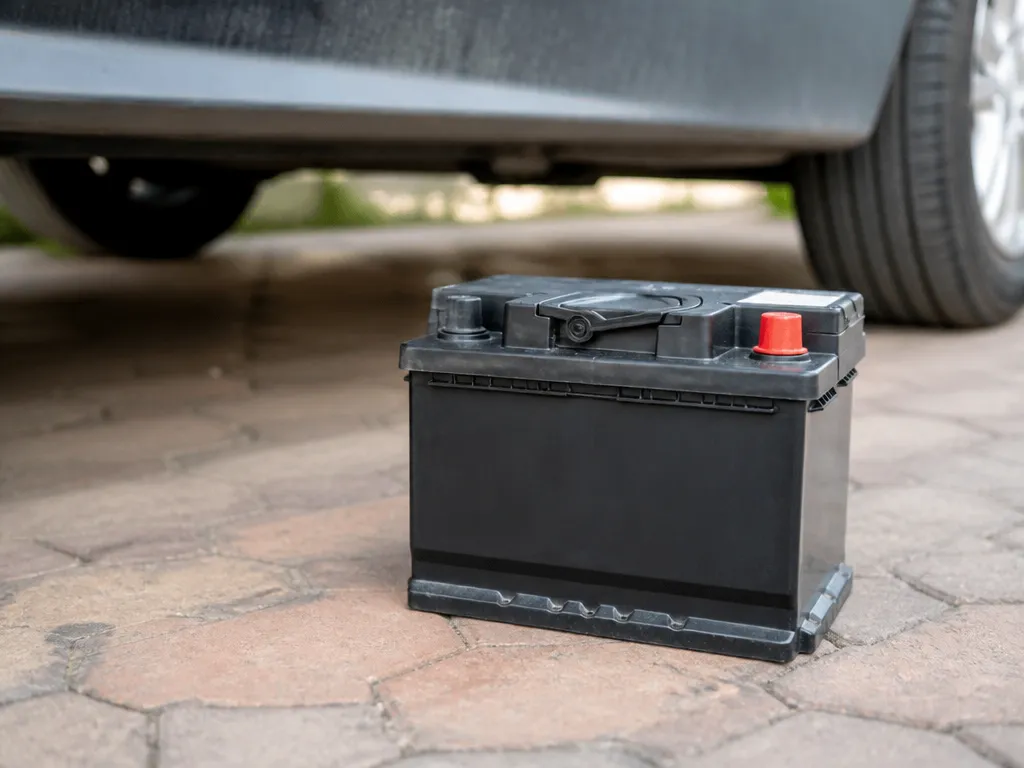
Typical parasitic loads on a modern car are often a small fraction of an amp, commonly tens of milliamps, but they can be higher if modules stay awake or a component is stuck on. Battery “self-discharge” adds another slow loss, but parasitic drain is usually the main driver for how long a car can sit before the battery voltage collapses.
To estimate time-to-flat from parasitic drain, use battery capacity in amp-hours (Ah) and your measured or assumed drain current in amps (A). A practical first-pass formula is days approximately equal to Capacity Ah divided by (Drain A times 24). This assumes the load is steady and ignores conversion inefficiency and battery voltage sag, so treat the result as optimistic.
For example, a key fob system that settles around 20 to 40 mA on sleep mode can drain a 50 to 70 Ah battery in roughly 2 to 4 months depending on cold weather and battery health. For an alarm or immobilizer that stays active or a module that never fully sleeps, 0.1 A (100 mA) can flatten many batteries in weeks.
In practice, “too high” is any drain current you cannot explain with normal aftermarket gear or documented behavior. A quick sanity check: if you measure above about 0.05 A (50 mA) after the vehicle is fully asleep, investigate parasitic draw before waiting it out.
| Sleep drain (A) | Sleep drain (mA) | Days for 60 Ah (approx) |
|---|---|---|
| 0.01 | 10 | 250 |
| 0.02 | 20 | 125 |
| 0.03 | 30 | 83 |
| 0.05 | 50 | 50 |
| 0.10 | 100 | 25 |
| 0.20 | 200 | 12.5 |
Quick Calculator: Days To Flat
Use battery capacity in amp-hours (Ah) and an estimated average drain current (A) to get a rough days-to-dead estimate, then cut it down for losses and cold weather. A practical starting point is: Days ≈ (Ah × usablefraction) ÷ (draincurrentA × 24), where usablefraction is often 0.5 – 0.8 for lead-acid and 0.8 – 0.9 for healthy lithium (estimate unless you have test data).
Measure what you can, guess only when you must. Measure drain with a multimeter or clamp meter, and measure temperature with an inexpensive thermometer, then treat capacity as “from the label” while state-of-charge is a “test or estimate” input.
Calculator Inputs
Input checklist (fill these first):
- Ahtotal: battery amp-hours rating from the case label/spec sheet (or use the reserve capacity only if that is all you have).
- Initialstateofcharge: from a resting-voltage test or battery health screen.
| Estimated drain current (A) | Example capacity (Ah) | Days ≈ (Ah × 0.7) ÷ A |
|---|---|---|
| 0.010 (10 mA) | 50 | 146 days |
| 0.025 (25 mA) | 50 | 58 days |
| 0.050 (50 mA) | 50 | 29 days |
| 0.100 (100 mA) | 50 | 15 days |
| 0.200 (200 mA) | 50 | 7.3 days |
For example, a 50 Ah battery with a measured average drain of 0.050 A gives Days ≈ (50 × 0.7) ÷ (0.050 × 24) = 35 ÷ 1.2 ≈ 29 days, assuming battery health is average and temperature is not extremely cold. If temperature is near freezing, cut your result by a third as a conservative estimate.
For instance, if you do not know drain current, estimate it by doing a staged measurement workflow: connect a meter in-line, wait for modules to “sleep,” then record the steady lowest current for 10 to 20 minutes. If you cannot measure, use a conservative placeholder drain of 50 mA for cars with active telematics or alarms, then confirm later with a real measurement.
- Step 3 (Pick usablefraction): choose 0.7 for typical lead-acid, 0.85 for healthy lithium (adjust downward if voltage sag is fast).
Replacement trigger for “days to flat” planning: if the battery starts struggling sooner than your calculated window, treat it as reduced usable capacity and update your usablefraction. Stop trying to “stretch it” when you see repeated low-voltage events or signs of overheating and swelling.
Days-to-flat math is only as good as the drain and usablefraction assumptions, so the workflow above is the fastest way to turn guesswork into numbers. A single bad assumption can swing results by weeks, especially when temperature is low or a module fails to sleep.
Storage Charging And Maintainer Setup
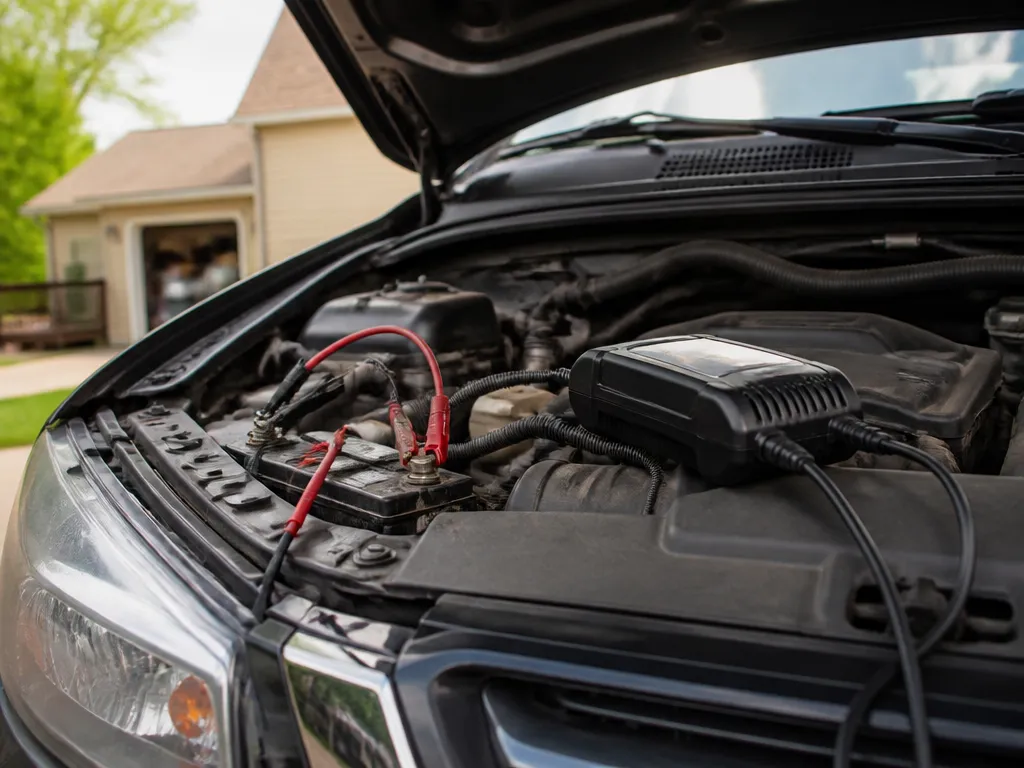
Battery storage time depends heavily on keeping the battery at a safe, fairly high state of charge. A correctly matched maintainer can hold that charge with minimal wear, while repeated deep discharge accelerates sulfation and shortens service life.
Choose The Right Charger Type (Flooded, Agm, Gel)
Use a maintainer or charger that matches the battery chemistry and charging profile. Flooded lead-acid, AGM (absorbed glass mat), and gel batteries use different charge voltages and absorb behavior, and a wrong profile can overheat or permanently reduce capacity.
For buying checks, read the label on the charger for battery type support (flooded, AGM, gel) and look for an automatic multi-stage profile (bulk, absorption, float) or a maintainer mode that limits current after reaching charge.
Set Charging Current And Target A Low-rate Storage Charge
For long-term storage, aim for gentle current, typically in the range of 0.1C to 0.2C, where “C” is the battery’s rated capacity in amp-hours. Many maintainers provide a small fixed output (often enough for most parked cars), while some chargers let you pick a current level. If you have the option, keep it toward the low end for storage.
Use this rule of thumb to size the setting: if your battery is rated 80 Ah, 0.1C is 8 A and 0.2C is 16 A. A maintainer that automatically tapers toward zero amps is safer for storage than a device that keeps pushing at high current for hours.
Storage Temperature, Ventilation, And Where The Battery Sits
Cool, stable temperatures reduce self-discharge and slow chemical wear, while heat increases it quickly. If the battery is indoors, park it in a ventilated area away from ignition sources, especially for flooded batteries that may vent during charging.
Disconnecting The Battery: When It Helps
Disconnecting can reduce parasitic drain from vehicle electronics, but the need depends on your car and what accessories stay powered. After disconnecting, some vehicles lose learned settings or alarms may require reprogramming, so weigh that hassle against drain.
Disconnecting helps most when you cannot use a maintainer and the vehicle will sit long enough that tiny drains become meaningful.
Best-practice Sequence: Charge-up Then Maintainer Hookup
Do a full charge before storage, then move to the maintainer for the entire layup period. Starting the storage period fully charged is one of the strongest practical ways to prevent long-term sulfation from repeated low-voltage conditions.
Replacement trigger: if the battery will not hold charge after proper charging, repeatedly drops back to low voltage, or shows persistent charging instability, plan on replacement rather than continued storage-charging attempts.
Test State Of Charge Safely
Use an automotive voltmeter to check a 12V lead-acid battery only after it has been resting for several hours, so you read the battery itself instead of temporary “surface charge.” Resting voltage lets you estimate charge level, and a simple load test can separate a truly weak battery from one that is fine but recently charged.
Surface charge recognition. Surface charge makes voltage read “better than it is” right after charging or a short drive, then it settles lower after rest.
For example, a battery that reads around 12.6 V immediately after driving can drop closer to 12.4 V after several hours, which means you should judge it by the rested value.
Simple load test overview. A load test applies a controlled draw (often around half the battery’s cold-cranking performance for a short time) and checks how far the voltage sags and whether it rebounds. If the voltage collapses quickly or fails to recover after the brief load, the battery may be failing even if the open-circuit voltage looked “not too bad.”
“It’s not just low charge” criteria. If voltage is low, charging helps, but repeated behavior like quick sag under load, rapid voltage drop during rest, or a voltage that never returns near full after proper charging is a sign of capacity loss. Capacity loss is what leads to “it won’t start after sitting,” even when the battery is not fully dead.
Replace Triggers And Sulfation Signs
Car batteries typically last about 3 to 5 years, but “without driving” periods can expose a battery that is already losing capacity. Replacement becomes likely when the battery fails basic load tests or shows chronic low state of charge that leads to sulfation.
Quick replacement triggers are practical symptoms that keep getting worse, not one-off quirks after cold weather. Slow cranking that used to recover, then keeps getting slow, is the most common end-of-life behavior. Rapid voltage sag during starting (headlights dim hard and stay dim) also points to a battery that cannot deliver current.
Sulfation, Chronic Undercharge, And Why It Matters
Sulfation happens when lead-acid batteries sit at low charge for long periods. The evidence is often indirect, since you cannot see plate chemistry during normal ownership, so you look for patterns that match chronic undercharging.
For example, a car that starts fine after driving but struggles after a week or two of sitting, especially in cool weather, is a common pattern. Another pattern is a battery that “measures okay” at rest but fails under load, because the internal resistance has risen.
Measure what you can before condemning the battery. A simple “resting voltage” check helps, but the decisive test is whether it can hold voltage while you draw current.
| Observed symptom | More likely cause | Next step |
|---|---|---|
| Slow crank, strong voltage dip during start | Battery internal resistance increasing | Load test battery, then replace if it fails |
| Battery “recovers” after a long charge, then fails again after sitting | Sulfation from chronic undercharge or weak cells | Check charging system output, then re-test after charge |
| Battery holds voltage on rest but fails under load | Weak capacity or sulfated plates | Load test, avoid guessing based on rest voltage |
| Starts fine except after repeated short trips | Not enough charging time, aging battery, or parasitic draw | Confirm charge behavior and consider parasitic draw check |
Maintenance vs end-of-life: clean terminals, confirm grounds, and verify your alternator and regulator output can fix some “looks dead” issues. When a battery repeatedly passes at rest but fails under starting load, replacement is usually the correct end-of-life outcome.
Do not ignore unsafe indicators such as a swollen battery case, cracked vents, heavy corrosion at the terminals, or any smell of overheating. A damaged or overheated battery can fail suddenly, so stop charging and get it inspected.
Safety And Heat Handling
Heat and hydrogen gas are the two big killers during long sit times, especially if you charge or store a battery in a closed garage, shed, or trunk area. A battery can survive weeks to months without driving, but poor ventilation, wrong charging order, loose terminals, or a failing cell can turn that into overheating or a hazardous leak.
Use the same safety mindset whether you start the car occasionally, keep a maintainer attached, or jump-start after storage. Treat any smell of rotten eggs, visible corrosion growth, wet spots around the case, or a bulging battery as stop-and-check signals.
Charging And Disconnect Safety
Disconnect and connect in a consistent order to reduce short-circuit risk. A tool slip across the battery posts or terminal hardware can arc and ignite battery gas, so keep metal jewelry and loose tools away from the top of the battery.
Overheating And Stop Rules
Overheating is a symptom of bad connections, incorrect charging, or an internal fault. A charger that runs hot, clamps that discolor, or battery tops that feel unusually warm are clear stop signs.
After you stop, let the battery cool and ventilate the area before handling. Clean corrosion only with the engine off, ignition sources away, and proper eye and hand protection, since corrosion can include conductive residues and battery acid.
Swelling, Leaks, Corrosion, And Disposal
Swollen cases, wet leakage, or crusty, expanding corrosion patterns mean the battery should be treated as compromised. A leaking lead-acid battery can damage paint and wiring, and it can create ongoing chemical and electrical hazards.
Practical takeaway: if the battery is hot, swollen, leaking, or heavily gassing during charging, the safest “how to proceed” is to stop charging and switch to inspection, replacement planning, and compliant recycling.
Quick Summary
Car battery life without driving is usually measured in weeks to months, and it can fail in under a month even if it is “fine.” The article stresses that the biggest drivers are battery type and resting state-of-charge, plus how much voltage drops from parasitic drain, not CCA. It explains the split between battery self-discharge and vehicle draw from systems like keyless entry receivers, alarm modules, engine control memory, and telematics. It also gives a rule of thumb, days ≈ Capacity (Ah) / (Drain (A) × 24).
In practice, a typical car battery often stays usable about 2 to 8 weeks without driving when parasitic loads are normal and the battery is healthy, and some cars reach 2 to 6 months when the battery is well charged and the parked draw is very low. Cold weather compresses timelines, with the article contrasting warm 2 to 6 months versus cold 2 to 8 weeks, and it notes frequent wake-ups like door openings and key fob use can drain faster. The best next action is to measure resting voltage with a voltmeter, compare it to 12V lead-acid open-circuit benchmarks, then do a quick load test and match any maintainer to your battery type.
Frequently Asked Questions
How Long Should A Car Battery Last Without Driving In Winter Or Hot Weather?
Typical lead-acid car batteries lose charge gradually when parked, and temperature matters a lot, with colder weather slowing chemical reactions but increasing starting load, and heat accelerating aging. Treat it as a matter of days to a few weeks for reliability if there are any parasitic drains, and check the battery voltage periodically instead of guessing.
How Can I Estimate Battery Runtime Without Driving If I Only Know The Battery Size (Cca Or Ah)?
Start by looking at parasitic draw, not just battery capacity, because most “no driving” drain comes from clocks, keyless entry, alarms, and control modules. A rough approach is to use your car’s key-off current (in amps) and compare it to the battery’s reserve, but you should confirm by measuring voltage drop over 24 to 72 hours.
Is It Safe To Leave A Car Battery Connected To A Charger While The Car Is Parked For Weeks?
Yes, but use the right charger mode, ideally a smart maintainer or trickle charger with automatic shutoff and a temperature-aware profile for lead-acid. Avoid cheap unmanaged “constant” chargers, because overcharging can overheat the battery and increase the risk of venting.
What Charger Should I Buy For A Car Battery That Might Sit For Months, And How Do I Ensure Compatibility?
Match the charger to your battery type and voltage, most cars use a 12 V lead-acid battery, and you should verify the battery chemistry on the label if it is not standard (for example, AGM or gel). If the charger is for lead-acid, choose a smart/maintainer unit that supports maintaining, not just bulk charging, and confirm the output voltage before connecting.
What Is The Most Common Mistake People Make When A Car Battery Keeps Dying Without Driving?
The most common mistake is assuming the battery is bad when the real cause is parasitic drain or poor maintenance, like leaving interior lights on or ignoring corrosion on terminals. If the battery repeatedly dies, test for key-off current draw and inspect/clean terminals before replacing the battery.

- 10 Best Battery For Generator Battery Safety System 2026 - October 12, 2026
- 10 Best Battery For Generator Battery Safety Option 2026 - October 12, 2026
- 10 Best Battery For Generator Battery Safety 2026 - October 12, 2026