Difference Between A Marine Battery And A Car Battery
Most boats and cars use 12V lead-acid batteries, but those batteries are built for different jobs. The spec that matters most is whether the battery is a starter (high CCA) or a deep-cycle (usable Ah), and a common mistake is swapping them. First check the battery label for 12V, Ah, and CCA or the words “deep-cycle” before buying or installing.
Difference between a marine battery and a car battery is that a marine battery is built for repeated deep discharge and sometimes dual-purpose starting, while a car battery is built for short, high-current starts. Both are typically 12V, and marine types tolerate repeated 50% discharges better than starter batteries.
Definition of Marine Batteries
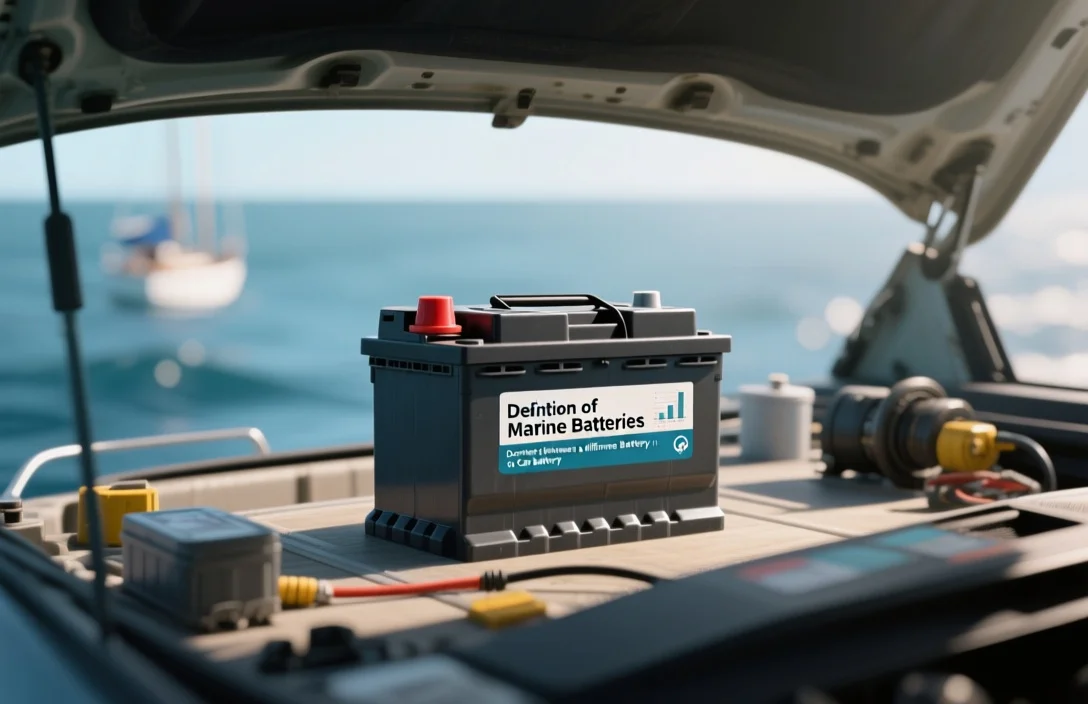
Marine batteries are designed to supply both short, high-current bursts for engine starting and longer, repeated lower-current discharges for accessories and propulsion, and they are built to tolerate boat vibration, moisture, and cyclical use better than a typical vehicle starting battery. Many marine batteries are labeled deep-cycle, starting, or dual-purpose to reflect which role they are optimized for.
Construction differences drive the performance gap. Marine deep-cycle cells have thicker plates and stronger separators to resist damage from repeated partial discharges and recharge cycles, while dual-purpose marine batteries balance plate thickness so they can both crank an engine and run accessories. Cases are usually reinforced and often sealed (AGM, gel) or flooded with heavier venting to handle wet environments and tilting on a boat.
Common applications include powering trolling motors, running fishfinders, cabin lights, bilge pumps, and serving as house bank storage for inverters and chargers. Marine batteries also handle repeated partial discharges from accessories while providing reliable starting when engines need a heavy, short burst of current.
For example, many small fishing boats use one battery dedicated to starting the outboard and a separate deep-cycle battery for the trolling motor and electronics, because the two loads have different duty patterns and depth-of-discharge needs.
| Attribute | Marine Battery | Typical Vehicle Starting Battery |
|---|---|---|
| Primary use | Longer accessory run-time and/or mixed starting and deep discharge | Short high-current starts only |
| Plate design | Thicker plates for deep-cycle; some dual-purpose middle ground | Thinner plates optimized for cranking amps |
| Durability | Built for vibration, tilt, moisture, repeated cycles | Built for occasional short bursts, less tolerant of deep discharge |
| Common chemistries | Flooded, AGM, gel, lithium options | Flooded and AGM common |
Safety note: Never mix battery types, states of charge, or different chemistries in parallel; check venting and secure mounting for marine use, and verify the label for Ah, reserve capacity, or CCA before replacing batteries.
Definition of Car Batteries
Car batteries are designed primarily to start internal combustion engines and provide power to the vehicle’s electrical systems. They typically use lead-acid chemistry and operate at 12 volts, delivering high current for short durations to crank the engine.
Construction features of a car battery include:
Common applications of car batteries extend beyond just starting the engine. They power:
For instance, a standard car battery is typically rated between 40 to 100 amp-hours, enabling it to sustain electrical loads when the engine is not running. In contrast, a marine battery is engineered for different demands and environments.
Understanding these specifications is vital for selecting the appropriate battery for your vehicle. While car batteries are optimized for starting engines, marine batteries serve dual purposes of starting and deep cycling, making them suitable for boats and RVs. When choosing between the two, consider the intended use, as using a marine battery in a car may not provide the necessary starting power, and vice versa.
Key Differences in Design
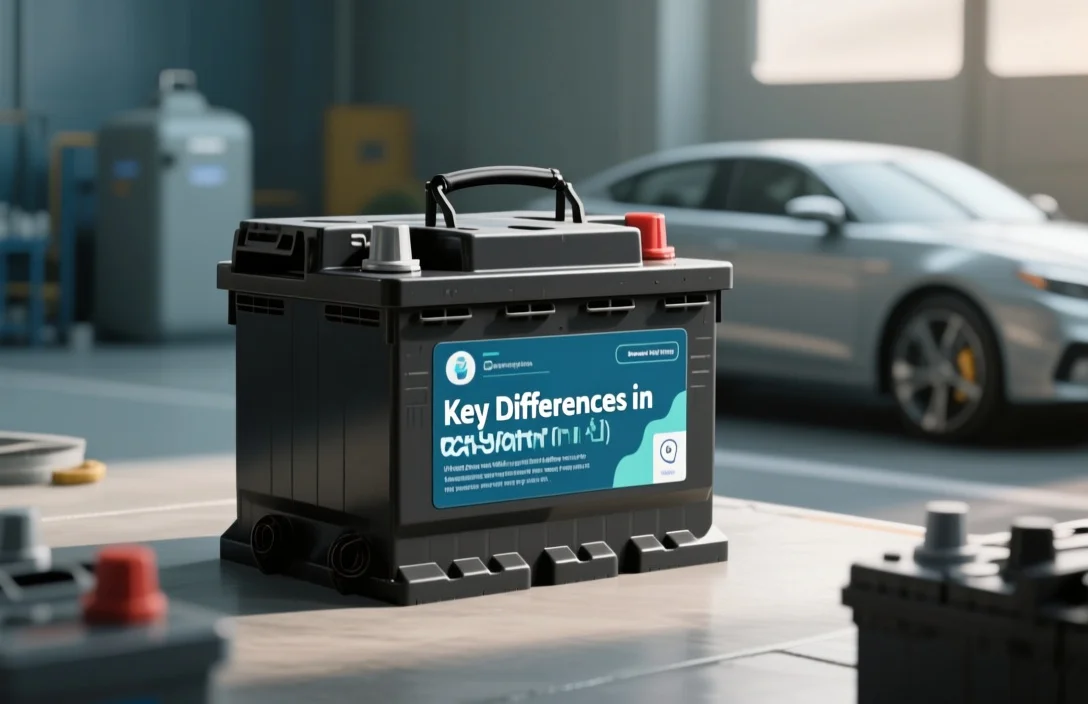
Marine batteries are built with thicker cases, heavier mounting features, and terminals that resist corrosion and looseness from vibration, because boats expose batteries to salt, spray, and continuous motion. Car batteries are focused on delivering very high cranking current in short bursts and therefore use lighter cases and terminal types suited to engine bays and standard automotive clamps.
Terminal types are one of the clearest physical differences. Car batteries most commonly use top-post terminals or, on some models, recessed side-posts that work with standard automotive clamps. Marine batteries often add stud terminals or dual terminal options, so you can hook up a starter feed and accessories, or make a more secure stainless steel connection that resists corrosion.
| Terminal | Where you see it | Design trade-off |
|---|---|---|
| Top-post | Most cars, many light vehicles | Easy to clamp for starters, lower cost, can loosen under vibration |
| Side-post | Some cars, tight engine bays | Low profile, fewer aftermarket clamp options, harder to add accessories |
| Stud / Bolt | Boats, marine cranking, accessory banks | Secure bolted connections, better for heavy cables and salt exposure |
Durability features go beyond terminals and include case material, internal bracing, and sealing. Marine battery cases are often thicker polypropylene with reinforced tops and strong carry handles, and manufacturers add internal supports to keep plates from shifting under constant rolling and pounding. Many marine options are available in sealed AGM or gel formats to avoid venting inside a bilge, though flooded marine batteries still exist for serviceable installations.
Car batteries have cases sized for vehicle hold-downs and shorter mechanical life expectations, so they are lighter and cheaper per ampere-hour than marine-focused designs. That trade-off matters if you need resistance to corrosion, repeated shallow discharges, or mounting in a wet environment; a car battery can work temporarily in a boat only if the physical clamps, hold-downs, ventilation, and charging profile match the battery label and the manufacturer recommendations.
Safety: Do not install a vented (flooded) battery in an enclosed space without proper ventilation, and do not mix terminal types or mountings that prevent a secure, corrosion-free connection.
Capacity and Discharge Rates
Marine batteries typically have a higher capacity measured in amp-hours (Ah) compared to car batteries, allowing them to store more energy for prolonged use. Car batteries, designed primarily for short bursts of power to start engines, focus on delivering higher cold cranking amps (CCA) for reliable ignition in cold conditions.
Marine batteries are often rated between 70 to 250 Ah, depending on their type and intended use, while car batteries generally have CCA ratings ranging from 400 to 800 amps. This difference reflects their distinct purposes: marine batteries need to provide power for longer periods, often to run electronics and appliances when the engine is off, whereas car batteries primarily need to deliver high currents for brief intervals.
| Battery Type | Amp-Hours (Ah) | Cold Cranking Amps (CCA) |
|---|---|---|
| Marine Battery | 70 – 250 Ah | 100 – 300 CCA |
| Car Battery | 40 – 70 Ah | 400 – 800 CCA |
For example, a deep-cycle marine battery designed for prolonged discharge can sustain lower currents over extended periods, making it suitable for powering lights, pumps, and other accessories on a boat. In contrast, a car battery, with its high CCA, is engineered to provide the necessary surge of power to start an engine but is not ideal for deep discharges.
Both battery types have unique discharge characteristics influenced by their construction. Marine batteries can handle repeated deep cycles without significant damage, while car batteries can degrade quickly if drained deeply and left in such a state. Therefore, understanding these differences is crucial for selecting the right battery for your specific needs.
When to Use Each Battery?
Marine batteries are made for repeated partial discharges, sustained accessory loads, and resistance to vibration and moisture, while car batteries are made to deliver a very high current for a short time to start an engine. Use a marine or deep-cycle battery when you need steady power for electronics, trolling motors, or house loads; use a car battery when the primary need is reliable starting power and the electrical load is low once the engine runs.
Choose based on the electrical duty the battery will face, the charging system available, and the physical and environmental constraints of the installation. If you need both functions, consider a proper dual-purpose marine starting battery or run separate batteries, one for cranking and one for house loads.
For example, a bass-boat operator who runs a trolling motor, fishfinder, and livewell all day needs a deep-cycle marine battery or bank that tolerates many shallow cycles. In contrast, a daily commuter only needs a starting battery that can deliver high cold-cranking current and then be kept topped by the alternator.
Safety and Maintenance Tips
Marine batteries are made to handle repeated partial and deep discharges and continuous accessory loads, while car batteries are made to supply very high short bursts of current to start an engine. Because of that, storage, charger selection, and maintenance routines are different: marine batteries tolerate slower, multi-stage charging and may need periodic equalization or topping, while car batteries need to be kept near full charge and avoided deep discharges to prevent sulfation.
Check the battery label and spec sheet before storing or charging: verify chemistry (flooded, AGM, gel), amp-hour rating, cold-cranking amps, and recommended charger profile. If those specs are missing from a vendor listing, do not assume compatibility between marine and automotive chargers or systems.
Storage Best Practices
Store batteries in a cool, dry, and well-ventilated location away from direct sunlight and heat sources. Higher temperatures speed up self-discharge and grid corrosion, which shortens life for both marine and car batteries.
For long-term storage, keep batteries at 50 to 80 percent state of charge and use a maintenance charger with a proper chemistry profile. Disconnect batteries from the vehicle or boat to prevent parasitic drains, and check voltage monthly with a meter.
Common Issues and Solutions
Swelling, overheating, slow cranking, and high self-discharge are common failure signs to address quickly. If a battery smells of sulfur or shows swollen case walls, stop using it and replace it; these are signs of severe internal damage or overcharge.
When troubleshooting, start with a visual inspection and simple voltage and load tests before assuming chemistry or manufacturing defect. Mixing different chemistries or old batteries in parallel is a frequent mistake that speeds failure, so match capacity, age, and type when adding or replacing cells.
Real-World Usage Examples
Marine batteries are built to supply sustained, repeated low-to-moderate current for accessories and trolling motors, while car batteries are built to deliver a short, high-current burst to crank an engine. Using the right type for the job avoids early failure: choose deep-cycle or dual-purpose marine batteries for house loads, and car starter batteries for daily vehicle starts.
For boating situations, match the battery type to the load profile. For a small day boat that only needs an engine start and navigation lights, a car-style starter battery or a dual-purpose marine battery can work, though a dual-purpose battery will tolerate occasional discharge better than a straight starter battery.
For a fishing boat with a trolling motor, livewell pump, fish finder, and cabin lights, use a deep-cycle marine battery or a bank of deep-cycle batteries.
For example, a single deep-cycle battery will keep a trolling motor and electronics running longer than a starter battery, and a bank gives redundancy so the engine start battery is kept separate.
In vehicle usage, the car battery must deliver high cold-cranking amps, then be rapidly recharged by the alternator on short trips. Swapping a marine deep-cycle battery into a car will generally run the starter, but it may have lower CCA than a dedicated starter battery and could struggle in extreme cold or leave poor starting margins.
| Attribute | Marine (deep-cycle / dual) | Car (starter) |
|---|---|---|
| Primary design | Sustained discharge, cycling | High short burst, cranking |
| Plate thickness | Thicker for cycling | Thinner for quick current |
| Best use | Trolling motors, house loads, repeated discharge | Engine starting, short high-current bursts |
| Trade-off | Lower peak CCA for longer life under discharge | High CCA, lower cycle tolerance |
If you need one battery for both duties, accept compromises: dual-purpose marine batteries give better cycling than a car battery and better starting than a pure deep-cycle unit, but two dedicated batteries is a safer long-term choice for mixed loads.
Warning: verify venting, mount type, and charger profile before substituting batteries, and watch for swollen or overheated units, damaged cables, and mismatched specs, which increase risk. When unsure, read the battery label and your vehicle or boat manual to confirm recommended types and charging requirements.
Quick Summary
Marine batteries are built for both starting and sustained deep-cycle discharge, whereas car batteries prioritize short high-current starting only.
Frequently Asked Questions
What is the main difference between a marine battery and a car battery?
The main difference is that a marine battery is designed for deep cycling, providing steady power over a longer period, while a car battery is intended for short bursts of energy to start the engine. Marine batteries typically have a higher amp-hour rating, often around 100-200 Ah, compared to car batteries.
Can I use a marine battery in my car?
While you can use a marine battery in a car, it may not be the most efficient choice. Marine batteries are designed for different applications, so if you need a battery primarily for starting, a car battery is often more suitable.
What safety considerations should I be aware of when using a marine battery?
Safety is crucial, as marine batteries can produce gas during charging, which can be hazardous in enclosed spaces. Always ensure adequate ventilation and use appropriate personal protective equipment when handling or charging these batteries.
How often should I replace my marine battery?
A marine battery typically lasts between 3 to 5 years depending on usage and maintenance. Regularly checking the battery’s charge and maintaining clean terminals can help extend its lifespan.
What common mistakes should I avoid when purchasing a marine battery?
A common mistake is not matching the battery’s specifications to your needs, such as amp-hour rating and type. Always verify that the battery’s characteristics, like deep cycle capability, are suitable for your intended use to avoid performance issues.

- Top 10 Battery For Seiko Solar 2026 - September 13, 2026
- Top 10 Solar Battery For Storage 2026 - September 13, 2026
- Top 10 Solar Battery For Street Light 2026 - September 13, 2026