How Long Do Batteries Last In A Smoke Detector?
Smoke detector batteries usually last longer than people expect, yet the low-battery chirp can be confusing, and a wrong battery type can shorten life fast. The spec that matters most is the smoke alarm’s power model: disposable alkaline, rechargeable where explicitly supported, or a sealed 10-year lithium pack. This article explains typical battery life ranges, what the chirp timing really means, and how to replace safely and correctly.
Smoke detector batteries last about 1 year in many disposable alkaline alarms, while sealed 10-year lithium units are meant to be replaced when their life ends. Battery-backed alarms with AA or other cells usually vary by brand and conditions, so check the alarm label and warning behavior. A chirp can indicate either a low battery or an end-of-life warning, depending on the model.
How Long Do Batteries Last In A Smoke Detector?
Recommended Products

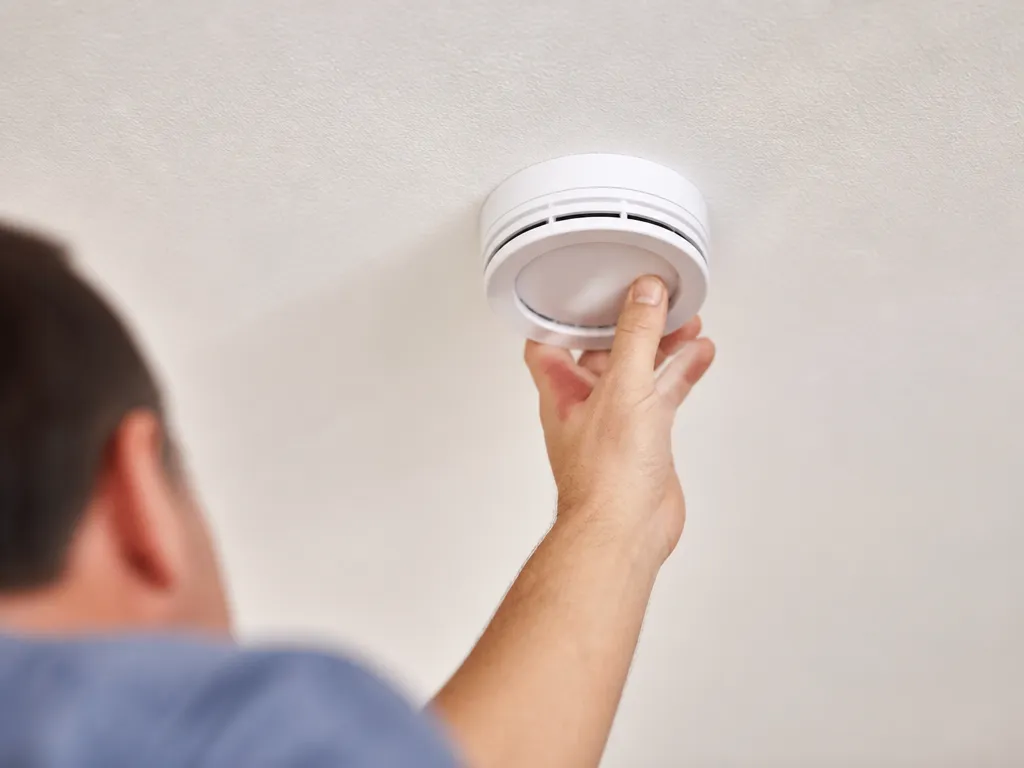
Smoke detectors use two main power strategies: battery-backed disposables that you replace on a schedule, and sealed long-life lithium units that are designed to run a decade or more. Real “lifespan” depends on battery chemistry, detector electronics load, and how often the alarm is tested or briefly silenced.
In practice, a low-battery warning usually shows up as a chirp or control-panel warning, while a sealed unit may use a separate end-of-life signal. A low-battery chirp means the battery voltage has dropped enough to risk unreliable sensing, and the correct response is replacement, not waiting for silence or removing the battery.
What “Lifespan” Means In Real Usage
Battery life is usually measured under expected operating conditions, then translated into a practical replacement interval. Even with the same battery type, life can swing based on temperature swings (especially cold winters), how long the detector spends in alarm test mode, and local humidity and dust exposure that force electronics to do more processing.
Intermittent testing affects life only a little compared with day-to-day standby drain, but it still creates extra battery usage. The bigger driver is age, because batteries degrade gradually as internal chemistry changes and the detector draws current through a voltage regulator circuit.
Battery Types You Commonly See In Smoke Detectors
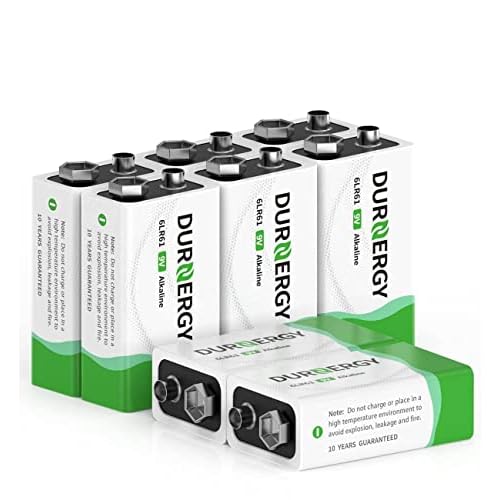
Most modern battery-powered smoke detectors use either a replaceable 9V alkaline battery for older styles, or AA cells (often alkaline or lithium) for newer models. Many detectors also use built-in sealed lithium power sources (often marketed as “10-year” units), where the detector is meant to be replaced as a whole when the battery reaches end of life.
Battery chemistry is the main reason runtimes differ. Alkaline disposable cells tend to have shorter, more variable service life, while lithium primary cells usually hold voltage better over time and across temperature extremes, which is why they are common in long-life products and some replaceable-detector designs.
Common Battery Options And Runtimes
Recommended Products


Smoke detectors typically use either disposable alkaline batteries (often replaced about once per year in many homes) or sealed long-life lithium battery packs (commonly designed for roughly a decade, depending on the model). Real-world life varies with battery brand, temperature, alarm activity, and how often you test.
| Smoke detector power option | Typical “replace window” | What you will notice when it is aging | Best check on the label |
|---|---|---|---|
| Disposable alkaline AA or 9V (model dependent) | Often around 1 year (varies) | Low-battery chirp, usually recurring | Battery type, number of cells, and battery installation instructions |
| Sealed 10-year lithium pack (model dependent) | Often around 10 years (varies) | Low-battery chirp or end-of-life warning specific to that model | “10-year” marking and replacement guidance in the manual |
| Hardwired with backup battery | Main power is continuous, backup battery is the variable | Low-battery chirp can still occur during outage or battery aging | Backup battery type and expected replacement schedule |
Battery labels and manuals are the fastest way to avoid guessing. The most useful words are the stated battery chemistry (for example, alkaline versus lithium), the stated service life (such as “10-year”), and the exact battery model or pack model number.
For example, a detector that is “tested” weekly will often see a shorter runtime than one tested quarterly, because the test draws power and may briefly exercise the internal alarm electronics. For recurring chirps, many models begin with a periodic chirp pattern and escalate if the battery is not replaced.
Reading Manufacturer Labels, Warranties, And The “End Of Life” Behavior
Manufacturer warranties and the stamped “years” rating are not the same thing as guaranteed battery life. The “10-year” class usually assumes specific operating conditions and normal use, and it still allows for early end-of-life when conditions are harsher than average.
Practical rule: treat any low-battery chirp as the detector’s estimate of failure risk, even if you still have months left before the printed date.
For your exact model, verify the chirp pattern description and replacement instructions in the manual. Some detectors indicate low battery with a repeating short chirp, others use different intervals, and some hardwired units report backup issues while still having line power.
For instance, if your detector is hardwired and you experience frequent power blips, the backup battery gets cycled more often, shortening the time to chirp. For verification, compare the date you last replaced the battery or the date code printed on the pack, then watch for the low-battery warning timing after that date.
Low-battery Chirps Explained
Recommended Products


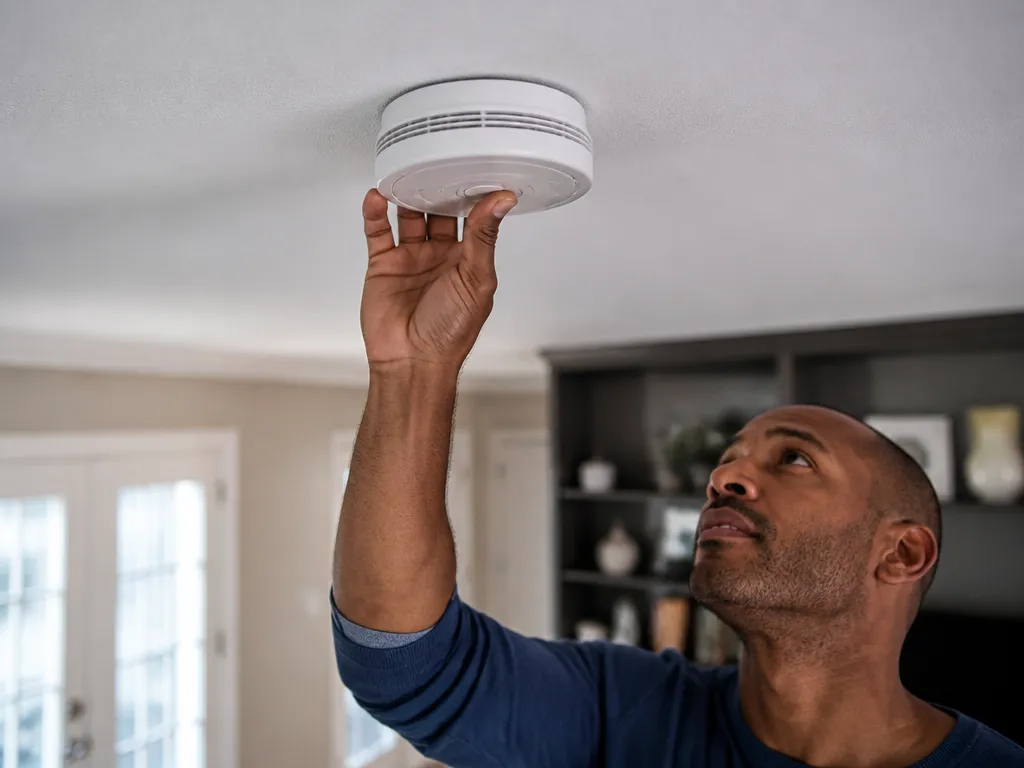
A low-battery chirp is the detector’s way of warning that the battery voltage or capacity has dropped below its “needs replacement” threshold. Most detectors keep chirping intermittently for some time, but the exact duration depends on the detector’s battery type and how fast the battery is sagging under load.
Low-battery chirp patterns vary by brand and model, but many units use a short beep or chirp that repeats on a schedule (often every 30 to 60 seconds). Some detectors use a different cadence for “end-of-life” (for example, faster chirps, a long chirp, or more frequent warnings) or combine chirps with a visual LED indicator.
| Chirp behavior you hear | What it usually indicates | What to do |
|---|---|---|
| Single chirp that repeats periodically | Battery voltage is low | Replace batteries soon (and follow the exact battery type on the label) |
| Chirps get more frequent or louder | Battery is degrading further | Replace immediately, do not wait for another test |
| Silence after a chirp started | Battery may have recovered briefly or the alarm reached a different state | Perform the unit’s test button check and verify with its indicators |
If a chirp continues for days, the detector may still detect and alarm, but battery capacity headroom keeps shrinking, so the chance of failure rises. Replace the battery as soon as possible, especially in high-humidity or high-temperature locations where batteries age faster.
What silence means after a chirp depends on what changed. If the detector is now quiet after you replaced batteries, silence is expected, but you should still run the test. If silence happens without any maintenance, the battery may have temporarily stabilized under lighter load, so you should still monitor closely and plan to replace rather than assume the problem is gone.
End-of-life Indicators By Model
Recommended Products


Most smoke detectors end their service life in two ways: they start signaling low or failing power, or they reach a built-in “end-of-life” date where the detector itself stops meeting its design reliability. Sealed 10-year lithium units usually require replacement of the entire detector, while hard-wired models with a backup battery warn you when that backup is getting weak.
End-of-life signals can look similar to low-battery warnings, so the detector type determines what you should do next. This is where many people either replace the battery when they should replace the detector (or ignore a backup-battery warning because “the chirp sounds like a low-battery chirp”).
| Smoke detector model type | Main end-of-life signal | What to do |
|---|---|---|
| Sealed 10-year lithium | End-of-life/service warning pattern (often tied to rated life) | Replace the whole detector |
| Hard-wired with backup | Low backup power chirp while AC is present | Replace the backup battery, then reassess warnings |
Safety rule: When a smoke alarm is signaling end-of-life or repeated warnings, treat it as urgent. Replace or service it right away so you do not rely on a detector that may fail during an outage or at the end of its intended service life.
Factors That Shorten Life
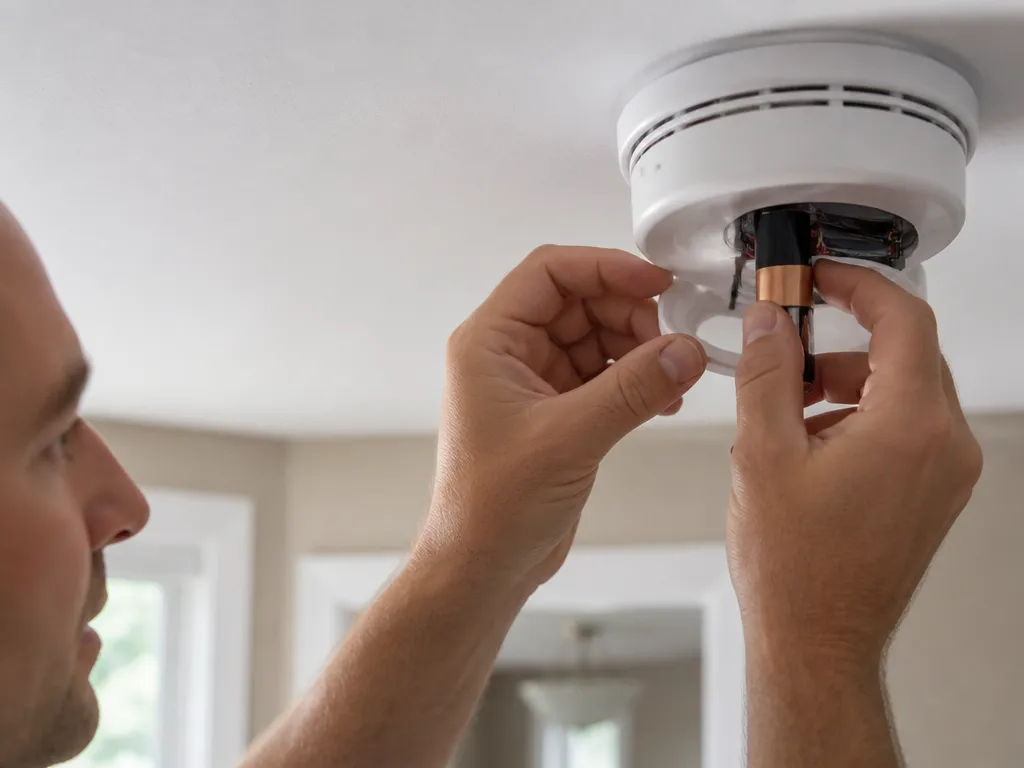
Battery life in a smoke alarm shrinks fastest when temperature swings, moisture, contamination, and aging electronics increase self-discharge or reduce the sensor and transmitter’s efficiency. House conditions also change the current draw during standby and alarm tests, so two alarms of the same battery type can age very differently.
Environment, Dust, And Kitchen Air
Ambient temperature and humidity are major drivers because many smoke alarms use batteries to power a sensor that stays active even when you are not testing it. Heat speeds chemical aging, while high humidity can promote corrosion and leakage paths that drain energy. Cooking fumes and steam bring grease and particulates that clog air paths and can force the alarm to work harder to interpret smoke particle behavior.
Dust can also interfere with vents and timing electronics. In practice, a dusty alarm can still chirp on schedule, but it may lose reliability earlier because the sensor assembly is stressed. For high-cooking areas, placement matters as much as maintenance.
Detector Age, Sensor Type, And Power Draw Behavior
Older alarms often use electronics that draw slightly more current as components drift, which shortens battery life even if the battery is “good.” Sensor technology matters too: photoelectric and ionization alarms can have different baseline behavior, and alarms that include extra features (interconnect radios, more frequent diagnostics, or end-of-life beeping) can use more standby current. The result is that two alarms with the same battery type can reach low-battery chirps at different times.
Detector age also increases the chance of an early failure of the power path (corroded contacts, cracked battery springs, degraded seals). A weak battery can still “chirp,” but the alarm may become less responsive during real smoke events if the electronics are already near their operational limits.
| Condition that changes draw or aging | What tends to happen |
|---|---|
| Interconnect or radio features | Higher standby drain, earlier chirps in some installations |
| Ionization vs photoelectric sensor implementation | Different baseline current and aging behavior |
| Contact corrosion or loose battery fit | Voltage sag under load, earlier end-of-life behavior |
Maintenance, Test Habits, And Battery Installation Quality
Maintenance that keeps vents clear and prevents residue buildup helps the alarm run within its normal operating margins. Maintenance that is too aggressive can also shorten life if it physically stresses the sensor chamber or dislodges internal parts. Testing frequency matters mainly because every test momentarily adds load; frequent nuisance tests can accelerate depletion in marginal batteries.
Battery replacement quality has an outsized impact. Correct battery type and polarity prevent under-voltage and overheating at the contacts, and fresh batteries should be installed with clean, dry contacts to avoid creeping corrosion.
Safety warning: If a battery compartment shows swelling, leaking, strong odor, or scorching, stop using the alarm and replace it. A damaged alarm can fail to alarm even if the rest of the house appears protected.
Replacement Timing And Steps
Recommended Products

Many disposable battery models are expected to be replaced about yearly, while sealed lithium “10-year” detectors are replaced when the detector indicates end of life. Replace a battery when you hear a low-battery chirp because the battery is already near its usable limit.
For example, if you hear the low-battery chirp every 30 to 60 seconds, that usually means the battery is already near end-of-life. If the chirp stops immediately after replacement, you likely timed it correctly. If the chirp persists, treat it as a compatibility or installation problem first, then move to detector replacement.
| Detector battery design | What to follow for replacement timing |
|---|---|
| Replaceable alkaline AA/9V (or similar) | Replace on an annual schedule, or sooner when low-battery chirps appear. |
| Replaceable lithium AA/9V (if specified) | Replace based on the detector’s guidance, but still treat chirps as “replace immediately.” |
| Sealed lithium “10-year” detector | Replace the entire unit when it reaches its end-of-life indication. |
Quick-check: If you have a chirp pattern, visible battery corrosion, a loose battery compartment, or a detector that tests weakly, assume replacement is imminent. If the battery case looks swollen, hot, or damaged, stop using the detector and do not attempt further installs with that battery.
Design Differences: Battery Vs Hardwired
Smoke alarms can use three common power designs, and each changes expected service life. Battery-only units usually use replaceable primary cells and often expect a shorter life between battery swaps than sealed long-life models. Hardwired-with-backup models depend on a smaller backup battery that lasts until it is replaced, while the rest of the electronics runs from AC.
Battery-only Models
Battery-only smoke alarms rely entirely on a replaceable battery pack, usually disposable AA or 9 V style cells depending on the brand and model. The battery type and load profile are what drive lifespan, so the same model will chirp earlier if the battery chemistry is different or the cells are old before install. “End of life” shows up as a low-battery chirp that repeats at a regular cadence until the battery is replaced.
Battery-only units also tend to show earlier chirping when the alarm has frequent nuisance activity from cooking aerosols, steam, or dusty environments. Intermittent test buttons help confirm the alarm works, but repeated tests can drain marginal cells faster (especially in units that draw more current during self-check).
Hardwired With Backup (Ac + Back-up Battery)
Hardwired smoke alarms run on building AC power, and they use a secondary battery to keep protection during outages. The backup battery is sized for emergency runtime, so it is normal to replace it on a schedule even if the unit never chirps loudly. The most important practical detail is that the low-battery chirp usually refers to the backup battery, not the AC wiring.
Hardwired-with-backup models can look “stable” for years, then begin chirping when the backup battery ages. Users often delay battery changes because AC power is still present, but the backup protection can become unreliable right when you need it most.
Sealed 10-year Units (Replace The Whole Detector)
Sealed 10-year smoke alarms contain a non-replaceable battery pack, so the “battery replacement” is actually the end-of-life replacement of the entire detector. The unit will typically announce end of life with a chirp pattern or indicator that is different from a normal battery warning (exact behavior varies by manufacturer). Treat the end-of-life signal as a replacement trigger, since the battery cannot be swapped without opening the sealed housing.
Sealed units also create a clear maintenance habit: periodic test button checks for function, visual inspection for contamination, and immediate replacement once the end-of-life signal appears. Using the wrong adapter, opening the case, or trying to “extend life” with third-party packs can compromise the sensor and alarm circuitry, which defeats the point of the design.
Practical planning logic looks like this:
| Smoke alarm power design | What you replace | What the warning usually indicates | How to maintain |
|---|---|---|---|
| Battery-only | Replaceable cells/battery pack | Low battery drawing voltage down | Test button, swap batteries promptly on chirp |
| Hardwired + backup | Backup battery (secondary cells) | Backup battery aging, AC still present | Test button, replace backup when warned |
| Sealed long-life | Whole detector | End-of-life battery state, non-serviceable | Test button, replace unit at end-of-life signal |
Safety note: A chirp is a “replace now” cue, not background noise. If a detector is chirping while you still have power at the outlet, assume the backup battery needs replacement for hardwired units, and verify the model’s exact warning pattern in its manual.
For accurate expectations, check the detector’s label for “battery type” (battery-only), “backup battery” instructions (hardwired), or “sealed” wording (10-year class).
In practice, the warning behavior tells you more than the calendar because real battery life depends on temperature, dust exposure, and how often the detector runs its internal self-checks.
Quick Summary
Smoke detector battery life is often longer than expected, but the low-battery chirp can be confusing, and the wrong battery type can shorten service fast. The key spec to check is the detector’s power model, since it can use disposable alkaline cells, rechargeable cells, or a sealed 10-year lithium pack. In many setups, disposable alkaline batteries last about 1 year. Sealed “10-year” lithium units are meant to be replaced when their life ends, often signaled by chirping or an “end of life” indication, and battery-backed alarms vary by brand and conditions.
Battery life can also swing with temperature swings, humidity, dust exposure, and how often you test or briefly silence the alarm, with kitchens, bathrooms, and attics draining faster than bedrooms. Use the test button as the manual directs, replace only with the exact approved chemistry, and confirm the battery type printed on the label.
Frequently Asked Questions
How Long Do The Batteries Last In A Smoke Detector After You Replace Them?
Many smoke detector makers target about 1 year of service life for typical “replace yearly” batteries, but the real runtime depends on detector model, battery brand, and how often the alarm is tested or triggers chirps. If your unit emits a low-battery chirp, plan to replace it rather than waiting for a calendar date.
Can I Use A Different Battery Brand Or Type In My Smoke Detector Without Reducing Runtime?
You should match the exact battery type and size listed on the label, such as 9V alkaline for many units or AA/other types for others. Using the wrong size, voltage, or chemistry can cause nuisance chirps, early low-battery warnings, or unreliable operation.
Do Smoke Detector Batteries Get Hot While The Detector Is Running?
Under normal operation, a smoke detector should not make its battery compartment feel hot; the detector draws very low power most of the time. If you notice warmth, swelling, odor, or leaking, stop using the battery and replace the detector power source.
Should I Charge Smoke Detector Batteries, Or Use A Charger For Them?
In most cases, smoke detector “batteries” are not meant to be charged with a charger, and trying to recharge non-rechargeable alkaline or lithium primaries is unsafe. Only use rechargeable batteries that the manufacturer explicitly allows, and follow the smoke detector’s guidance exactly.
When Should I Replace Smoke Detector Batteries To Avoid A Dead Battery During An Emergency?
Don’t wait for a total failure; replace the battery when the unit chirps low-battery or according to the schedule on the detector’s label (often around 1 year for many models). A common buying mistake is grabbing “any” battery pack, when the right match depends on the detector’s battery type, voltage, and whether it supports rechargeable cells.

- 10 Best Battery For Generator Battery Safety 2026 - October 12, 2026
- 10 Best Battery For Generator Battery Rv Upgrade 2026 - October 12, 2026
- 10 Best Battery For Generator Battery Retrofit System 2026 - October 12, 2026