Lithium-Ion Fire Suppression: Cooling, Containment and Equipment
A smoking laptop or swollen power bank triggers a panic unlike any ordinary house fire. Regular extinguishers often let you down when lithium-ion batteries catch fire. These cells pump out their own oxygen during thermal runaway, so smothering them rarely works.
The chemical reaction inside the battery sustains the flame even without outside air. Putting out a lithium ion battery fire demands agents that cool the cells and halt internal decomposition. Water alone can fling hazardous electrolytes across a room.
This piece explains the chemistry behind these blazes and reviews specific lithium ion battery fire extinguisher options to handle them safely.
Why Lithium Ion Battery Fires Resist Normal Extinguishers
Grasping thermal runaway explains why standard firefighting tactics flop. A lithium-ion battery fire operates under different chemical rules than wood or paper burns. Understanding this science reshapes how you prepare for an emergency at home or in a workshop.
Thermal runaway kicks in when a battery cell heats beyond its safe limit. The separator between anode and cathode melts. This sparks an internal short circuit that generates intense heat fast. The electrolyte liquid inside the cell boils and breaks down into flammable gases.
Those gases ignite and produce scorching temperatures in moments. Crucially, the breakdown process releases its own oxygen supply. Traditional extinguishers starve a fire of oxygen from the air around it. That strategy crumbles completely here because the battery brings its own oxidizer to the reaction.
The fire keeps burning until the chemical energy inside the cells burns out. Trying to smother a lithium ion battery fire with a blanket or standard foam often just traps dangerous heat. The trapped heat accelerates failure of adjacent cells in the battery pack.
This chain reaction turns a small device fire into a major structural hazard in seconds.
- Evacuate the room immediately if the battery emits thick white smoke before flames appear.
- Never move a burning device, as physical shock accelerates thermal runaway in damaged cells.
- Keep your distance to avoid exposure to toxic hydrogen fluoride gas released during electrolyte combustion.
- Do not use standard dry chemical extinguishers, which cannot cool the internal cell reactions effectively.
Cooling And Containment Strategies For Battery Emergencies
Since you can’t starve the fire of oxygen, cooling becomes the main goal. Stopping a lithium ion battery fire means dropping the cell temperature below the threshold where decomposition sustains itself. Specialized agents achieve this through targeted chemical intervention.
Aqueous Vermiculite Dispersion
Aqueous vermiculite dispersion uses microscopic mineral platelets suspended in water. When sprayed onto a burning battery, the water evaporates and pulls massive heat away. The remaining vermiculite platelets stack together to form a ceramic-like barrier. This barrier physically isolates the damaged cells from atmospheric oxygen.
It also prevents flammable electrolyte vapors from escaping the battery casing. The combination of rapid cooling and physical encapsulation stops thermal runaway propagation. Unlike standard water sprays, the vermiculite layer stays put on vertical surfaces.
This makes it highly effective for devices like e-bikes mounted on walls or laptops sitting on desks. The technology specifically addresses the unique failure mode of lithium-ion chemistry rather than treating it as a generic electrical fire.
Electrolyte Stabilization Chemistry
Some advanced agents target the hazardous chemical byproducts directly instead of just cooling the exterior. Decomposing battery electrolytes produce hydrogen fluoride, a highly toxic and corrosive gas. Specialized formulas contain compounds that react with hydrogen fluoride to form stable, non-hazardous salts.
This neutralizes the toxic threat while simultaneously limiting hydrogen gas generation. Less hydrogen means a significantly lower risk of secondary explosions during the event. These agents also create a protective armor over exposed elemental lithium surfaces. That armor prevents further oxidation reactions that would otherwise feed the fire intensity.
By addressing both the thermal and chemical aspects of the failure, these solutions offer comprehensive protection. They transform a volatile chemical emergency into a manageable containment situation much faster than water alone ever could.
Comparing Suppression Approaches
| Method | Mechanism | Limitation |
|---|---|---|
| Standard Water | Absorbs heat via evaporation | Spreads toxic electrolytes widely |
| CO2 Extinguisher | Displaces ambient air oxygen | Fails against internal oxygen generation |
| Vermiculite Dispersion | Cools and forms ceramic barrier | Requires specialized equipment to apply |
| Chemical Neutralizers | Stabilizes electrolytes and limits hydrogen | Higher cost per unit volume |
Tools To Stop A Lithium Ion Battery Fire Fast
Stopping thermal runaway requires agents designed specifically for battery chemistry. The following lithium ion battery fire extinguisher options provide the cooling power or chemical neutralization needed to end the reaction. Each serves a different scale of emergency, from a single smartphone to a larger workstation setup.
|
1
|
FCL-X 1 Liter Lithium-ion Battery Fire Extinguisher |

Its one-liter capacity delivers targeted chemical neutralization for smaller personal electronics experiencing early-stage thermal runaway events.
The FCL-X 1 Liter Lithium-ion Battery Fire Extinguisher targets the specific chemical failures inside burning cells. Instead of just cooling the exterior, the agent stabilizes decomposing electrolytes to prevent hydrogen fluoride formation. It also mitigates the lithium oxidation reaction that drives explosive intensity.
This one-liter size fits easily inside a desk drawer or workshop cabinet. The formula creates a protective armor over lithium-containing materials to halt further reactions. For someone asking how to put out a lithium ion battery fire, this provides a chemically precise answer.
This compact size works best for single-device emergencies like a smoking phone or a failing power bank. The limited volume means it empties quickly during sustained application. Users must aim carefully to ensure the agent coats the entire battery surface.
It excels in office environments where large extinguishers feel impractical or overly heavy. The specialized chemistry handles the toxic gas threat better than standard water-based sprays. Keep it near charging stations where devices spend hours connected to power sources unattended overnight.
|
2
|
StaySafe Lithium Fire Extinguishing Spray By LifeSafe Technologies | Patented Non-Toxic Fl |

The patented non-toxic spray safely suppresses electrical fires up to 1000V without leaving hazardous residue on ruined electronics.
The StaySafe Lithium Fire Extinguishing Spray by LifeSafe Technologies offers a consumer-friendly approach to battery fires. Its patented fluid suppresses flames caused by lithium-ion batteries in phones, laptops, and power banks. The aerosol format makes operation incredibly simple for users of all ages.
Just remove the cap, point at the base of the fire, and spray until empty. It handles electrical fires up to 1000V safely from a minimum distance of one meter. This answers the question of how to put out a lithium ion battery fire without requiring professional training.
Households with children or elderly residents benefit most from this intuitive spray-can design. The eco-friendly, non-toxic formula leaves no hazardous residue behind after discharge. Cleanup involves simply wiping the area rather than dealing with corrosive powder fallout. However, the total fluid volume limits its effectiveness against larger battery packs.
An e-bike battery or large drone pack might overwhelm a single canister quickly. Third-party testing facilities approve the formula, providing verified confidence for home safety kits. Store one in the kitchen and another near the home office charging hub.
|
3
|
FCL-X 2 Liter Li-Battery Fire Extinguisher |

Doubling the agent volume allows sustained chemical neutralization for medium-sized battery packs prone to prolonged thermal runaway cascades.
A solid pick that aligns with what the question is asking.
|
4
|
StaySafe Lithium Fire Extinguishing Spray By LifeSafe Technologies | Patented Non-Toxic Fl |

Rapid heat removal properties specifically target thermal runaway to prevent re-ignition after the initial battery fire appears suppressed.
This version of the StaySafe Lithium Fire Extinguishing Spray emphasizes rapid heat removal capabilities. LifeSafe Technologies formulated the patented fluid to address thermal runaway directly. Removing heat quickly prevents the battery cells from reaching ignition temperature again after spraying.
It remains safe for electrical fires up to 1000V from a one-meter distance. The simple cap-and-spray mechanism ensures fast deployment when seconds count heavily. Answering how to put out a lithium ion battery fire requires stopping re-ignition, which this formula prioritizes effectively.
Users dealing with devices prone to deep thermal runaway need this enhanced cooling focus. Laptops left running intensive tasks or power banks charged with incompatible adapters fit this profile. The non-toxic, eco-friendly nature means accidental discharge causes no environmental harm.
Like other aerosol sprays, the total agent volume limits continuous application time. Large-scale battery fires will exhaust the canister before full suppression occurs. The third-party approvals confirm its reliability for personal electronics protection. Keep this variant specifically near high-performance computing setups or fast-charging stations where heat buildup happens frequently.
|
5
|
FCL-X 3 Liter Extinguisher |
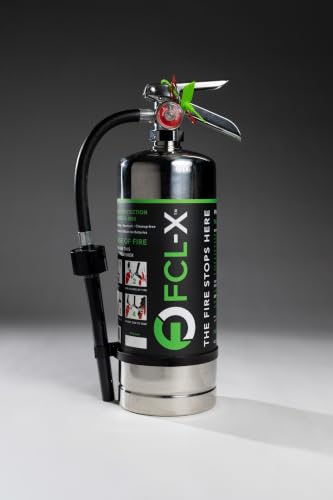
The three-liter capacity delivers maximum chemical stabilization for large battery arrays where smaller units run dry too quickly.
The FCL-X 3 Liter Extinguisher represents the largest capacity in this specialized chemical line. It delivers the same complex reaction-neutralizing agent designed specifically for lithium-ion emergencies. Three liters of fluid provides extended discharge time for severe thermal runaway events.
The formula continues to stabilize decomposing electrolytes and form non-hazardous salts upon contact. It builds a robust protective armor over lithium-containing materials to stop fire spread. Limiting hydrogen generation remains a core function of this larger delivery system.
When wondering how to put out a lithium ion battery fire in a large pack, volume dictates success.
Commercial settings, server rooms, or garages housing multiple e-vehicle batteries demand this three-liter capacity. Smaller units simply run dry before penetrating deep into a large battery enclosure. The added weight requires dedicated wall mounting for practical emergency access.
Untrained users might find the heavier cylinder difficult to aim precisely under stress. Despite the bulk, the chemical action remains identical to the smaller models. It transforms hazardous hydrogen fluoride into safe compounds across a wider area.
Facilities managers should pair this with clear evacuation protocols due to the scale of potential fires involved.
|
6
|
Lithium-Ion Fire Suppressant by Battery Ice | Patented Technology | Compact Fire Aerosol S |

Patented aqueous vermiculite dispersion technology physically encapsulates burning cells while passing rigorous electrical insulation safety tests.
The Lithium-Ion Fire Suppressant by Battery Ice uses patented AVD technology for fire control. Aqueous Vermiculite Dispersion works differently than chemical neutralizers by forming a physical barrier. The spray cools the battery rapidly while the vermiculite platelets isolate cells from oxygen.
It passed the 35 kV dielectric test of EN3, proving safe around live electricity. This compact aerosol format suits home, garage, and office environments perfectly. Addressing how to put out a lithium ion battery fire requires both cooling and isolation, which AVD delivers simultaneously.
Electricians or hobbyists working near live circuits benefit from the proven electrical insulation properties. The non-toxic, eco-friendly formula aligns with responsible disposal practices after an incident. It effectively suppresses Class A and flammable metal fires alongside lithium-ion emergencies. The single-unit packaging means users must purchase multiples for comprehensive room coverage.
Once discharged, the vermiculite crust remains in place to prevent delayed re-ignition events. The compact size fits inside glove compartments or desk drawers without consuming valuable space. Verify the expiration date periodically to ensure the propellant maintains adequate spray pressure over time.
|
7
|
StaySafe Lithium Fire Extinguishing Spray By LifeSafe Technologies | Patented Non-Toxic Fl |

A straightforward point-and-spray mechanism removes hesitation during panic, ensuring immediate response to smoking household electronics.
This third iteration of the StaySafe Lithium Fire Extinguishing Spray reinforces accessibility for all users. LifeSafe Technologies highlights the simple operation: remove the cap, point, and spray. The patented non-toxic fluid suppresses fires from tablets, smartphones, and power banks effectively.
It maintains safety ratings for electrical fires up to 1000V at one meter distance. Fully tested and approved by recognized standards organizations, it provides verified peace of mind. Figuring out how to put out a lithium ion battery fire should never involve reading complex instructions during an emergency.
Guests, babysitters, or temporary workers need extinguishers that require zero prior explanation. The intuitive spray can design eliminates the pin-pull confusion of traditional cylinders. Eco-friendly formulation ensures no toxic residue contaminates living spaces after use. The primary limitation remains the finite spray duration inherent to aerosol containers.
Sustained fires in large battery packs will deplete the fluid rapidly. Keep multiple units distributed throughout high-risk areas like bedrooms and home offices. Regular visual inspections ensure the nozzle remains unclogged and ready for immediate deployment when a device starts smoking unexpectedly.
|
8
|
LifeSafe Technologies StaySafe All-in-1 Portable Fire Extinguisher | Easy to Use Compact F |

Handles ten distinct fire classes including cooking oil and petrol, making it ideal for mixed-risk rooms beyond just electronics.
The LifeSafe Technologies StaySafe All-in-1 Portable Fire Extinguisher expands protection beyond just batteries. It tackles ten types of fires, including cooking oil, textiles, petrol, and bio-ethanol. Crucially, it also extinguishes dangerous lithium-ion battery fires found in phones and e-scooters.
The liquid formula works safely on electrical fires up to 1000V without conducting current. Non-toxic and eco-friendly ingredients mean cleanup leaves no hazardous residue behind. When learning how to put out a lithium ion battery fire, having a versatile tool simplifies overall home preparedness significantly.
Kitchens that double as charging stations represent the ideal environment for this multi-class extinguisher. A grease fire and a battery fire require different agents traditionally, but this handles both. The compact spray bottle fits neatly beside the stove or inside a pantry shelf.
Users relying solely on this for large garage fires might find the volume insufficient. It excels as a first-response tool for sudden, localized flare-ups in living spaces. Third-party testing validates its broad claims across multiple fuel types reliably.
Replace the unit according to manufacturer guidelines to maintain the integrity of the specialized liquid formula inside.
|
9
|
AmzBoom 2-Pack Fire Extinguisher for Home, Kitchen, Car, and Grill with Mounting Bracket- |

The included mounting brackets ensure the extinguisher stays fixed in accessible locations rather than buried under clutter during emergencies.
The AmzBoom 2-Pack Fire Extinguisher provides a water-based solution for various fire classes. It covers Class A, B, C, and K fires, including lithium-ion battery incidents. The formula creates a protective barrier that helps prevent reignition after the flames die.
Simple press, aim, and spray activation removes complexity during high-stress moments. Each package includes two sturdy mounting brackets for secure installation in kitchens or cars. Knowing how to put out a lithium ion battery fire matters less if the extinguisher remains buried in a closet.
Vehicle owners benefit greatly from the included brackets for glove compartment or trunk mounting. The two-pack distribution allows placement in separate high-risk zones simultaneously. Eco-friendly, non-toxic ingredients make it safe around pets and children after discharge. The water-based nature means it lacks the specialized chemical neutralization of dedicated battery agents.
Extremely aggressive thermal runaway events might require more targeted electrolyte stabilization chemistry. A reliable six-year warranty backs the product against manufacturing defects or pressure loss. Check the bracket hardware periodically to ensure vibrations have not loosened the mounting screws over time.
|
10
|
AmzBoom Fire Extinguisher for Home, Car, Kitchen, and Boat 3-Pack, Portable Extinguishing |

Three units allow strategic placement across multiple rooms, ensuring a suppression tool is always within arm’s reach of any device.
The AmzBoom 3-Pack Fire Extinguisher scales up the previous model’s protection strategy. It handles kitchen grease, wood, gasoline, and lithium-ion battery fires using an advanced formula. The spray forms a protective coating to prevent reignition once the fire goes out.
Safe, residue-free design ensures quick cleanup without harming sensitive areas or electronics. Lightweight construction allows easy storage in car glove boxes, cabinets, or emergency kits. Answering how to put out a lithium ion battery fire requires having the right tool immediately available nearby.
Larger homes with multiple charging hubs need the three-unit distribution this pack offers. Placing one in the bedroom, one in the office, and one in the garage covers all bases. The included mounting brackets facilitate permanent installation exactly where risks concentrate highest.
Like the two-pack, the water-based formula provides general suppression rather than specialized chemical neutralization. Massive battery pack fires may overwhelm the cooling capacity of a single aerosol can. The six-year warranty provides long-term confidence in the product’s readiness for emergencies.
Rotate stock periodically to ensure family members remember where each unit is stored.
These specialized agents tackle the unique challenge of thermal runaway through cooling, encapsulation, or chemical neutralization. Selecting the right lithium ion battery fire extinguisher depends on the size of the devices typically charged in the space.
Having one accessible is only half the solution; knowing how to deploy it safely completes the preparation.
Deploying Your Extinguisher Safely During Thermal Runaway
Owning the correct agent does not guarantee safety if deployment technique is flawed. Battery fires behave unpredictably, venting toxic gases and occasionally exploding. Proper positioning and timing determine whether the suppression attempt succeeds or escalates the danger significantly.
Identify the specific device emitting smoke or flames before approaching the area closely.
Maintain a minimum distance of one meter to protect against sudden cell venting or rupture.
Aim the spray nozzle at the base of the device rather than the visible flames above it.
Apply the agent in continuous sweeping motions to ensure complete coverage of the battery surface.
Continue spraying until the canister empties or the hissing sound from the battery stops completely.
Back away slowly while monitoring the device for signs of delayed re-ignition or renewed smoke.
Distance management remains the most critical factor during a battery fire response. Lithium-ion cells can vent superheated gas suddenly without warning during thermal runaway. Standing too close exposes skin and lungs to hydrogen fluoride and other toxic decomposition products.
Most specialized sprays rate their safety for use at a minimum of one meter away. Always respect that boundary even if the fire appears small initially. The chemical reaction inside the battery can accelerate instantly if an adjacent cell fails.
Sweeping motions ensure the cooling agent or vermiculite barrier covers the entire footprint of the device. Concentrating spray on just the visible flame ignores the hidden cells generating the actual heat. Complete coverage forces the internal temperature down uniformly across the whole battery pack structure.
Partial application often allows surviving cells to restart the thermal cascade minutes later.
Managing Toxic Gas And Post-Fire Hazards
Suppressing the visible flames does not end the emergency immediately. Burning lithium-ion batteries release hazardous chemicals that linger in the air and on surfaces. Understanding these secondary dangers prevents injury long after the fire itself goes out completely.
Clearing Hydrogen Fluoride Gas
Hydrogen fluoride forms when the liquid electrolyte inside lithium-ion cells decomposes under extreme heat. This gas is colorless but highly corrosive to human respiratory tissue and eyes. Opening windows immediately after suppression is mandatory regardless of outdoor weather conditions.
Do not remain in the room to inspect the device until fresh air circulates thoroughly. Fans help push contaminated air outside, but avoid directing airflow toward other occupied rooms. If breathing becomes difficult or throat irritation occurs, evacuate the building entirely and seek medical attention.
This gas settles low in enclosed spaces, making floor-level ventilation particularly important for clearance. Standard air purifiers lack the chemical filters needed to scrub hydrogen fluoride from indoor air effectively.
Handling The Damaged Battery
A suppressed battery remains chemically unstable long after the flames disappear. The internal structure has suffered irreversible damage that makes re-ignition possible without warning. Never attempt to pick up a burned device with bare hands or standard gloves. Use heavy-duty leather or specialized thermal gloves if movement becomes absolutely necessary.
Place the damaged battery inside a metal bucket filled with sand for temporary containment. Do not dispose of it in regular household trash bins under any circumstances. Contact local hazardous waste authorities for specific disposal instructions regarding thermally damaged lithium cells.
Transport the container outdoors away from structures while waiting for professional collection services to arrive safely.
Putting out a lithium ion battery fire requires specialized agents that cool cells and neutralize internal chemical decomposition. Standard extinguishers fail because the battery generates its own oxygen supply during thermal runaway. Today, identify where your largest lithium-powered devices charge overnight in your home.
Purchase a dedicated battery fire extinguisher sized appropriately for those specific devices. Mount it within arm’s reach of the charging station, not hidden inside a hallway closet. Practice removing the safety cap so the motion becomes muscle memory during a real panic.
Preparedness turns a potentially devastating chemical emergency into a manageable, contained incident.

- Marine Chargers and Backup Batteries: 9 Options Compared (2026) - October 27, 2026
- LTO Cells vs. SLA Generator Batteries: 5 Options Compared (2026) - October 27, 2026
- 12V/24V Backup Batteries and the EcoFlow DELTA Pro 3 (2026) - October 27, 2026