How To Replace Car Battery Terminals?
If your car’s battery terminals are corroded or worn down, you’ve probably noticed dim lights, a sluggish start, or that telltale white or bluish crust forming around the posts. Left untreated, this buildup can interrupt the flow of electricity and leave you stranded.
In this guide, I’ll walk through what causes terminal deterioration, how to clean or replace the connections, and which kits make the job easier for DIYers.
Why Battery Terminals Fail Over Time
Recommended Products

Before grabbing tools, it’s worth understanding why battery terminals fail so you can catch the warning signs early.
Battery terminals sit in a harsh environment under your hood. Daily driving subjects them to heat cycles that make metal expand and contract, and if your battery is vented, acid vapors escape and settle on the posts and clamps.
Moisture and road salt only accelerate the reaction, leaving behind a crusty layer of lead sulfate or copper sulfate that disrupts electrical flow. Over time, vibration can also loosen connections or grind away the protective plating on the terminals themselves, which speeds up corrosion.
When the connection degrades enough, your starter motor doesn’t get the juice it needs and your car may not turn over at all.
Common Signs of Terminal Damage
| Symptom | Underlying Cause | Urgency Level |
|---|---|---|
| White or green crust | Acid vapor reaction | Medium |
| Engine cranks slowly | Poor electrical contact | High |
| Loose cable clamp | Metal fatigue or stripping | Critical |
| Intermittent power loss | Oxidation layer buildup | High |
Tools Needed for Safe Replacement
Recommended Products


Safety comes first. You’ll want to disconnect the battery properly, wear protection, and have the right tools on hand before you start cleaning or replacing anything.
- Wear safety glasses to shield eyes from acid splashes
- Use insulated wrenches to prevent accidental shorts
- Keep baking soda solution nearby for neutralizing spills
- Select correct socket sizes for your specific battery posts
- Have wire brushes ready for cleaning adjacent cable ends
Turn off the engine and remove keys from the ignition completely
Identify positive and negative cables by their red and black colors
Loosen the negative cable bolt first to break the circuit safely
Remove the positive cable bolt second to isolate the battery fully
Inspect old terminals for cracks or severe corrosion before discarding
Kits To Clean And Protect New Terminals
Recommended Products

Once you’ve got clean, secure terminals, the right maintenance kit can keep corrosion from creeping back. Here’s what each of these products brings to the table.
|
1
|
CRC Tech Grade Battery Cleaner w/Acid Indicator – 11 oz | Battery Acid Cleaner, Terminal a |

For a quick pre-installation clean-up, this spray neutralizes residual acid and highlights spots you might otherwise miss.
CRC Tech Grade Battery Cleaner uses an acid indicator to show exactly where corrosion hides. The formula dissolves buildup on posts and trays before you install fresh terminals. It treats cable ends thoroughly to ensure maximum conductivity. This professional-grade cleaner handles fleet-level maintenance demands easily.
Made in the United States, it meets strict quality standards for automotive repair.
Mechanics appreciate the visible color change indicating acid presence. It works well on heavily corroded trays where brushes cannot reach. However, it requires rinsing with water after application. This extra step ensures no residue remains to damage new parts. Ideal for deep cleaning before attaching replacement terminals.
|
2
|
NOCO NCP2 M401 Battery Terminal Cleaner and Protector Kit with Brush | Clean and protect c |

NOCO combines cleaning and protection in one kit, extending the life of your replaced terminals significantly.
CRC’s Tech Grade Battery Cleaner earns its name by using an acid indicator that changes color when it encounters corrosive residue. That makes it useful for giving your battery tray and posts a thorough cleaning before you install new terminals.
It cuts through buildup on cable ends and metal surfaces without the need for heavy scrubbing. Since it’s made in the United States, it’s also a dependable choice for shop or home use.
The color-changing formula is genuinely helpful for pinpointing problem areas, especially on older batteries that have seen better days. Just note that you’ll need to rinse with water afterward, which is worth planning for if you’re working in a garage or driveway.
|
3
|
TKDMR Battery Terminal Cleaners (2 pcs),12 pcs Battery Terminal Anti-Corrosion Fiber Washe |

NOCO’s kit bundles cleaning and protective coating together, which is handy if you want to refresh connections without chasing down extra products.
TKDMR offers two cleaning brushes plus twelve anti-corrosion fiber washers. These washers fit both six and twelve-volt batteries securely. Color coding helps identify positive and negative sides quickly. The stainless steel brushes remove stubborn oxidation from cable clamps. Inner rings can be removed to accommodate larger terminal posts.
This set excels at preventing future buildup around the connection point. The pocket-sized tools store easily in any glove box or toolkit. Some users find the fiber washers slightly thick for very small terminals. Trimming may be required for a perfect fit on compact batteries.
Great value for preventing repeat corrosion issues.
|
4
|
Battery Terminal Cleaner Tool Kit, 2-Pack Battery Post Wire Brush with Metal Case and 10 A |

This dual-ended brush kit cleans posts and clamps thoroughly, ensuring optimal contact for new terminals.
The NOCO NCP2 M401 is designed to clean, neutralize, and coat in one pass. The spray dissolves existing corrosion on contact, while the included brush helps work the formula into tight spots around clamps and posts.
Once the surface is clean and dry, the protective layer resists future acid fumes and moisture. It’s been a staple in garages for decades, and for good reason.
What stands out is how little effort it takes to get visibly cleaner terminals. The trade-off is that the protective coating isn’t permanent. Reapplying it every year or so keeps things in good shape, which is a reasonable ask for most drivers.
|
5
|
Alltooetools Battery Terminal and Post Cleaner Wire Brush Tool SF0193 | Dual-head brush de |

If you’re replacing terminals, throwing in a set of fiber washers can help keep new connections corrosion-free from day one.
Alltooetools designs brushes specifically for removing dirt and restoring electrical contact. Stainless steel bristles withstand heavy use without flattening out. The cone brush cleans top and side terminals effectively. Handle dimensions allow access to various outer and inner diameters. Compatibility spans many European and domestic car models.
Mechanics value the robust steel housing that resists dropping damage. It handles severe corrosion buildup better than plastic alternatives. The specific sizing might not fit every obscure battery type perfectly. Checking dimensions against your specific post size is recommended first. Excellent choice for versatile cleaning across different vehicle types.
|
6
|
LotFancy Battery Terminal Cleaners (2 pcs), Plus 12 pcs Battery Terminal Anti-Corrosion Fi |

LotFancy adds extra washers to the standard kit, offering prolonged protection for your new terminal investment.
TKDMR’s kit leans on 12 anti-corrosion washers, along with two brushes to prep the posts and clamps. The washers come color-coded, red for positive and green for negative, which takes the guesswork out of installation.
They’re sized to fit standard 6V and 12V terminals, and the removable inner ring adapts to larger posts. The steel brushes do a solid job stripping away oxidation and old residue.
For the price, including a dozen washers is a thoughtful touch. Some users with compact terminals may find them a touch snug, but trimming isn’t usually required. For most drivers, this is a practical way to refresh a neglected battery setup.
|
7
|
Battery Brush Cable Cleaner with 8Pcs Protector Fiber & 1Pcs Brush |

A dual-ended brush and a handful of gaskets make this a solid option for drivers who prefer mechanical cleaning over sprays.
This kit contains one spiral brush and four protective fiber washers. The spiral design effectively removes buildup from posts and cable ends. Heavy-duty metal components ensure long-lasting performance during cleaning. It works with both top post and side post battery configurations. Color-coded washers create a barrier against future corrosion attacks.
Ideal for quick touch-ups between major terminal replacements. The single brush is sufficient for occasional maintenance needs. Having only four washers limits its use for multiple batteries. Buying additional washers separately might be necessary for fleets. Good option for individual vehicle owners seeking simplicity.
|
8
|
BELOMI 12PCS Battery Terminal Cleaning Brush Protector Washer Kit, Green | Steel Bristles, |

BELOMI bundles brushes and washers in a compact design, ideal for storing in small toolboxes near your work area.
This wire brush kit takes a more physical approach, using stainless steel bristles in a metal housing to scrub corrosion off posts and clamps. The dual-head design, one round, one for the post itself, covers most standard terminal styles.
It also includes 10 color-coded fiber gaskets to slip between the terminal and the battery post after cleaning.
The build quality feels sturdy enough to handle routine maintenance without bending or breaking. The main drawback is that it doesn’t include a protective spray or grease, so you’ll want to pick one up if you’re trying to seal out moisture.
|
9
|
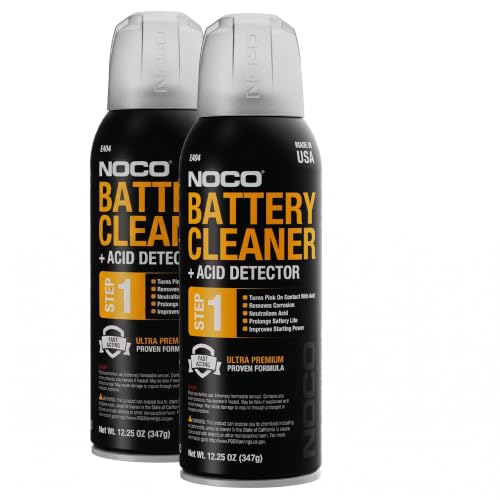
NOCO E404 12.25 Oz Battery Terminal Cleaner Spray and Corrosion Cleaner with Acid Detector |
If you’re working on multiple vehicles or just want a brush that’s built to last, this one’s worth a look.
NOCO E404 spray features fast-acting foaming action to break down corrosion. An acid detector turns pink upon contact with harmful residues. This visual cue ensures thorough cleaning before reassembly. Improved electrical connections lead to increased cranking ability instantly. The pack includes two cans for multiple cleaning sessions.
Professionals rely on the pink indicator to verify complete neutralization. Spray-on and rinse-off operation simplifies the cleaning process greatly. The aerosol format can be messy if not used carefully. Covering surrounding painted areas is advised before spraying. Essential for verifying cleanliness before final terminal tightening.
Each of these kits takes a slightly different angle. Spray-on cleaners excel at neutralizing acid and reaching tight spots. Mechanical brushes tackle heavy buildup through friction. And fiber washers provide a low-cost barrier against future corrosion.
Your choice mostly comes down to how often you maintain your battery and what kind of buildup you’re dealing with.
Installing New Terminals Correctly
With clean terminals in place, installation order matters more than you might think. A few small steps can prevent sparks, shorts, or loose connections.
Place the new positive terminal onto the battery post first gently
Tighten the positive bolt until the clamp feels secure and immovable
Attach the negative terminal to its post and tighten the bolt firmly
Apply a thin layer of dielectric grease over both completed connections
Tug gently on cables to confirm they do not move or slip off
Always connect the positive side before the negative side during installation. This sequence minimizes the risk of sparking near the battery. Ensure bolts are tight enough to prevent vibration loosening. Over-tightening can strip threads or crack the new terminal housing. Double-check that no tools remain on top of the battery.
Start the engine to verify strong electrical contact immediately. Listen for smooth cranking without hesitation or clicking sounds.
Maintaining Connections Long Term
Regular checks extend the lifespan of your replacement terminals significantly. Simple habits prevent costly roadside failures.
- Inspect terminals visually every time you change your oil
- Reapply protective grease if the surface looks dry or dusty
- Clean minor buildup immediately before it becomes severe crust
- Ensure cable clamps remain tight after the first month of use
- Replace fiber washers if they appear cracked or disintegrated
Persistent Electrical Issues
If problems continue after replacing terminals, check the cables themselves. Internal wire corrosion can mimic terminal failure symptoms. A professional load test determines if the battery holds charge properly. Alternator output should also be verified to rule out charging faults.
Damaged Battery Posts
Sometimes the battery posts themselves are too damaged for new clamps. Spinning posts indicate internal failure requiring battery replacement. Do not force clamps onto stripped or broken lead posts. Safety risks increase significantly when connections remain unstable.
Swapping out corroded battery terminals is one of those small maintenance tasks that pays off big in reliability. Take the time to clean thoroughly, reconnect in the right order, and follow up with a protective coating or washer if you can.
With the right kit nearby, it’s easier than most DIYers expect, and you’ll definitely appreciate the peace of mind when your car fires right up on a cold morning.

- 10 Best Battery For Generator Ev Battery Bank Marine 2026 - October 27, 2026
- 10 Best Battery For Generator Ev Battery Bank Lto 2026 - October 27, 2026
- 10 Best Battery For Generator Ev Battery Bank Low Voltage 2026 - October 27, 2026