12V Battery Basics: Voltage, Capacity, Chemistry and Common Forms
You’re staring at a dead ride-on toy, a chirping smoke alarm, or a garage door remote that won’t open, and the label says 12V. So what actually is a 12 volt battery, and why do the same three characters cover a tiny key-fob cell and a brick-sized block of lead?
The short answer: 12 volts describes the electrical pressure a battery pushes through a circuit, not its size, chemistry, or how long it lasts. This guide explains the basics, then points to real 12V batteries that fit common jobs.
What 12 Volts Actually Means
Before buying anything, it helps to separate two numbers people constantly mix up: voltage and capacity. Voltage tells you the push; capacity tells you how long that push lasts. Here’s the plain-English version.
A 12 volt battery is a power source that maintains roughly 12 volts of electrical potential between its positive and negative terminals.
Think of it like water pressure in a pipe: voltage is the pressure, current (measured in amps) is the flow, and capacity (amp-hours) is how much water the tank holds. Most 12V batteries are built from six individual cells wired in series, each contributing about 2 volts.
That’s true whether the battery is a sealed lead-acid block, a lithium iron phosphate pack, or a string of tiny alkaline cells stacked inside a key-fob casing. The 12V label tells you what the battery can run, not how big it is or how long it will last.
A 12V 7Ah battery and a 12V 100Ah battery both output 12 volts, but one dies in an hour and the other runs all weekend.
Voltage vs. Capacity vs. Chemistry
| Term | What It Tells You | Typical Unit |
|---|---|---|
| Voltage | Electrical pressure the battery pushes | Volts (V) |
| Capacity | How long it can sustain a load | Amp-hours (Ah) |
| Current | Rate of flow at a moment | Amps (A) |
| Chemistry | What’s inside the cells | SLA, LiFePO4, alkaline |
| Terminal type | How it connects to your device | F1, F2, nut and bolt |
Why 12V Comes In So Many Shapes
The same 12V rating shows up in a battery the size of a candy bar and one that weighs 12 pounds. That range confuses people, so it’s worth knowing why the physical differences exist.
The Workhorse Chemistry
Sealed lead-acid batteries, often called SLA, VRLA, or AGM, dominate 12V applications that need real current for hours. They’re the batteries inside alarm panels, UPS backups, ride-on toys, fish finders, and deer feeders. They’re heavy, cheap per amp-hour, and maintenance-free because the electrolyte is absorbed rather than free-flowing.
A typical 12V 7Ah SLA block measures about 6 by 2. 5 by 4 inches and weighs around 5 pounds. They tolerate being mounted in any position and resist vibration, which is why they end up in moving equipment.
The trade-off is cycle life: most SLA batteries handle 200 to 300 charge cycles before capacity fades noticeably.
Lithium Iron Phosphate (LiFePO4)
LiFePO4 batteries deliver the same 12 volts but weigh a fraction of lead-acid and last far longer, often 2000 cycles or more. They include a battery management system (BMS) that shuts off the cells before overcharge, over-discharge, or short circuit damages them.
That safety layer is why lithium is now common in solar setups, scooters, and off-grid power. The catch is cost: a 12V 10Ah LiFePO4 pack typically costs several times what a comparable SLA block does.
They also need a lithium-specific charger, since a standard SLA charger may only partially fill them. For occasional use, lead-acid still wins on price; for daily cycling, lithium usually pays off.
- Match the voltage exactly , 12V devices need 12V batteries, not 6V or 24V.
- Check the amp-hour rating on the old battery; going slightly higher is usually fine.
- Confirm the terminal type (F1, F2, nut and bolt) before ordering.
- Measure the battery compartment , physical size varies widely across 12V options.
- Note whether the device charges the battery itself or needs an external charger.
12 Volt Batteries That Fit Common Jobs
The right 12V battery depends entirely on what you’re powering. A key-fob remote needs a tiny 23A alkaline cell, while a ride-on toy or alarm panel needs a rechargeable SLA block.
Below are nine 12V batteries covering the most common uses, from pocket-sized remotes to deep-cycle lithium packs for solar and scooters.
|
1
|
ExpertPower EXP1270, 12V 7Ah Battery SLA Rechargeable with F1 Terminals | 12 Volt sealed l |

A direct replacement for the 12V 7Ah SLA block found in most home alarms and ride-on toys.
The ExpertPower EXP1270 is a 12V 7Ah sealed lead-acid battery with F1 terminals, the exact spec that shows up in countless alarm panels, UPS units, and Power Wheels. It measures 5. 94 by 2. 56 by 3. 70 inches, so it drops into the same footprint as common 1270-series batteries.
The spill-proof, maintenance-free design means no acid checks and no venting concerns. It replaces UB1270, RT1270, CA1270, and 12FM7 batteries, which makes cross-referencing your old unit straightforward.
This is the battery to grab when a home alarm starts beeping or a ride-on toy loses its charge. It handles emergency lighting, exit signs, and deer feeders equally well.
The main limitation is cycle life: like all SLA batteries, expect a few hundred charges before capacity fades, so heavy daily use will wear it out faster than a lithium option. For occasional backup duty, it’s a solid, inexpensive choice.
|
2
|
Energizer A23 Batteries (2 Pack), A23 Battery Alkaline | For garage door openers, keyless |
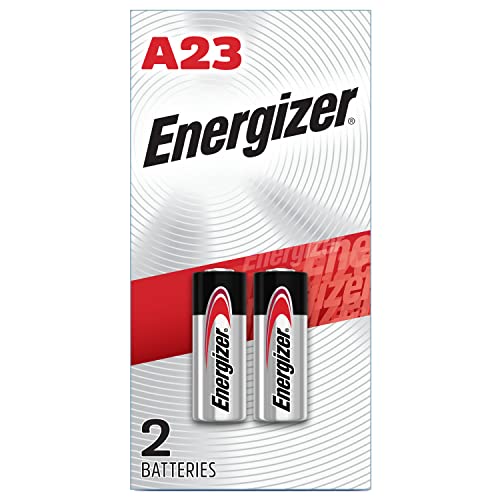
A tiny 12V alkaline cell sized for key fobs, garage remotes, and small security devices.
The Energizer A23 is a 12V miniature alkaline battery sold in a two-pack. It’s not a rechargeable block , it’s the small cylindrical cell inside garage door openers, keyless entry remotes, and some cameras and security sensors. Energizer rates it for long-lasting, reliable power in low-drain gadgets.
The zero-mercury construction reduces environmental impact when it finally needs disposal. If your device takes an A23 or 23A cell, this is the direct replacement.
This battery fits devices that need a small 12V burst rather than sustained current: remotes, fobs, and wireless doorbells. It won’t run a ride-on toy or an alarm panel, and it isn’t rechargeable, so you’ll replace it periodically.
The two-pack covers a couple of devices at once, which is handy if you have multiple remotes or fobs around the house. Keep a spare in a drawer and you’ll never be locked out.
|
3
|
SEFEPODER 12 Volt 7ah Rechargeable Sealed Lead Acid Battery 2 Pack (F1 Terminals) |

A two-pack of 12V 7Ah SLA blocks for anyone replacing multiple batteries at once.
The SEFEPODER 12V 7Ah is a sealed lead-acid battery with F1 terminals, sold as a two-pack. Each unit measures 5. 94 by 2. 56 by 3. 94 inches, matching the standard 1270 footprint. The valve-regulated, anti-spill design means maintenance-free operation, and the shock- and vibration-resistant construction suits moving equipment.
Compatibility spans emergency lighting, 12V routers, ride-on toys, fish finders, small UPS backups, ham radios, home alarms, and off-grid setups.
Buying two at once makes sense if you’re refreshing an alarm panel plus a backup light, or replacing both batteries in a dual-battery setup. The SLA chemistry means a few hundred cycles, so heavy daily discharge will shorten life.
For standby and occasional use, though, the pair offers good value and the same easy F1 terminal installation as the originals. Just confirm your device uses 7Ah and not a higher capacity.
|
4
|
Mighty Max Battery ML7-12, 12 Volt 7.2 AH SLA F1 Terminal Battery, Brand Product, Black (P |
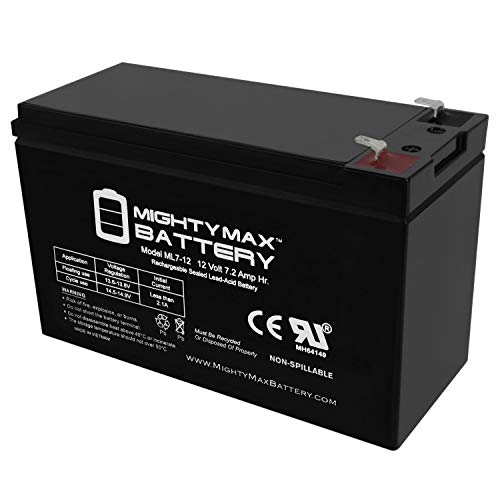
A single 12V 7.2Ah SLA block with slightly higher capacity than the standard 7Ah.
The Mighty Max ML7-12 is a 12V 7. 2Ah sealed lead-acid battery with F1 terminals, sold as a single unit. The slightly higher 7. 2Ah rating gives a touch more runtime than a standard 7Ah block, which can matter in UPS and alarm applications. It measures 5. 94 by 2.
56 by 3. 94 inches and can be mounted in any position. The design resists shocks and vibration and performs well across high and low temperatures. It ships as the battery only, with no wire harness or mounting hardware.
This is a good pick when you want a direct single replacement and don’t need a multi-pack. The 7. 2Ah capacity is a small upgrade over 7Ah, useful for slightly longer backup runtime. Like any SLA battery, it’s maintenance-free but limited to a few hundred cycles.
If your device originally shipped with a 7Ah battery, this will fit and function identically, just with marginally more reserve. Check your terminal type before ordering.
|
5
|
Amazon Basics 6-Pack 23A Alkaline Batteries, 12 Volt, Long-Lasting Power, for Key Fobs |

A six-pack of 12V 23A alkaline cells for key fobs and small remotes around the house.
The Amazon Basics 6-pack of 23A alkaline batteries delivers 12 volts in a small cylindrical format. These are the cells inside keyless entry devices, key fobs, garage door openers, remote controls, and small toys.
The heavy-duty casing is built for reliable strength and safety, and the high-capacity design targets longevity and shelf life. They’re mercury-free, which simplifies disposal. Six cells in one pack means you can refresh several remotes or fobs without reordering.
This pack suits households with multiple small 12V devices: a couple of car fobs, a garage remote, maybe a wireless doorbell. It won’t power anything that needs sustained current, and it isn’t rechargeable. The value comes from buying in bulk, since individual 23A cells can be oddly expensive at retail.
Keep them in a drawer and swap them as devices start to weaken. Just don’t confuse 23A with AA or AAA , they are not interchangeable.
|
6
|
WILDGAME INNOVATIONS 12V Edrenaline Rechargeable Battery for Game Feeders Outdoor Long-Las |

A rechargeable 12V tab-style battery built specifically for game feeders in remote locations.
The Wildgame Innovations Edrenaline is a 12V sealed lead-acid rechargeable battery with a tab-style terminal, designed for game feeders. It offers 7. 5Ah capacity at a 20-hour rate, so it can run a feeder motor through repeated cycles.
The tab-style connection fits compatible feeder models that call for a 12V source. The compact, rugged construction makes it easy to transport and install in remote areas where power access is limited. Recharging it repeatedly eliminates the cost of disposable batteries.
This battery is aimed squarely at hunters and wildlife enthusiasts running automated feeders. The tab terminal is the key detail: it matches specific feeder models, so check compatibility before buying. It’s sealed lead-acid, so expect a few hundred cycles and a maintenance-free but finite lifespan.
If you run multiple feeders, buying spares makes sense. For non-feeder uses, a standard F1 or F2 terminal battery is usually a better fit.
|
7
|
Mighty Max Battery ML9-12 – 12 Volt 9 AH SLA Battery – Pack of 2 |

A two-pack of 12V 9Ah SLA batteries with F2 terminals for slightly higher-capacity needs.
The Mighty Max ML9-12 is a 12V 9Ah sealed lead-acid battery sold as a two-pack. It measures 5. 94 by 2. 56 by 4. 02 inches and uses F2 terminals, slightly wider than the F1 found on 7Ah blocks.
The SLA/AGM construction is spill-proof and handles high discharge rates, wide operating temperatures, and long service life. It can be mounted in any position and resists shocks and vibration. The pack carries UL certification and a full one-year warranty.
The 9Ah capacity gives meaningfully more runtime than a 7Ah battery, which helps in UPS backups, fish finders, and small off-grid setups. The F2 terminal is the main compatibility check , it won’t fit devices wired for F1 without an adapter.
Buying two covers a primary and spare, or two separate devices. As with all SLA batteries, cycle life is limited, so deep daily discharges will shorten lifespan. For standby power, it’s a reliable choice.
|
8
|
Nermak 2 Pack 12V 10Ah Lithium Ion LiFePO4 Deep Cycle Battery, 2000+ Cycles Rechargeable B |
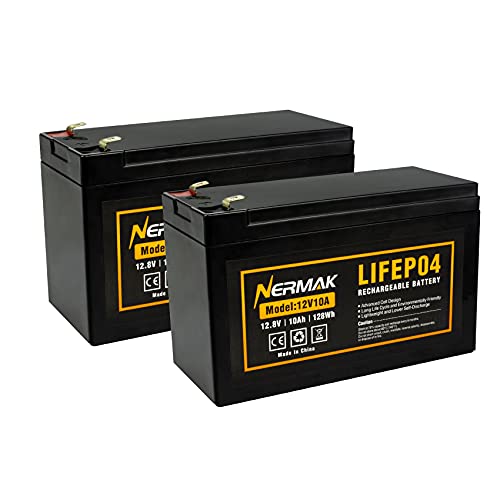
A two-pack of 12V 10Ah LiFePO4 batteries with 2000+ cycles and built-in BMS protection.
The Nermak 12V 10Ah LiFePO4 battery is a lithium iron phosphate pack sold as a two-pack. It includes a built-in 10A battery management system that guards against overcharge, over-discharge, over-current, and short circuit.
The chemistry delivers high energy density, no memory effect, and up to 2000 charge cycles , roughly ten times a typical lead-acid battery. It supports series or parallel expansion, up to four units in series, and charges quickly at 5A.
It suits solar, scooters, power wheels, fish finders, and ham radio.
This is the pick when cycle life and weight matter more than upfront price. The BMS makes it safer than bare lithium cells, and the low self-discharge means it can sit for a year without maintenance.
The honest catch: it needs a LiFePO4-specific charger, since a standard SLA charger may only partially charge it. If you‘re replacing a lead-acid block in a solar or scooter setup and plan to cycle it often, the long-term math favors lithium.
|
9
|
Mighty Max Battery ML18-12 – 12 Volt 18 AH, Nut and Bolt (NB) Terminal, Rechargeable SLA A |

A large 12V 18Ah SLA battery with nut-and-bolt terminals for high-capacity backup power.
The Mighty Max ML18-12 is a 12V 18Ah sealed lead-acid battery with nut-and-bolt terminals, sold as a single unit. At 7. 12 by 3. 00 by 6. 50 inches, it’s substantially larger than the 7Ah and 9Ah blocks, so it fits applications needing more runtime.
The SLA/AGM design is spill-proof and handles high discharge rates, wide temperatures, long service life, and deep discharge recovery. It can be mounted in any position and resists shocks and vibration. It ships with the battery and screws, and carries UL certification plus a one-year warranty.
This battery suits UPS systems, larger backup power setups, and equipment that draws more current for longer. The nut-and-bolt terminals accept heavier gauge wiring than F1 or F2 spade connectors, which matters at higher currents.
The trade-off is size and weight: measure your compartment before ordering, because 18Ah takes real space. As with all SLA batteries, cycle life is finite, but the deep discharge recovery helps if it occasionally runs low. For sustained backup, it’s a workhorse.
Those nine cover the practical range of 12V batteries: tiny alkaline cells for remotes, 7Ah to 9Ah SLA blocks for alarms and toys, a feeder-specific tab battery, a lithium pack for daily cycling, and an 18Ah block for serious backup.
The right one comes down to matching voltage, capacity, terminal type, and physical size to your device. Once you’ve picked, a few habits will make whichever battery you chose last longer.
How To Make Any 12V Battery Last Longer
A 12V battery is only as good as how you treat it. Most premature failures come down to charging habits, storage conditions, and terminal care. These practices apply whether you bought lead-acid or lithium.
Charge it fully before first use , new SLA batteries often ship at partial charge.
Use the correct charger for the chemistry; lithium needs a LiFePO4-specific unit.
Avoid draining lead-acid below about 50 percent capacity to preserve cycle life.
Store it in a cool, dry place and top up the charge every few months.
Keep terminals clean and tight; loose connections cause heat and voltage drop.
Depth of discharge is the single biggest factor in how long a 12V battery lasts. Lead-acid batteries that are routinely run down to near-empty might manage 200 cycles, while the same battery kept above half charge could see 400 or more.
Lithium packs tolerate deeper discharges, but even they last longest when not drained to zero. Temperature matters too: heat accelerates internal corrosion in lead-acid, and extreme cold temporarily reduces usable capacity in both chemistries.
For devices that sit unused for months, like a backup alarm or a seasonal feeder, a maintenance charge every few months prevents the battery from sulfating or self-discharging into a dead state. A cheap trickle charger pays for itself by extending battery life.
Mistakes That Kill 12V Batteries Early
Many 12V batteries fail within a year not because they were defective but because of a handful of avoidable errors. Here are the ones that show up most often, plus how to sidestep each.
- Using an SLA charger on a lithium battery , it will undercharge and can damage cells.
- Mixing old and new batteries in series or parallel, which unbalances the pack.
- Ignoring terminal type and forcing an F2 battery into an F1 connector.
- Letting a lead-acid battery sit discharged for months, causing permanent sulfation.
- Storing batteries in a hot garage or trunk, which shortens lifespan fast.
- Reversing polarity when connecting , always match positive to positive.
Terminal mismatch is a quieter problem than most people expect. F1 and F2 terminals look similar but differ in width, and nut-and-bolt terminals need ring connectors rather than spade plugs.
Forcing the wrong connector can loosen over time and cause intermittent power, which is maddening to diagnose in an alarm or feeder. Polarity is the other silent killer: reversing positive and negative can fry the device and the battery instantly.
Before connecting anything, photograph the old battery’s wiring or note which terminal is which. And if you‘re replacing one battery in a multi-battery bank, replace them all at once , mixing a fresh battery with a worn one drags the new one down to the old one’s level.
A 12 volt battery is simply a power source that maintains about 12 volts across its terminals, and everything else , size, chemistry, capacity, terminal type , depends on the job.
If you’re replacing one today, write down the voltage, amp-hour rating, terminal type, and physical dimensions from the old battery before you order. That four-item checklist prevents almost every wrong-battery purchase. Then match your chemistry to your use: lead-acid for standby and occasional duty, lithium for daily cycling.
Get those details right and your device will run like new.

- Marine Chargers and Backup Batteries: 9 Options Compared (2026) - October 27, 2026
- LTO Cells vs. SLA Generator Batteries: 5 Options Compared (2026) - October 27, 2026
- 12V/24V Backup Batteries and the EcoFlow DELTA Pro 3 (2026) - October 27, 2026