What Type Of Battery Does A Smoke Alarm Take?
There’s nothing quite like that 2 a. m. chirp from your smoke alarm to remind you that batteries don’t last forever. And more often than not, the reason it’s chirping is because someone grabbed the wrong kind of replacement.
Smoke alarms usually run on 9-volt alkaline batteries, AA cells, or sealed lithium units, and mixing those up can leave your home unprotected or force an unwelcome trip to the hardware store.
Whether you’re replacing a battery for the hundredth time or thinking about switching to a low-maintenance detector, it helps to know what you’re dealing with. Here’s a look at what powers these life-saving devices, and ten products that cover all the bases.
Why Smoke Alarms Demand Specific Battery Types
Recommended Products

Not every battery fits every alarm. Voltage and compartment size matter, and picking the wrong one might leave your detector dead when you need it most.
Smoke alarms need a steady power source to keep watch 24/7, and even a small dip in voltage can trigger that dreaded low-battery chirp. Most older detectors use a standard 9-volt alkaline battery, the kind with two snap terminals on top that connect to internal contacts.
But newer, smaller models often run on AA batteries wired in series, which can be easier to find and replace. Hardwired alarms still rely on a backup battery for power outages, and those are typically 9-volt or AA depending on the brand.
Using the wrong voltage might seem harmless, but it can actually damage the sensor circuit or prevent the 85-decibel siren from sounding during a real emergency. The easiest way to avoid all that? Open the battery compartment and check what’s already in there. No guesswork needed.
Common Smoke Alarm Power Sources Compared
| Battery Type | Typical Lifespan | Common Detector Style |
|---|---|---|
| 9-Volt Alkaline | 1 year | Traditional standalone units |
| AA Alkaline | 1 year | Compact modern sensors |
| Sealed Lithium | 10 years | Maintenance-free alarms |
The Shift Toward Sealed Lithium Power
Replacing batteries every year works, but it’s easy to forget, and a forgotten battery means a forgotten alarm. Sealed lithium designs take that chore off your plate entirely.
More manufacturers are integrating non-replaceable lithium batteries directly into the alarm housing, and for good reason. These sealed units are built to last ten full years, the same lifespan as the detector itself.
When the battery finally gives out, the whole alarm chirps its end-of-life warning, signaling it’s time for a full replacement. That means no more climbing on chairs every January to swap out a 9-volt or AA cell.
No more midnight chirps from a battery that died because you forgot to replace it. For rental properties or busy households, these ten-year alarms offer peace of mind that traditional replaceable-battery models can’t. Sure, they cost more upfront, but you’re not buying replacement batteries ever again for those units.
Just be aware that some local building codes now require sealed lithium alarms in new homes, so check before you install.
- Open the existing battery compartment to verify the required cell size before buying replacements.
- Never mix old and new batteries inside the same smoke detector unit.
- Avoid rechargeable batteries because their voltage drops too quickly for reliable fire detection.
- Replace standard alkaline smoke alarm batteries at least once every twelve months.
- Test the alarm monthly using the front button regardless of battery freshness.
Batteries And Detectors To Keep Alarms Powered
Identifying the right battery for your smoke alarm really comes down to two things: checking what’s already in your current unit and deciding whether a replaceable battery or a sealed lithium option fits your habits better. Some readers just need fresh 9-volt replacements.
Others might be ready to upgrade to a maintenance-free detector. Either way, here are ten products that cover every scenario.
|
1
|
Amazon Basics 8-Pack 9V Long-Lasting Alkaline Batteries for Smoke Detector, Electronics & |

Provides eight standard 9-volt cells specifically marketed for smoke detector compatibility with a five-year shelf life.
The Amazon Basics 8-Pack 9V Long-Lasting Alkaline Batteries are exactly what they sound like: no-frills, reliable 9-volt cells meant for smoke detectors and similar home safety gear. Most traditional alarms use this standard rectangular battery, and having eight on hand means you’re never scrambling when one starts chirping.
These alkaline batteries are leak-resistant, which is a small but crucial detail when you consider that corroded terminals can ruin an entire alarm. The packaging is simple but functional, making it easy to pull out a single battery without tearing open the whole pack.
And with a five-year shelf life, you can stock up without worrying about them degrading while sitting in your closet.
For anyone juggling multiple older smoke detectors, this 8-pack is straightforward and practical. They fit most standard 9-volt compartments and deliver the consistent voltage needed to keep the alarm responsive. The main thing to remember is that these are alkaline, not rechargeable, so they’re a one-and-done kind of deal.
That’s actually fine for smoke alarms, since the draw is pretty steady but small. Just pop one in once a year, test the alarm, and move on.
|
2
|
First Alert Battery Smoke Alarm | SMI100, 1-Pack |

Demonstrates a modern alarm featuring a front-access battery compartment that simplifies identifying and swapping the required power cell.
The First Alert Battery Smoke Alarm SMI100 (1-Pack) brings something a lot of older alarms don’t: a front-access battery compartment. That alone makes changing the battery a lot less awkward, especially in tight spaces like hallways or stairwells.
It’s powered by a standard replaceable battery, and the design makes it clear what kind you need without popping off a rear panel or getting on a ladder. First Alert’s Precision Detection tech is tuned to ignore minor cooking smoke and steam, so random false alarms are less likely.
There’s a test button, a silence button, and an end-of-life warning that tells you when the whole unit needs swapping, not just the battery.
This single-pack model is ideal if you’re replacing one aging alarm or outfitting a smaller space. Installation is tool-free and straightforward, and the front-loading battery door saves a lot of hassle compared to older designs.
The trade-off is that it still uses a standard replaceable battery, so you’ll need to stay on top of annual changes. That’s fine for most people, but if you’re prone to forgetting, you might prefer a sealed lithium option down the line.
|
3
|
First Alert Battery Smoke Alarm | SMI100, 2-Pack |

Offers the same front-access battery design in a two-pack, covering multiple rooms with identical power requirements.
If you liked the idea of First Alert’s front-access battery design but need coverage in two spots, the SMI100 2-Pack is the natural next step. Both alarms use the same battery type and the same straightforward installation process, so you’re not juggling different models or power sources across rooms.
That consistency alone saves a lot of confusion during annual battery swaps. The Precision Detection sensors are calibrated to reduce nuisance alarms from cooking, steam, or dust buildup. And since both units are battery-operated, there’s no wiring involved, just mount them and go.
For smaller homes or apartments, a two-pack covers the essentials, typically one in the hallway and one in the bedroom or living area. Having two matching alarms makes it easy to buy batteries in bulk and stick to a single replacement schedule.
The downside is the same as the single unit: you’re still responsible for yearly battery changes. But honestly, the front-access design makes that chore so much less of a pain that it might be worth it.
|
4
|
DURACELL Coppertop 9V Battery, 6 Count, Smoke Detector Battery |
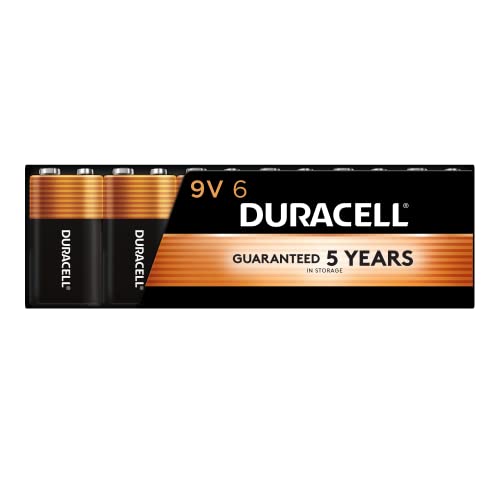
Supplies premium 9-volt alkaline batteries guaranteed for five years in storage, ensuring reliable smoke detector power.
Duracell Coppertop 9V Batteries aren’t just marketing fluff, they’re a staple in a lot of professional installers’ toolboxes, and that trust carries over to smoke detector use.
These are alkaline 9-volt cells with a five-year storage guarantee, so you can keep a few in a drawer without worrying they’ll be dead when you actually need them.
The voltage curve is steady, which matters for smoke alarms since inconsistent power can trigger false low-battery warnings or, worse, weak alarm output. Duracell backs these with a defect guarantee, which adds a layer of confidence when you’re literally trusting your life to them.
Six-count is enough to cover annual replacements for most households, and pros often specify Duracell for its consistency across brands. The trade-off is cost: these aren’t the cheapest 9-volt batteries on the shelf. But when we’re talking about fire safety, paying a little extra for reliability isn’t really a debate.
Just don’t forget to test your alarms twice a year, even with fresh batteries in place.
|
5
|
First Alert Battery Smoke Alarm | SMI100, 3-Pack |

Extends standardized battery access to three rooms, eliminating guesswork about which power cell fits where.
The First Alert SMI100 3-Pack makes sense if you’re outfitting a multi-room layout and want all your alarms to match. Every unit takes the same battery, uses the same front-access design, and responds the same way to testing and silencing.
No hunting around to remember which model lives where or which battery type goes where. That uniformity cuts down on confusion during annual maintenance and makes bulk battery purchases a lot simpler.
The Precision Detection sensors are tuned to distinguish between real smoke and everyday kitchen steam or cooking odors, so random false alarms aren’t as much of an issue.
For families or homeowners tackling a whole floor at once, this 3-pack is practical. Just mount them, pop in the batteries, and set a calendar reminder for next year. Like the smaller packs, these don’t offer sealed lithium power, so annual battery swaps remain a responsibility.
But the consistent design and easy access make that chore feel less like a chore.
|
6
|
Kidde Compact Smoke Detector, AA Battery-Powered, 10SDR | 4-Inch Smoke Alarm with LED Stat |

Highlights a compact detector that shifts away from 9-volt cells by using two standard AA batteries instead.
The Kidde 10SDR does something different: instead of the traditional 9-volt battery, it runs on two AA cells. That switch isn’t just cosmetic, AA batteries are easier to find almost anywhere, and they’re often cheaper than 9-volt alkalines.
The alarm itself is noticeably smaller, which can be a blessing in tight spaces or homes where aesthetics matter. Kidde claims faster smoke detection compared to previous models, and it backs that with an 85-decibel alarm and a red LED alert light.
It meets UL 217 10th Edition standards, which is the current benchmark for residential smoke detectors.
If you’re tired of hunting for 9-volt batteries, this AA-powered design is a relief. The ten-year limited warranty adds confidence, and since the batteries are included, setup is genuinely tool-free. The only real trade-off is the battery compartment, it’s a bit bulkier than a single 9-volt snap connector.
But the advanced sensing tech keeps false alarms down, especially from cooking smoke or bathroom steam. Worth considering if you’re updating older 9-volt alarms.
|
7
|
X-Sense Smoke Detector, 10-Year Battery, UL 217 Certified, SD2J0AX, 1-Pack | Photoelectric |

Eliminates the battery replacement question entirely by utilizing a sealed lithium cell designed to last ten years.
The X-Sense SD2J0AX takes a completely different approach to the battery question: it doesn’t have a replaceable one at all. Inside the sealed housing is a lithium battery built to last ten years, the full expected lifespan of the detector.
No annual battery swaps, no midnight chirps from a dying cell, no last-minute runs to the store. When the battery eventually runs down, the whole alarm chirps its end-of-life warning, telling you it’s time to replace the entire unit.
The photoelectric sensor is tuned to catch smoldering fires early while ignoring minor cooking fumes, and it carries full UL 217 certification.
This alarm is basically a set-it-and-forget-it option, which makes it a strong pick for busy households, rental properties, or anyone who’s tired of remembering to change batteries twice a year. Mounting is straightforward with the included hardware, and there’s a single button for testing and silencing.
The main catch is that it’s a standalone unit, no Wi-Fi, no wireless interconnection with other alarms. But if simplicity is your priority, this is about as maintenance-free as smoke alarms get.
|
8
|
Duracell Coppertop 9V Battery, 2 Count, Smoke Detector, Long-lasting |
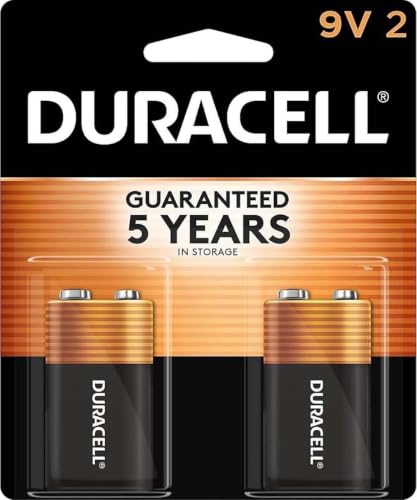
Provides a smaller two-count pack of trusted 9-volt batteries for homes with fewer smoke detectors to maintain.
Duracell Coppertop 9V Batteries in a 2-count pack are for people who want reliability without the bulk of a six-pack sitting around. If your home has one or two older alarms that still use 9-volt alkalines, this is all you really need for a full annual replacement cycle.
Same five-year storage guarantee and same steady voltage curve that keeps false low-battery chirps to a minimum. These fit into any standard 9-volt compartment, and Duracell’s defect guarantee covers you if something goes wrong.
Smaller packs do cost more per battery than bulk options, but they also mean less waste and less unused product cluttering your storage space. If you’re in a studio apartment or a small house with just two detectors, this feels appropriately scaled.
Just remember that like any alkaline battery, these are disposable, you’ll still need to swap them out every year or so. But they’re consistent performers when it comes to powering life-safety gear.
|
9
|
XUNIUZERO 9V Batteries 6F22 Square Battery (4 Pack) for Smoke Detector Alarm System, Wirel |

Delivers four carbon zinc 9-volt batteries engineered to withstand extreme temperatures inside attics or garages.
XUNIUZERO 9V Batteries (4 Pack) aren’t your typical alkaline cells, they use a carbon zinc design that handles temperature swings better than standard alkaline batteries.
That makes them a solid choice for smoke alarms installed in unfinished spaces like attics, garages, or crawl spaces where temperatures can swing from freezing to scorching. They’re built with a corrosion-resistant steel shell, which helps protect detector contacts from getting damaged by leaks.
And while carbon zinc isn’t as energy-dense as alkaline, these are rated to work in conditions from -4°F to 140°F.
The four-pack size works well for most homes, and the leak-resistant construction gives some peace of mind in less-than-ideal environments. But carbon zinc batteries do drain faster than alkaline under continuous load, which matters if your alarm has digital features beyond just the photoelectric sensor.
If you’re using these in a high-end or smart-enabled smoke alarm, you might need to test them more frequently to make sure they’re keeping up. Still, for basic detectors in extreme locations, they’re a pragmatic option.
|
10
|
Energizer Alkaline Power 9V Batteries (8 Pack), Long-Lasting | Smoke detector battery for |

Supplies eight alkaline 9-volt batteries incorporating recycled materials for eco-conscious smoke alarm maintenance.
Energizer Alkaline Power 9V Batteries come in an 8-pack sized for homes that need to refresh several alarms at once. These deliver the reliable voltage curve that smoke detectors expect, and Energizer rates them for up to five years of storage life.
What stands out here is the recycled-content angle, up to 4% recycled materials in the battery construction, which appeals to folks who’d rather not add entirely new plastic to the mix. The standard 9-volt snap connector fits into virtually any traditional battery-operated smoke alarm without issue.
For larger households running battery checks twice a year, an 8-pack keeps things efficient. You can stash extras in a drawer without worrying they’ll expire before the next replacement cycle.
Since these are still standard disposable alkaline batteries, the annual swap routine stays the same, you’re not getting away from replacement batteries here. But the recycled packaging and dependable performance make them a reasonable middle-ground choice for eco-minded buyers who also value consistency.
Smoke alarm batteries aren’t one-size-fits-all. Traditional 9-volt alkaline cells cover most older detectors, while AA batteries show up in newer compact models. And if you’d rather not think about batteries at all, sealed lithium units remove the replacement question entirely.
The ten products above reflect every angle, from bulk packs of trusted brands to full upgrade paths for low-maintenance homes.
How To Verify What Your Specific Alarm Requires
A quick look inside your current alarm is usually all it takes to figure out which battery you need. Guessing might save a trip to the store, but it won’t save your home from a silent alarm.
Twist the smoke alarm counterclockwise to detach it from the ceiling mounting bracket safely.
Locate the battery door on the back or front face of the detached alarm unit.
Slide the door open and observe the shape of the installed battery carefully.
Note whether the cell is a rectangular 9-volt block or cylindrical AA batteries.
Check the printed text near the compartment for specific voltage or size requirements.
Purchase the exact matching battery type before reinstalling the alarm on the ceiling.
Most modern smoke alarms have the battery type clearly marked inside the compartment door or on a sticker near the battery slot. If it’s a rectangular 9-volt battery with two snap terminals on top, you’re dealing with a standard alkaline replacement.
If you see cylindrical cells, typically two of them arranged side by side, it’s most likely AA batteries. Forcing a battery into a compartment that feels too tight is a red flag; that usually means you’ve picked the wrong type.
Some newer alarms don’t have a removable battery at all, which means the power source is sealed inside the housing. In that case, the whole unit gets replaced when the battery dies, not just the battery.
When in doubt, a quick photo of the old battery next to a ruler can help narrow down size and chemistry if you’re shopping online.
Mistakes That Compromise Smoke Alarm Battery Life
Even the correct battery type can fail faster than expected if it’s handled or stored wrong. Small missteps add up when your safety depends on that tiny power source.
Most smoke alarms fall into one of three camps: a standard 9-volt alkaline battery, two AA cells, or a sealed lithium unit that lasts ten years.
Which one yours uses depends entirely on the model mounted to your ceiling, and swapping in the wrong type can leave your detector silent when it matters most. So tonight, grab a flashlight, twist off one of your alarms, and peek inside the battery compartment.
Seeing the physical battery removes all doubt before you shop for replacements. Whether you’re restocking on reliable 9-volts or ready to switch to a low-maintenance lithium detector, matching the battery to the alarm, and then testing the siren, makes sure your home actually stays protected.

- 10 Best Battery For Generator Ev Battery Bank Marine 2026 - October 27, 2026
- 10 Best Battery For Generator Ev Battery Bank Lto 2026 - October 27, 2026
- 10 Best Battery For Generator Ev Battery Bank Low Voltage 2026 - October 27, 2026