Is A Car Battery Ac Or Dc?
When your car won’t start, you’re suddenly forced to think about electrical current. You might wonder if your vehicle runs on the same power as your wall outlet. The short answer requires understanding how engines start and how electronics run.
Car batteries store direct current (DC), which flows in a single direction. Household outlets use alternating current (AC). Mixing these up can damage expensive electronics or leave you stranded.
This breakdown explains why vehicles rely on DC power and highlights ten practical accessories that work with your car’s specific electrical setup.
Why Your Car Battery Stores DC Power Instead Of AC
Recommended Products

Understanding the difference between alternating and direct current explains why every car battery uses DC. Here’s a look at the core electrical concepts behind vehicle starting systems.
Alternating current changes direction dozens of times per second. Power plants generate AC because it travels efficiently over long distances through power lines. Direct current flows steadily in one single direction without reversing. Batteries store chemical energy and release it as a continuous stream of electrons.
This steady flow makes DC the only practical choice for storing power inside a vehicle. An engine needs a massive, instant burst of energy to turn the starter motor. AC power cannot provide this kind of stored, immediate surge from a compact box.
A standard automotive battery delivers 12 volts of direct current to handle this exact job. When you turn the ignition key, the battery pushes DC power directly into the starter. The alternator then takes over once the engine runs to keep the battery charged.
Even though the alternator technically generates AC internally, built-in diodes immediately convert it back to DC. Your entire vehicle electrical system relies on this constant direct current loop.
- Always disconnect the negative battery terminal first to prevent accidental short circuits during maintenance.
- Never connect household AC appliances directly to battery terminals without using a proper power inverter.
- Check device voltage ratings carefully before plugging anything into your 12V cigarette lighter socket.
- Use inline fuses on any custom DC wiring to protect against dangerous electrical overloads in your vehicle.
- Keep battery terminals clean and tight to ensure maximum direct current flow to your starter motor.
How Alternators And Inverters Bridge The Gap Between DC And AC
Recommended Products


Cars run on DC power, but drivers often need AC electricity for laptops or tools. Specific components make this conversion possible while keeping the battery safe.
The Alternator Keeps The DC System Alive
Your car battery would drain completely within an hour if it had to do all the work alone. The alternator solves this problem by generating electricity while the engine spins. Interestingly, alternators actually produce alternating current through their spinning magnetic coils.
However, vehicles cannot use AC power directly for charging or running onboard computers. A component called a rectifier instantly converts that raw AC into usable 12-volt DC power. This converted direct current recharges the battery and powers headlights, radios, and sensors simultaneously.
Without this constant conversion process, modern cars simply could not function on the road.
Power Inverters Bring AC Outlets To Your Dashboard
Sometimes you need standard household AC power while sitting inside your DC-powered vehicle. A power inverter plugs directly into your 12V cigarette lighter or battery terminals. It takes the steady direct current from your car battery and rapidly switches it back and forth.
This electronic switching mimics the sine wave of a standard wall outlet. You can then plug in laptops, small televisions, or medical devices like CPAP machines. Inverters come in various wattage ratings depending on what you plan to power.
Small 300-watt models handle phone chargers easily, while larger 1000-watt units run heavy-duty tools. Always check the inverter rating against your device requirements to avoid blowing vehicle fuses.
Ten Products That Work With Your Car’s DC System
Recommended Products


Knowing your battery outputs direct current helps you choose the right vehicle accessories. These ten products either draw safely from your 12V DC system or convert it to AC power. Each one addresses a specific need for drivers who understand how their electrical system operates.
|
1
|
Czepa 12v Car dc Charger Power Cord with 8 Connectors for Cigarette Lighter Portable DVD P |
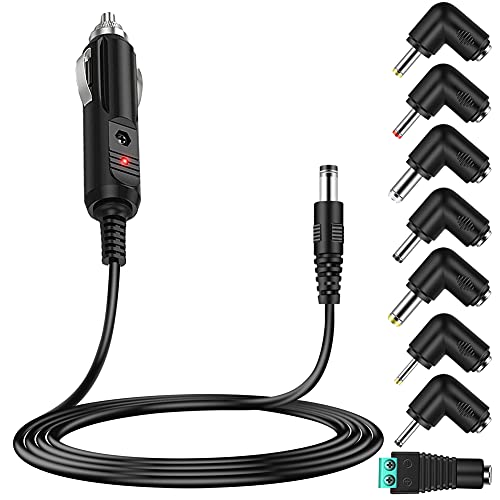
This cord draws pure 12V DC power directly from your car battery through eight different connector sizes.
The Czepa 12V Car DC Charger Power Cord pulls direct current straight from your cigarette lighter socket. It outputs 12V at 4 amps to power smaller DC devices. The package includes eight interchangeable connectors ranging from 2. 5mm to 5. 5mm barrel plugs.
This variety lets you power portable DVD players, GPS units, or car refrigerators directly. Because your battery stores DC power, this cord uses it natively without needing any conversion. A built-in fuse automatically blows if the current exceeds 4 amps to protect your devices.
I’d recommend this cable for drivers who own multiple 12V DC accessories with different plug shapes. You can swap the tips instead of buying separate chargers for each gadget. Just remember that devices requiring more than 4 amps will cause the fuse to blow repeatedly.
Always verify your appliance’s voltage and amperage requirements before connecting it to this cord. It is a simple, effective way to utilize your battery’s direct current output safely.
|
2
|
Pro Chaser 400W Power Inverters for Vehicles DC 12v to AC 110v Car Inverter | Car Converte |
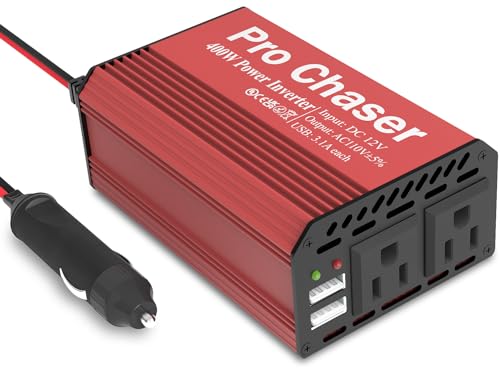
It converts your battery’s 12V DC output into 110V AC power so you can run household electronics.
The Pro Chaser 400W Power Inverter bridges the gap between your car’s DC battery and AC devices. It takes 12 volts of direct current and transforms it into 110 volts of alternating current. You get dual AC sockets and two 3. 1A USB ports for charging phones or tablets.
The unit provides 400 watts of continuous power with an 800-watt peak for startup surges. This means you can finally plug a laptop or breast pump into your DC-powered vehicle. Its compact size fits easily near the center console or passenger seat.
Road trippers who need to charge laptops or run small appliances will find this highly useful. The 30-inch cord gives you flexibility to position the inverter where you need it most. A smart cooling fan turns on automatically at 113 degrees Fahrenheit to prevent overheating.
However, you should never use this in damp environments or expose it to moisture. It handles everyday electronics perfectly, but high-draw appliances like space heaters will exceed its 400-watt limit quickly.
|
3
|
CARSUN AC/DC Tire Inflator Portable Air Compressor, Dual Power for Home 110V AC and Car 12 |

This air compressor accepts both 110V AC wall power and 12V DC car battery power seamlessly.
The CARSUN AC/DC Tire Inflator demonstrates exactly how devices can bridge household AC and vehicle DC power. It includes a 12V DC plug designed specifically for your car’s cigarette lighter socket. It also features a 110V AC plug for standard home wall outlets.
This dual-power design means you can fill tires in your garage or out on the road. The metal motor outputs up to 150 PSI, filling a standard car tire in five minutes. A digital display shows pressure readings clearly even in bright sunlight or dark conditions.
This pump is ideal for families who want one inflator for both home and vehicle use. The auto-shutoff feature prevents over-inflation by stopping exactly at your preset pressure value. You can switch between car, motorcycle, bicycle, and ball modes with a single click.
Keep in mind that it does not support heavy truck or tractor tires due to volume limits. Let the compressor cool for ten minutes after every fifteen minutes of continuous use to protect the motor.
|
4
|
12V Kids Charger for Ride On Car, 12V Various Electric Ride-on Toys Car Battery Charger,12 |

It converts 100-240V AC wall power into 12V DC to safely recharge kids’ ride-on toy batteries.
The 12V Kids Charger for Ride On Cars shows how AC power converts back to DC for battery charging. It plugs into a standard 100V to 240V AC household wall outlet. Inside the charger block, circuitry steps that alternating current down to 12 volts of direct current.
This 12V DC output matches the exact storage requirement of children’s electric ride-on toy batteries. A 5-foot power cable reaches from the wall to the toy easily. The 2. 1mm by 5. 5mm center-positive barrel plug fits most major brands including Kid Trax and Best Choice Products.
Parents who need a reliable replacement charger for battery-powered toy vehicles will appreciate this unit. Smart LED indicators show a red light while charging and turn green when the battery fills up. Built-in safety features include overcharge protection, short circuit prevention, and overload safeguards.
The main limitation is compatibility; you must ensure your toy uses the specific round-hole charging port. It comes with a one-year warranty and a three-month unconditional return policy for peace of mind.
|
5
|
Dr.meter 3 Ways Powered Air Mattress Pump Electric Air Pump with 3-Nozzle | AC 110V, DC 12 |

This pump runs on 12V DC car power, 110V AC wall power, or standalone AA batteries.
The Dr. meter 3 Ways Powered Air Mattress Pump offers three distinct ways to handle electrical current types. You can plug it into a 110V or 220V AC wall outlet for maximum 4kpa performance. Alternatively, use the included DC 12V car adapter to pull direct current from your vehicle battery.
If neither power source is available, insert eight AA batteries for portable 3kpa inflation. This flexibility proves how different devices adapt to both AC grids and DC automotive systems. Three interchangeable nozzles fit almost any inflatable pool float, air bed, or camping mattress.
Campers and beachgoers benefit greatly from having three power options in one tiny device. The pump measures just slightly larger than a smartphone, making it incredibly easy to pack. It moves 200 liters of air per minute when plugged into AC or DC power sources.
One honest limitation is the battery mode, which produces slightly less pressure than the plugged-in options. Avoid running the pump continuously for more than ten minutes to prevent internal motor overheating during heavy use.
|
6
|
Topwest Cordless Tire Inflator Portable Air Compressor, 21V 160PSI for Car | Outlasts 20V. |

It runs on a rechargeable DC battery or draws 12V DC directly from your car’s outlet.
The Topwest Cordless Tire Inflator operates entirely on direct current, matching your car battery’s native power type. It includes a removable 10,000mAh rechargeable battery that stores DC power for cordless operation. When the battery dies, plug the 9. 84-foot 12V DC cigarette lighter cable into your vehicle.
This dual DC power supply ensures you never lack the ability to inflate a tire. The solid metal cylinder pushes up to 24 liters of air per minute. A large dual digital display shows both your current tire pressure and target setting simultaneously.
Daily commuters and off-road drivers will value the combination of cordless freedom and vehicle power. Setting your target pressure allows the smart chip to stop inflation precisely within one PSI. The replaceable hose swaps out in ten seconds without tools if it ever gets damaged.
Four built-in LED light modes help with nighttime roadside emergencies or dark garage repairs. Note that charging the removable battery fully takes between two and two and a half hours before your next trip.
|
7
|
Schumacher Electric 1200A Car Battery Jump Starter & Power Station – SJ1332 | 1200A Jump S |

This jump starter stores DC battery power while offering built-in AC inverter outlets for devices.
The Schumacher Electric SJ1332 Jump Starter acts as a massive DC power reservoir for your vehicle. It stores enough direct current to deliver 1200 amps, instantly starting 7. 0L gas or 4. 0L diesel engines. Beyond jump-starting, it functions as a complete power station bridging DC storage and AC usage.
A built-in inverter provides 200 watts of continuous 120V AC power for laptops or small tools. You also get 12V DC accessory outlets and USB ports for charging phones directly. This single unit perfectly illustrates the relationship between car battery DC power and converted AC electricity.
Drivers who travel through remote areas need this level of backup power and versatility. Advanced safety sensors prevent reverse polarity and short circuits during stressful jump-start situations. The integrated air compressor adds another layer of emergency preparedness for flat tires on the road.
One limitation is the 200-watt AC inverter ceiling, which cannot handle heavy appliances like microwaves or coffee makers. It comes with a storage bag, inflator hose, and three air compressor adapters to keep everything organized.
|
8
|
BougeRV Car Refrigerator with 240Wh LiFePO4 Battery, CRX3 30 Quart, -4℉~68℉ | Fast 12-Min |

This refrigerator runs natively on 12V or 24V DC power drawn directly from your vehicle’s battery.
The BougeRV CRX3 Car Refrigerator utilizes your car’s direct current to run a powerful compressor cooler. It accepts both 12V and 24V DC inputs, making it compatible with cars, trucks, and RVs. The advanced compressor technology drops the internal temperature from 77 degrees to 32 degrees in twelve minutes.
Operating in ECO mode keeps power consumption under 35 watts to protect your vehicle’s battery life. You can also attach the optional 240Wh LiFePO4 battery for up to 28 hours of cordless runtime. This detachable battery stores DC power independently for extended camping trips away from the vehicle.
Overlanders and long-distance road trippers will appreciate the fast cooling and low noise operation. At just 35 decibels, the compressor remains quiet enough to sleep next to inside a van. The BougeRV smartphone app lets you adjust temperatures and monitor power status from up to 32 feet away.
While it accepts 110V AC power via an adapter, its primary design focuses on efficient DC usage. Ensure your vehicle’s battery has adequate capacity if you plan to run it overnight without the detachable pack.
|
9
|
300W Portable Charger Car Power Inverters for Vehicle | 24W USB A/C,Dual 12V-110V AC Car |

It converts your car’s 12V DC battery power into 110V AC current through six total output ports.
This 300W Portable Car Power Inverter translates your battery’s DC output into usable AC electricity. It plugs directly into your 12V DC cigarette lighter adapter to begin the conversion process immediately. You receive two 110V AC wall-style outlets alongside four USB-A and USB-C charging ports.
The 24W USB ports handle smartphones, cameras, and Kindles without needing the larger AC sockets. Measuring just 5. 4 by 2. 75 inches, it takes up almost no space in your center console. An upgraded intelligent cooling fan keeps the internal components stable during prolonged power conversion sessions.
Digital nomads working from their vehicles will find the mix of AC and USB ports essential. You can run a laptop from the AC outlet while charging a phone via USB-C simultaneously. The lightweight 9. 17-ounce design makes it easy to transfer between rental cars or personal vehicles.
Be aware that this 300-watt limit strictly prohibits high-draw items like hair dryers or electric space heaters. Attempting to power those heavy appliances will blow the internal fuse and halt all power delivery instantly.
|
10
|
1000W Power Inverter 12V DC to 110V/120V AC Car Converter for Vehicles | LCD Screen Displa |

This heavy-duty inverter converts 12V DC battery power into 1000W of continuous 110V AC electricity.
The 1000W Power Inverter handles serious DC to AC conversion for demanding vehicle power needs. It takes 12 volts of direct current from your car or truck battery and outputs 110V AC. The unit delivers 1000 watts of continuous power with a 2000-watt peak surge for motor startups.
A built-in LCD screen displays real-time input voltage, output voltage, and overall battery status clearly. You get two standard AC outlets, a 36W Type-C port, and a 5V USB port. Six safety protections guard against undervoltage, overvoltage, overloads, and short circuits during heavy use.
Truck sleepers, van lifers, and outdoor job sites require this higher wattage capacity for larger tools. The intelligent cooling fan activates automatically when internal temperatures rise to maintain stable power delivery. You can run game consoles, small televisions, or power tools that smaller inverters simply cannot handle.
One limitation is that drawing full 1000 watts continuously will drain a standard car battery very quickly. Connecting this directly to the battery terminals with heavy-gauge cables is recommended rather than using the cigarette lighter.
These ten products demonstrate exactly how direct current powers your vehicle and how inverters create AC electricity. Whether you need to inflate tires, charge laptops, or run a refrigerator, matching the correct current type matters.
Selecting gear designed for 12V DC systems protects your battery while delivering reliable performance on the road.
What Happens When You Plug AC Devices Into A DC System
Recommended Products


Connecting the wrong type of current to a device causes immediate problems. Understanding how your car handles mismatched electrical loads prevents blown fuses and damaged electronics during daily driving.
Plugging an AC-only device directly into a 12V DC battery terminal will destroy the appliance instantly. Alternating current devices expect a rapid back-and-forth electron flow that batteries physically cannot provide. Instead, the device receives a flat, continuous push of direct current that burns out internal motors.
This is why power inverters exist as a necessary middleman between your car and household electronics. The inverter uses transistors to rapidly switch the DC power on and off thousands of times per second. This rapid switching creates a simulated alternating current wave that AC devices recognize and use safely.
Cheap inverters produce a modified sine wave that works fine for basic chargers and simple power bricks. Sensitive medical equipment or audio gear often requires a pure sine wave inverter to operate without buzzing.
Always read the label on your device to determine if it needs AC power or accepts DC input directly. Many modern laptop chargers actually accept DC input internally, even though they plug into AC walls at home.
Comparing Electrical Current Types In Your Vehicle
| Feature | DC (Car Battery) | AC (Wall Outlet) |
|---|---|---|
| Current Flow Direction | One continuous direction | Reverses constantly |
| Storage Capability | Stored chemically in batteries | Cannot be stored directly |
| Typical Voltage | 12 Volts | 110 or 220 Volts |
| Primary Use Case | Starting engines, running sensors | Powering homes, heavy appliances |
| Conversion Needed | Inverter required for AC devices | Rectifier required for DC devices |
Protecting Your Battery From DC Overload During Accessory Use
Running too many DC accessories drains your battery faster than the alternator can replenish it. Managing your electrical load ensures your car starts reliably every time you turn the key.
Calculating Your Total DC Power Draw
Every accessory you plug into your car pulls a specific amount of direct current from the battery. Adding up these amperage ratings tells you if your electrical system can handle the load. A typical car alternator produces between 60 and 150 amps of DC power while the engine runs.
If your stereo draws 30 amps, headlights use 20 amps, and an inverter pulls 40 amps, you approach limits. Exceeding the alternator‘s output forces the battery to make up the difference, draining it slowly over time.
Eventually, the battery voltage drops below the 12 volts needed to crank the starter motor. Check the amperage rating on every DC device before running them all simultaneously in your vehicle.
Signs Your Battery Is Struggling With DC Demand
A struggling battery gives clear warning signs before it fails completely on the road. Dimming headlights while idling indicate the alternator cannot keep up with the total DC power demand. Slow cranking speeds when you turn the ignition key mean the battery lacks sufficient direct current reserves.
You might also notice dashboard lights flickering when you roll up power windows or turn on the heater blower. These symptoms prove that your DC electrical system is operating at its absolute maximum capacity. Ignoring these warnings usually results in a dead battery at the worst possible moment.
Upgrading to a higher-output alternator or reducing accessory usage solves this chronic power deficit effectively.
Maintaining Your DC Battery For Long-Term Reliability
Direct current batteries degrade naturally over time, but poor maintenance accelerates the process significantly. Taking proactive steps extends the lifespan of your vehicle’s primary power source.
Inspect battery terminals monthly for white or blue corrosion buildup that blocks direct current flow.
Clean corroded terminals using a wire brush and a mixture of baking soda and water.
Tighten terminal clamps securely to prevent voltage drops caused by loose physical connections.
Test your battery voltage with a multimeter; a healthy resting DC battery reads around 12.6 volts.
Avoid leaving DC accessories plugged into the cigarette lighter when the engine is turned off completely.
Drive your vehicle for at least twenty minutes weekly to let the alternator fully recharge the battery.
Corrosion acts as an insulator that restricts the smooth flow of direct current from your battery to the starter. Even a thin layer of oxidation can reduce cranking power significantly during cold winter mornings. Cleaning the terminals takes only a few minutes but prevents countless roadside breakdowns throughout the year.
Extreme heat damages batteries just as much as freezing temperatures by accelerating internal chemical breakdown. Parking in shaded areas or garages helps regulate the battery temperature during hot summer months. If your battery is over four years old, have it professionally load-tested at an auto parts store.
A load test simulates the heavy DC draw of a starter motor to reveal hidden internal weaknesses. Replacing a weak battery proactively costs far less than paying for an emergency tow truck service. Treat your DC power source as a critical wear item rather than a permanent vehicle component.
A car battery stores and supplies direct current, not alternating current. This 12V DC power starts your engine and runs all onboard electronics. To use household AC devices, you must install a power inverter to convert that direct current. Take five minutes today to check your battery terminals for corrosion.
Clean connections ensure your DC power flows efficiently to every accessory. Understanding this basic electrical difference keeps your vehicle reliable and prevents costly electronic damage. Drive confidently knowing exactly how your car generates, stores, and distributes its power.

- 10 Best Battery For Generator Ev Battery Bank Marine 2026 - October 27, 2026
- 10 Best Battery For Generator Ev Battery Bank Lto 2026 - October 27, 2026
- 10 Best Battery For Generator Ev Battery Bank Low Voltage 2026 - October 27, 2026