How Much Do A Car Battery Weigh?
A car battery can be heavy enough to make a quick replacement awkward, but its weight depends on the battery type and size. A typical lead-acid car battery weighs about 30 to 50 pounds, though some larger models tip the scales higher.
Lightweight lithium replacements can weigh considerably less, but a jump starter is a portable device, not a replacement for the battery installed in your car. The products below mix actual replacement batteries with jump starters, so their weights answer different questions.
Here is how to estimate your car battery’s weight and make sense of those examples.
Why Car Battery Weight Varies
There is no single weight for every car battery. The chemistry, group size, and capacity all matter, as does whether a product is a full replacement battery or a portable jump starter. Those differences explain why listed weights can range from under a pound to several dozen pounds.
Most conventional automotive batteries use lead-acid chemistry, and lead is dense. Many passenger-car batteries land around 30 to 50 pounds, though larger batteries for trucks or vehicles with high electrical demands can weigh more. Group size describes the battery’s physical dimensions and terminal layout, not a guaranteed weight.
Two batteries with similar dimensions may still differ because of internal design and capacity. Lithium replacement batteries often weigh less than comparable lead-acid models, but the reduction varies by product.
Portable jump starters are a separate category: they supply power for starting a vehicle but do not replace its installed battery. A coin cell for a key fob is lighter still and cannot start the car. Check the manufacturer’s specification for the exact model, and handle a full-size battery carefully.
Its weight can strain your back, and its terminals can cause dangerous shorts if handled improperly.
Typical Weight Depends On The Battery Type
| Product type | What it does | Weight context |
|---|---|---|
| Lead-acid car battery | Installed vehicle starting battery | Often about 30-50 pounds |
| Lithium replacement battery | Installed vehicle starting battery | Model-specific; often lighter |
| Portable jump starter | Temporary starting assistance | Compact; not a replacement |
| Coin cell | Key fob or small device | Not a car starter |
Check The Exact Battery Before Lifting
A broad estimate is useful for planning, but it cannot confirm the weight of the battery in a specific vehicle. The label, product listing, and vehicle fitment information provide better clues. Check them before buying or removing a battery.
- Find the battery’s group size on its label or in the vehicle manual; dimensions help identify the correct replacement.
- Look for a listed shipping or product weight, and check which figure the seller provides.
- Compare chemistry and capacity only among batteries intended to fit the same vehicle application.
- Do not treat a portable jump starter’s listed weight as the weight of an installed car battery.
- If lifting a battery, keep it upright, use a secure grip, and avoid touching both terminals with metal.
- Ask a shop to remove or install the battery if its position or weight makes handling uncomfortable.
The most reliable answer comes from the exact make and model of the battery, not the vehicle name alone. I’ve seen a single vehicle accept different battery options, and those options can use different chemistries or capacities.
When I need a weight, I search the battery’s model number or group size together with the word weight, then verify the result against the manufacturer’s specification. One thing I’d flag is that listings sometimes give shipping weight rather than the battery’s own weight.
Shipping weight may include packaging and accessories. If the battery is already installed, its label can help identify a replacement, but I would not disconnect it just to weigh it. A parts retailer or mechanic can usually identify the correct specification from the vehicle details.
That approach gives a more reliable estimate than relying on a general average.
Battery And Starting Options For Your Car
These listings illustrate why product type matters when asking how much a car battery weighs. The Mighty Max, TPE, and OMUGO products are replacement batteries with relevant weight information or battery specifications.
Most of the remaining products are jump starters, while one is a key-fob coin cell and one is a leaf blower. Their weights should not be confused with a vehicle battery’s weight.
|
1
|
Duracell 2032 Lithium Battery, 4 Count, AirTag & Key Fob, CR2032 3V Cell |

The Duracell CR2032 is a key-fob coin cell, not the heavy battery that starts a car.
This four-count Duracell CR2032 pack is made for devices such as AirTags and car key fobs. Its 3V lithium coin cells power small electronics, not a vehicle’s starter motor. The listing gives no weight, but a coin cell is far lighter than a full-size automotive battery.
Its relevance here is limited to distinguishing the small battery in a key from the battery under the hood.
This makes sense for someone replacing a key-fob cell, especially in a household that values the child-resistant packaging and bitter coating on both sides. Those safety details address accidental ingestion concerns, not car-battery weight.
The listing does not provide a price or rating, and the pack cannot serve as a car battery or jump starter. I would check the key fob’s required cell number before buying.
|
2
|
JOLTEKON Car Battery Jump Starter with Air Compressor 4500A 150PSI, Car Jumper Starter Por |
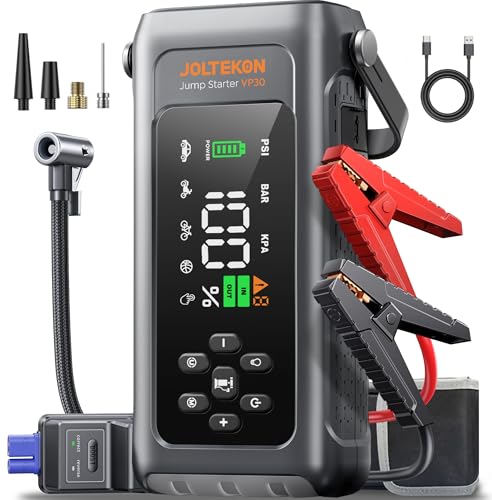
The JOLTEKON is a multi-function jump starter, so its weight would not represent an installed car battery.
This JOLTEKON unit combines a 4500A jump starter with a 150 PSI air compressor, lights, and a USB power bank. It is roadside equipment for helping start a vehicle and inflate tires, not a replacement battery.
The listing does not state its weight, so it cannot provide a direct pound-for-pound comparison with a full-size car battery.
Its compressor and emergency lighting may suit drivers who want several roadside functions in one kit. The listed engine coverage includes vehicles up to 9L gas and 8L diesel, but that claim does not establish compatibility with every vehicle.
Since the weight is omitted, I’d check the manufacturer or seller before assuming it is easy to carry. I would keep its category separate from installed-battery weight.
|
3
|
Mighty Max Battery MM-H6 Start and Stop Car BCI Group Size 48 12V 70 AH, 120RC, 760 CCA Re |

The Mighty Max MM-H6 is an actual 12V AGM replacement battery, unlike the portable jump boxes in this list.
The Mighty Max MM-H6 is a BCI Group 48, 12V AGM car battery rated at 70Ah and 760 CCA. It is an installed replacement battery, making it directly relevant to the question. However, the provided listing does not state its weight.
AGM construction and its reserve capacity describe performance, not a reliable way to calculate pounds.
This sealed, spill-resistant model may suit a vehicle that specifically calls for Group 48 and supports start-stop operation. Its 120-minute reserve capacity and vibration-resistant construction are useful selection details, but they do not replace a fitment check.
I would confirm the vehicle’s required group size and verify the exact weight with the manufacturer before arranging a lift or installation. The listing also lacks price and rating information.
|
4
|
AstroAI S8 Car Battery Jump Starter 1500A – Portable 12V Lithium Jump Box | BOOST for Dead |

The 0.95-pound AstroAI S8 shows how much lighter a portable starter is than a full-size car battery.
The AstroAI S8 is a 1500A lithium jump starter with a stated item weight of 0. 95 pounds. That figure answers a related carrying question, but not the weight of the installed car battery. It supports 12V vehicles and lists capacity for engines up to 6. 0L gas or 3.
0L diesel, with a boost mode for low-voltage batteries.
Its compact 7. 9-by-4. 5-by-3. 7-inch size and flashlight suit drivers who want emergency starting help in a travel bag or car compartment. Eight listed protections add safeguards during use. Still, a portable starter has limited stored energy and cannot replace a worn-out battery.
I would verify the vehicle’s starting requirements and keep the listed 0. 95 pounds separate from estimates for an automotive replacement.
|
5
|
Leaf Blower Cordless Handheld Blower 2×4.0Ah Batteries & Charger,Green | Small Lightweight |

This 1.12-pound leaf blower is unrelated to car-battery weight, despite its bundled rechargeable batteries.
This cordless handheld leaf blower is listed at 1. 12 pounds and includes two 4. 0Ah batteries and a charger. It is a yard and car-cleaning tool, not an automotive battery or jump starter. Its weight therefore cannot help estimate what a car battery weighs.
The listing describes airflow, speed adjustment, and nozzles rather than vehicle starting performance.
The blower may suit someone looking to clear leaves, dust, or light snow, or to dry a car after washing. Its two battery packs support longer tool use, but their individual weights are not specified here. The advertised 1.
12-pound figure should not be assumed to include every accessory or both batteries without checking the seller’s details. It does not belong in a car-battery weight comparison.
|
6
|
TPE Car Start-Stop Lithium Battery BCI Group47 LiFePO4 Lithium-ion Car Battery Lightweight |

The TPE Group 47 LiFePO4 replacement has a stated 11.02-pound weight, a direct lightweight-battery comparison.
The TPE is a Group 47, 12. 8V LiFePO4 automotive replacement battery, and its listing states a weight of 11. 02 pounds. That is a concrete example of a lightweight replacement, rather than a portable jump starter. It measures 9. 60 by 6. 92 by 7.
75 inches and lists 600 CCA, with testing reportedly reaching 700 CCA.
Its low stated weight may interest drivers whose vehicles accept Group 47 batteries and whose start-stop systems support this chemistry. The built-in management system and emergency switch are distinctive features. Fit and electrical compatibility still need confirmation; the listing specifically advises comparing dimensions and polarity.
Its weight should not be generalized to lead-acid batteries or other lithium replacements, and the product page reports no featured offers.
|
7
|
TREKURE Car Battery Jumper Starter Portable 5000A, Portable Car Jump Starter up to 10L Gas |

The TREKURE jump starter weighs 0.8 pounds, a portable-device figure rather than an installed-battery estimate.
The TREKURE 5000A is a portable jump starter listed at 0. 8 pounds. It can assist with starting vehicles, including engines rated up to 10L gas or 8L diesel, but it is not the car’s installed battery.
Its magnetic LED light, power-bank function, and detachable carry loop make this a compact roadside tool.
This model may fit drivers who want a small unit that can attach magnetically near a work area and provide hands-free light. The listing also describes force-start capability and ten safety protections.
Its compact weight does not indicate how heavy a replacement battery will be, and the advertised starting capacity should be checked against vehicle requirements. The listing provides no price or rating data.
|
8
|
10-in-1 Car Battery Jump Starter with Air Compressor 8000A 160PSI Portable Car Jumper Star |

This 8000A jump starter combines an inflator and lights, but its weight is not supplied for comparison.
This 10-in-1 unit combines an 8000A jump starter with a 160 PSI compressor, emergency lights, and device charging. It is a portable emergency kit, not an installed car battery.
The product description emphasizes support for gas and diesel engines, tire pressure monitoring, and multiple safety protections, but gives no item weight.
It may suit drivers who prefer one device for jump-starting and tire inflation, especially if the digital pressure display and automatic shutoff are useful. The listing contains inconsistent engine coverage across its claims, so I’d verify the capacity and compatibility before relying on it.
Without a stated weight, it cannot show how heavy a car battery is or even confirm the kit’s carrying burden.
|
9
|
OXILAM Jump Starter 6000A for All Gas/12L Diesel, Car Battery Jumper Starter Portable, 12V |

The OXILAM 6000A is a jump box, and its missing weight highlights why product specifications must be checked.
The OXILAM 6000A is a lithium jump starter with a power bank, LED display, and three-mode light. Its advertised compatibility includes gas engines and up to 12L diesel, but it remains a portable starting aid rather than a replacement battery.
The listing calls it compact without giving a specific weight, so that description cannot support a numerical comparison.
Its USB outputs, Type-C input, protective shell, and battery-status display may suit drivers who want charging and emergency starting in one unit. The listing claims up to 60 starts per charge, though actual results depend on conditions and vehicle needs.
I’d check exact weight and compatibility with the seller, and I would not use its portability as an estimate for the installed battery.
|
10
|
OMUGO Group 47 H5 12V LiFePO4 Car Battery, 800CCA Start-Stop, Lightweight | Built-in BMS p |

The OMUGO Group 47 LiFePO4 battery is listed at 20 pounds, a specific replacement-battery reference point.
The OMUGO Group 47/H5 is a 12V LiFePO4 replacement battery with 800 CCA and a stated weight of 20 pounds. That makes it a direct example for car-battery weight, unlike the jump starters. Its listed dimensions are 9. 60 by 6. 92 by 7.
75 inches, and it includes a built-in battery management system and voltage display.
The start-stop design and claimed cold-weather performance may appeal to drivers whose vehicles support this chemistry and Group 47 fitment. Its 20-pound figure is useful for this model only; it does not establish the weight of a factory lead-acid battery.
I would confirm polarity, dimensions, charging compatibility, and warranty terms before purchase. The listing does not provide a price or independent rating data.
Only three listings here are actual replacement batteries: the Mighty Max AGM, TPE lithium, and OMUGO lithium. The TPE lists 11. 02 pounds, while the OMUGO lists 20 pounds; Mighty Max provides no weight. The other products are mostly jump starters, whose listed or unlisted weights describe portable equipment.
Use the exact replacement model’s specification for a reliable answer.
Estimate Your Car Battery Before Replacing It
Once you identify the battery type and fitment, finding a useful weight estimate is straightforward. The key is matching the specification to the exact replacement, then planning for safe handling. A rough category average is not a substitute for that check.
Read the installed battery label for its brand, model, group size, and chemistry; photograph the label if access is awkward.
Search the exact model number on the manufacturer’s site, then check its technical specifications for net weight.
If the model is discontinued, ask a parts retailer to cross-reference the replacement and confirm its listed weight.
Compare the replacement’s dimensions and terminal position with the vehicle manual before ordering, even when its weight seems suitable.
Arrange assistance or professional installation if lifting the battery feels unsafe; do not improvise a lift using its cables.
A useful estimate starts with identification, not lifting. Battery group size can narrow the choices, but it does not guarantee a particular weight. Chemistry also matters: a lithium replacement may be much lighter than a lead-acid option, while battery capacity and construction affect the final figure.
Product pages sometimes show shipping weight, which can include packaging, so I’d check whether the specification refers to the product itself. If the exact model is unavailable, I treat comparable batteries as a range rather than an exact match.
A repair shop can identify the installed battery and provide a replacement specification without requiring removal. When handling is necessary, I would avoid carrying a battery by its terminals or tilting it unnecessarily. If you are uncertain about safe removal, I’d leave the task to a trained installer.
Handle And Dispose Of A Heavy Battery Safely
Knowing a battery’s weight helps with planning, but safe handling also depends on its condition and installation. Car batteries can be awkward to lift, and damaged units can expose users to corrosive material. A careful handoff or installation can prevent avoidable injury.
- Wear eye protection and gloves when handling a conventional battery, and follow the vehicle manual’s disconnect sequence.
- Keep the battery upright and use its handle only if the manufacturer provides one.
- Do not place tools or other metal objects across the terminals; a short circuit can cause burns or damage.
- Stop if the casing is cracked, swollen, leaking, or unusually hot, and keep others away from the unit.
- Use a retailer or recycling center that accepts automotive batteries; do not put them in household trash.
- Ask for installation help when the battery’s position, weight, or condition makes lifting difficult.
Separate Product From Shipping Weight
A seller may display a package weight that includes cardboard, protective material, or accessories. That number can differ from the battery’s own weight. I’d look for a manufacturer specification labeled net weight or product weight.
If the listing does not clarify the figure, I’d ask the seller before using it to plan a lift or compare replacements. Portable jump starters may include cables and cases in their package weight as well.
Confirm The Battery You Actually Need
A lighter battery is not automatically a suitable substitute. The replacement must match the vehicle’s required dimensions, terminal layout, electrical specifications, and supported chemistry. Start-stop vehicles may have specific battery requirements, and a portable jump starter cannot replace the installed unit.
I’d check the owner’s manual or consult a qualified parts professional before choosing a different battery type. Fit and compatibility come before weight savings.
A typical lead-acid car battery weighs about 30 to 50 pounds, though exact weight depends on its model and chemistry. Some lithium replacements weigh less, as the 11. 02-pound TPE and 20-pound OMUGO examples show.
Today, I’d advise checking the group size and model number on your battery label, then looking up the manufacturer’s product weight. If you are planning a replacement and lifting feels difficult, arrange help with removal and installation.

- Marine Chargers and Backup Batteries: 9 Options Compared (2026) - October 27, 2026
- LTO Cells vs. SLA Generator Batteries: 5 Options Compared (2026) - October 27, 2026
- 12V/24V Backup Batteries and the EcoFlow DELTA Pro 3 (2026) - October 27, 2026