What Batteries Does Calipers Use?
Digital calipers are only as good as the battery powering them. Most models run on LR44 or equivalent button cells, but getting the right voltage and physical fit is critical for accurate readings.
I’ve broken down which battery types actually work in these tools and highlighted options that keep measurements precise.
Why Calipers Need Specific Batteries
Calipers are sensitive to power fluctuations, so battery choice isn’t just about size. Using the wrong chemistry or a poor fit can cause erratic readings or total failure. Here is why matching specs matters for precision tools.
Most digital calipers need a steady 1. 5V source to maintain calibration. While LR44 and AG13 alkaline cells are the standard, some high-end models perform better with SR44 or 357 silver oxide batteries due to their flatter discharge curve.
Physical fit is equally important; even a fraction of a millimeter difference in thickness can prevent the compartment door from closing or making proper contact. Since calipers draw very little current, capacity matters less than voltage stability and shelf life.
I always recommend checking the existing battery’s label or the tool’s manual before buying replacements to avoid compatibility headaches.
| Battery Model | Voltage | Common Caliper Compatibility | Chemistry |
|---|---|---|---|
| LR44 | 1.5V | Most digital calipers | Alkaline |
| AG13 | 1.5V | Common alternative to LR44 | Alkaline |
| SR44 | 1.55V | Some high-end calipers | Silver Oxide |
| 357 | 1.5V | Often interchangeable with LR44 | Silver Oxide |
Signs Your Caliper Battery Needs Replacing
A failing battery often shows up as weird behavior before it dies completely. Catching these signs early saves you from doubting your measurements mid-project.
- The display flickers or turns off unexpectedly during use.
- Measurements become inconsistent or drift over time.
- The caliper powers down immediately after turning on.
- Error messages appear, such as ‘low battery’ or ‘E-BAT’.
- The device takes longer to respond to button presses.
Many digital calipers lack a low-battery warning light, so you have to watch for performance dips. If the display flickers, numbers jump erratically, or the tool resets when you slide the jaw, the voltage is likely sagging under load.
Because these tools rely on stable voltage for sensor accuracy, waiting for the screen to go blank is risky. I suggest swapping the battery at the first sign of inconsistency rather than troubleshooting the tool itself.
Keeping a spare pack in your toolbox prevents downtime when you’re in the middle of a critical measurement task.
Batteries That Power Digital Calipers Reliably
Not every button cell handles the low-draw demands of precision instruments equally well. These 10 options cover the voltage, size, and chemistry requirements for most digital calipers, ranging from bulk alkalines to premium silver oxide cells.
|
1
|
Amazon Basics 6-Pack LR44 Alkaline Button Cell Replacement Battery, 1.5 Volt, Long Lasting |
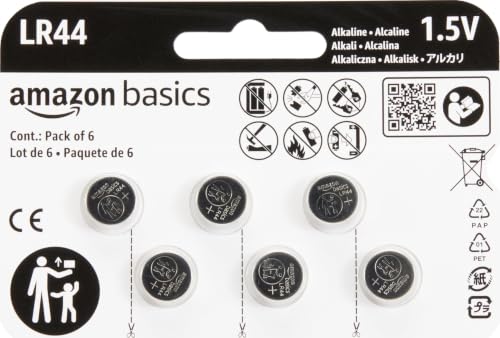
Standard LR44 alkaline cells in a convenient 6-pack size for quick replacements.
Amazon Basics 6-Pack LR44 batteries are a practical staple for caliper owners. These 1. 5V alkaline cells are mercury-free and sized correctly for most digital measuring tools.
The model number is clearly engraved on each cell, which helps avoid mix-ups in a crowded drawer, and the child-resistant packaging is a sensible safety feature. They offer a decent shelf life for occasional users who don’t cycle through batteries quickly.
My read is that this pack suits hobbyists or home workshops where calipers see intermittent use. While pricing and ratings aren’t visible here, Amazon Basics generally delivers consistent baseline performance for commodity electronics.
The 6-count size is manageable without being excessive, making it a logical backup supply rather than a primary bulk purchase for professionals.
|
2
|
Energizer 357/303 Batteries (3 Pack), 1.5V Silver Oxide Button Batteries | Reliable power, |
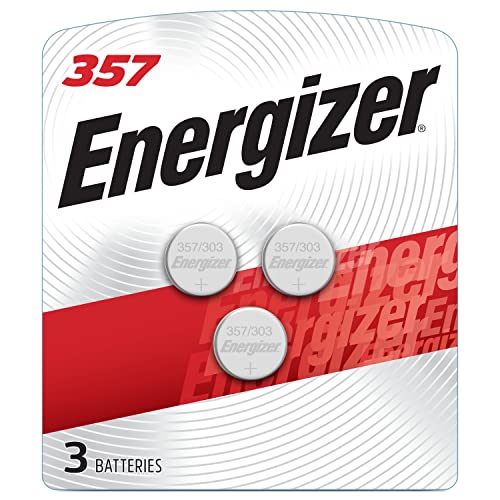
Silver oxide 357/303 chemistry provides the stable voltage curve preferred for high-precision calipers.
Energizer 357/303 batteries use silver oxide chemistry, which maintains a steadier voltage throughout its lifespan compared to alkaline alternatives. This 3-pack is compatible with SR44-sized compartments and holds power for up to five years in storage.
For calipers where voltage sag equals measurement error, this stability is a tangible benefit over cheaper options.
I would shortlist these for machinists or anyone using calipers for quality control where accuracy is non-negotiable. The higher cost per unit reflects the superior chemistry, and the 5-year shelf life makes them worth stocking even if you rarely swap batteries.
The 3-pack size is small, so heavy users might need to order multiple units, but for precision-critical applications, the trade-off is usually justified.
|
3
|
10 Pack LR44 Batteries 1.5V AG13 L1154F A76 357 303 SR44 Alkaline Battery | Long-Lasting a |

Budget-friendly 10-pack covers multiple compatible model numbers including 357 and 303 equivalents.
This unbranded 10-pack of LR44 batteries offers broad compatibility across AG13, A76, and 357 designations. Rated at 165mAh, they are tested for full voltage and leak resistance, which matters when batteries sit inside expensive tools. The dimensions (11. 6mm x 5.
4mm) match standard caliper compartments, and the listing explicitly calls out digital caliper compatibility.
For workshops burning through batteries across multiple tools, this bulk option keeps costs down. The lack of a major brand name might give some pause, but the stated testing and 3-year shelf life suggest adequate quality control for general-purpose use.
I’d consider these for secondary tools or backup calipers where absolute peak stability isn’t as critical as having fresh cells available.
|
4
|
Energizer LR44 / A76 Button Batteries, (10 Pack), 1.5V LR44 Batteries | Zero mercury minia |

Trusted brand LR44/A76 10-pack with zero-mercury formulation for environmentally conscious users.
Energizer’s LR44/A76 10-pack delivers reliable 1.5V alkaline power with a zero-mercury design. These are dimensionally identical to standard caliper batteries and come in packaging suitable for emergency kits or shop storage. The brand’s consistency reduces the guesswork around voltage output, which is helpful when swapping cells in sensitive electronics.
I view this as a safe middle-ground pick: reputable chemistry, reasonable quantity, and eco-friendly construction. They don’t offer the extended shelf life of silver oxide cells, but for users replacing batteries annually or biannually, that’s rarely an issue.
The 10-pack strikes a balance between bulk savings and freshness, avoiding the waste that comes with larger packs sitting unused for years.
|
5
|
POWEROWL High Capacity LR44 Batteries 40 Pack, L1154F AG13 357 303 SR44 A76 Premium Alkali |

High-capacity 40-pack with sealed anti-leak design for shops with heavy battery turnover.
POWEROWL’s 40-pack LR44 batteries are built for volume users. They claim 20% higher capacity and improved energy density over standard cells, along with dual crimps and anti-corrosion components to prevent leaks. The airtight seal helps preserve charge during storage, which is valuable when buying in bulk.
Compatibility spans LR44, SR44, AG13, and dozens of other common designations.
If you manage a shop with multiple calipers, micrometers, and gauges, this pack likely pays for itself quickly. The leak-prevention features address a real pain point with cheap bulk batteries damaging tool contacts.
While 40 cells may be overkill for individual users, the 24-month warranty and upgraded cell design make this a pragmatic choice for environments where battery swaps are routine maintenance.
|
6
|
PHILIPS LR44 Batteries 12 Count, Replaces AG13 A76 l1154f 357 303 SR44 AG13 Button Batteri |

Philips ultra-alkaline 12-count pack balances brand trust with practical quantity for home shops.
Philips LR44 batteries in this 12-count pack use an ultra-alkaline formulation aimed at consistent output in small electronics. They replace all standard AG13/A76/SR44 sizes and feature leak-proof construction to protect caliper internals. The value-pack sizing ensures you have spares without committing to industrial-scale quantities.
My take is that this sits in the sweet spot for serious DIYers or small professional setups. Philips’ reputation for electrical components lends confidence, and the 12-count avoids both the scarcity of 3-packs and the excess of 40-packs.
They lack silver oxide longevity, but for typical caliper duty cycles, ultra-alkaline performance should suffice without breaking the budget.
|
7
|
Voniko AG13 LR44 Batteries 20 Pack, [Ultra Power] Premium Alkaline 1.5 Volt LR44 Button Cel |

Voniko 20-pack features double corrosion protection specifically relevant for humid workshop environments.
Voniko’s AG13 LR44 20-pack emphasizes double corrosion protection, a key feature for preventing acid damage to caliper battery contacts. These 1.5V cells carry a 5-year shelf life and fit standard LR44/357/AG13 compartments. The anti-leak design addresses one of the biggest risks of storing batteries inside precision tools long-term.
I’d prioritize these for users in humid climates or those who store calipers for extended periods. Corrosion is often more destructive than simple depletion, and the added protection justifies choosing this over generic bulk packs.
The 20-count size offers good value for frequent users, though note the manufacturer’s warning against mixing old and new cells, a best practice regardless of brand.
|
8
|
youchen 15 Pack LR44 Alkaline Button Cell Battery,AG13 1.5V Coin Batteries | Battery for W |

Youchen 15-pack includes child-safe packaging and clear labeling for organized shop storage.
The youchen 15-pack LR44 batteries provide stable 1.5V output with leak-proof construction and a 3-year shelf life. Each cell is clearly marked for easy identification, and the child-resistant packaging adds safety for households or shared workspaces. The moderate pack size bridges the gap between single-use and bulk purchasing.
This feels like a practical choice for users who want organized, accessible spares without overbuying. Clear labeling prevents confusion with similar-sized cells, and the stable voltage supports reliable caliper operation. Brand recognition is lower than Energizer or Philips, but the specs align with what digital calipers require.
Suitable as a secondary supply or for mixed-device households.
|
9
|
Digital Caliper Measuring Tool, Stainless Steel Vernier Caliper Digital Micrometer with La |
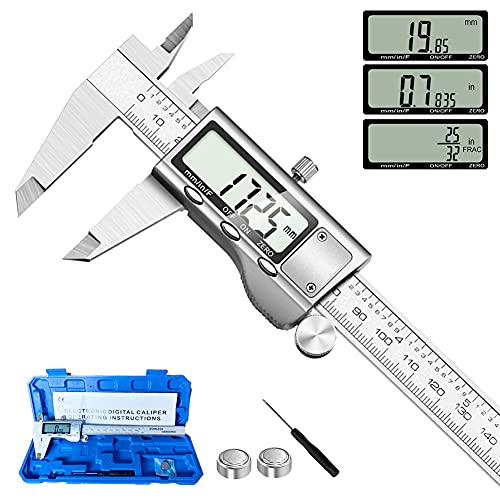
Complete digital caliper tool confirming LR44 compatibility for users needing both device and power source.
This 6-inch stainless steel digital caliper uses standard LR44 or equivalent batteries, confirming fitment for the cells listed elsewhere in this guide. Features include a large LCD, multiple measurement modes, and waterproof construction. Battery replacement is straightforward, and the auto-shutoff function helps extend cell life during intermittent use.
I included this because some users searching for caliper batteries actually need a replacement tool altogether. Note that batteries aren’t included, so pair this with any LR44 option above. The auto-shutoff is a genuine battery-saver, and the waterproof build reduces corrosion risk.
Ideal if your current caliper is damaged beyond a simple battery swap.
|
10
|
Vtreneg 10 Pack LR44 Batteries AG13 L1154F 357 303 1.5V Alkaline Batteries | For Watches, |

Vtreneg 10-pack focuses on leak resistance and compact storage for multi-tool households.
Vtreneg’s 10-pack LR44 batteries emphasize leak-resistant design and long-lasting 1.5V output for digital calipers and similar devices. The compact packaging stores easily in toolboxes or drawers, and the cells fit standard AG13/LR44 compartments. Leak prevention is highlighted as a core feature, protecting sensitive tool electronics.
This is a no-frills option for users who need dependable spares without premium pricing. The leak-resistant claim addresses a common failure mode in stored batteries, and the 10-count size works for homes with multiple battery-powered tools. Brand visibility is limited, but the specifications meet basic caliper requirements.
A reasonable pick for keeping a backup supply on hand.
From bulk alkalines for busy shops to silver oxide cells for precision work, these picks address different caliper power needs. All match standard compartment dimensions and deliver the voltage stability required for accurate measurements.
How to Replace a Caliper Battery Safely
Swapping a caliper battery seems trivial, but doing it carelessly can damage contacts or reset calibration. A methodical approach protects both the tool and the new cell.
Power off the caliper completely to prevent short circuits during the replacement.
Use a small screwdriver or coin to open the battery compartment, usually located on the back.
Remove the old battery carefully, noting its orientation (positive/negative sides).
Insert the new battery with the correct polarity, matching the compartment’s markings.
Close the compartment securely and test the caliper to confirm it powers on.
Reset the caliper to zero if required, as some models may need recalibration.
- Forcing the battery into the compartment if it doesn’t fit easily.
- Mixing old and new batteries, which can cause uneven power drain.
- Using rechargeable batteries unless the caliper explicitly supports them.
- Touching the battery terminals with bare hands for extended periods.
- Storing spare batteries in extreme heat or humidity.
When to Upgrade Your Caliper’s Power Source
Premium batteries aren’t always necessary, but certain use cases justify the upgrade. Here’s how to decide when to spend more.
Frequent Use
Daily caliper users will find cheap alkalines drain faster and pose higher leak risks. Upgrading to high-capacity or silver oxide cells reduces swap frequency and protects tool internals. Bulk packs further lower cost-per-use for high-volume environments.
Precision Work
Sub-millimeter accuracy demands stable voltage. Silver oxide batteries like Energizer 357 maintain a flatter discharge curve than alkalines, minimizing measurement drift. This matters most in machining, QC, or any task where voltage sag translates directly to error.
Harsh Environments
Humid or variable-temperature workshops accelerate corrosion. Sealed designs like POWEROWL’s or Voniko’s double-protection cells resist leaks that destroy caliper circuitry. In harsh conditions, paying extra for anti-leak features is cheaper than replacing a damaged tool.
Quantity also factors into the decision. If you power multiple calipers or share batteries across tools, bulk packs like POWEROWL’s 40-count or Voniko’s 20-count deliver better economics. Occasional users are better served by smaller packs from Energizer or Amazon Basics to avoid stale inventory.
Always verify whether your caliper specifies silver oxide over alkaline, some high-end models depend on it for rated accuracy.
Storing Spare Batteries for Calipers
How you store spare batteries affects both their lifespan and your caliper’s safety. Simple habits prevent waste and tool damage.
| Storage Condition | Impact on Batteries | Recommended Action |
|---|---|---|
| Room Temperature | Optimal performance | Store in a cool, dry place |
| High Humidity | Increased corrosion risk | Use sealed containers with silica gel |
| Direct Sunlight | Reduced shelf life | Keep in a dark drawer or cabinet |
| Mixed with Other Batteries | Uneven discharge | Store batteries separately by type |
| Loose in a Toolbox | Physical damage | Use original packaging or a battery case |
Even premium cells degrade if stored poorly. Never mix old and new batteries in a caliper; mismatched voltages strain the weaker cell and increase leak risk. Label storage containers by type and date to rotate stock effectively. Check expiration dates periodically, especially for emergency spares.
Silver oxide cells like Energizer 357/303 tolerate longer storage but still benefit from cool, dry conditions and organized rotation.
Most digital calipers use LR44, AG13, or equivalent 1.5V button cells, but verifying your specific model’s requirements avoids costly mismatches. Whether you need bulk alkalines for a busy shop or silver oxide for precision work, keeping fresh batteries on hand ensures your caliper stays accurate when it matters most.

- 10 Best Battery For Generator Ev Battery Bank Marine 2026 - October 27, 2026
- 10 Best Battery For Generator Ev Battery Bank Lto 2026 - October 27, 2026
- 10 Best Battery For Generator Ev Battery Bank Low Voltage 2026 - October 27, 2026