What Size Battery For Smoke Detector?
Here’s the short version: most smoke detectors run on either a single 9-volt alkaline battery or a pair of AA batteries, and which one you need depends on the model you already have hanging on the wall.
If yours chirps at you every 30 seconds or you’ve got a front-loading battery door, you’re probably looking at a 9V. Hardwired units with a battery backup tend to take AAs. My advice?
Pop out the old battery, look at the label, or check the little sticker inside the compartment before you grab anything off the shelf. Below I walk through how to nail down the right size and lay out specific batteries and alarms worth a look.
Why Battery Size Matters for Smoke Detectors
Recommended Products


Before you spend money on a replacement, I would check the exact size your detector calls for. It takes thirty seconds, and it saves you from opening a package, realizing the battery doesn’t fit, and running back to the store. Here are the quickest ways to confirm.
Most smoke detectors fall into one of two categories. The first type uses a single 9-volt battery, typically alkaline or lithium. The second type uses two AA batteries, often included with the unit. Some older models may use a 6-volt lantern battery, but this is rare.
To determine which your detector needs, remove the old battery and check its size. Alternatively, look inside the battery compartment for a label listing the required type. Installing the correct battery ensures reliable operation and prevents unnecessary chirping.
Common Smoke Detector Battery Types
| Battery Type | Voltage | Typical Use | Notes |
|---|---|---|---|
| 9V Alkaline | 9V | Most standard detectors | Replace annually |
| AA (2x) | 3V | Some modern alarms | Longer lifespan |
| 9V Lithium | 9V | 10-year sealed units | Non-replaceable |
| AA (1x) | 1.5V | Rare, low-power units | Limited use |
How to Check Your Smoke Detector Battery Size
Recommended Products


Before buying a replacement battery, confirm the exact size your smoke detector requires. This section outlines the quickest ways to check, including visual inspection and manufacturer labels.
Remove the old battery and note its size printed on the casing.
Look inside the battery compartment for a label listing the required type.
Check the user manual or manufacturer website for your model number.
Hold the old battery next to a new one to confirm physical fit.
If unsure, contact the manufacturer with your model number.
- Always match the voltage exactly to prevent power issues.
- Use alkaline batteries for standard 9V detectors unless specified otherwise.
- Avoid generic or off-brand batteries in life-safety devices.
- Replace batteries annually, even if they still work.
- Test the alarm after installing a new battery.
- Keep a spare battery in an easily accessible location.
Picks To Power Your Smoke Detector Correctly
Recommended Products


So, what size battery does your smoke detector actually need? Depending on whether you’re topping off a 9V, swapping in AAs, or replacing the whole alarm, the answer shifts.
The options below cover that spread, from bulk alkaline packs you can drop in today to sealed detectors that take the annual battery-swap chore off your plate entirely.
|
1
|
Amazon Basics 8-Pack 9V Long-Lasting Alkaline Batteries for Smoke Detector, Electronics & |

Eight 9V alkalines in one pack means you can handle every detector in the house in a single annual pass without running out mid-year.
I would shortlist the Amazon Basics 8-Pack 9V Alkaline Batteries if you’ve got three or four detectors and want to grab them all at once.
Each battery carries a five-year leak-free shelf life, so you can tuck a few in a drawer for emergencies and still rotate the rest on schedule. The packaging is the standard frustration-free kind, no plastic rings to fish out, just open and store.
The practical play here is stocking up during a sale and swapping them all at the same time each year, which keeps your rotation simple.
One caveat: these are single-use alkalines, not rechargeable, so if you’re in the camp that wants to plug things in overnight and reuse them, this isn’t the pack for you. I’d point it toward anyone who just wants a reliable, no-fuss bulk supply and doesn’t mind buying fresh cells annually.
|
2
|
First Alert Battery Smoke Alarm | SMI100, 1-Pack |

The SMI100 is a complete alarm that takes a standard 9V, so you skip the guesswork of matching a battery to a bare circuit board.
The First Alert SMI100 is essentially a single detector in a box, ready to mount. It runs on a standard 9V battery that you slide in and swap out roughly once a year.
Under the hood, it uses what First Alert calls Precision Detection sensing, which is designed to cut down on the classic false alarms you get when you’re making a big pot of rice or steaming a dish, while still catching real smoke early. Installation is straightforward, two screws, done.
My read is that this works well in a studio, a one-bedroom apartment, or a small office where one detector covers the whole space. The front-access battery door means you don’t have to twist the unit off the ceiling to reach the compartment.
The trade-off is coverage: one unit, one room. If you’ve got a two-bedroom place or a long hallway, you’ll want more. I’d recommend it for someone replacing a single old alarm or setting up a first alarm in a rental.
|
3
|
DURACELL Coppertop 9V Battery, 6 Count, Smoke Detector Battery |
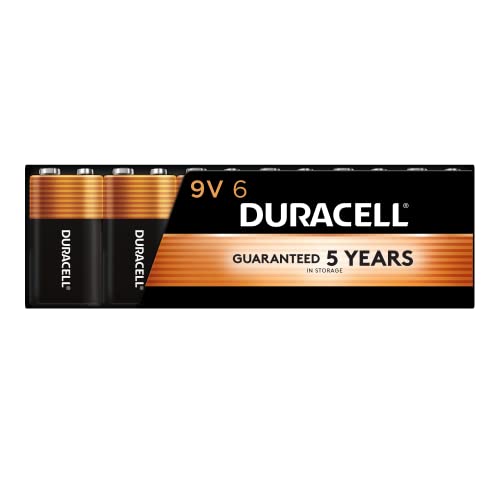
Six Duracell 9Vs is enough to cover a typical house’s detectors plus a couple of spares, and the five-year storage guarantee means they won’t sit in a drawer and go flat.
The Duracell Coppertop 9V, 6 Count, is the one I’d reach for if brand matters to you and you want a battery you can set in a cabinet and forget about for a couple of years.
They’re marketed as the go-to for smoke detectors, CO monitors, security sensors, and alarm systems, and the five-year storage guarantee is backed by the manufacturer. Beyond home safety gear, the same cell handles walkie-talkies, guitar pedals, and multimeters, so the pack isn’t strictly single-use.
For a household with four or five 9V detectors, six batteries gets you through the year with a spare or two in reserve. The limitation I’d flag is quantity: if you’ve got a larger home or a landlord-style setup with ten or more units, six won’t stretch far.
I’d point this at homeowners who trust the Duracell name, want to replace their detector batteries on a yearly cycle, and prefer not to make a special trip just for batteries.
|
4
|
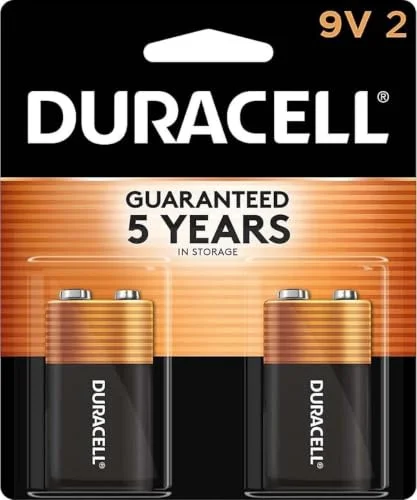
Duracell Coppertop 9V Battery, 2 Count, Smoke Detector, Long-lasting |
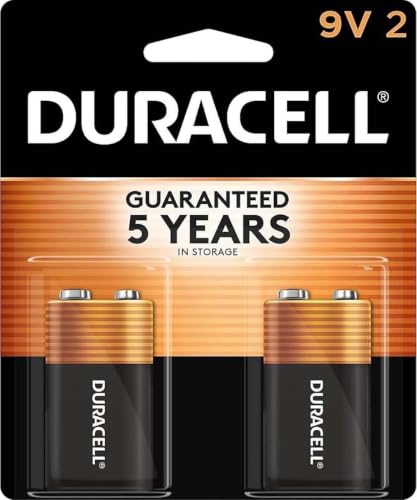
Two Duracell 9Vs is a neat little pack for a one- or two-detector home where you just need to top off without over-buying.
The 2-Count Duracell Coppertop 9V is the compact sibling to the six-pack. These are the same alkaline cells with the same five-year shelf life, just in a smaller sleeve.
In typical smoke-detector duty they’ll carry power through a full year of standby operation, so if you’re running one or two alarms, two fresh cells every time feels about right. You don’t end up with four spares gathering dust in a junk drawer.
I’d suggest this if you’ve got a small flat, a single bedroom apartment, or maybe a detector in a garage and one upstairs, and you simply don’t want a whole tray of batteries.
The main drawback is that if you ever add another detector or the chemistry drains a bit faster in a cold garage, two might not last the full year. Best for minimalists who want exactly what they need and nothing extra.
|
5
|
First Alert Battery Smoke Alarm | SMI100, 2-Pack |

Two complete First Alert detectors means you can cover two rooms at once, each running on the same 9V format so your replacement schedule stays uniform.
The SMI100 2-Pack puts two identical detectors in one box, which is handy if you’re outfitting a bedroom and a hallway, or adding coverage where you previously had just one alarm.
Each unit runs on a standard 9V and uses the same Precision Detection sensing to keep cooking false alarms to a minimum. The front-access battery door on both makes the annual swap quick, you don’t have to wrestle the unit off the wall.
One thing to note: the listing doesn’t include the batteries, so budget for a couple of 9Vs to match.
I’d recommend this pair if you’re building out a two-room setup and want the detectors to match in form factor and sensing type, which keeps maintenance simple. It’s less ideal if you need four or five rooms covered; you’d be back on the ordering page anyway.
For someone expanding an existing single-alarm setup to a small two-room footprint, the matched pair makes sense.
|
6
|
XUNIUZERO 9V Batteries 6F22 Square Battery (4 Pack) for Smoke Detector Alarm System, Wirel |

Four XUNIUZERO 9V cells cover a small-to-mid size home and include a temperature resilience range that’s unusual in this price bracket.
The XUNIUZERO 9V Batteries, 4 Pack, are square 6F22 cells aimed squarely at smoke detectors and wireless alarm gear.
What catches my eye in the spec is the temperature window: they’re rated to hold a charge from -4°F up to 140°F, which matters if your detector lives in a garage, a detached shed, or a home that gets really cold in winter.
The shell is corrosion-resistant steel with leak-proof sealing, and the low self-discharge design means they don’t bleed power while sitting on a shelf. They’re also free of mercury, cadmium, and lead.
I’d put these on the list for someone who needs four or so replacements and wants to keep the cost down without going full-name-brand. They also handle wireless doorbells, multimeters, and security sensors, so the pack isn’t locked to one use.
The honest trade-off: carbon-zinc chemistry can fade faster than premium alkaline in high-drain applications, so if your detector is a heavy user, you might cycle through them a bit sooner. For value-minded buyers who just need dependable backup cells, this is a reasonable pick.
|
7
|
Kidde Compact Smoke Detector, AA Battery-Powered, 10SDR | 4-Inch Smoke Alarm with LED Stat |

The Kidde 10SDR takes two AAs (included), so you never have to chase a 9V pack or worry about the classic chirp-and-replace cycle.
The Kidde Compact Smoke Detector 10SDR is a small four-inch unit that runs on two AA batteries, which are included when you open the box. It pushes an 85-decibel siren plus a flashing red LED, so even if you’re hard of hearing or in another room, the visual cue helps.
The sensing tech is tuned to ignore the steam from a pot or the smoke from a broiler, and it meets UL 217 10th Edition. There’s a 10-year limited warranty on the unit itself.
I’d point renters and small-homeowners toward this one. It’s low-profile, easy to mount, and the AA format means you can grab replacements at any gas station without hunting for 9Vs.
The size is the one constraint: at four inches across, it won’t project the same volume in a big open-plan living area that a larger detector might. If your layout has a couple of small rooms or a hallway, it’s a tidy, code-compliant option that sidesteps the 9V question entirely.
|
8
|
PKNOVA 9V Batteries Carbon 9 Volt Battery for Smoke Detector 9V 6F22 Square Battery, Long- |

Four PKNOVA 9V cells are a budget-friendly way to cover a small setup, and the double-seal construction is a thoughtful nod to preventing the dreaded battery leak.
The PKNOVA 9V Batteries, 4 Pack, are carbon-zinc cells built for smoke detectors and alarm systems.
The double-sealed construction is the feature I’d highlight: it’s designed to keep electrolyte from leaking onto the contacts inside your detector, which is the failure mode that actually destroys the unit and costs you more than the battery.
They’re also free of chromium, lead, and mercury, and the low self-discharge design keeps the charge stable across a wide temperature range.
I’d recommend these as the backup battery you keep in a drawer for multiple 9V devices, the detector, a garage door opener, a wireless doorbell. The price point is lower than alkaline-name-brand packs, and for a device that mostly sits in standby, that’s a fair trade.
The catch is that carbon-zinc chemistry can’t match alkaline’s energy density in sustained high-drain use, so if your detector is in a particularly cold or hot environment, you might see the battery window shrink a little.
For everyday, moderate-use situations where you just want a cheap, environmentally cleaner swap, this works.
|
9
|
SITERWELL 10 Pack Smoke Detector, 10 Year Product Life Fire Alarm | Battery Smoke Alarms w |

The SITERWELL GS509A bakes the battery into the unit for a ten-year service window, so you skip the annual battery-swap ritual entirely.
The SITERWELL 10 Pack GS509A are photoelectric smoke alarms with a built-in battery that’s designed to be swapped out year by year for a full decade of operation.
Each one includes a one-year 9V battery in the sealed compartment, so you can mount it and not think about power until it’s time for the next annual swap.
The photoelectric sensing is good at catching slow, smoldering fires that ionic detectors sometimes miss, and the alarm hits 85 dB when triggered. There’s a test/mute button and a low-battery warning on each unit.
I’d look at this pack if you’re outfitting a large home, a duplex, or a landlord portfolio where you want to minimize the number of times you have to open a battery compartment over the next ten years. The bulk of ten units makes the per-detection cost reasonable.
One thing to keep in mind: the battery is sealed inside and not user-replaceable, so after the ten-year window you swap the entire alarm rather than just the cell. If that maintenance cycle fits your planning, it takes a recurring chore off your list.
|
10
|
Energizer Alkaline Power 9V Batteries (8 Pack), Long-Lasting | Smoke detector battery for |

Eight Energizer 9Vs give you a full year of replacements for a typical home, plus a couple of spares, from a brand most people already recognize.
The Energizer Alkaline Power 9V, 8 Pack, are alkaline cells that cover the same territory as the Amazon Basics and Duracell packs, smoke detectors, digital clocks, handheld meters, radios.
They carry a five-year storage life, so you can buy them during a sale and not worry about them going flat in a drawer by next spring. They’re also made with recycled materials, which is a small but meaningful point if that’s a factor for you.
I’d suggest this pack for a homeowner who replaces all their 9V detector batteries at once each year and wants a recognizable mid-tier brand without stepping up to the premium shelf.
One thing to keep in mind: alkaline cells do lose a bit of available capacity in really cold temperatures, so if your detector is in an uninsulated garage or a workshop that drops below freezing in winter, you might see the battery window tighten a few weeks.
Otherwise, it’s a consistent, no-surprises choice from a name you’ve probably seen in the aisle.
Whether your detector wants a 9V, a pair of AAs, or you’re ready to swap the whole unit for a sealed 10-year alarm, the picks above cover that spread.
Bulk alkaline packs keep the annual swap cheap and quick, while sealed detectors like the SITERWELL push maintenance into a decade-long cycle. The common thread: figure out what your current unit actually takes, grab the matching format, and put a reminder on your calendar.
That single habit is what keeps the alarm from going silent at the worst possible moment.
How Often Should You Replace a Smoke Detector Battery?
Recommended Products


Getting the right size is step one, but timing is step two. Even a perfectly matched 9V will eventually need replacing, and most people wait until the chirping gets annoying. This section lays out a simple cadence that keeps you ahead of that.
For standard 9V or AA alkaline batteries in a smoke detector, the manufacturer’s guidance is to swap them once a year, no exceptions. Pick a date you’ll actually remember, a holiday, your birthday, the first Sunday of a month, and put a recurring reminder on your phone.
If you’ve got a lithium 9V in a sealed 10-year alarm, the window is longer, but you still want to check the low-battery indicator at least twice a year. The universal tell that something’s off: the chirp. It’s not a warning you can sit on.
If your detector starts chirping on a regular interval, the battery is in its last few percent, and you should swap it that same evening, not ‘when I get around to it.’
Battery Replacement Timeline
| Battery Type | Recommended Replacement Interval | Chirp Indicates |
|---|---|---|
| 9V Alkaline | Annually | Low power |
| AA Alkaline | Annually | End of life |
| 9V Lithium | Every 10 years | Sealed unit |
| AA Lithium | Every 10 years | Internal |
Troubleshooting Common Smoke Detector Power Issues
Sometimes the battery’s fine and the detector still acts up. This last section walks through the usual suspects when a smoke alarm chirps after a fresh swap or flat-out refuses to sound.
Chirping Despite New Batteries
If you just dropped in a brand-new battery and the chirp doesn’t stop, the problem is probably not the battery. A dirty photoelectric sensor or a loose internal connection will make the unit think it’s in trouble even with full power.
My go-to fix: pull the battery, hold the test button for ten seconds to drain whatever residual charge is left, then put the battery back in. If the chirp still won’t quit, open the detector and look inside.
A year of kitchen dust or pet hair on the sensor lens is enough to trigger a false low-battery or error signal. A soft brush or a can of compressed air (held upright so it doesn’t spray liquid) usually clears it.
Give it a test button press after, and you should be back to quiet.
Detector Fails To Sound During Testing
A detector that doesn’t respond at all when you hit the test button is a different animal. First, make sure the battery is seated fully and the contacts aren’t green or white with corrosion. A cotton swab with a dab of rubbing alcohol cleans the contacts in about a minute.
If the battery’s good, the contacts are clean, and the test button still gets no response, the internal circuit board may be shot, especially if the unit is past its ten-year mark. At that point, I’d stop troubleshooting and just replace the whole detector.
A decade-old alarm with a tired PCB isn’t going to catch a fire that’s starting in another room, and the replacement cost is lower than the peace-of-mind you’d lose by keeping it.
- Always replace an entire set of batteries at the same time.
- Check the expiration date on new batteries before installing.
- Clean your detector monthly to prevent dust interference.
- Never paint or cover your smoke detector with decorations.
- Keep spare batteries in an accessible location.
- Replace the entire detector after ten years regardless of function.
Pull the battery out, read the label, and you’ll know in five seconds whether you need a 9V or a pair of AAs.
Grab a pack of the right format from the list above, or, if your detector is pushing past ten years, go ahead and order a sealed 10-year alarm so the next battery conversation you have with yourself is a decade away.
Either way, put the date in your calendar now, not when the chirping starts.

- 10 Best Battery For Generator Ev Battery Bank Marine 2026 - October 27, 2026
- 10 Best Battery For Generator Ev Battery Bank Lto 2026 - October 27, 2026
- 10 Best Battery For Generator Ev Battery Bank Low Voltage 2026 - October 27, 2026