How Often Should Car Batteries Be Replaced?
There’s nothing quite like that moment when your car refuses to turn over on a chilly morning , sudden, frustrating, and usually pointing to a battery on its last legs.
Most people have a vague sense that car batteries don’t last forever, but they’re surprised by just how much variation there is in real-world lifespan.
Depending on where you live, how you drive, and even the make of your car, you might be looking at three years or closer to six. The trick is catching the warning signs before you end up roadside.
This rundown walks through what actually causes batteries to fade and which replacements are worth considering when it’s time to swap.
Why Car Batteries Lose Power Over Time
Batteries don’t really ‘wear out’ the way a tire does , they degrade from the inside out. Heat tends to be the silent killer here, sneaking up faster than cold weather ever does.
Once you get how the chemistry works, you start seeing the pattern in your own vehicle a lot sooner.
The Impact of Extreme Heat
Hot weather is brutal on lead-acid batteries because it speeds up fluid evaporation inside the casing. When that happens, there’s less active material available to generate current, and the plates start corroding faster.
If you’ve ever noticed your battery in Arizona or Texas lasting just a couple of summers, that’s why. The heat also takes a toll on the plastic housing, making it more brittle over time. Southern climates are basically an endurance test for any battery.
Cold Weather Starting Demands
Cold mornings are when you feel the effects most , thickened oil means the starter has to work harder, and the battery needs to push out a big surge of power all at once.
The chemical reactions inside slow down temporarily, which is why a battery that seemed fine yesterday suddenly won’t crank the engine. It’s often the last straw for an already weakened unit, which is why you hear that clicking noise instead of a roar.
- Test voltage levels regularly after the battery reaches three years old.
- Clean terminal corrosion immediately to prevent poor electrical connections.
- Secure the hold-down clamp tightly to reduce harmful vibration damage.
- Avoid short trips that prevent the alternator from fully recharging cells.
- Park in shaded areas whenever possible to minimize heat exposure risks.
Reliable Picks To Replace Your Aging Car Battery
Once you know your group size and CCA needs, the real decision comes down to build quality and warranty. The nine here cover the common sizes people actually need, and each leans a little differently depending on whether you prioritize cold-weather starts, long cycle life, or just plain reliability.
I’d shortlist based on your climate and driving habits , start-stop systems and short trips are harder on batteries than highway runs, so factor that in.
|
1
|
ACDelco Gold 48AGM (88864541) 36 Month Warranty AGM BCI Group 48 Battery |
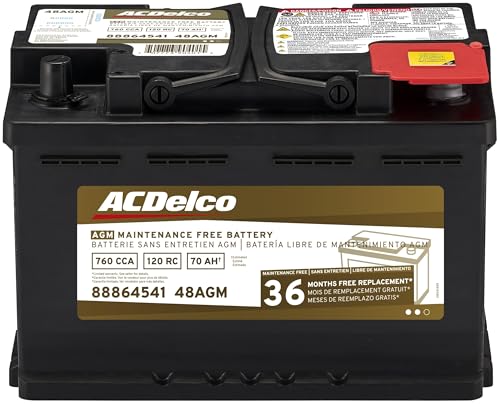
ACDelco’s paste formulation keeps internal resistance low even as the battery ages, which is why it holds up well past the typical replacement window.
The ACDelco Gold 48AGM feels overbuilt in the best way , thick casing, secure terminal connections, and that distinctive AGM slosh you hear when you shake it (in a good way).
The calcium grid design helps it hold voltage steady even after sitting for a few days, which matters if you don’t drive every day. It’s the kind of battery you install and forget about for a while.
GM backing isn’t just a marketing line here , there’s a reason dealerships spec these for newer models. The 36-month warranty is standard, but the real test is how it behaves under stop-and-go driving.
If you’re in a cold climate, the 760 CCA gives you some breathing room on brutal mornings. Downside? It’s pricier than basic flooded options, so budget accordingly. Just double-check the group 48 fitment before ordering.
|
2
|
Mighty Max Battery MM-H6 Start and Stop Car BCI Group Size 48 12V 70 AH, 120RC, 760 CCA Re |

Mighty Max keeps the CCA high without bloating the case size, which makes it versatile across different Group 48 vehicles.
This Mighty Max MM-H6 sits firmly in the ‘good enough’ camp, and honestly, that’s perfectly fine for most drivers. The 760 CCA gives it serious cold-start capability, and the AGM design means no maintenance headaches.
It’s not glamorous, but it’s reliable and straightforward , exactly what you want from a battery. The build feels sturdy enough for daily commuting, and the sealed design is a bonus if you’re tired of checking water levels.
|
3
|
ACDelco Gold Automotive Battery 94RAGM | PN 88864542 | 12V Car Battery AGM Group 94R/H7 Ba |

If your car calls for a 94R, ACDelco’s AGM version gives you the premium power without paying dealer prices.
The ACDelco 94RAGM is clearly aimed at luxury vehicles , tighter specs, more precise terminal placement, and the kind of consistent output that high-end electronics appreciate. It’s not just about raw power here; it’s about maintaining steady voltage so your infotainment, navigation, and driver-assist systems don’t hiccup.
The pressurized valve and envelope separators feel like thoughtful touches, especially if you’ve dealt with cheaper alternatives leaking or failing prematurely.
|
4
|
Weize Platinum AGM Battery BCI Group 48-12v 70ah H6 Size 48 Automotive Battery, 120RC, 760 |

Weize’s AGM construction pushes cycle life well past standard flooded designs, which matters for start-stop driving.
The Weize Platinum H6 is one of those batteries that feels engineered for modern driving , frequent stops, regenerative braking, and all the electrical demands that come with newer cars. The 70Ah capacity and 760 CCA combo gives it a nice balance of punch and endurance.
I like that the specs list out operating temps and charging parameters; it tells you they’re thinking about real-world usage, not just lab conditions.
|
5
|
Weize Platinum AGM Battery BCI Group 94R – 12v 80ah H7 Size 94R Automotive Battery, 140RC, |

Extra capacity and CCA make this one a strong choice if you’re towing or running serious accessories.
For bigger engines or vehicles with lots of electronics, the Weize 94R delivers without hesitation. The 80Ah capacity means you’re not constantly recovering from deep drains, and 850 CCA gives serious cold-cranking authority.
If you’re in a region with harsh winters and a V6 or bigger, this one earns its keep. The dimensions line up well with European luxury sedans too, which is helpful if you’re shopping for something specific.
|
6
|
Mighty Max Battery MM-H5 Start and Stop Car BCI Group Size 47 12V 60 AH, 100RC, 680 CCA Re |

Compact tray fit without sacrificing the cranking power you need for daily driving.
The Mighty Max MM-H5 is a practical pick for smaller cars that still need reliable starting. The 680 CCA is plenty for most four-cylinders, and the AGM design keeps things clean under the hood. It’s one of those batteries that won’t surprise you , just does its job quietly.
If you’re not pushing huge loads or driving in extreme cold, this one hits the sweet spot between performance and price.
|
7
|
Weize Platinum AGM Battery BCI Group 24F Automotive Battery, 120RC, 710CCA, 36 Months Warr |

Built for sustained power delivery in consistently hot environments.
The Weize 24F earns respect in hot climates , its heat-resistant separators and acid absorption design handle sustained high temps without breaking a sweat. If you live somewhere where summer isn’t just a season but a lifestyle, this one’s worth a look.
The 710 CCA gives a solid buffer for unexpected cold snaps, and the low self-discharge rate means it holds charge well during long storage periods. It’s the kind of battery you appreciate after dealing with others failing too soon.
|
8
|
Weize Platinum AGM Battery BCI Group 35 Automotive Battery, 100RC, 650CCA, 36 Months Warra |

Small footprint with enough punch for lighter-duty applications.
If your car sits on the smaller side or you’re in a mild climate, the Weize 35 delivers without overcomplicating things. The 650 CCA is adequate for most four-cylinder setups, and the compact dimensions mean it fits where others might not.
It’s a no-fuss option for people who want reliability without paying for features they’ll never use. The AGM construction still gives you the spill-proof benefit, which matters if you’re loading and unloading your trunk frequently.
|
9
|
Mighty Max Battery MM-G35 Start and Stop Car BCI Group Size 35 12V 55Ah, 100RC, 650 CCA Re |

High reserve capacity keeps power flowing longer during extended accessory use.
The Mighty Max G35 leans into its 100-minute reserve capacity, which means it can keep your lights, radio, and other essentials running even if the alternator takes a break. That’s a nice safety net for people who frequently run accessories with the engine off.
The build quality feels rugged enough for daily abuse, and the AGM design eliminates one more thing to worry about. It’s not the flashiest battery on the list, but it’s dependable.
From compact Group 35s to larger 94Rs, these options give you room to match your vehicle’s actual needs instead of guessing. AGM batteries dominate the field because they handle modern driving demands better , start-stop systems, higher electrical loads, and longer service intervals all favor them.
Pick based on your real-world usage: climate, driving patterns, and how much electrical gear you rely on. Install it right, and it’ll keep you moving for years.
Signs Your Current Battery Needs Immediate Replacement
By the time you notice dimming headlights or a slow crank, the battery’s usually well into its decline phase. These aren’t minor inconveniences , they’re warning shots.
| Symptom | Likely Cause | Action Required |
|---|---|---|
| Slow engine crank | Low voltage output | Load test immediately |
| Dim headlights | Weak cell connection | Check terminals first |
| Swollen battery case | Excessive heat damage | Replace unit now |
| Old age over 4 years | Natural chemical decay | Proactive replacement advised |
Take a walk around your car and look at the battery itself. Bulging sides, white or bluish corrosion around the terminals, or fluid leaks are dead giveaways. Age plays a role too , if it’s been three years and you’re noticing sluggish starts, don’t wait for the fourth.
Auto parts stores will test your battery for free, and that five-minute check could save you from a stranded weekend. Ignoring these signs usually ends with a jump start and a tow truck bill , neither of which are fun.
Maximizing Lifespan After Installing Your New Battery
Proper care extends the service life of your new investment significantly. Simple habits reduce stress on internal components during daily operation. Follow these steps to ensure you reach the full expected lifespan.
Tighten hold-down clamps securely to prevent vibration damage during driving.
Apply dielectric grease to terminals to block moisture and future corrosion.
Drive frequently for longer durations allowing full alternator recharging cycles.
Turn off all electronics before shutting down the engine to save power.
Keep the terminals clean and tight , corrosion acts like a resistor and makes everything work harder. If you take a lot of short trips, consider a trickle charger or battery maintainer to keep things topped off.
The alternator isn’t designed to fully recharge a deeply drained battery, so topping off between drives helps. And if you can park in the shade or a garage, do it , consistent temperature swings are tougher on a battery than steady heat.
These aren’t complicated steps, but they’ll shave years off your replacement schedule.
Plan on replacing your car battery every three to five years, sooner if you live in an extreme climate or drive mostly short trips. If yours is pushing four years, get it tested , most auto parts stores do it while you wait.
A replacement now is a lot cheaper than a tow later, and you’ll sleep better knowing you’re not playing roulette with your morning commute.

- Marine Chargers and Backup Batteries: 9 Options Compared (2026) - October 27, 2026
- LTO Cells vs. SLA Generator Batteries: 5 Options Compared (2026) - October 27, 2026
- 12V/24V Backup Batteries and the EcoFlow DELTA Pro 3 (2026) - October 27, 2026