Battery Sulfation Stages: Crystal Buildup and Charger Options
When a battery develops sulfation, lead sulfate crystals start coating the internal plates. This buildup blocks the chemical reactions that keep things running, so you end up with sluggish engine cranks, dim headlights, and a battery that just won’t hang onto a charge.
Sulfation happens naturally over time, but it speeds up with neglect, long idle periods, and cold weather. If you catch it early, the right charger can often reverse it. This piece breaks down what’s really going on with sulfation and looks at chargers built to fight it.
Why Batteries Sulfate
Sulfation kicks in when a lead-acid battery sits partially discharged. Lead sulfate starts forming on the plates, and if it stays there too long, those crystals harden and resist normal charging.
Voltage and temperature play big roles in how quickly this happens, and understanding that helps you stop it before it gets serious.
Lead-acid batteries depend on a reaction between lead plates and sulfuric acid. Discharging turns that active material into lead sulfate, and ideally, a full charge reverses it. But if the battery stays half-dead, the crystals harden into something that regular chargers can’t push through.
These crystals insulate the plates, shrinking the space that actually stores energy. The result? A battery that feels weak or dead, even if it technically still has some charge left. Soft sulfation comes on early and usually responds to pulse charging.
Hard sulfation takes weeks to set in and often needs specialized treatment to break down. Keeping a battery maintained regularly is the best defense, along with cleaning the terminals to maintain good voltage flow.
Riding solo trips or letting a car sit for weeks are two surefire ways to push a battery into this cycle.
Sulfation Stages Compared
| Stage | Crystal Type | Reversibility | Symptoms |
|---|---|---|---|
| Early | Soft | Easy | Slow crank |
| Moderate | Mixed | Possible | Dim lights |
| Advanced | Hard | Difficult | No start |
Chargers To Reverse Sulfation
Your typical charger runs into trouble once sulfation sets in. It just can’t push current through that insulating layer. Good desulfators use high-frequency pulses to safely break those crystals apart. The picks here cover a range of needs, from small motorcycle batteries to heavy truck setups.
Most of them auto-detect sulfation and kick into repair mode, so you’re not fiddling with settings. Match the charger to your battery size and how often you’re bringing it back from the dead.
|
1
|
Car Battery Charger 12V 10Amp Fully Automatic Smart Trickle Charger |

The pulse repair mode directly targets sulfation to bring stalled batteries back to life.
This 12V 10-Amp smart charger pulls double duty as a desulfator for all kinds of lead-acid batteries. The nine-stage program keeps things optimized, adjusting voltage as it goes.
When normal charging isn’t cutting it, the dedicated maintenance mode switches on pulse repair to clear up plates and extend the battery’s life. The LED display makes it easy to keep an eye on voltage and current without guessing.
Automatic temperature compensation helps in cold weather, which is when batteries really start struggling. It’s set up for batteries between 2Ah and 150Ah, so it’s pretty adaptable.
If you’re dealing with cars or motorcycles that sit for weeks, this one makes sense. The trickle mode keeps small batteries topped off without pushing too much juice through them. There’s reverse polarity protection and a spark-proof setup, so connections feel safer in tight engine bays.
Just keep in mind it won’t pull a true zero-volt unit back from the dead, it needs at least 0. 3V to start the process. That’s fair, though. Most sulfated batteries still have some residual charge.
|
2
|
MOTOPOWER MP00205A 12V 800mA Automatic Battery Charger, Maintainer, Trickle and Desulfator |

Its automatic desulfation works in the background to keep performance steady without any input from you.
The MOTOPOWER MP00205A handles desulfation quietly but effectively. It catches sulfation issues on its own and uses pulse current tech to break down those stubborn crystals. It’s rated for all 12V lead-acid batteries, whether they’re flooded, sealed, AGM, or gel cell.
What stands out is the standby mode, it draws zero power, so no battery drain when it’s plugged in but not actively charging. There’s also spark-proofing built into the leads, which matters if you’re hooking it up in damp or uncertain conditions. It caps off charging around 14.
4V and holds at 13. 6V, which helps keep gassing to a minimum.
This one suits seasonal stuff well, boats, lawnmowers, anything that gets stored for months. The 800mA output won’t thrill anyone in a rush, but that’s kind of the point for small batteries.
You’re not going to juice up a big car battery fast, but you will keep a motorcycle or ATV battery healthy over winter. There’s no screen, so you’re leaning on the indicator lights, which works if you want something set-it-and-forget-it simple.
|
3
|
PZ.P 15-Amp 12V/24V Smart Battery Charger, Maintainer & Trickle Charger for LiFePO4, Lead |

Its pulse repair handles sulfation and stratification in one go, restoring starting power without hassle.
If you need a charger that can juggle 12V and 24V while still packing a punch, this PZ. P 15-Amp model is set up for it.
The nine-stage program moves fast on 12V and stays steady on 24V, and the color screen gives you a clear readout of voltage, current, and temperature. The one-click pulse repair targets sulfation and stratification to get things flowing again.
It supports LiFePO4 and a spread of lead-acid types, so it’s flexible for different garage setups. The 6. 7-foot cable is plenty for those tougher-to-reach battery spots, and there’s a built-in replacement guarantee if something goes sideways.
This is the pickup if your fleet leans heavier, trucks, SUVs, anything marine. The extra amperage makes a real difference when you’re not waiting around for hours. The screen is readable in bright sun, which is huge if you’re charging outdoors.
Total dead batteries might not respond, but as long as there’s some residual voltage, this thing usually gets them ticking again. Winter mode helps maintain charge in freezing weather too.
|
4
|
E-FAST 25A Smart Car Battery Charger, 12V/24V Automatic Automotive Battery Maintainer & De |

The 16-hour repair cycle works through deeply sulfated plates to give sluggish batteries another shot.
The E-FAST 25A is built for the big rigs, trucks, RVs, boats, the stuff that eats power and needs quick turnaround. It gives you five manual current settings (2A, 8A, 20A, 25A, or auto), so you can match the draw to the battery instead of winging it.
The auto mode checks internal resistance and picks the best setting, which is handy. If you’re staring down a dead battery, the booster mode gives it a 200-second surge to get you moving again. And the 16-hour repair cycle is about as patient as it gets for clearing sulfation.
This one’s made for heavy-duty use, so it feels overbuilt for a motorcycle but perfect for an RV. You can manual-pick lower amps to protect smaller batteries or crank it wide open for a truck.
The booster only works on 12V, so 24V setups miss out there, but you still get full charging. The aluminum housing and cooling fan keep it from overheating during long hauls. If you’re the kind of person who wants control over the process, this gives you those dials.
|
5
|
PLXX 12V 24V Car Battery Charger Heavy Duty 0-15A Automatic Smart Trickle Charger with Aut |

The repair function works through sulfated and stratified batteries above 3V to pull performance back into range.
Built with pure copper coils, this PLXX charger handles 12V and 24V batteries up to 300Ah without breaking a sweat. The seven-stage program auto-switches between fast charge and slow trickle, so large and small batteries each get what they need.
Its battery repair mode takes aim at sulfation and stratification and can wake up idle batteries as long as they’re holding 3V or more. The LCD gives real-time data on voltage and current, and the housing is a mix of metal and ABS that feels workshop-ready.
It doubles as a 12V DC power supply, which is a bonus if you do electrolysis projects on the side.
This is a practical pick for mixed garage use, cars, trucks, marine stuff. You don’t need to flip voltage settings manually, which removes one thing to mess up. The electrolysis angle is niche but useful if you’re into rust removal or small shop projects.
Auto shutoff kicks in once things are fully charged, and winter mode keeps performance steady in cold weather. It’s not the prettiest unit, but it doesn’t try to be sleek. It’s built for function.
|
6
|
TowerTop 2/10/25 Amp 12V Smart Car Battery Charger, Fully Automatic Battery Maintainer wit |

Manual desulfurization buttons let you kick off repairs when the automatic mode isn’t enough.
TowerTop goes with simplicity: pick your amp setting (2A, 10A, 25A, or auto), and it handles the rest. The 25A max gets a 100Ah battery under three and a half hours, and the 85% efficiency actually beats a lot of standard chargers.
The eight-stage program includes desulfurization, and you can hit those buttons manually if you’d rather take control instead of letting it auto-run. The HD LCD shows each stage clearly, and the unit auto-starts charging within 30 seconds of being plugged in.
This one’s good across a wide range, cars, deep-cycle house batteries, whatever you’ve got. If you like having options, the manual repair buttons give you that control without overwhelming you with settings. It stores your last settings, which is thoughtful if you’re moving it between different batteries.
Just don’t expect it to revive something that’s fully drained. It needs a little residual voltage to work with, but that’s normal.
|
7
|
10Amp Battery Charger Smart Car Trickle Charger 12V 24V Battery Maintainer | 7-Stage Safet |
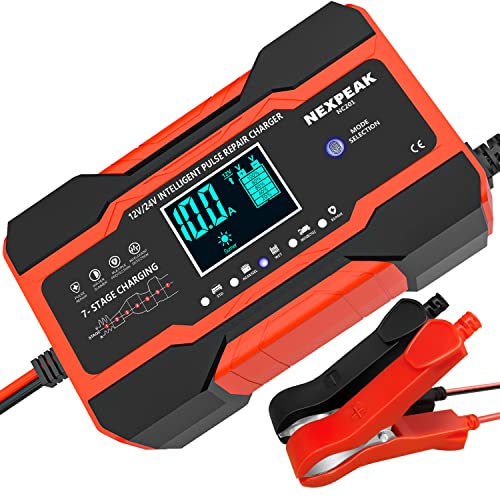
The pulse repair kicks in during charging to keep sulfation from dragging performance down.
This 10-Amp charger runs seven stages of safety-conscious charging across 12V and 24V systems. It’s faster than your basic eight-amp charger and includes a pulse repair function that targets sulfation and stratification. The large LCD keeps stats visible, and summer/winter modes dial the voltage in based on temperature.
It’s set up as a charger, maintainer, and desulfator all in one, which cuts down on clutter. Multiple protections guard against reverse polarity and overcharging, and the plug-and-play design means no complicated setup.
Daily driving batteries benefit from this one, cars, motorcycles, anything getting regular use. The quick charge feature saves a bit of time, and the visualized display makes it easy to understand what’s going on with your battery.
As with most of these, totally dead batteries aren’t in play, but sulfated or underperforming ones usually respond well. The compact build fits in a glovebox, and the multi-protection setup gives you peace of mind at home.
|
8
|
Schumacher Electric 15A Car Battery Charger & Maintainer, 6V/12V – SC1280 | 3A Trickle Cha |

The desulfation mode actively fights crystal buildup so old batteries can fire up reliably again.
Schumacher’s SC1280 keeps things moving with 15A rapid charging across 6V and 12V systems. It charges, maintains, and tests batteries, and the advanced desulfation mode targets those crystals that slow things down. Microprocessor control manages everything automatically, which is nice if you’re not looking to babysit settings.
It supports standard, AGM, and gel types, and the three-amp trickle keeps long-term storage batteries happy. The desulfation mode really shines on neglected units that still have some life but won’t stay charged.
If you’re working with a mix of vehicle types, classic cars, motorcycles, power sports, this one’s got you covered. The 6V option is key for older stuff, and rapid charging shaves time off after-storage recovery.
You get a decent amount of diagnostic info, which helps you decide whether a battery’s worth saving or if it’s just time to replace it. It’s reliable enough that it feels like an upgrade over older home workshop setups.
|
9
|
1.5A 6V/12V Car Battery Charger – Automatic Trickle Charger, Battery Maintainer & Desulfat |

Recovery mode pulls 1V batteries back online, which can undo sulfation when the damage isn’t too deep.
Don’t let the 1. 5A label fool you, this unit is punchier than standard 1A chargers and supports both lithium and lead-acid batteries at 6V and 12V. Recovery mode starts as low as 1V, which is lower than most others here.
It uses pulse repair to target sulfation and stratification quietly in the background. Thermal sensors adjust charging based on temperature, and seven-layer protection covers reverse polarity and overheating. Ten-foot cables reach into cramped spots, and the simple LED indicators keep you updated without any fuss.
Small engine batteries, ATVs, lawn mowers, that kind of thing, are what this one’s made for. The lower amperage keeps little batteries from getting overwhelmed, and pulling charge from 1V helps you save units others would write off. The long cables are a real plus when the battery’s tucked away.
No screen clutter here, just lights telling you what you need to know. The 6V lithium compatibility also makes it useful for classic car owners who might otherwise be out of luck.
|
10
|
PLXX 12V 24V 0-15A Automatic Car Battery Charger Heavy Duty, Smart Trickle Charger, Batter |

The repair mode walks through sulfated and stratified batteries above 3V to bring back lost capacity.
Yeah, it’s another PLXX model, but this one stands on its own merits. Pure copper coils keep losses low, and it covers 12V and 24V batteries up to 300Ah. The seven-stage charging auto-adjusts from fast charge down to trickle depending on what the battery needs.
Repair mode targets sulfation and stratification and kicks in for any battery above 3V. The LCD keeps you looped in on voltage and charge percentage, and the rugged metal-and-ABS housing holds up under regular workshop abuse. It even works as a 12V DC power supply for side projects.
Dual voltage support means it auto-detects what you’re working on, so no hunting through menus or flipping switches. The electrolysis feature is more of a hobbyist perk, but if you tinker with rust removal or metal restoration, it pays for itself there.
Auto shutoff and winter mode keep things safe during long storage. This isn’t the fanciest unit, but it’s the kind of charger that just does what it says and keeps doing it.
These chargers each take a slightly different approach to tackling sulfation. Higher-amp units make sense if you’re dealing with bigger batteries and don’t want to wait. Lower-amp models are gentler on smaller cells and usually cost less.
Pulse repair shows up a lot here because it’s one of the few reliable ways to crack sulfation without frying anything. Some units let you manually trigger repairs, others handle it automatically. Match your choice to your battery type and how often you’re doing this kind of work.
Preventing Future Sulfation
Prevention is cheaper than repair. Simple habits extend battery life significantly. Regular driving keeps batteries fully charged. Short trips often leave batteries partially discharged. This state encourages crystal formation. Using a maintainer during storage helps. It keeps voltage at optimal levels. Cleaning terminals ensures good conductivity.
Corrosion increases resistance and lowers charge. Check voltage monthly during idle periods. Cold weather demands extra attention. Batteries lose capacity in freezing temps. Keeping them warm or charged helps. Avoid deep discharges whenever possible.
- Drive vehicle weekly to ensure full recharge cycles.
- Use a trickle charger during long storage periods.
- Clean terminals regularly to prevent corrosion buildup.
- Check voltage monthly with a multimeter for accuracy.
- Keep battery warm in extreme cold weather conditions.
- Avoid leaving lights or accessories on when parked.
Most sulfation cases come down to consistency. Daily driving keeps the alternator cycling the battery regularly, which is usually enough. Problems pop up when cars sit for weeks, holidays, storage, whatever, letting the battery creep into a partial discharge state.
A smart maintainer keeps voltage steady without overdoing it, and that alone saves a lot of headaches. Clean terminals matter too; corrosion throws resistance into the mix and messes with charging efficiency. A wire brush and some dielectric grease go a long way.
Checking voltage monthly is quick and catches the early warning signs, soil below 12. 4V means the battery’s starting to weaken, and acting on it early stops sulfation before it hardens.
When To Replace Instead
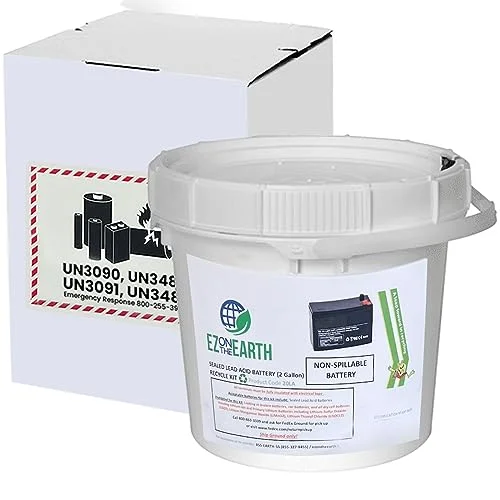
Not all sulfated batteries can be saved. Hard sulfation may cause permanent damage. Physical signs indicate when replacement is necessary. Bulging cases suggest internal short circuits. Leaking acid poses safety hazards. These units must be recycled immediately. Age also plays a critical role. Most batteries last three to five years.
Older units struggle to hold charge. Repair efforts may yield temporary results. Cost-benefit analysis favors replacement in these cases. New batteries offer reliability and warranty coverage. Attempting to revive ancient units risks failure. Stranded vehicles cost more than new batteries.
Sulfation means lead sulfate crystals are blocking your battery’s plates, but early-stage damage can often be cleared with a pulse charger. Check the voltage first, if it’s above 12. 4V, a maintainer might get you back on track. Below 10V, it’s usually time to replace.
Don’t let a dead battery leave you stranded tomorrow; deal with it today.

- Marine Chargers and Backup Batteries: 9 Options Compared (2026) - October 27, 2026
- LTO Cells vs. SLA Generator Batteries: 5 Options Compared (2026) - October 27, 2026
- 12V/24V Backup Batteries and the EcoFlow DELTA Pro 3 (2026) - October 27, 2026