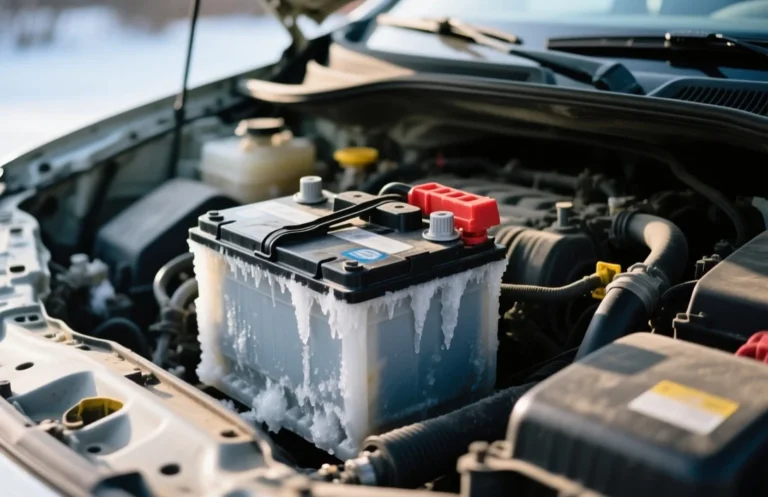
Does Putting A Car Battery On The Ground Kill It?
Car batteries don’t die the instant they touch the ground, but where they sit matters. A lead-acid battery on a damp concrete floor can corrode and vent moisture, while a dry, non-conductive surface protects terminals and prevents shorting. Ground contact isn’t catastrophic; poor surface choice chips away at battery life over months or years.
Moisture, heat, and poor ventilation cause more harm, especially to flooded lead-acid packs. Use a non-conductive mat or tray, keep vents clear, and store batteries upright to preserve life and performance.
Key Takeaways
- Direct answer. Ground contact doesn’t immediately kill a car battery; damage results from moisture and heat over time.
- Moisture matters. Damp concrete accelerates corrosion and self-discharge.
- Surface choice. Use a non-conductive mat or plastic tray to prevent shorts.
- Battery type. Flooded lead-acid batteries are more sensitive to surface conditions than AGM or Li-ion.
- Storage rule. Keep batteries dry, cool, and upright; avoid direct sunlight.
- Voltage check. After moving, test with a multimeter; 12.6 V resting indicates good health.
What actually happens when a battery sits on the ground
Recommended Products



Placing a car battery on the floor doesn’t trigger instant failure. The battery’s chemistry dictates a slower risk profile. If the surface is dry, non-conductive, and away from heat sources, you’ll hardly notice any performance difference for months. Trouble arises when moisture seeps into terminals, corrosion builds up around the posts, or heat speeds up discharge.
Moisture and temperature drive most of the problems. Damp concrete encourages condensation and moisture transfer into the battery housing or around the terminals. In flooded lead-acid packs, venting during charging releases hydrogen gas; in humid or poorly ventilated areas, terminal corrosion accelerates and compromises connections. AGM packs handle vibration and minor moisture better, but they’re not immune to the damp floor scenario.
A clean, dry, insulated floor isn’t a death sentence for a battery. Minimize exposure to heat and humidity, and avoid stacking or sliding a battery across rough surfaces that could damage seals or knock terminals loose. The goal is to maintain a stable, dry micro-environment that keeps connections clean and prevents accidental shorts.
Most battery issues linked to ground contact stem from three factors: surface conductivity, moisture exposure, and mechanical wear. A conductive floor or dampness that transfers moisture to the case increases corrosion risk. A rough surface can nick terminal covers or vents, inviting leaks or dirt intrusion. Dragging a battery across a metal floor poses a real risk of shorting or arcing.
You’ll notice the difference most often when a battery sits on cold, damp concrete for weeks. Fast self-discharge and terminal corrosion become evident compared to a battery on a dry wooden pallet or plastic tray. The impact isn’t immediate; it’s a gradual decline that compounds if conditions persist.
Do different battery chemistries react differently to ground contact?
Recommended Products


Flooded lead-acid batteries are most sensitive to moisture and venting. They can lose water during charging, and moisture around terminals accelerates corrosion and lead sulfate buildup. AGM (absorbed glass mat) batteries resist vibration and moisture slightly better but still require clean terminals and dry surroundings. Lithium-based packs rely on BMS or protective circuits that can mitigate external contact issues, but poor surface conditions can still create mechanical or thermal stress that reduces life or safety margins.
Surface problems matter in all chemistries, but the degree differs. Flooded lead-acid is most prone to moisture-related degradation; AGM handles exposure better; Li-based packs depend more on electronic protection but still benefit from dry, non-conductive support. Switching from a concrete floor to a sturdy plastic mat reduces several risks at once, regardless of battery chemistry.
What happens if a battery is on damp concrete?
Recommended Products

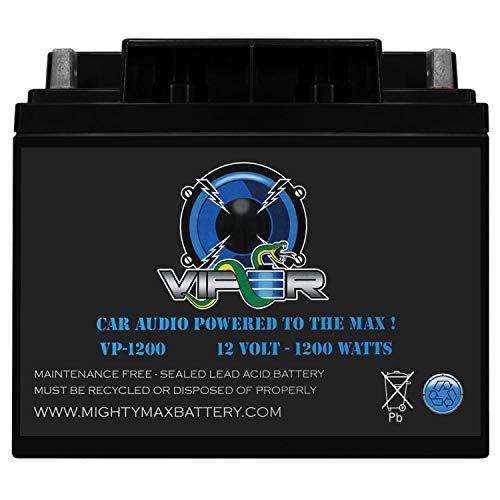

Damp concrete introduces moisture into the battery environment and accelerates corrosion at the terminal interface. This corrosion raises contact resistance, which can heat up during charging and lead to faster degradation. A neglected battery on a wet surface may develop rust on clamps, making removal and future charging less reliable.
Even without visible damage, moisture accelerates self-discharge and can worsen sulfuric acid concentration on flooded designs. In well-ventilated spaces, hydrogen release during charging remains the bigger hazard; in cramped or humid spaces, moisture-laden air compounds corrosion and venting effects. A dry, well-ventilated environment mitigates most of these issues.
Damp concrete is a risk multiplier. It doesn’t kill the battery outright, but it shortens its usable life if the battery spends prolonged periods on that surface. The simplest fix is to introduce a barrier between the battery and the floor and regularly inspect terminals for corrosion or dirt buildup.
Best practices for placing a car battery on the ground
The simplest approach is to give the battery a dry, non-conductive base and stable support. A rubberized mat, plastic battery tray, or wooden pallet keeps moisture and metal away from the case and terminals. Keep the battery upright, avoid stacking, and ensure there’s no access to water or snow around the storage area. If using a metal rack or bench, place the battery on a non-conductive platform to prevent arcing.
In a garage or workshop, create a dedicated battery corner: dry floor, away from heat vents, with a shallow tray to collect incidental spills. Regularly cleaning the floor area prevents dust and corrosion around terminals. Periodically inspect terminal clamps for corrosion and replace any showing pitting or looseness. Keeping the battery off the ground as a habit pays dividends in longevity.
A quick reference table helps compare surface types and recommended actions.
| Surface type | Conductivity risk | Temperature/moisture risk | Recommended action |
|---|---|---|---|
| Concrete floor | Moderate risk if damp | Can be cool and damp, especially in winter | Place on a non-conductive mat or tray; ensure area is dryWooden floor |
| Plastic/rubber mat on floor | Low risk | Stable; resists moisture | Always use a mat under the battery |
| Metal bench or shelf | High risk of short if contact occurs | Can conduct heat and moisture | Use a plastic or rubber spacer; never rely on metal directly |
| Carpeted surface | Moderate risk if fibers trap moisture | Moisture can wick into the battery edge | Use a tray and raise off the carpetThis approach creates a practical, repeatable habit: always establish a dry, non-conductive base and inspect regularly. Short, predictable routines beat occasional, reactive checks. |

Helpful pick
NOCO Snap-Top BG27 Battery Box, Group 27 12V Battery Box for Marine, Automotive, RV, Boat, Camper and Travel Trailer Batteries
This battery box provides a sturdy and moisture-resistant storage solution for your car battery, ensuring safety and longevity.
Essential Accessories to Protect Your Battery

EMEPOVGY Fireproof Battery Safe Bag Explosionproof Battery Storage Guard Pouch for Charge & Storage with Portable Bandage 2 Pack(9.65×8.46x7inch, 8×3.54×4.33inch)
The EMEPOVGY Fireproof Battery Safe Bag provides a secure storage solution, preventing damage to your car battery from ground contact and potential hazards.

OVONIC Lipo Safe Bag Fireproof Explosionproof Bag Large Capacity Lipo Battery Storage Guard Safe Pouch for Charge & Storage(260X130X180mm 251g)
The OVONIC Lipo Safe Bag ensures safe charging and storage of your battery, protecting it from environmental risks like moisture and ground-related issues.
How to store a spare battery safely
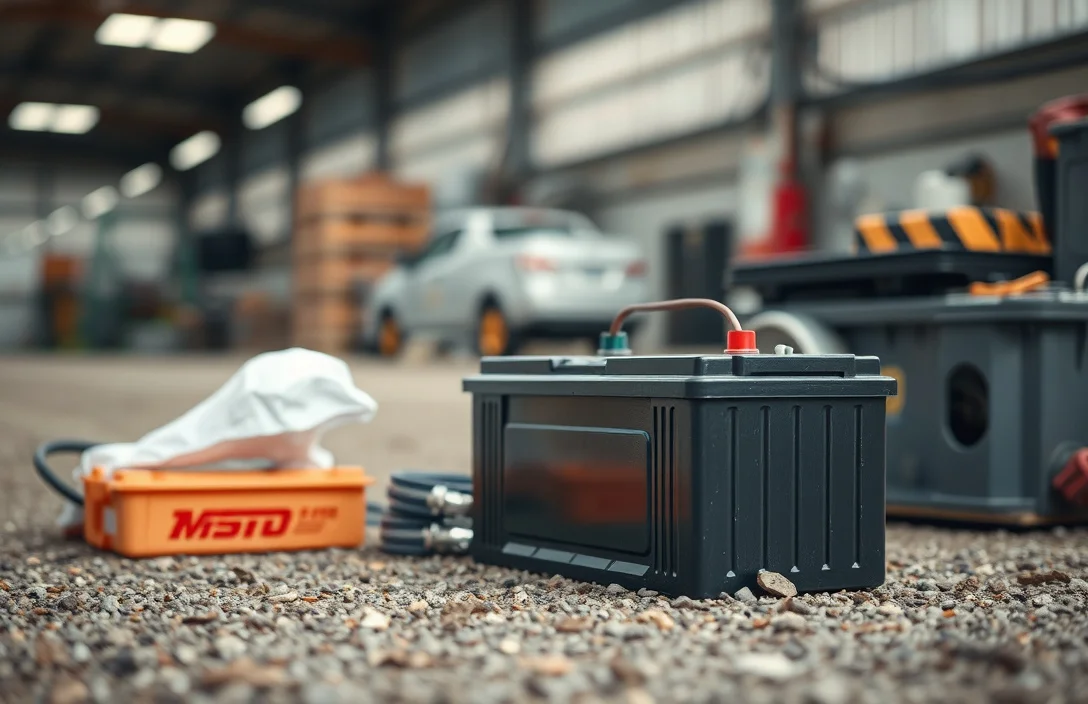
Store spare batteries upright in a dry, cool place with a non-conductive base. If keeping a spare in a garage, avoid direct sunlight and heat sources; a shaded corner with ventilation works best. Check the voltage every two to three months to catch gradual self-discharge early, and recharge as needed. Label every spare with the date and capacity for easy replacement tracking.
When stacking or storing multiple batteries, maintain space between units to prevent accidental contact and heat pooling. A simple battery rack or low-profile crate works well. Never store a battery on metal shelves where terminals can contact metal parts. If you must place a spare on the floor, ensure a dry, non-conductive base and a moisture-protective barrier is in place.
A well-thought-out storage routine reduces the risk of surprise failures when you need a spare during cold winter months or roadside emergencies. The difference may seem small daily, but it adds up over years of ownership.

Helpful pick
Attwood 9067-1 Vented Battery Box with Mounting Strap, Fits Group 27 Series Batteries, Black
This vented battery box keeps your car battery safe and secure while allowing for proper ventilation.
Common mistakes that kill batteries when handling on the floor
- Piling batteries on damp concrete without a base. Water accelerates corrosion and worsens self-discharge.
- Forgetting to insulate the battery from metal surfaces. A metal floor or rack creates an accidental short path if terminals touch metal edges.
- Leaving vents dirty or partially blocked. Dirt around posts impedes clean connections and promotes corrosion buildup.
- Carrying a battery with loose clamps. Loose connections heat up and accelerate wear; always tighten to manufacturer torque specs.
- Exposing a charged battery to heat sources or direct sunlight. Heat increases self-discharge and can degrade plastic housings over time.
Check for swollen cases, white or blue corrosion around terminals, or noticeable voltage drops under load. Those red flags demand immediate attention, not a DIY guess.
| Option | Why it helps | Price | Link |
|---|---|---|---|
| Zeee Fireproof Explosionproof Large Capacity Battery Storage Guard Pouch for Lipo Charge & Storage (8.46 x 6.5 x 5.71 in) | This fireproof battery storage pouch protects batteries from moisture and corrosion when placed on the ground. | Check price | View → |
| Camco Large Battery Box with Straps and Hardware – Group 27, 30, 31 |Safely Stores RV, Automotive, and Marine Batteries | Measures Inside 7-1/4″ x 13-1/4″ x 8-5/8″ | (55373), Black | This battery box provides insulation from metal surfaces, preventing accidental short circuits. | Check price | View → |
How to inspect a battery after moving it from the floor
After relocating a battery off the ground, inspect the case for cracks or bulges. Check terminals for corrosion deposits, color changes, or loose clamps. Clean with a baking soda and water solution if you see acid residue; dry thoroughly before reconnecting. Use a multimeter to confirm resting voltage and ensure the load rating matches the vehicle’s requirements.
During inspection, look for cracks in the case seal or swelling near terminals. Both indicate failure risk and require replacement. If you notice acid fumes or a strong sulfur odor, relocate the battery outdoors and ventilate the space before continuing any work. A small current draw from a device left connected can trickle-charge a battery over time, so ensure nothing remains connected during a ground-level swap.
A quick inspection after moving the battery is worth two hours of troubleshooting later. Regular checks catch corrosion early and prevent costly failures at the worst moments.
Case study: a common garage scenario
In a typical home garage, a 12-volt flooded lead-acid battery sits on a dry concrete floor for a few weeks while a vehicle is in maintenance. A rubber mat under the battery, dry air, and occasional terminal checks maintain quality. When placed on a non-conductive surface with clean terminals, the observed life aligns with standard expectations, avoiding early discharge due to moisture uptake.
Conversely, the same battery left directly on concrete for several weeks shows terminal corrosion and a slight voltage drop after only a few days. The difference is small but measurable – enough to justify a simple shift to a tray or mat. The practical rule: provide a dry, non-conductive base to extend battery life with minimal effort.
FAQ
1) Can placing a car battery on the floor cause a short or safety hazard?
Yes, if the floor is conductive or if moisture creates a path between the terminals and a grounded surface. A battery sitting on a damp floor increases terminal corrosion risk and potentially a short if a metal object bridges the terminals. Always place on a non-conductive base and keep the area dry. Key fact: a non-conductive base drastically reduces shorting risk.
2) Does concrete floor kill a battery faster than other surfaces?
It can, but only if the concrete is damp or dirty and the battery is left there for a long period. A dry concrete floor is not inherently dangerous, but moisture and dirt raise corrosion and self-discharge risks. The safest approach is to use a mat or tray on any floor surface to minimize moisture transfer.
3) What’s the safest surface to place a car battery in a garage?
A dry, non-conductive base such as a rubber mat or plastic battery tray on a wooden pallet works best. It prevents direct contact with concrete moisture and avoids arcing from metal surfaces. A ventilated, cool corner is advisable; avoid direct sun or heat sources near the battery.
4) Do different battery chemistries react differently to being placed on the floor?
Yes. Flooded lead-acid batteries are more vulnerable to moisture-induced corrosion and water loss than AGM or Li-ion packs. AGM fares better on damp floors, while Li-ion packs rely on protective circuitry but still benefit from dry, non-conductive support. Keep all chemistries on a dry, non-conductive base.
5) Should I store a spare battery directly on the concrete?
No. Always use a base that isolates the battery from moisture and metal. A small tray or pallet on a dry surface is enough to reduce risk. Inspect the spare regularly, keep it upright, and check the voltage to avoid surprises during use.
Practical verdict and next
Placing a car battery on the ground doesn’t instantly kill it, but it invites risks from moisture, heat, and arcing. The most effective strategy is clear: keep the battery off bare concrete, use a non-conductive base, and store it upright in a dry, cool space. Perform a quick voltage check after any move and inspect terminals for corrosion at least once a month in humid environments. Upgrading storage with a small tray or mat significantly enhances longevity and reliability.

- 10 Best Battery For Generator Battery Safety System 2026 - October 12, 2026
- 10 Best Battery For Generator Battery Safety Option 2026 - October 12, 2026
- 10 Best Battery For Generator Battery Safety 2026 - October 12, 2026