How Long Do Aaa Batteries Last?
AAA batteries are usually “good for months,” until a hungry device turns them into dead weight in a few days. The spec that matters most is the battery chemistry (alkaline vs NiMH rechargeable) because it sets the usable capacity in mAh. This guide-style piece spells out typical runtime ranges, a quick way to estimate hours from your device’s current draw, and the checks that prevent charger mistakes and unsafe charging.
AAA batteries last about 6 to 24 months in low-drain remotes (alkaline), while AAA NiMH rechargeables often last 3 to 12 months in the same use. High-drain devices like flashlights can drop runtime to minutes to a few hours. Check your device current (mA) and choose matching capacity (mAh).
How Long Do Aaa Batteries Last?
Recommended Products


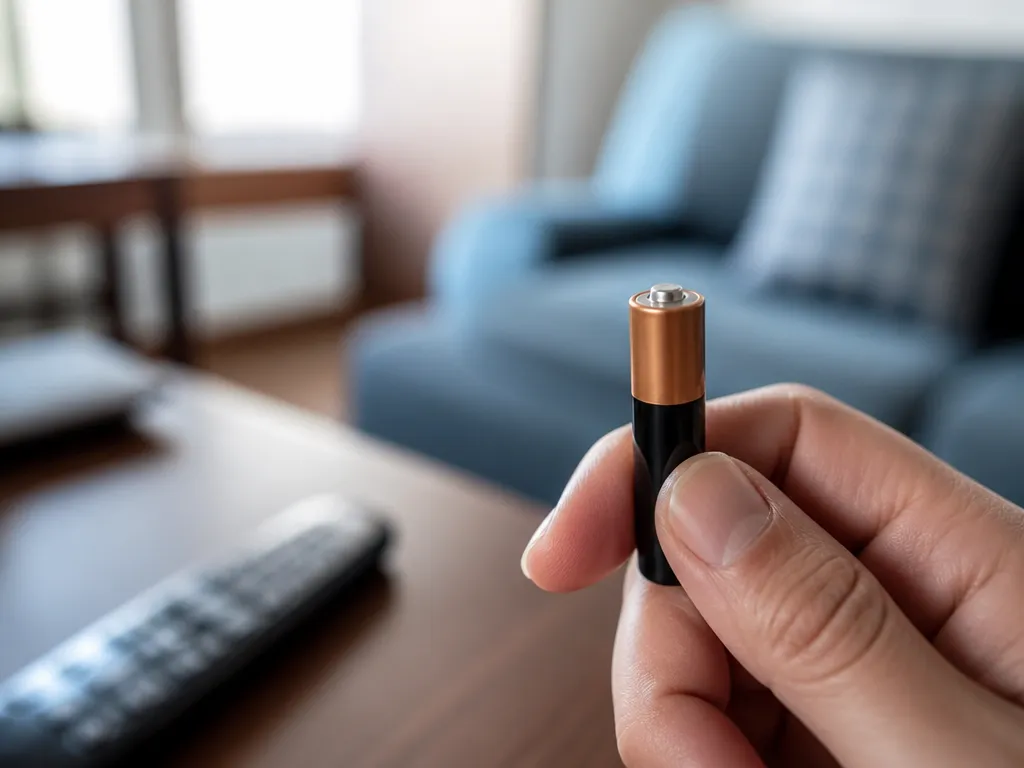
AAA battery life is best thought of as usable hours at a specific load, because current draw changes a lot between devices.
In practice, alkaline disposables usually run longer in low-drain gear, while rechargeable AAA cells trade lower peak voltage for many charge cycles.
AAA alkaline cells are manganese dioxide-based chemistry. AAA NiMH (nickel metal hydride) cells are rechargeable and their voltage profile is usually a bit different, so “same brand” performance can still vary across flashlight models, toys, and remotes.
What “Runtime” Really Means In Devices
Runtime is the time until the device stops working or its light output drops to the level you notice. Many devices include a low-voltage cutoff, especially digital remotes, some toys, and flashlights with regulated drivers, so the cell can have energy left but becomes “functionally empty.”
For quick estimates, treat batteries in terms of average current draw (how hard the device demands power) and how the battery voltage behaves under that load. High-drain bursts (camera flashes, some motors, or high-brightness modes) shrink runtime faster than you would expect from the battery’s capacity rating alone.
| Device example | Typical behavior | Why runtime varies |
|---|---|---|
| TV remote | Low, intermittent drain | Works until cutoff, then drops suddenly |
| Wireless mouse | Moderate drain with bursts | Radio transmission spikes reduce effective capacity |
| Flashlight | Often high-drain, mode-dependent | Brightness regulation and heat limit runtime |
| Toy | Motor-driven peaks | Peak current causes early cutoff and lower voltage |
| Wall clock | Very low drain | Self-discharge and aging dominate |
For a practical comparison between alkaline and NiMH in your own devices, look at the battery’s label details and match the device’s power style (regulated or cutoff-based). Because NiMH self-discharge is higher than alkalines, a rechargeable set can “feel weaker” after sitting unused for weeks, even if it works great right after charging.
For a simple runtime estimator, estimate average current draw (in milliamps) from the device manual or a power meter, then use this rough math: runtime (hours) is about capacity (mAh) divided by average current (mA).
Example: a device that averages 200 mA using a 1000 mAh AAA cell would suggest around 5 hours in ideal conditions, then shorten for real-world losses and cutoff behavior.
Replacement guidance: replace as a set, especially in devices that mix internal resistance. If one cell is weak, the whole series pack can hit cutoff early, and you may see uneven performance.
Capacity Ranges By Chemistry
Recommended Products

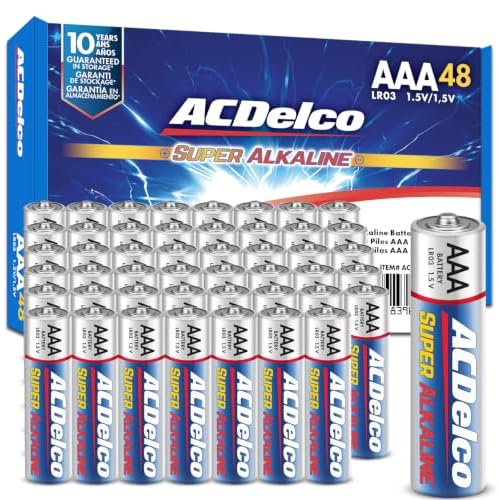
Alkaline AAA cells usually land around 900 to 1200 mAh in fresh packs under light, steady loads, while NiMH AAA rechargeables typically rate around 800 to 1000 mAh (commonly marked “low self-discharge” or “standard”). Actual usable capacity shifts a lot with device current draw, and with temperature, so these bands predict runtime only when your device load is similar.
Alkaline Aaa Capacity Range
Fresh alkaline AAA capacity is often quoted broadly as hundreds of mAh to just over 1 Ah, with the best fit for everyday devices like TV remotes and wall clocks at lower current draws. Under higher drain, alkaline voltage sags sooner, so your device can “cut out” while the battery still has measurable charge left.
In practice, alkaline performance is strongly shaped by how the device regulates cutoff.
For example, an LED flashlight may stop due to driver behavior at a set voltage, while a remote might keep running until the receiver threshold fails, making runtime look very different even if capacity measured in the lab would not change as dramatically.
Nimh Aaa Capacity Range
NiMH AAA cells are typically rated near 800 to 1000 mAh, with higher-marked cells often paired with specific charging and discharge conditions. NiMH has a flatter voltage curve than alkaline, so devices may continue running longer even when the battery is approaching end-of-life.
NiMH also has practical differences between types. Eneloop-style “low self-discharge” cells usually lose less charge while sitting, while standard NiMH can look fine right after charging but drop faster if stored for months.
How Rate And Temperature Affect Capacity
Capacity ratings are measured at a specific discharge rate, temperature, and cutoff voltage. When you draw more current (for example, a camera flash or a bright flashlight), the cell’s internal resistance causes extra voltage drop and heat, so the usable fraction of mAh shrinks.
Temperature also swings results. Cold conditions slow chemical reactions, raising effective resistance so a device reaches its cutoff sooner; warm conditions can increase current delivery but may also accelerate aging if the battery overheats.
| AAA chemistry | Typical capacity band (fresh) | What usually changes runtime most |
|---|---|---|
| Alkaline | ~900 to 1200 mAh | Voltage sag under higher drain, device cutoff threshold |
| NiMH (rechargeable) | ~800 to 1000 mAh | Discharge rate losses, cold performance, aging and charge quality |
Runtime Estimation Method
Recommended Products

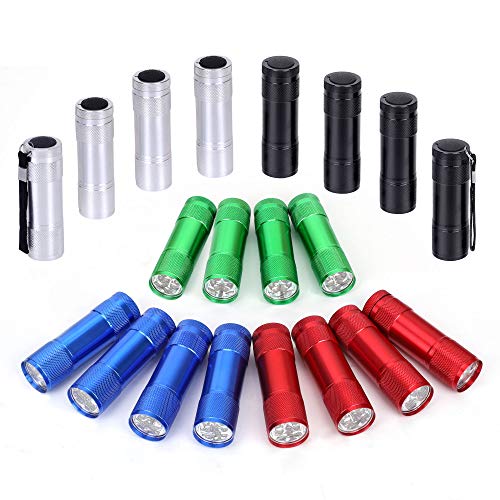
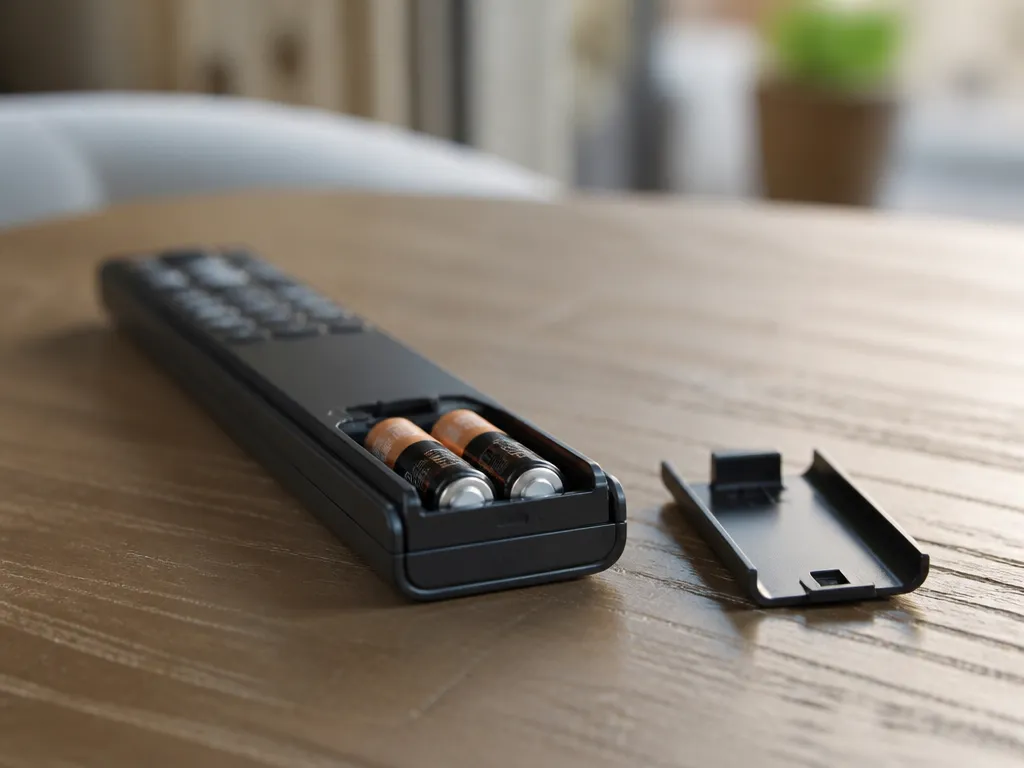
Battery runtime is mainly set by how many watt-hours the AAA pack stores versus how many watts your device draws. Use hours ≈ (watt-hours in AAA) ÷ (watts drawn), then apply a 70% factor for real-world losses (higher drain, cold, and aging). This method gives a practical “ballpark hours” you can refine with measurements.
Estimation Formula (Use Capacity In Mah)
Most AAA battery labels list capacity in mAh (or mAh for rechargeables). Convert to watt-hours using a nominal AAA voltage (alkaline and NiMH are typically treated as about 1.5 V and about 1.2 V respectively for estimating).
| Step | Formula | Notes |
|---|---|---|
| 1 | Wh ≈ (mAh ÷ 1000) × Vnom | Vnom is ~1.5 V alkaline or ~1.2 V NiMH (estimate). |
| 2 | Runtime (h) ≈ (Wh × 0.70) ÷ Watts | 0.70 covers conversion and cutoff inefficiency. |
| 3 | Watts = Volts × Amps | For current draw, many devices publish mA or A. |
When your device gives current draw in mA and it runs from a battery with a known voltage (for example, three cells in a device), you can compute watts from that voltage. When the device does not publish current, use measured mA from a USB/inline meter (only for test setups you know are safe).
Quick safe check: If you measure or test, avoid short circuits, keep metal probes from touching, and stop if the battery casing warms significantly.
Worked Example (Replicate The Math)
Example: A wireless mouse uses one AAA cell and draws about 120 mA at the battery while active. Assume an alkaline AAA label says 1000 mAh (capacity varies by brand and drain), and use Vnom = 1.5 V.
Runtime ≈ 5.8 hours of active use. If the mouse has sleep periods, average current drops a lot, so the real calendar life can be much longer than the “active-only” estimate.
Device Runtimes By Category
Recommended Products


AAA runtime is mostly set by your device’s average current draw. Alkaline AAA cells often last about weeks in low-drain remotes, days in LED flashlights used heavily, and months in light, intermittent toys, while AAA rechargeable cells typically land lower due to lower usable capacity and higher voltage sag under load.
For practical estimates, assume the battery sees an “average” current, not a peak. Higher drain (strong motor toys, bright beam flashlights, constant fan/gear movement) shortens life dramatically, while intermittent use stretches it.
Quick Runtime Ranges (What To Expect)
These are representative expectations for fresh AAA cells at typical room temperatures, using the same total battery load. Your results can shift a lot if the device uses new batteries differently (for example, a flashlight that cycles high intensity versus low intensity).
| Device category (common AAA usage) | Typical behavior | Estimated runtime with alkaline AAA | Estimated runtime with NiMH AAA (rechargeable) |
|---|---|---|---|
| Remotes and small controllers (TV, fan remotes) | Low power, bursts of RF/IR | 3 to 12 months | 2 to 10 months |
| Wireless mice and keyboards (AAA models) | Medium average draw, frequent events | 1 to 6 months | 0.5 to 4 months |
| LED flashlights (intermittent use) | Low average on low mode, higher on turbo | 2 to 20 hours | 1.5 to 15 hours |
| LED flashlights (high brightness, frequent use) | High drain, longer on-time | 30 minutes to 6 hours | 20 minutes to 5 hours |
| Toys and gadgets (motorized, sound, lights) | Variable bursts, often high peaks | 2 to 20 hours total | 1 to 15 hours total |
When a device has a “low battery” cutoff or a voltage threshold, runtime can look shorter because the device stops before the battery is fully depleted. That’s more noticeable with rechargeables as they experience voltage sag earlier under load.
For example, a toy that uses motors for 5 seconds every minute can outlast a flashlight that stays on at high brightness for the same total “on time,” because the average current over time is different.
Battery drain also depends on number of cells and configuration. Two AAA cells in series (3 V) can behave differently than two AAA in a different arrangement if the device electronics are sensitive to voltage.
Practical expectation: treat alkaline AAA as “reliable longer at low-to-medium loads,” and treat AAA NiMH as “great for frequent recharge, with shorter runtime under heavy drain.”
Category-level expectations are enough to plan replacements, but precision comes from your device’s real current. If you have access to the device label (or a battery compartment meter reading), matching your device’s average drain to the battery chemistry will narrow the estimate fast.
Life, Storage, Disposal Guidance
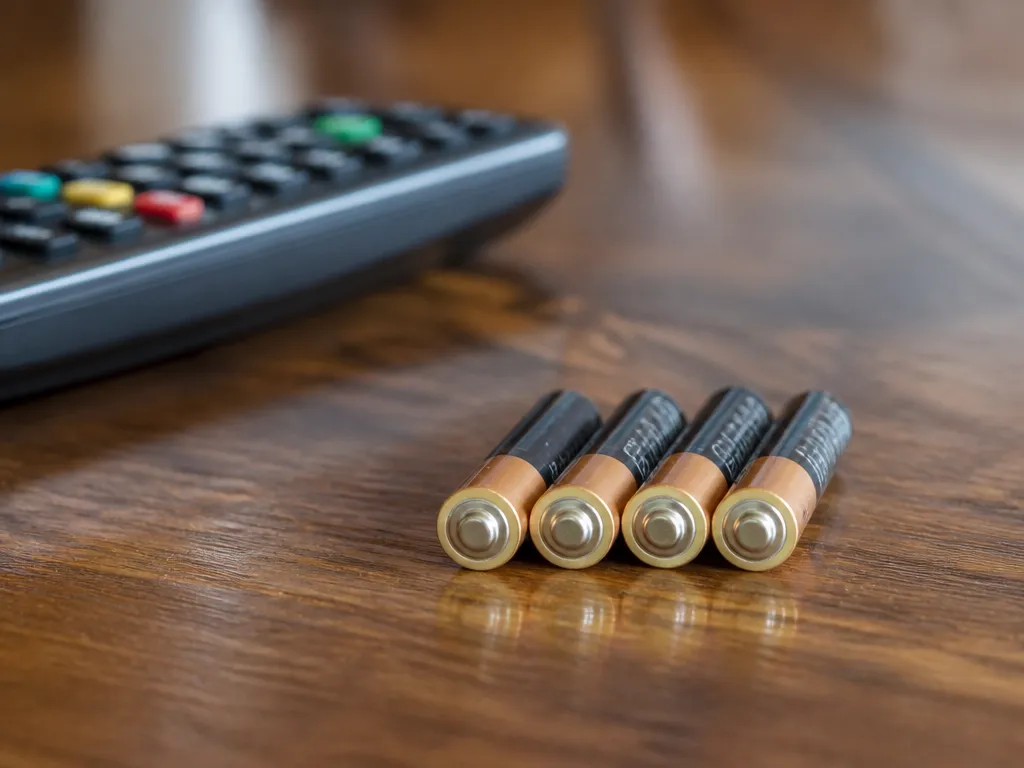
AAA battery life varies most with how much current the device draws, the storage temperature, and the battery’s age. Alkaline AAA can last years in low-drain devices, but short-cycle, high-drain use (flashlights, toys with motors, camera flashes) can empty them in days to weeks. Rechargeable AAA improve cost per use but wear out after many charge-discharge cycles and still age even when unused.
What Shortens Life (And What Extends It)
Drain rate is the biggest swing factor. Higher current usually reduces usable capacity faster due to internal losses, so a “works fine in a TV remote” AAA can perform poorly in a high-output flashlight.
Temperature affects both chemistry and leakage behavior. Heat speeds aging and can increase internal pressure, cold increases internal resistance and makes the battery sag sooner under load.
For low-drain devices, life improves when you keep contacts clean and avoid mixing “new with old” cells. For rechargeables, life improves when you charge them with a charger meant for NiMH AAA and you avoid fast-charging when the manufacturer says not to.
| Battery type | Life reality check |
|---|---|
| Alkaline AAA | Long shelf life, strong for sporadic low drain, faster drop under high drain |
| NiMH rechargeable AAA | Good for repeated use, capacity declines with cycles and calendar aging |
Shelf Life And Storage Practices
Store batteries cool, dry, and indoors when you can. Keep them in original packaging or a battery case to prevent metal contact and reduce the chance of corrosion from stray moisture.
Rotate stock for rechargeables just like you would consumables. When a device sits unused for months, test capacity before committing to critical use (alarms, controllers, or emergency gear).
End-of-life Signs, Replacement, And Disposal
Replace cells when performance is inconsistent (early cutoffs, flashing indicators, reduced run time) or when the battery door won’t close without pressure. For rechargeable AAA, cycle wear shows up as rapidly dropping capacity across the same device.
Retire immediately any battery that is swollen, leaking, hot, smells “sweet or solvent-like,” or shows heavy corrosion. Swollen cells can damage the device and can vent if overheated.
“NiMH” and alkaline AAA are different chemistries, but both should be recycled when you can. Many municipalities and retailers accept rechargeable batteries; bring alkalines to a suitable household hazardous waste or recycling program if required locally.
Disposal is chemistry-dependent and local rules vary. For safety, tape the terminals (especially for rechargeables with exposed metal), keep damaged batteries in a non-conductive container, and follow your local recycling guidance rather than regular trash.
Datasheet References And Practical Checks
Battery manufacturers publish key specs that affect real-world life: rated capacity, maximum discharge current (for rechargeables), recommended charging current and charge termination behavior, and operating temperature ranges. Checking the charger label matters because a charger set for one chemistry or charge mode can cause overheating or shorten life.
For rechargeable AAA, use the charger and reconditioning settings specified by the charger manual and battery datasheet. When runtime seems “too short,” check device contacts and switch settings first, then retire cells that show consistent low performance in multiple devices.
Quick Summary
Recommended Products


AAA battery life is best thought of as usable hours at a specific load, because runtime changes a lot with current draw and with each device’s low-voltage cutoff behavior. The article says alkaline AAA cells are often good for about 6 to 24 months in low-drain remotes, while AAA NiMH rechargeables often last about 3 to 12 months in the same type of use. High-drain devices like flashlights can cut runtime down to minutes or a few hours, even if the capacity looks adequate on paper.
To estimate runtime, check the battery capacity in mAh and the device’s average current draw in mA, then use the rough math given: hours is about (mAh ÷ mA) × 0.8, with the example that a 1000 mAh NiMH at 100 mA is about 8 hours usable runtime. The article also stresses practical checks like dimming, weak clicks, and fast cutoff, plus peak-drain behavior that uses most capacity early. For safety, recharge only with a NiMH-specific charger, never charge alkaline cells, and the best next action is to match chemistry and charger type before replacing or recharging.
Frequently Asked Questions
How Long Do Aaa Batteries Last In A Tv Remote Or Flashlight?
AAA runtime depends mostly on the device’s power draw and how “new” the cells are, so there is no single guaranteed number. For a practical check, look at the manufacturer’s expected life on the battery packaging, or measure run time yourself and replace once performance drops clearly.
Do I Get Different Battery Life If I Use Rechargeable Aaa (Nimh) Instead Of Alkaline?
Rechargables usually last fewer hours per charge than fresh alkalines in high-drain devices, but they can be much cheaper over time if you recharge often. If you care about lifetime, choose a charger and NiMH cells rated for the same chemistry, and expect “cycle life” to be limited by the cell design.
Can I Use A Rechargeable Aaa Charger With Any Aaa Batteries?
No, you should only use a charger designed for NiMH or the specific rechargeable type you have. A NiMH charger should not be used on primary (non-rechargeable) alkalines, and mixing battery chemistries in the same device can reduce performance.
Why Do My Aaa Batteries Get Hot When Charging, And Is That Normal?
It can be normal for chargers to get warm, but cells should not be excessively hot to the touch. If you notice strong heat, swelling, leaking, or a burning smell, stop charging immediately and replace the batteries, and make sure you are using the correct charger current.
When Should I Replace Aaa Batteries To Avoid Leaks Or Device Failures?
Replace when the device becomes unreliable or you see a big drop in performance, and do not keep old batteries in high-drain devices “just to finish one more use.” For long storage, consider removing batteries, and do not reuse batteries that show corrosion, cracking, or leakage.

- 10 Best Battery For Generator Battery Safety System 2026 - October 12, 2026
- 10 Best Battery For Generator Battery Safety Option 2026 - October 12, 2026
- 10 Best Battery For Generator Battery Safety 2026 - October 12, 2026