How Much Does An Average Car Battery Weigh?
Lifting a car battery is often the first time drivers realize just how heavy these components are. The weight isn’t arbitrary; it shifts dramatically depending on whether you’re looking at traditional lead-acid, AGM, or modern lithium chemistries.
Knowing the exact mass matters not just for avoiding back strain during a swap, but for ensuring your vehicle’s mounting hardware can handle the load. Below, I break down what drives these weight differences and highlight specific products that show just how far the technology has come.
Why Car Battery Weight Varies So Much
Recommended Products

Weight comes down to materials and power density. Two batteries might fit the same tray, but their heft tells a completely different story about what’s inside.
Traditional flooded lead-acid batteries are heavy because they rely on dense lead plates and liquid electrolyte. A standard Group 48 unit usually lands between 40 and 50 pounds.
AGM (Absorbed Glass Mat) batteries keep that same lead weight but add fiberglass mats to hold the acid, so they feel similarly hefty while offering better vibration resistance.
Lithium iron phosphate (LiFePO4) batteries change the game entirely by swapping lead for lightweight cells, cutting mass by 60-70% without losing cranking power. This drop in weight makes installation easier and can even improve vehicle handling.
Always double-check the spec sheet, though, group size alone doesn’t guarantee identical weight across different brands or chemistries.
Average Weights By Battery Chemistry
| Chemistry Type | Typical Weight Range | Primary Mass Contributor |
|---|---|---|
| Flooded Lead-Acid | 35-50 lbs | Lead plates + acid |
| AGM Lead-Acid | 40-55 lbs | Lead + glass mats |
| LiFePO4 Lithium | 10-20 lbs | Lightweight cells + BMS |
| Portable Jump Starter | 0.8-2 lbs | Small lithium pack |
Real-World Examples Of Car Battery Weight
Recommended Products


These ten products cover the full range of automotive battery weights you’ll find today. From featherlight lithium jump starters to substantial AGM replacements, each one shows how chemistry dictates portability and physical presence.
|
1
|
JOLTEKON Car Battery Jump Starter with Air Compressor 4500A 150PSI, Car Jumper Starter Por |
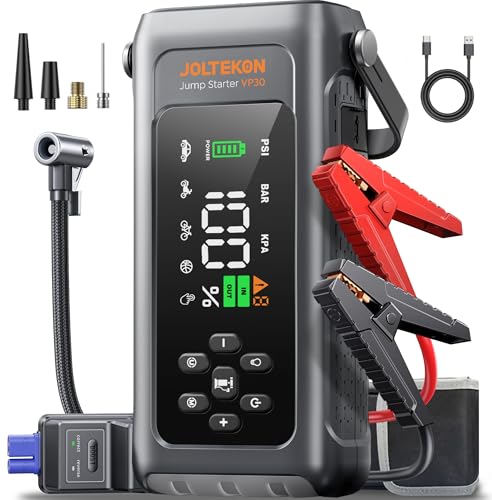
Weighs under three pounds, serving as a compact emergency tool that replaces bulky jumper cables.
The JOLTEKON 4500A jump starter packs tire inflation and lighting into a unit that weighs just two to three pounds. It’s a portable alternative to keeping heavy jumper cables or separate air compressors in your trunk. Despite its light frame, the lithium cells deliver 4500 peak amps.
The display is clear enough to read in direct sunlight, which is a nice touch for roadside checks.
This is best for drivers who want emergency backup without adding permanent weight to their vehicle. It reliably starts engines up to 9. 0L gas or 8. 0L diesel. Keep in mind it’s not a replacement for your primary starting battery.
Since it can lose charge over long storage periods, I’d recommend checking it every few months to ensure it’s ready when needed.
|
2
|
Duracell 2032 Lithium Battery, 4 Count, AirTag & Key Fob, CR2032 3V Cell |

Shows the extreme low end of battery weight, mere grams, compared to multi-pound automotive units.
Duracell 2032 lithium coin cells weigh only a few grams each, highlighting just how light small-scale batteries can be. These power key fobs and tire pressure sensors, not engines. The four-pack includes a bitter coating on both sides to help keep kids safe.
Consistent manufacturing means you get reliable voltage from each cell.
It’s important to note that not all car-related batteries share the same weight class. These work with most major keyless entry systems, including Toyota, Honda, BMW, and Ford. Never try to use these as substitutes for your main vehicle battery.
Store them in their original packaging to prevent accidental ingestion, especially if you have young children around.
|
3
|
Mighty Max Battery MM-H6 Start and Stop Car BCI Group Size 48 12V 70 AH, 120RC, 760 CCA Re |

Represents the standard AGM lead-acid weight class, coming in at approximately 45 pounds.
The Mighty Max MM-H6 AGM battery is a typical example of Group 48 lead-acid mass, weighing around 45 pounds. Its sealed design prevents spills while packing enough density for 760 cold cranking amps. With a 120-minute reserve capacity, it supports accessories well even when the alternator isn’t charging.
The internal build is rugged enough to handle daily driving vibrations.
This is a solid pick for vehicles that need reliable cold-weather starting using proven lead-acid tech. It fits most mid-size sedans and SUVs requiring BCI Group 48. Be prepared for the lift, installation requires care due to the weight compared to lithium options.
While it won’t last as long as LiFePO4 batteries, the upfront cost is generally lower.
|
4
|
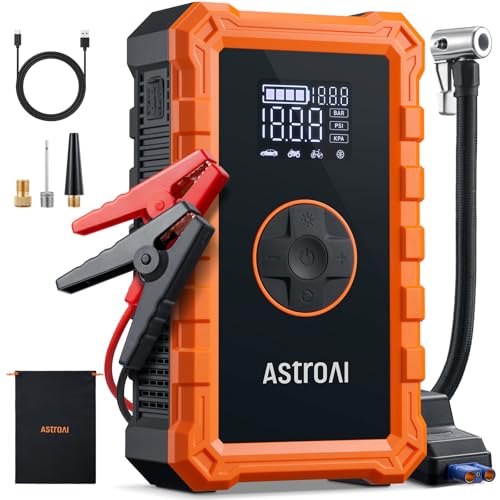
AstroAI S8 Car Battery Jump Starter 1500A – Portable 12V Lithium Jump Box | BOOST for Dead |

Shows a portable lithium jump box weighing under one pound, ideal for emergency use.
The AstroAI S8 jump starter weighs just 0. 95 pounds but still delivers 1500 peak amps for dead battery recovery. At 7. 9 inches long, it fits in a glove compartment, unlike bulky cable sets. The smart boost mode detects low voltage and unlocks forced start capability automatically.
Metal clamps help dissipate heat better than plastic ones during high-current jumps.
Urban drivers who need occasional jump assistance will appreciate not having to store bulky equipment. It starts 6.0L gas or 3.0L diesel engines reliably in a pinch. It can’t replace your primary battery, though. After each use, recharge it via USB-C to keep it ready for unexpected roadside situations.
|
5
|
TPE Car Start-Stop Lithium Battery BCI Group47 LiFePO4 Lithium-ion Car Battery Lightweight |

Demonstrates significant weight savings with LiFePO4 tech, coming in at 11 pounds versus 40+ pounds for lead-acid.
The TPE Group 47 LiFePO4 battery weighs just 11.02 pounds while matching standard lead-acid dimensions. That’s a 70% mass reduction compared to equivalent AGM units. It includes built-in BMS protection to prevent overcharge damage and an emergency switch for backup starting if the protection circuit trips.
Performance enthusiasts looking to reduce front-end weight without structural mods will like this. It delivers 600 cold cranking amps, which is sufficient for most passenger vehicles and light trucks. The higher price reflects the advanced chemistry and longer cycle life.
Just verify your alternator is compatible, as some older charging systems struggle with lithium profiles.
|
6
|
Leaf Blower Cordless Handheld Blower 2×4.0Ah Batteries & Charger,Green | Small Lightweight |

Illustrates cordless tool battery weight at 1.12 pounds, unrelated to car starting but relevant for context.
This cordless leaf blower uses two 4. 0Ah lithium batteries, with the whole assembly weighing 1. 12 pounds. While it’s not automotive starting equipment, it shows how dense modern lithium energy has become. The stepless speed adjustment gives precise airflow control, which is handy for drying cars after a wash.
Detachable nozzles make it easy to clean wheel wells and undercarriages.
It’s a useful comparison point for understanding how lithium tech enables lightweight power across categories. You get about 30 minutes of runtime per battery at low speed, which is adequate for detail work. It’s not designed for engine cranking, despite sharing lithium chemistry with automotive starters.
It’s particularly useful for removing water after washing to prevent corrosion on terminals and connections.
|
7
|
TREKURE Car Battery Jumper Starter Portable 5000A, Portable Car Jump Starter up to 10L Gas |

An ultra-light 0.8-pound jump starter with magnetic mounting for hands-free hood work.
The TREKURE TK60 jump starter weighs a mere 0. 8 pounds yet delivers 5000 peak amps for large engines. The magnetic LED panel sticks to metal surfaces, giving you hands-free light during nighttime repairs. The V0 fireproof casing and ten safety protections exceed many industry standards for portable lithium devices.
A quick-release lanyard lets you secure it to your belt or bag during emergencies.
Mechanics and DIYers who prioritize minimal carry weight without sacrificing capability will find this excellent. It starts 10. 0L gas or 8. 0L diesel engines, including heavy-duty trucks and boats. The pocket-sized form factor is a stark contrast to traditional 40-pound battery replacements.
Just keep in mind that runtime per charge is limited, so plan accordingly if you need multiple consecutive jumps.
|
8
|
10-in-1 Car Battery Jump Starter with Air Compressor 8000A 160PSI Portable Car Jumper Star |

A high-output 8000A unit that still weighs under three pounds, showcasing impressive power-to-weight ratio.
This 8000A jump starter combines tire inflation and engine starting in a package under three pounds. The peak current handles 12. 0L diesel engines that would overwhelm smaller lithium units. A digital tire pressure gauge with auto-shutoff takes the guesswork out of roadside maintenance.
Upgraded charging tech replenishes the internal cells five times faster than previous models.
This targets owners of large-displacement vehicles who need maximum emergency power in minimal storage space. With fifty jump starts per charge, it covers extended road trips through remote areas confidently. It’s heavier than basic jump boxes due to the integrated compressor motor and larger cell array.
Regular firmware updates may be needed to maintain compatibility with newer vehicle security systems.
|
9
|
OXILAM Jump Starter 6000A for All Gas/12L Diesel, Car Battery Jumper Starter Portable, 12V |

A mid-range 6000A lithium option that balances weight and capability for most passenger cars.
The OXILAM 6000A jump starter offers balanced performance in a lightweight, waterproof shell. The LED screen displays real-time battery status, so you’re never guessing about remaining charge. Dual USB outputs let you charge phones and tablets simultaneously during long roadside waits.
The non-slip grip ensures secure handling even in wet conditions or when wearing gloves.
Daily drivers wanting reliable backup without excessive bulk will find this appropriate. Sixty jump starts per full charge provides ample margin for infrequent emergency use. It lacks the integrated air compressor found in heavier multi-function units on this list.
Lifetime technical support adds value for users unfamiliar with lithium jump starter maintenance.
|
10
|
OMUGO Group 47 H5 12V LiFePO4 Car Battery, 800CCA Start-Stop, Lightweight | Built-in BMS p |

A 20-pound LiFePO4 replacement that sheds 30% weight versus factory lead-acid batteries.
The OMUGO Group 47 LiFePO4 battery weighs 20 pounds while delivering 800 cold cranking amps reliably. An eight-layer BMS monitors cell balance continuously to prevent damage from charging system faults. The built-in voltage display allows for instant health checks without needing external testing equipment.
It’s a direct fit for Camry, Civic, and 3-Series models, simplifying the upgrade process.
Designed for start-stop vehicles where traditional batteries often fail prematurely under cycling stress. The 30% weight reduction can measurably improve steering response and fuel economy over time. The higher price reflects superior cycle life that exceeds lead-acid by several multiples.
Confirm negative-left polarity matches your vehicle configuration before ordering to avoid return hassles.
These ten products illustrate the complete spectrum of automotive battery weights available today. From sub-pound jump starters to 45-pound AGM replacements, each serves a distinct purpose. Understanding this range helps set realistic expectations when shopping for starting power or emergency backup solutions.
Safe Handling Techniques For Heavy Batteries
Proper lifting mechanics are essential when dealing with 40-plus pound lead-acid units. Technique matters more than raw strength when maneuvering batteries in tight engine bays.
- Bend knees keeping back straight when lifting from ground level
- Use both hands gripping designated handle points only
- Keep battery close to body center reducing spinal torque
- Avoid twisting torso while carrying heavy units sideways
- Set down immediately if grip slips or balance shifts
- Wear gloves protecting against acid residue and sharp edges
Engine bay clearance often forces awkward positioning during battery removal and installation. I’d recommend removing obstructing components like air intake ducts before attempting extraction whenever possible. Use battery carrier tools with hooked ends designed specifically for this task rather than improvised solutions.
Ask for assistance when dealing with AGM units exceeding 40 pounds in confined spaces. Never lift by the terminal posts, as this damages internal connections and causes premature failure. Clean the tray surfaces before installing new units to prevent corrosion-induced mounting issues later.
When Weight Reduction Justifies Upgrade Cost
Switching to lithium makes financial sense only under specific usage patterns and vehicle configurations. Evaluate your actual needs before paying premium prices for lightweight alternatives.
Front Axle Balance Improvement
Sports cars benefit disproportionately from battery weight reduction due to sensitive suspension geometry. Moving 30 pounds off the front axle improves turn-in response and reduces understeer tendencies noticeably. Track day participants report measurable lap time improvements after switching to LiFePO4 units.
Street drivers appreciate reduced brake fade during aggressive driving sessions as well. Calculate cost per pound saved versus alternative modifications like aluminum brackets or carbon fiber parts.
Start-Stop System Longevity
Modern vehicles with automatic engine shut-off cycle batteries hundreds of times weekly, causing rapid degradation. Traditional lead-acid units often fail within 18 months under this abuse pattern. LiFePO4 chemistry handles deep cycling without capacity loss, extending service life dramatically.
Fuel savings from maintained start-stop functionality can offset the higher purchase price over the ownership period. Check warranty terms specifically covering start-stop applications, since some manufacturers exclude this use case.
Cost-Benefit Comparison Matrix
| Scenario | Weight Savings Value | Recommended Chemistry |
|---|---|---|
| Daily commuter sedan | Low priority | Standard AGM |
| Track-focused sports car | High performance gain | LiFePO4 |
| Start-stop equipped SUV | Longevity critical | LiFePO4 |
| Classic car restoration | Originality matters | Flooded lead-acid |
Average car battery weight ranges from 11 pounds for lithium replacements to 50 pounds for traditional lead-acid units, depending on chemistry and size. Your next step should be checking your vehicle’s group size specification and comparing actual product weights before purchasing.
This ensures you select appropriate handling methods and understand whether lightweight alternatives justify their premium cost for your specific driving situation and vehicle configuration needs.

- 10 Best Battery For Generator Ev Battery Bank Marine 2026 - October 27, 2026
- 10 Best Battery For Generator Ev Battery Bank Lto 2026 - October 27, 2026
- 10 Best Battery For Generator Ev Battery Bank Low Voltage 2026 - October 27, 2026