How To Recharge Lithium Battery?
Recharging lithium batteries isn’t as simple as plugging them in. Using the wrong charger or method can damage the battery, reduce its lifespan, or even cause safety hazards. This article explains how to recharge lithium batteries safely and effectively, and highlights specific chargers that make the process reliable.
Why Lithium Battery Charging Needs Care
Recommended Products


Lithium batteries are sensitive to voltage, temperature, and charging rates. Charging them incorrectly can lead to overheating, swelling, or permanent failure. Understanding the basics helps you choose the right charger and avoid common recharge mistakes.
Lithium batteries, especially LiFePO4 types, require precise voltage regulation during recharging. Overcharging or using incompatible chargers forces excess current into the cells. This creates heat buildup, which degrades the electrolyte and shortens battery life. A proper charger stops automatically at full charge, while a generic adapter may keep pushing power.
- Always check the battery’s required voltage and chemistry before charging.
- Use a charger designed specifically for lithium or LiFePO4 batteries.
- Never leave a charging battery unattended for long periods.
- Ensure the charging area is dry and well-ventilated to prevent overheating.
- Inspect battery terminals and cables for damage before connecting.
Charging Stages And What They Mean
Recommended Products


Recharging lithium batteries involves multiple phases. Each stage delivers a controlled amount of power to maximize efficiency and longevity. Recognizing these stages helps users avoid interrupting the process too early or letting it run too long.
| Stage | Purpose | Typical Behavior |
|---|---|---|
| Constant Current | Deliver steady power | High current flows steadily |
| Constant Voltage | Maintain voltage level | Current slows as battery fills |
| Float/Cut-off | Stop charging | Charger switches off or pulses gently |
Connect the charger to the battery after verifying voltage compatibility.
Watch the indicator lights or screen to confirm charging begins.
Allow the charger to complete all programmed stages without interruption.
Disconnect safely once the final stage indicates a full charge.
Chargers To Safely Recharge Lithium Batteries
Recommended Products


The following chargers are selected based on their ability to handle lithium battery recharge safely. Each model balances speed, protection, and compatibility with different battery types mentioned above.
|
1
|
BROODAY 14.6V 10A LiFePO4 Battery Charger for 12V Lithium Iron Phosphate Batteries – Fast |

Tailored for 12V LiFePO4 batteries, delivering efficient and protected recharging.
The BROODAY charger targets 12V LiFePO4 batteries with a 14.6V output and 10A current. It charges a 50Ah battery to 50% in just 2.5 hours, thanks to over 90% efficiency. A cooling fan prevents overheating while an LED indicator tracks progress.
This charger works best for users maintaining LiFePO4 packs in RVs or solar setups. Alligator clips simplify connections, though they aren’t ideal for permanent terminals. It cannot charge lead-acid batteries, limiting versatility.
|
2
|
NOCO GENIUS1 1A 6/12V Smart Battery Charger, Trickle Charger & Maintainer | Overcharge Pro |

Smart 1A charger handles both lithium and lead-acid batteries with precision.
The NOCO GENIUS1 offers compact smart charging for 6V and 12V batteries, including LiFePO4. Its thermal sensor adjusts charging based on temperature, preventing overcharging in heat and undercharging in cold. Force Mode revives deeply discharged batteries down to 1V.
At only 1A, this charger suits small batteries or maintenance tasks rather than heavy-duty charging. It’s perfect for motorcycles, lawnmowers, or seasonal vehicles. Its small size makes storage easy, but larger batteries will charge slowly.
|
3
|
PZ.P 15-Amp 12V/24V Smart Battery Charger, Maintainer & Trickle Charger for LiFePO4, Lead |

High-amp 15A charger supports both lithium and lead-acid with 9-stage safety.
The PZ.P charger delivers 15A at 12V and 8A at 24V, supporting LiFePO4 and lead-acid batteries. Its 9-stage process includes pulse repair to recover sulfated or stratified batteries. A color LED screen shows real-time voltage, current, and temperature data.
Ideal for users juggling multiple battery types like cars and motorcycles, this charger adapts quickly. However, it cannot activate entirely dead batteries rated above zero volts. The 6.7ft cable helps reach tight spots under hoods or decks.
|
4
|
Haisito 20-Amp Smart Battery Charger (Lithium LiFePO4 & Lead-Acid), 12V/24V Rapid Automoti |
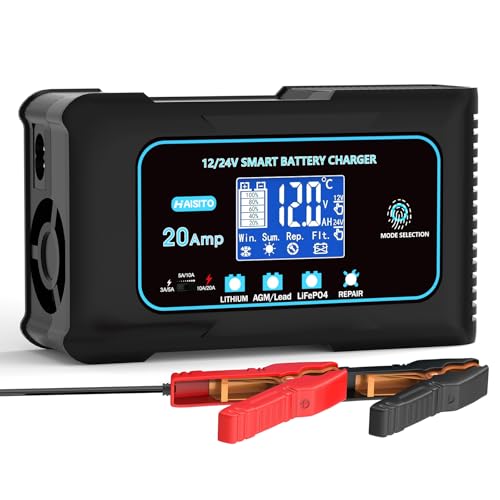
20A rapid charging with dedicated lithium algorithm protects expensive battery investments.
Haisito’s 20A charger rapidly recharges 12V and 24V lithium and lead-acid batteries. Its independent lithium LiFePO4 mode locks voltage to prevent overcharging damage. A large LCD displays current, voltage, temperature, and charge percentage clearly.
Perfect for large SUVs, pickup trucks, or farm tractors needing emergency power recovery, this unit also includes pulse repair for old batteries. Manual forced charging mode assists misread low-voltage batteries, but totally dead ones remain unsupported.
|
5
|
NOCO GENIUS10 10A 6/12V Smart Battery Charger, Trickle Charger & Maintainer | Overcharge P |

10A smart charger delivers over 115% more power than older models with full protection.
The NOCO GENIUS10 provides 10A smart charging across 6V and 12V systems, covering lithium and lead-acid batteries. Its thermal sensor optimizes charge based on ambient conditions, while Force Mode restores deeply drained batteries. Designed compactly with desulfation capability.
This charger suits daily use for marine, automotive, and powersport applications where reliable top-off charging matters. Users appreciate its consistent performance and safety features. Still, it lacks dual-bank support found in pricier units.
|
6
|
NOCO GENIUS5 5A 6/12V Smart Battery Charger, Trickle Charger & Maintainer | Overcharge Pro |

Compact 5A charger delivers over 65% more power with temperature-compensated precision.
The NOCO GENIUS5 serves as a budget-friendly smart charger for 6V and 12V lithium and lead-acid batteries. Delivering 5A current, it adapts to temperature changes with dynamic voltage adjustment. Includes desulfation and dead battery recovery down to 1V.
Great for occasional use by homeowners storing lawnmowers or ATVs during off-seasons. Lightweight design fits easily in garages or toolboxes. Despite solid protection, it lags behind higher-amp models for urgent recharges.
|
7
|
LiTime 12V 20A Lithium Battery Charger, 14.6V Output AC-DC, 0V Activation | For LiFePO4 Ba |

20A output with 0V activation safely reawakens deeply discharged lithium batteries.
LiTime’s 20A charger outputs 14.6V, ideal for fast-charging 12V LiFePO4 batteries in RVs, homes, or solar systems. With 0V activation, it revives BMS-protected batteries that appear dead. Built-in protections guard against over-temperature, over-voltage, and reverse polarity.
Best suited for off-grid enthusiasts relying on deep-cycle lithium banks who need quick turnaround times between uses. Aluminum housing dissipates heat efficiently via cooling fan. Note: Not waterproof, avoid marine or wet environments during recharge.
|
8
|
NOCO GEN5X2 12V 10A 2-Bank OnBoard Marine Battery Charger & Maintainer | Charges 2 Batteri |
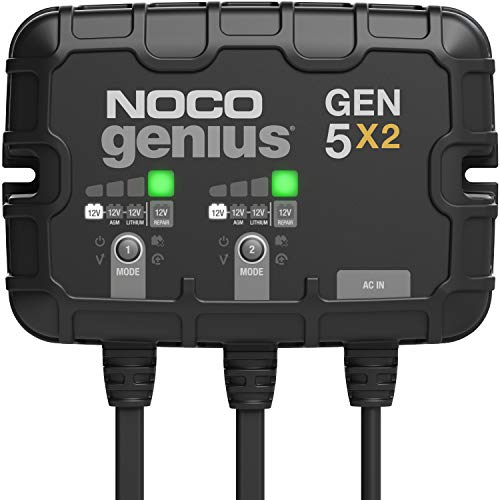
Two-bank 10A onboard charger keeps marine lithium and lead-acid batteries balanced safely.
The NOCO GEN5X2 delivers 10A across two independent banks, charging two 12V batteries simultaneously. IP68-rated and fully sealed, it handles harsh marine conditions. Selectable modes cover lithium, AGM, and repair functions for versatile onboard use.
Excellent for boat owners managing separate house and starter batteries requiring simultaneous charging and long-term maintenance. Its rugged build withstands moisture and vibration typical in marine rigging. Requires professional installation if retrofitting older vessels.
|
9
|
POWEROWL Smart Battery Charger for AA AAA Ni-MH/1.5V Lithium Rechargeable Batteries, Type- |

Charges up to eight NiMH or lithium AA/AAA batteries independently with Type-C input.
The POWEROWL smart charger powers up to eight AA or AAA batteries at once, supporting both 1.5V lithium and 1.2V NiMH chemistries. Offers 400mA per slot for NiMH and 250mA for lithium cells. Clear LED indicators flash blue or green to show charging status.
Perfect for households with remotes, toys, or wireless devices consuming many small rechargeable batteries. USB-C input allows flexible power sourcing from laptops, power banks, or wall adapters. Only suitable for low-voltage consumer electronics, not automotive lithium packs.
|
10
|
Battery Tender Junior 12V, 800mA Battery Charger and Maintainer for Lead Acid and Lithium |
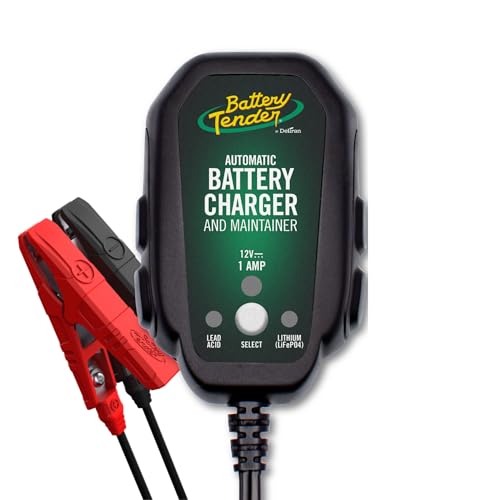
800mA switchable charger maintains lithium and lead-acid batteries safely with spark protection.
Battery Tender Junior provides gentle 800mA charging tailored for powersports batteries, compatible with both lithium and lead-acid types. Switchable chemistry selection ensures correct charge profile. Spark-proof technology and reverse polarity detection enhance user safety.
Ideal for motorcycle, ATV, or personal watercraft owners needing reliable battery upkeep between rides. Compact form factor fits in cramped engine compartments or storage compartments. Backed by five-year warranty, though slower amperage limits fast charging applications.
These ten chargers address key challenges in lithium battery recharging, from high-speed recovery to safe long-term maintenance. Whether dealing with RV deep cycles, motorcycle starter batteries, or household AA cells, there’s a tailored solution here.
Maintaining Charged Batteries Long-Term
Recommended Products


Properly maintaining a recharged lithium battery extends runtime and prevents unexpected failures. Follow these tips to keep your battery stable after every charge cycle.
- Store batteries in cool, dry places away from direct sunlight.
- Check voltage monthly using a multimeter or onboard display.
- Disconnect loads when storing for extended periods.
- Fully recharge every three months to prevent deep discharge.
- Clean terminals periodically to ensure strong electrical contact.
After recharging, monitor your lithium battery for signs of wear such as reduced capacity, swelling, or inconsistent voltage output. If anomalies persist post-charge, consider recalibrating the battery management system or replacing the unit. Regular inspection prevents sudden failures during critical usage moments.
When To Replace Or Upgrade Your Charger
Even quality chargers degrade over time. Recognizing early warning signs prevents battery damage and ensures continued safe operation. Know when upgrading pays off in reliability and performance.
| Sign | Meaning | Action |
|---|---|---|
| Slow Charging | Charger losing efficiency | Test or replace soon |
| Erratic Display | Internal circuitry faulting | Replace immediately |
| Frequent Disconnections | Unstable output voltage | Upgrade recommended |
| Physical Damage | Cable fraying or casing cracks | Stop using safely |
Compare charging time against expected benchmarks for your battery size.
Inspect cables and connectors for visible wear or exposed wiring.
Verify whether error codes or irregular behaviors occur frequently.
Decide whether repair costs justify replacing the entire unit instead.
To recharge lithium batteries safely, always use a compatible charger with automatic cut-off and temperature monitoring. For immediate action, inspect your current setup and confirm voltage and chemistry match before your next charge cycle.

- 10 Best Battery For Generator Ev Battery Bank Marine 2026 - October 27, 2026
- 10 Best Battery For Generator Ev Battery Bank Lto 2026 - October 27, 2026
- 10 Best Battery For Generator Ev Battery Bank Low Voltage 2026 - October 27, 2026