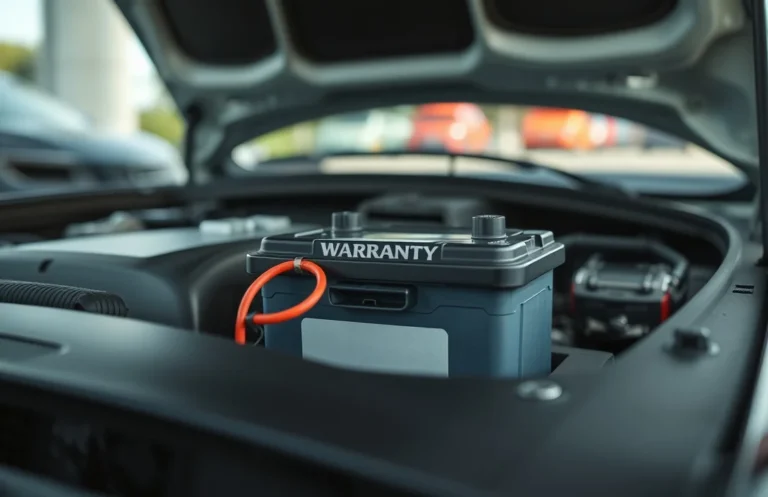
What Should Voltage Be On Car Battery?
A car battery voltage reading is one of the quickest ways to investigate a slow crank, dim lights, or a battery that keeps going flat. With the engine off, a fully charged 12V lead-acid battery is usually around 12. 6V to 12. 8V.
Once the alternator is running, the reading should rise, so the same tester can also point to a charging-system problem. This guide explains how to take the reading, how to interpret the main voltage ranges, and which testers make the result easier to understand.
Understanding Car Battery Voltage Ranges
Recommended Products


Voltage is useful because it gives you a quick view of both battery charge and charging-system behavior. Take the first reading with the engine off, then check again while the engine is running.
Comparing those two numbers can help separate a weak battery from an alternator that is not charging properly.
Resting Voltage Tells the Story
After the car has been off overnight, a fully charged 12V lead-acid battery should generally read between 12. 6V and 12. 8V. A reading below 12. 4V points to a partial discharge, while 12. 2V or lower indicates that the battery is effectively flat and needs charging.
These reference points apply to flooded and AGM batteries when the tester is connected directly to the terminals.
Charging Voltage During Operation
With the engine running, the alternator will usually raise the reading to roughly 13.7V to 14.7V. More than 14.8V can indicate overcharging, while less than 13.3V may suggest that the alternator is not keeping up. A tester that displays live voltage makes this second check quick to perform.
| Voltage Range | Battery Condition | Action Needed |
|---|---|---|
| 12.6-12.8V | Fully charged | No action |
| 12.4-12.6V | Partially charged | Monitor soon |
| 12.2-12.4V | Discharged | Charge battery |
| Below 12.2V | Flat or faulty | Recharge or replace |
Picks To Answer Your Car Battery Voltage Question
Recommended Products


The useful distinction here is between a basic voltage check and a fuller battery diagnosis. The models below include simple plug-in testers, alternator checkers, multimeters, and load-style analyzers. I would choose based on whether you only need a voltage reading or also want battery health, cranking, and charging information.
|
1
|
ANCEL BA101 Car Battery Tester, 12V Digital Automotive Alternator Meter Diagnostic Tool,10 |

It reports resting and charging voltage alongside state of health and cranking information, so it addresses more than just the number on the display.
The ANCEL BA101 checks voltage, state of health, state of charge, CCA, cranking, and charging-system behavior on 12V batteries. Its backlit black-and-white display is designed to stay readable in bright or dim conditions, and the tester draws power from the vehicle battery rather than using internal batteries.
Entering the battery type and rating shown on the label is important for a meaningful result.
I would shortlist this for a DIY owner who wants battery and alternator information in one device. Its support is centered on 12V systems, so it is not the right fit for a six-volt vehicle. The direct connection and guided readings keep routine checks fairly straightforward.
|
2
|
MOTOPOWER MP0514A 12V Digital Car Battery Tester Voltmeter and Charging System Analyzer wi |
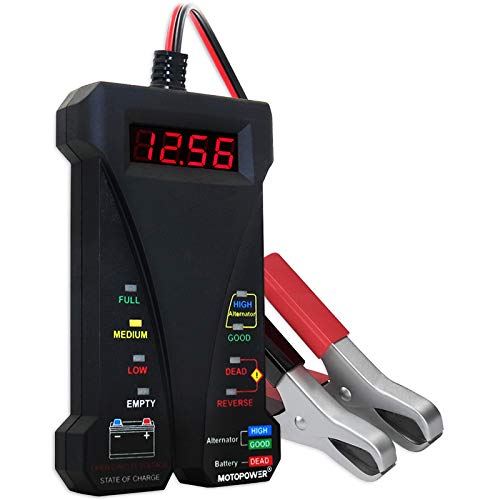
Its plug-and-test design gives you a voltage reading and an alternator indication quickly, which covers the basic comparison between resting and running voltage.
The MOTOPOWER MP0514A connects directly to the battery and shows voltage on a four-digit LCD. Eight colored LEDs provide a second, easier-to-scan indication of battery or alternator status, while reverse-connection and over-voltage protection add some useful reassurance during setup. The stated voltage accuracy is up to 0.01V.
This is the one I would consider for a driver who wants a simple status check without navigating a larger diagnostic menu. It is aimed at 12V vehicles and focuses on the readings most owners need when deciding whether to recharge, replace, or investigate the alternator.
|
3
|
ANENG 12V Car Battery Tester,Automotive Voltmeter and Alternator Analyzer | Digital Automo |

Separate battery and alternator modes make it easier to compare the two readings with normal resting and charging ranges.
The ANENG BT172 displays live voltage on its LCD and uses LEDs to indicate battery or alternator status. It is designed for 12V batteries in vehicles ranging from cars and motorcycles to trucks, RVs, boats, mowers, and golf carts, with accuracy described at approximately 0. 01V.
Correctly placing the red clip on positive and the black clip on negative is essential.
I would look at this when one tester needs to cover several types of 12V vehicle. The three-mode layout is practical for basic battery-versus-alternator checks, although its simpler construction may feel less substantial than a more advanced diagnostic unit.
|
4
|
AstroAI Digital Multimeter Tester 2000 Counts with DC AC Voltmeter and Ohm Volt Amp Meter; |
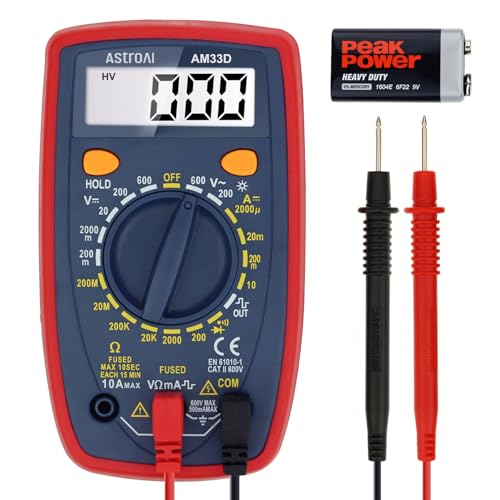
It measures voltage as part of a broader multimeter setup, making it useful when a battery check also leads to questions about current, resistance, or vehicle wiring.
The AstroAI Digital Multimeter measures AC and DC voltage, DC current, resistance, and diodes. Its 1999-count backlit display updates twice per second, and the included leads can be used for batteries, fuses, automotive circuits, and charging-system checks. The rotary switch and lead sockets need to be set correctly before measuring.
I would choose this for someone who already wants a general-purpose meter rather than a dedicated battery analyzer. It takes more setup than a clip-on battery tester, but the extra measurement modes are useful for tracing an electrical fault beyond the battery terminals.
|
5
|
UHANBUT 12V Car Battery Tester, Car Alternator Charging System Analyzer | Car Voltmeter An |

Its digital display and Full, High, Low, and Empty indicators turn a voltage check into a quick status readout, including in low-light conditions.
The UHANBUT 12V tester shows live voltage on an LED display and labels the result with Full, High, Low, or Empty indicators. The display is intended to remain visible at night, and the tester is also described as checking alternator output and charging status.
Connecting the red clip to positive and the black clip to negative is the basic setup.
This makes sense for a user who wants an uncomplicated reading in a garage, driveway, or service vehicle. The status labels are easier to scan than raw voltage alone, though anyone diagnosing a less obvious electrical issue may want a meter with more detailed measurements.
|
6
|
KONNWEI KW208 12V Car Battery Tester, Battery Load Tester Automotive 12V Alternator Starte |

It combines voltage with internal resistance, CCA, state of health, and charge status, giving a fuller picture than a voltage-only check.
The KONNWEI KW208 is designed for 12V batteries rated from 100 to 2000 CCA, including flooded, AGM flat-plate, AGM spiral, and gel types. It supports battery, cranking, charging-system, alternator, and starter tests, and its display includes voltage, internal resistance, CCA, AH capacity, battery health, and charge status.
The updated galvanized alloy clips are intended to provide durable contact.
I would shortlist the KW208 for a home mechanic who wants more than a pass-or-fail voltage reading. Its advice about recharging or replacing the battery can be useful, but the number of reported values may be more than necessary if you only want to check resting voltage.
|
7
|
MOTOPOWER MP0515A 12V Car Battery Tester Automotive 100-2000 CCA Battery Load Tester Auto |

Its claimed live-voltage, health, resistance, and waveform information is aimed at users who need more detail than a basic battery-voltage tester provides.
The MOTOPOWER MP0515A is described as showing live voltage and waveform graphs on a three-inch color display. It also reports health status and internal resistance, offers nine languages, and can provide a final pass-or-replace result.
Those features are directed at users who want to examine charging behavior rather than read a single voltage value.
I would reserve this kind of tester for a workshop or a vehicle owner who expects to investigate intermittent voltage drops. Its larger screen and additional diagnostics may be unnecessary for an occasional battery check, and the available listing details do not establish pricing or included accessories.
|
8
|
WINAMOO Automotive Test Light with 3-48V LED Digital Voltage Display, Auto Circuit Tester |

It gives a direct voltage readout for low-voltage vehicle circuits while also indicating polarity, which is useful when checking wiring as well as battery posts.
WINAMOO’s circuit tester uses red and green polarity lights and a digital display with 0. 1V resolution. It is described as handling 3V to 48V circuits, with a probe and spring wire intended to reach around vehicle wiring and battery compartments.
That makes it more of a circuit-checking tool than a dedicated battery analyzer.
I would choose this when the question extends beyond battery voltage to identifying live wires or checking polarity. It should cover basic voltage checks, but users who need battery health, CCA, or charging-system analysis will need a more specialized tester.
|
9
|
TOPDON BT100 12V Car Battery Tester, Automotive Battery Load Tester | 100-2000 CCA Auto Ba |

It checks voltage, cranking, and charging systems on common 12V batteries, so the result can be compared with both resting and running voltage expectations.
The TOPDON BT100 is specified for 12V batteries from 100 to 2000 CCA and checks battery voltage, cranking, and charging systems. Three colored LEDs translate the result into simple replace-or-recharge guidance, and its compact housing is intended for storage in a glove box.
The design does not depend on an app or subscription.
This is a reasonable fit for a DIY owner who wants quick, repeatable checks across several vehicles. It does not appear aimed at long-term data logging, but that may not matter if the goal is to investigate a slow start or confirm whether the alternator is charging.
|
10
|
FOXWELL BT705 Car Battery Tester 24V 12V, Alternator and Load Tester | 100-2000CCA High-Ac |
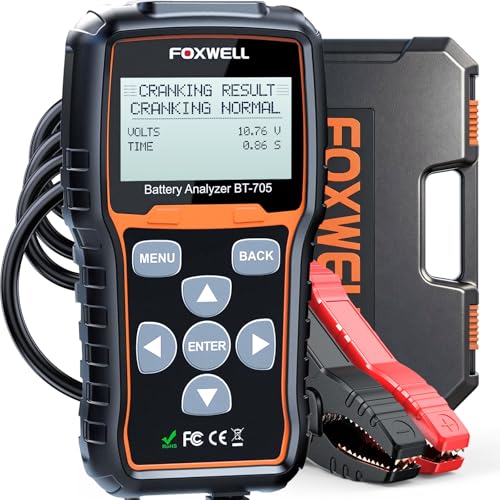
Support for both 12V and 24V systems makes it useful when voltage readings need to be checked across cars, trucks, or other larger vehicles.
The FOXWELL BT705 supports 12V and 24V batteries rated from 100 to 2000 CCA. Its 2.8-inch screen guides the user through the process and summarizes results as Good, Recharge, or Replace. The listed 5.9-foot cable is long enough to keep the display within reach while the engine is cranking.
I would consider this for a household or small fleet with more than one vehicle voltage standard. The guided verdicts reduce the work of interpreting the numbers, although the extra capability and menu steps may be more than a single 12V car owner needs.
All of these tools can help answer a basic voltage question, but they do so at different levels. A simple tester is enough for checking resting and running voltage; a multimeter adds electrical troubleshooting; and a battery analyzer adds CCA, resistance, health, and cranking information.
Match the tester to the vehicles you own and the amount of diagnosis you expect to do.
Taking Accurate Battery Voltage Readings
Recommended Products


Probe placement, engine state, and timing all affect the result. Use the same basic sequence each time so your readings are easier to compare.
Turn off engine and remove surface charge by turning on headlights for five minutes.
Connect red lead to positive terminal and black lead to negative or chassis ground.
Wait ten seconds for digital display to stabilize before recording the voltage.
Start engine and observe voltage rise toward 13.7V to 14.7V range during operation.
Turn off engine and recheck within one minute to confirm resting voltage recovery.
- Clean corroded terminals before clamping to avoid reading drops.
- Test battery only when core temperature is above freezing.
- Compare readings across multiple tests instead of trusting single values.
- Avoid cranking the starter motor during voltage checks to prevent false lows.
- Replace aging batteries proactively once voltage dips below 12.4V.
When Should You Replace Your Battery?
A single low reading does not always prove that the battery has failed. Tracking the reading after charging and after the vehicle sits can reveal whether the battery is losing charge or the charging system is not replenishing it.
If the battery reads below 12. 2V after sitting overnight, charge it before drawing a final conclusion. Repeatedly seeing the reading fall back toward 12. 4V after driving suggests that it is not holding charge well.
A battery that is several years old and shows slow recovery deserves closer attention, especially in cold weather, when lower voltage can reduce cranking performance.
| Voltage Reading | Likely Issue | Recommended Action |
|---|---|---|
| Below 12.2V | Severely discharged | Charge or replace |
| 12.2-12.4V | Partially charged | Recharge and monitor |
| 12.4-12.6V | Normal range | Continue monitoring |
| 12.6-12.8V | Fully charged | No immediate action |
For a typical 12V car, look for roughly 12. 6V to 12. 8V with the engine off and about 13. 7V to 14. 7V while it is running.
A tester that shows both readings can quickly separate a low battery from a possible charging-system problem, so choose the simplest model that gives you the information you actually need.

- 10 Best Battery For Generator Ev Battery Bank Marine 2026 - October 27, 2026
- 10 Best Battery For Generator Ev Battery Bank Lto 2026 - October 27, 2026
- 10 Best Battery For Generator Ev Battery Bank Low Voltage 2026 - October 27, 2026