Battery Cable Gauge: Wire Thickness, Current and Application Fit
Getting the wire thickness wrong is one of those mistakes that shows up later as dimming lights, slow cranking, or an inverter that shuts down under load. The gauge you need comes down to two numbers: how much current you’re pulling and how far it has to travel.
Too thin and the wire overheats and drops voltage; too thick and you’re hauling extra weight and spending money you don’t need to. This rundown covers nine cable options that actually address those trade-offs instead of glossing over them.
Why Battery Cable Gauge Determines System Safety
The link between wire thickness and current flow is something you feel in your garage, not just on paper.
Thinner wire means higher resistance, and resistance turns into heat. That heat is energy that never makes it to your device, and in a worst-case scenario it can damage insulation or start a fire.
A 2 AWG cable has a much larger cross-section than a 10 AWG, so it can carry a lot more current without breaking a sweat.
I would always size for the load first and then add a safety margin, because replacing a melted harness is a lot more expensive than buying the right gauge upfront.
Common Gauges and Their Typical Uses
| Gauge Size | Max Amps (Short Run) | Best Application |
|---|---|---|
| 1/0 AWG | 300+ Amps | High-end car audio, large inverters |
| 2 AWG | 200 Amps | Solar setups, welding, heavy trucks |
| 4 AWG | 150 Amps | Standard jumper cables, medium amps |
| 6 AWG | 100 Amps | Small cars, light duty accessories |
Top Cables To Ensure Safe Power Flow
These nine options span the range from thick 0-gauge runs for serious power draws down to 6-gauge jump leads for everyday cars. Each one makes sense in a specific scenario rather than trying to be a one-size-fits-all solution.
|
1
|
WotyWire 2 Gauge Wire Battery Cable with Lugs, 10FT Red + 10FT Black |

This 2-gauge kit brings real copper and the kind of build quality that matters for high-current work.
If you’re running a winch, a big inverter, or wiring up a truck that actually sees use, the WotyWire 2-gauge cable feels like the genuine article. The 1070 strands of oxygen-free copper aren’t just a spec line, they translate into noticeable flexibility and low resistance.
The EPDM jacket has a matte feel and doesn’t kink the way cheaper PVC jackets do. The tinned lugs and glue-lined heat shrink give the whole thing a finished look that says it wasn’t an afterthought in the box.
This is the cable I would reach for if I were building something that needed to carry a lot of amps over more than a few feet. The downside is bulk, and in a tight engine bay you’ll spend time figuring out where it all goes.
You’ll also want a decent crimping tool if you’re terminating the lugs yourself. For anything serious though, the pure copper here beats the CCA options on the table.
|
2
|
40FT 1/0 Battery Cable CCA,0 Gauge Wire with lugs for Amp,Winch,Automotive | 0 Gauge Wire |

A 0-gauge CCA run that doesn’t pretend to be something it isn’t.
The 40-foot 0-gauge CCA cable from this unnamed kit is straightforward about what it is: copper-clad aluminum with a 250-amp rating at a price that makes sense for long runs. The PVC jacket has a little give to it and the red/black coloring is easy to follow.
It comes with lugs and heat shrink, so you’re not hunting for parts mid-installation. For an RV, a boat, or a solar bank that needs serious amperage over distance, it holds up.
My read is that this is best suited for projects where cost matters more than absolute conductivity. CCA isn’t copper, and over very long distances you’ll see a small voltage drop compared to pure copper. Connections need to be tight, because aluminum oxidizes faster and loosening is a common regret.
But for the price, it’s a reasonable compromise.
|
3
|
TOPDC 4 Gauge 20 Feet Heavy Duty Jumper Cables for Car and SUV | 4 Gauge, 20 Feet heavy du |

Not fancy jump leads, just ones that grip and survive being tossed around.
The TOPDC 4-gauge jumper cables feel substantial without being ridiculous. The clamps have real bite to them, and the springs keep tension on the jaws instead of letting them slip off a dirty terminal.
The CCA cores are flexible enough that they don’t coil up like a steel spring when it’s cold, which is a small thing that makes a difference in January. The carry bag isn’t premium, but it keeps them from dragging around the trunk.
These are the cables I would keep in the car if I wanted something that works and doesn’t need a ceremony to use. They’re UL-listed, which is worth saying out loud in a market full of mystery cables.
The 20-foot length is fine for most cars, but if you park in a way that requires creative positioning, you’ll feel the limit.
|
4
|
A ABIGAIL 2 AWG Battery Cable 2AWG Gauge Pure Copper Battery Inverter Cables with 3/8 in L |

Short, pure copper links that do one job and do it cleanly.
The A ABIGAIL 2 AWG links are oddly specific in the best way. One foot of pure copper with tinned lugs and a flame-retardant jacket makes them feel purpose-built for inverter hookups or battery-to-busbar runs in RVs.
The lugs are the right size for most stud terminals and the heat shrink is already on, which saves a step. They’re stiff enough that they stay put once you’ve routed them.
These aren’t for everyone, but if you know you need a one-foot pure copper jumper, they remove the guesswork. The fixed length is the obvious limit. I would double-check that 3/8-inch lug size against your hardware before ordering. They’re priced like what they are: short, high-quality links that save time.
|
5
|
1/0 Gauge Wire 1/0 AWG Battery Cable (20FT Red+20FT Black), Copper Clad Aluminum CCA Amp W |

1/0 CCA that gets the job done without pretending to be audiophile gear.
The 1/0 gauge CCA cable here splits evenly between red and black and comes with enough lugs and heat shrink to actually finish a run.
The stranded construction has a surprising amount of flex for a cable this size, and the PVC jacket resists oil and moisture well enough for under-hood use. It’s rated for 12V and 24V systems, which covers most vehicle and small solar builds.
If you’re wiring an amp or a winch and want more copper than 4 AWG but don’t need OFC, this is a fair middle ground. The CCA means slightly higher resistance than pure copper, so I would keep runs reasonable.
Crimping the lugs properly matters here, because the softer aluminum strands don’t forgive sloppy connections.
|
6
|
Energizer Jumper Cables for Car Battery, Heavy Duty Automotive Booster Cables for Jump Sta |
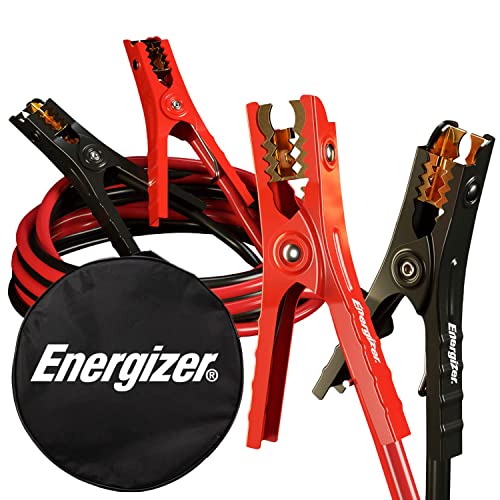
A six-gauge name-brand cable that focuses on being useful instead of heroic.
Energizer’s 6-gauge jumper cables are the kind of thing that sits in the trunk and works when you forget to check the battery before a road trip. The vinyl coating has a little texture to it and the clamps have enough spring that they don’t feel flimsy.
Sixteen feet is long enough for most cars parked in typical spots, and the carrying case keeps them contained instead of turning your trunk into a cable nest.
They’re not going to start a dead semi, but for passenger cars and light trucks they do what they say. The brand name carries weight if that matters to you, and the cables stay flexible in cold weather.
The main limitation is the gauge itself, so if you’re regularly jump-starting something with a big draw, these aren’t the answer.
|
7
|
Nicholaus 6AWG 19.7-Inch (50cm) Battery Cable Set (1 Positive & 1 Negative), 5/16″ M8 SC25 |

Six-gauge pure copper that doesn’t leave you wondering what’s inside the jacket.
The Nicholaus 6 AWG set is pure copper with tinned terminals, which is refreshing in a market full of CCA labeled as copper. At roughly 20 inches they’re long enough for most battery-to-block or inverter-to-battery runs without being unwieldy.
The PVC sheath has a clean finish and the terminals feel solid, not pressed on. The crimped ends are neat and the heat shrink is already applied.
I would consider these if I wanted copper I could trust without spending 0-gauge money. The length is fixed, so if you need more you’ll have to splice or buy elsewhere.
The M8 lugs are standard for a lot of applications, but checking the stud size before ordering is the kind of thing that saves a trip back to the store.
|
8
|
1/0 AWG/Gauge – 3/8″ Battery Cable Lug Copper Connector Wire Ring Terminal | AIRIC,UL,1/0 |

Simple, well-made lugs that stop projects from falling apart at the ends.
The AIRIC 1/0 AWG lugs are unglamorous but important. Ten copper ring terminals with dual-wall adhesive heat shrink means you’re not piecing together hardware from three different suppliers. The flared openings make wire insertion easy and the crimped or soldered connection holds.
These fit standard 3/8-inch studs, which covers most battery posts and many inverter inputs.
If you’re fabricating cables or replacing corroded ends, these remove a lot of friction from the process. Bare copper is the right choice here, it won’t flake or plate off like cheaper alternatives. You still need proper crimping tools, but that’s the cost of doing it right.
They’re not fancy, just reliable.
|
9
|
Shirbly 2 Gauge Battery Cable, 10FT Red + 10FT Black 2 AWG Pure Copper Wire Welding Cable, |

Flexible 2-gauge cable that survives being moved around in tight spots.
The Shirbley 2-gauge cable lives in that space where automotive meets welding, and it works well there. Fully annealed copper with 1070 strands bends like you want it to instead of fighting you.
The EPDM jacket has a slight tack to it and resists oil and moisture, which makes it at home on a boat or in a workshop. Ten feet of red and ten feet of black is enough to get most projects done without leftovers getting tangled.
This is the cable I would pick if flexibility mattered as much as current capacity. The temperature range is impressive and the insulation doesn’t crack when you coil it for storage. It’s pricier than CCA, but if you need copper that can take abuse, the difference pays for itself.
Just check the cut ends when it arrives, because shipping can nick strands on softer wire.
None of these is perfect for every job, and that’s the point. A 0-gauge CCA run makes sense for long RV feeds, while short 6-gauge copper links are better for inverter hookups.
The right choice is the one that matches your amperage, your distance, and your budget without overselling what it can do.
How To Install Battery Cables Without Voltage Drop
Even the best cable fails if it’s installed wrong, so a few habits go a long way.
Disconnect the negative battery terminal first to prevent accidental short circuits during work.
Measure your required length accurately and add six inches for slack and routing flexibility.
Strip wire ends cleanly using proper gauged strippers to avoid nicking inner copper strands.
Crimp terminals firmly with a hydraulic tool ensuring no gaps exist between wire and lug.
Apply heat shrink tubing over connections and seal tightly to block moisture entry completely.
- Do route cables away from moving parts and sharp metal edges to prevent insulation damage.
- Do use dielectric grease on terminals to inhibit future corrosion and maintain good contact.
- Don’t mix copper and aluminum wires directly without special bi-metallic connectors to stop galvanic corrosion.
- Don’t leave loose strands hanging out of terminals as they can cause dangerous short circuits later.
- Do secure cables every eighteen inches with zip ties or clamps to prevent vibration fatigue over time.
Signs Your Current Cables Are Failing Soon
Recognizing early warning signs of cable degradation helps you replace them before a total system failure occurs. Watch for these physical and performance indicators in your existing setup.
Visible cracks in the insulation often appear first, especially near bends or where cables rub against chassis parts. These cracks expose inner conductors to moisture and dirt, accelerating corrosion that increases electrical resistance significantly.
You might notice your engine cranks slower than usual or headlights dim noticeably when turning on high-power accessories like stereos. Warmth felt along the cable surface during operation indicates excessive resistance generating heat instead of delivering power efficiently.
Corrosion appearing as green or white powder on terminals suggests moisture intrusion compromising the connection integrity over time. Replace cables immediately if you detect any burning smell or see smoke rising from the insulation during use.
Electrical Performance Issues
Slow cranking speeds usually indicate insufficient current reaching the starter motor due to undersized or degraded cables. Dimming lights when engaging accessories suggest voltage drops occurring somewhere along the power distribution path. Intermittent electrical faults often stem from loose or corroded connections rather than complete wire breaks internally.
Multimeter testing can reveal voltage differences between battery posts and device inputs to pinpoint exact problem locations accurately. Consistent underperformance under load signals that your current gauge choice no longer matches your system demands.
Physical Inspection Clues
Stiff or brittle insulation feels hard to bend and may crack immediately when flexed manually during inspection checks. Discoloration on the outer jacket often results from prolonged exposure to excessive heat generated by internal resistance problems.
Swollen sections of wire indicate internal arcing or overheating that has damaged the conductor structure beneath the sheath. Broken strands visible at cut ends reduce overall current carrying capacity and increase likelihood of future failure points.
Rust stains running down from terminals show active corrosion eating away at metal contact surfaces rapidly.
The right cable gauge is the one that handles your actual load over your actual distance without overheating or dropping too much voltage. Measure twice, calculate the amperage, and pick something that gives you a little headroom.
Once it’s in, check the connections and keep an eye on it for the first few uses. Nothing electrical is set-it-and-forget-it forever, but with the right gauge and installation, failures stay rare.

- Marine Chargers and Backup Batteries: 9 Options Compared (2026) - October 27, 2026
- LTO Cells vs. SLA Generator Batteries: 5 Options Compared (2026) - October 27, 2026
- 12V/24V Backup Batteries and the EcoFlow DELTA Pro 3 (2026) - October 27, 2026